Caves, Ostriches, & Elephants
Fantasy South Africa RV Safari #4
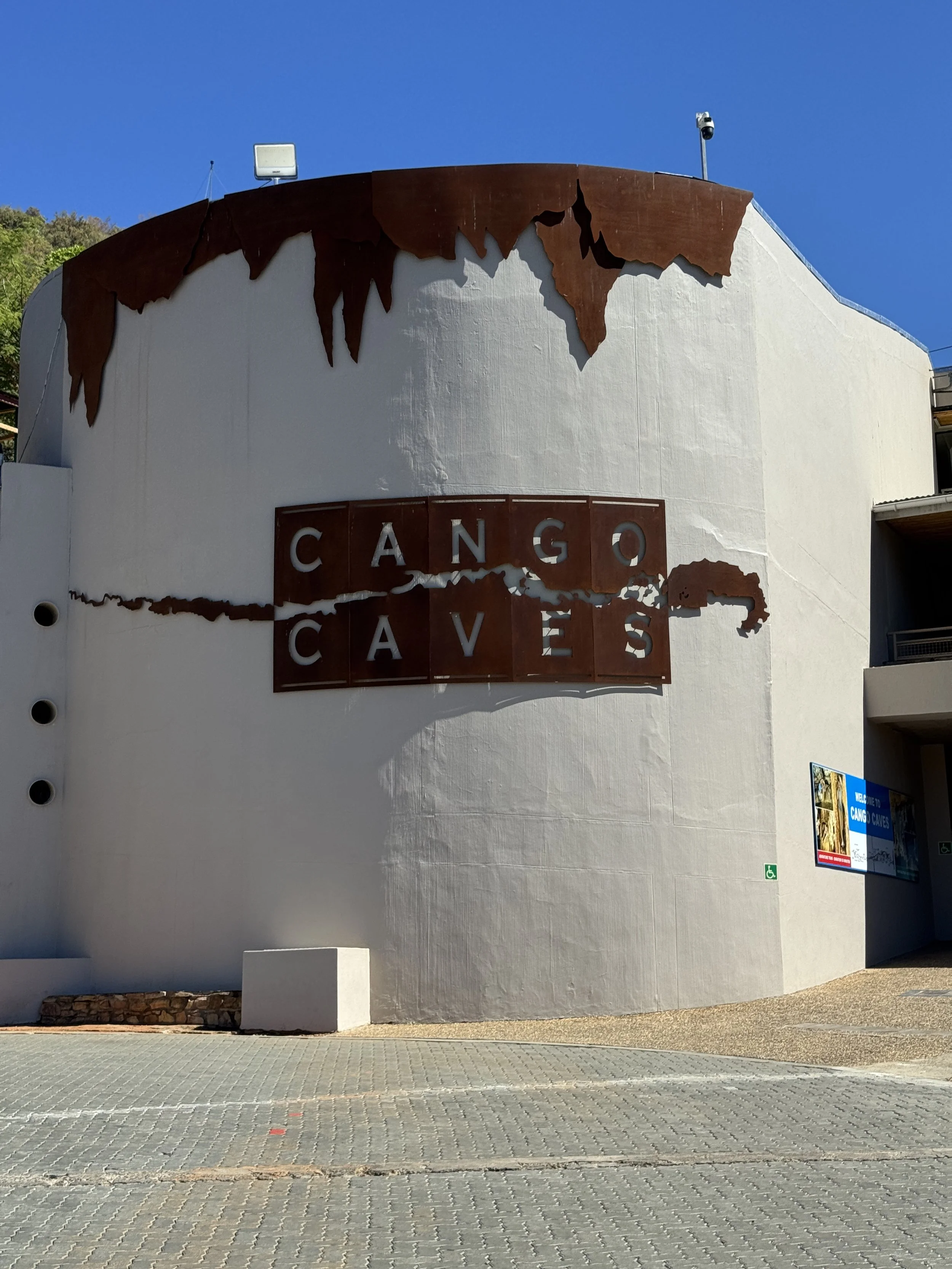
Sunday morning, after everyone had finished up their coffee and breakfast at their campers, we hit the road together—more or less as a convoy—heading out to our first stop of the day: Cango Caves near Oudtshoorn.
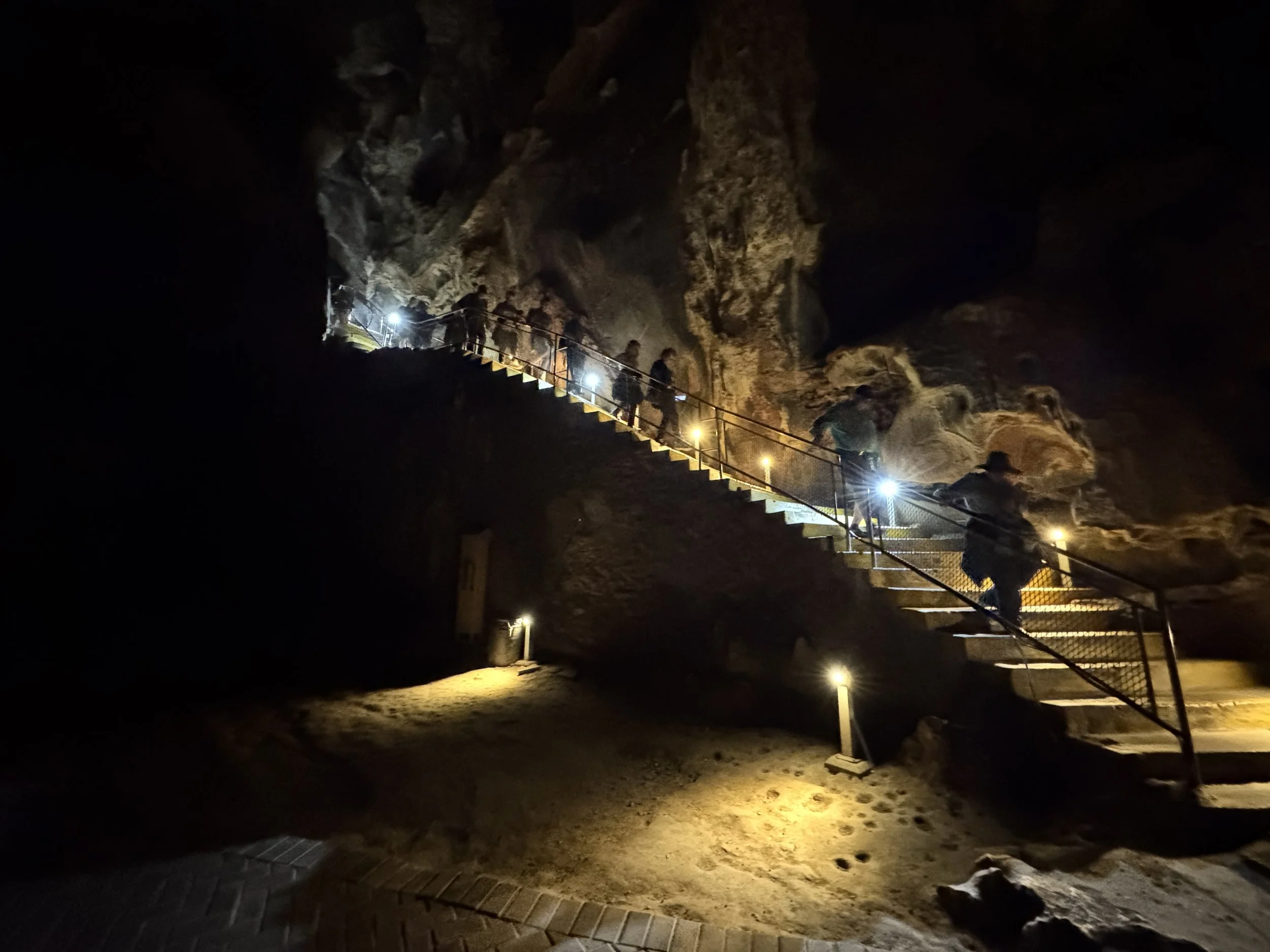
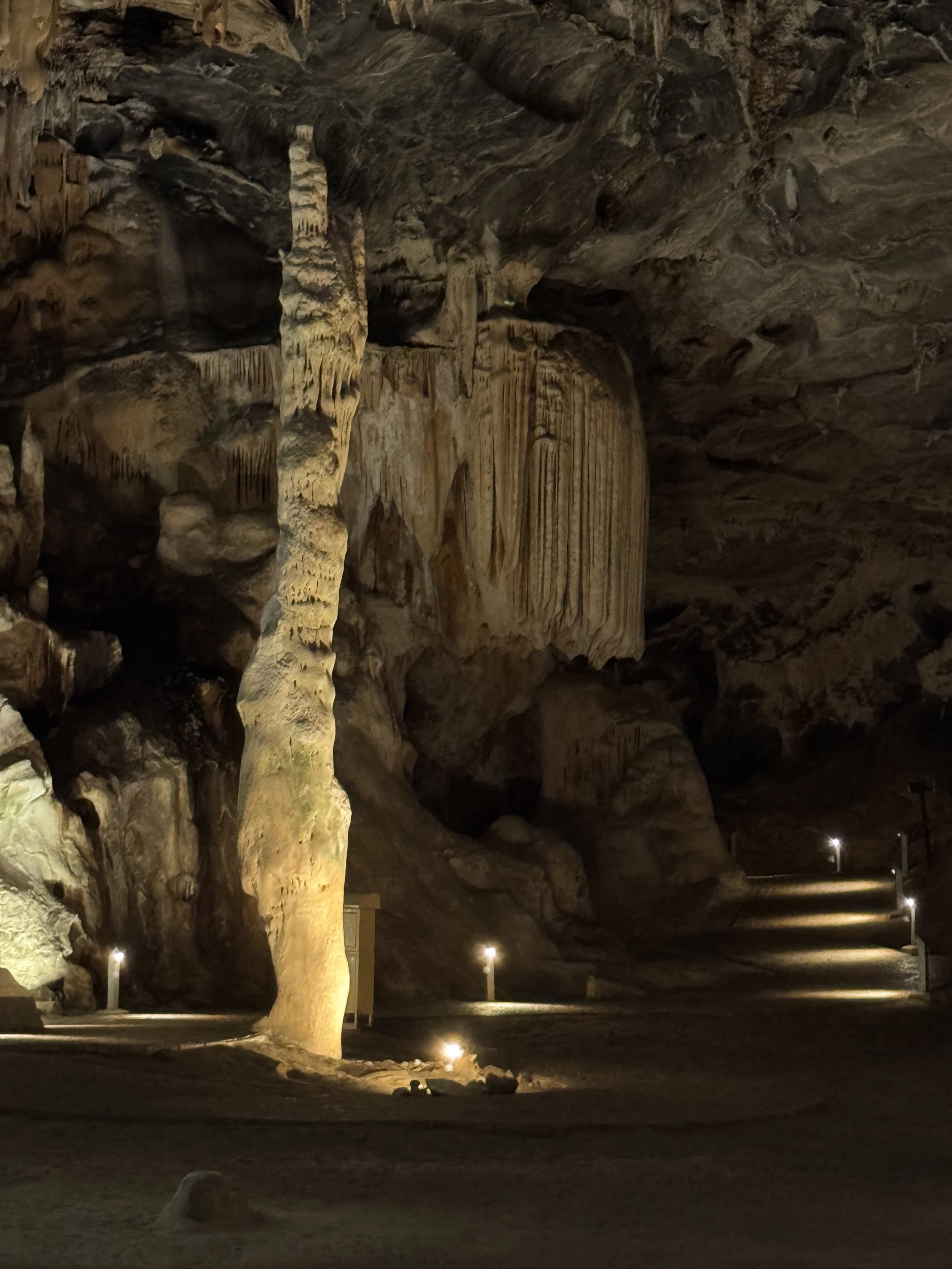
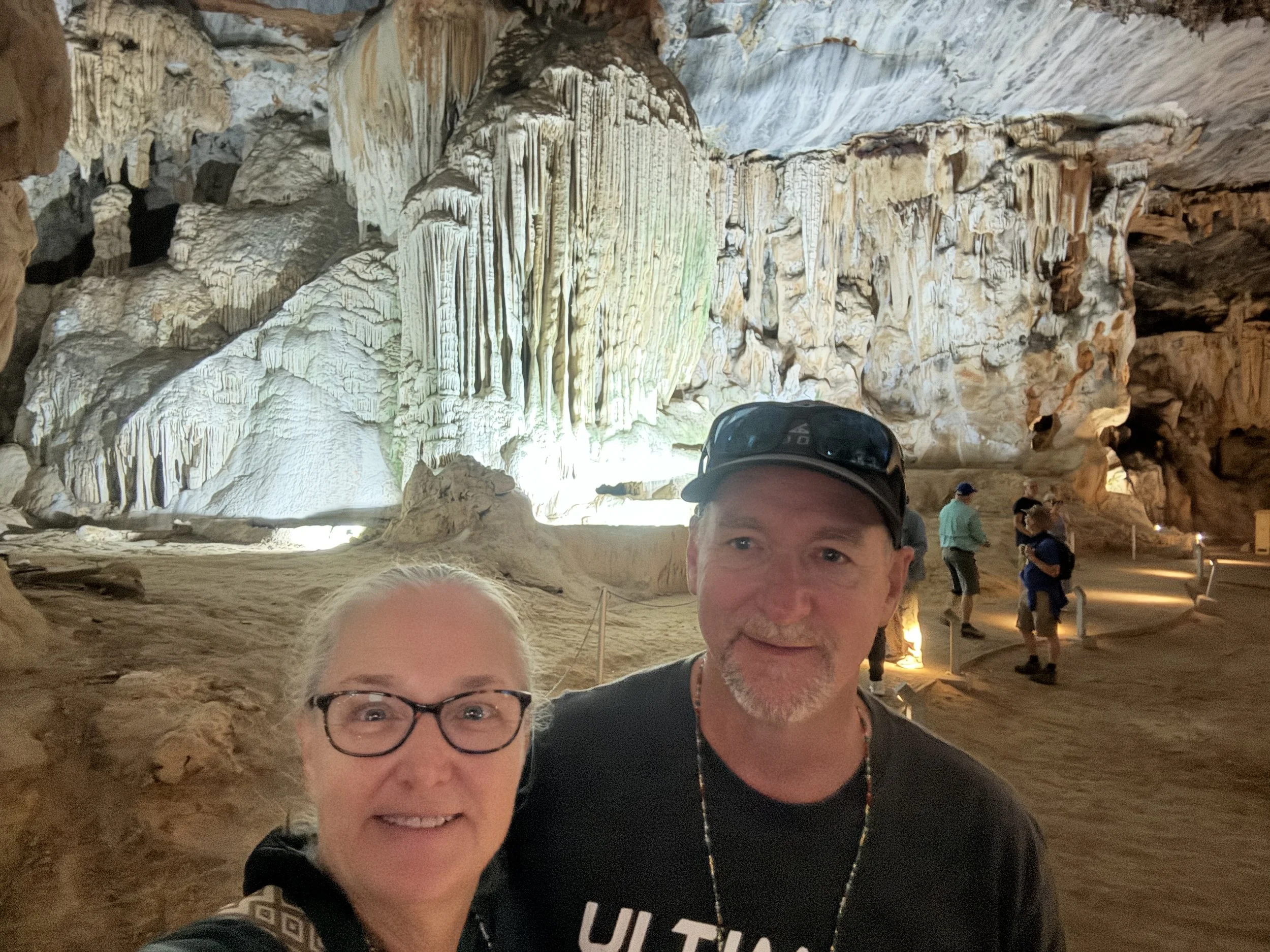
We’re treated to a 90-minute guided walk through the cave, and it’s both beautiful and fascinating. The pathways are wide, with well-lit stairs that make it easy to explore at a relaxed pace. What really stands out is how different it feels compared to most caves I’ve visited. It’s far more spacious, and surprisingly warm inside—quite the contrast to the cool, damp air you usually expect underground. Along the way, we learn about the incredible formations surrounding us and the slow, natural processes that shaped them over time.
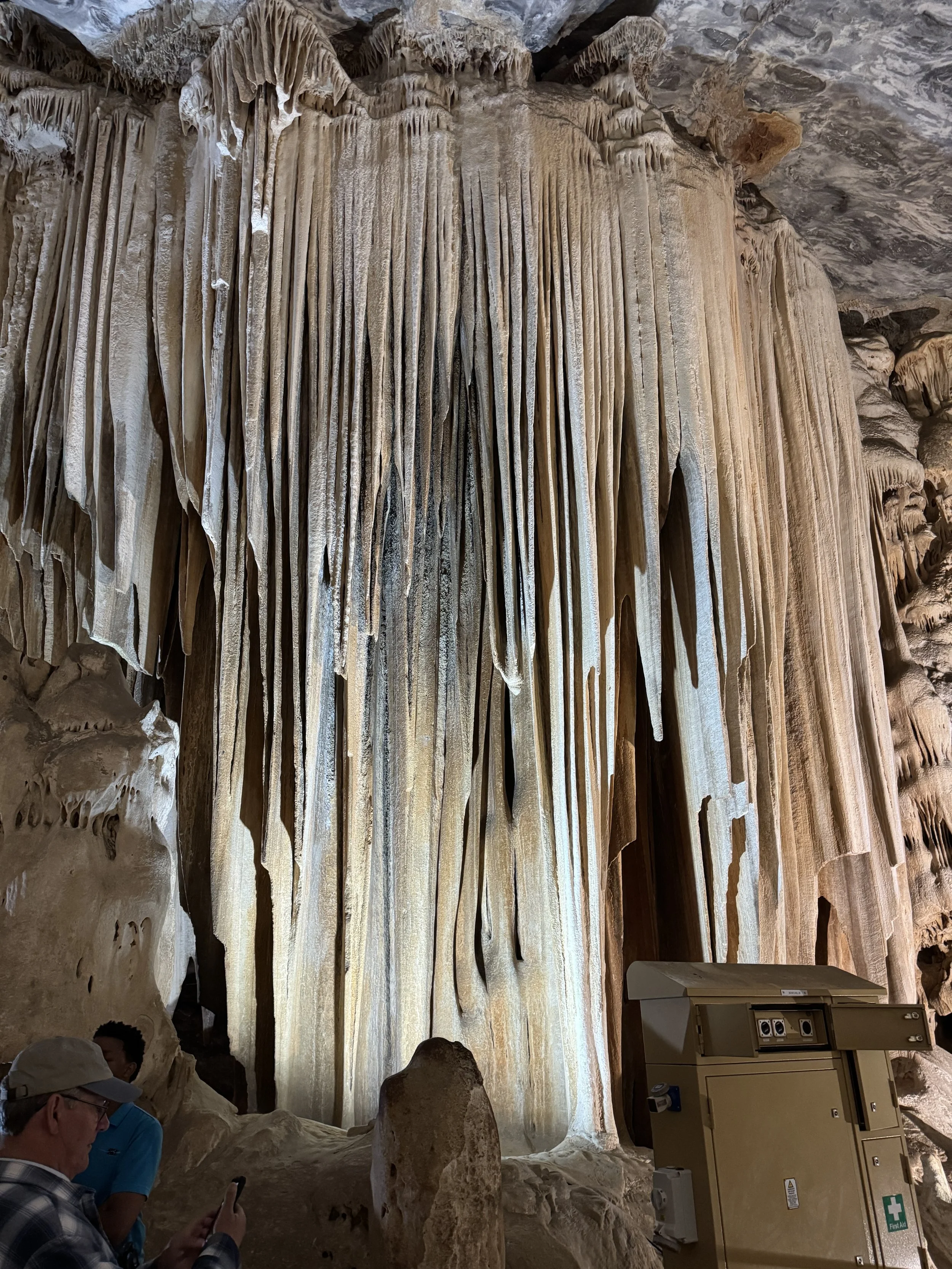
inside cango caves
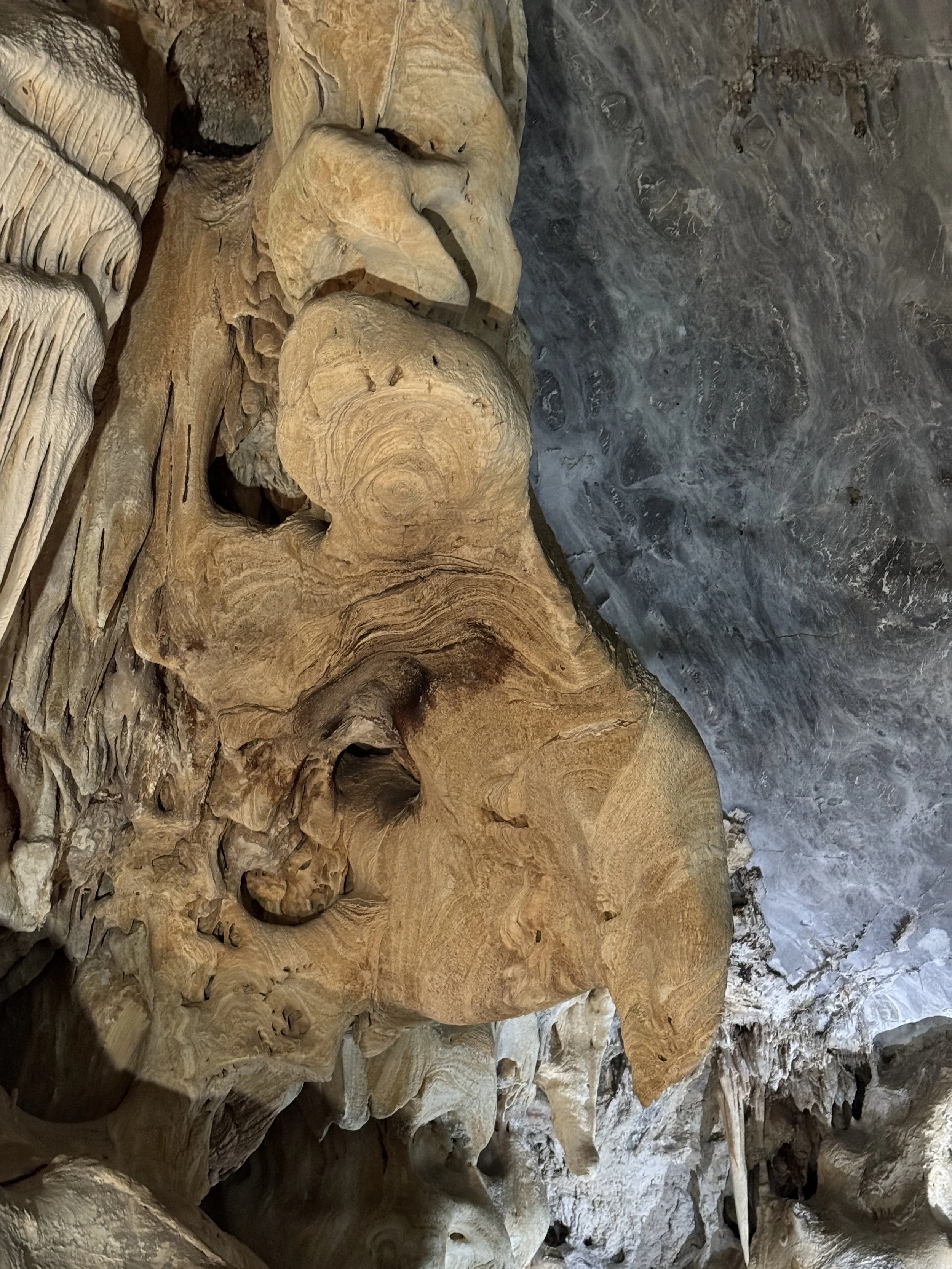
inside cango caves
From the cave, we more or less travel in a little convoy to the Safari Ostrich Farm, just 30 minutes away. When we arrive, everyone gets handed a small plastic bucket filled with pellets—ostrich snacks for the feeding session.
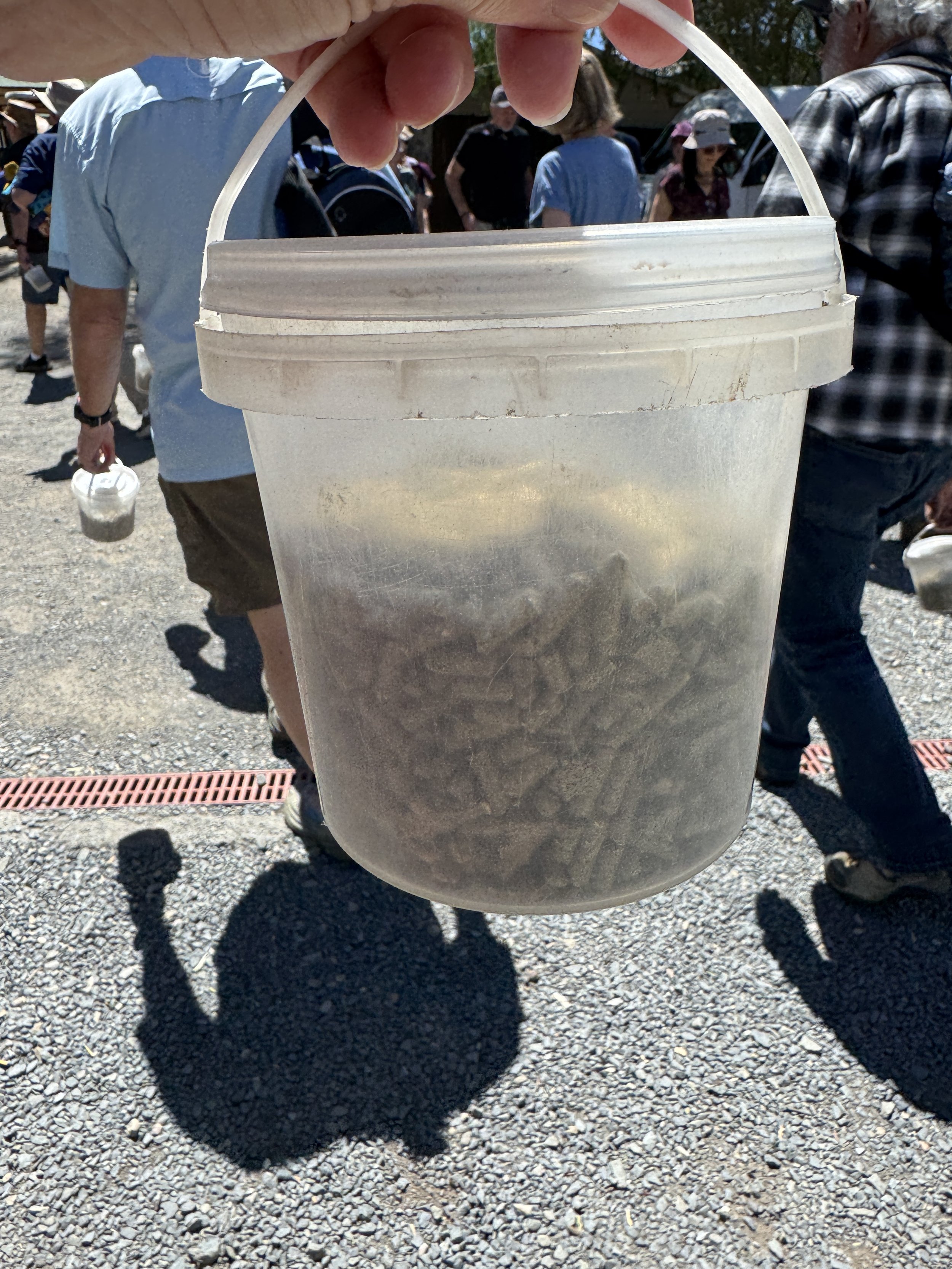
bucket of ostrich pellets
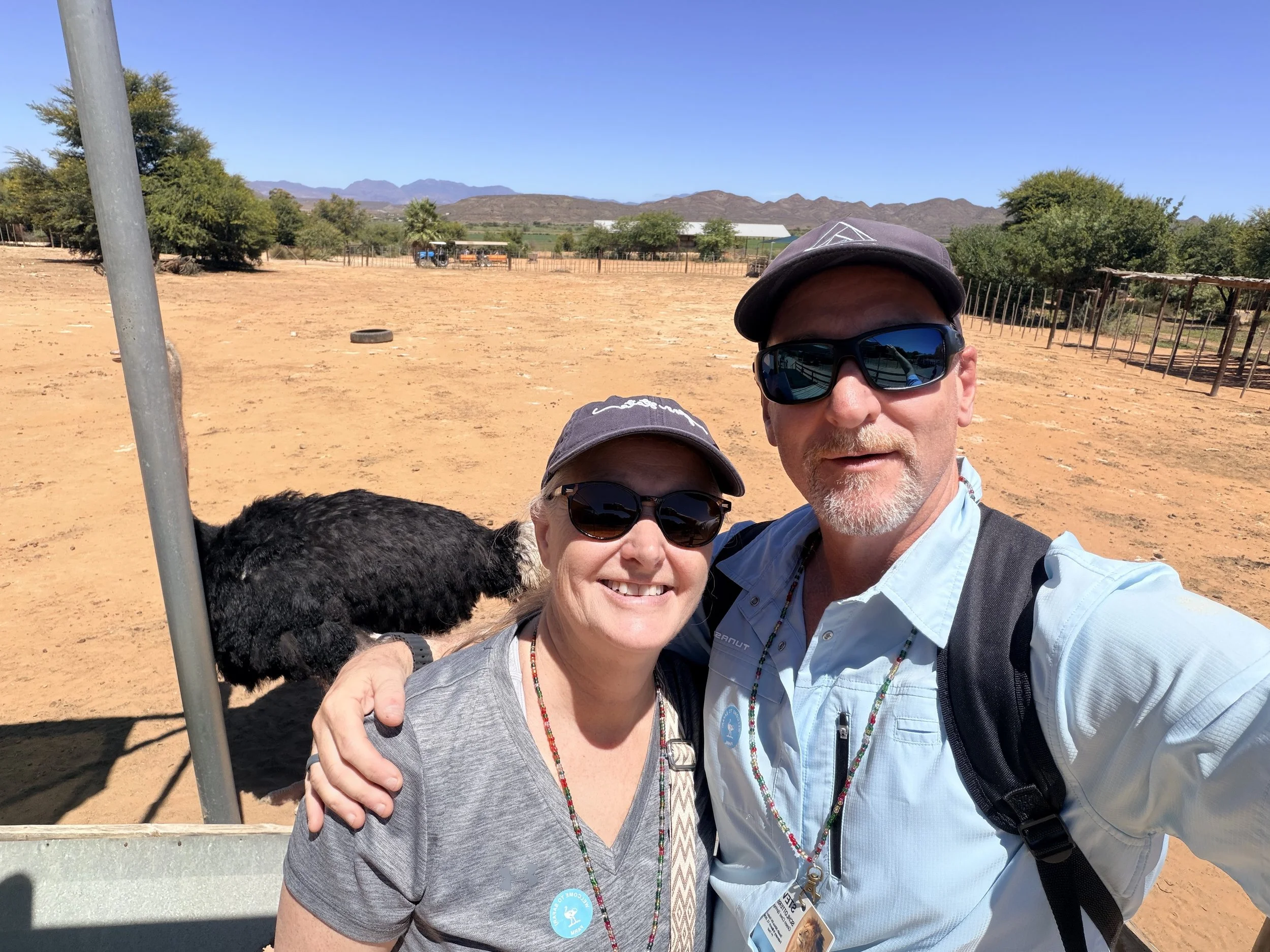
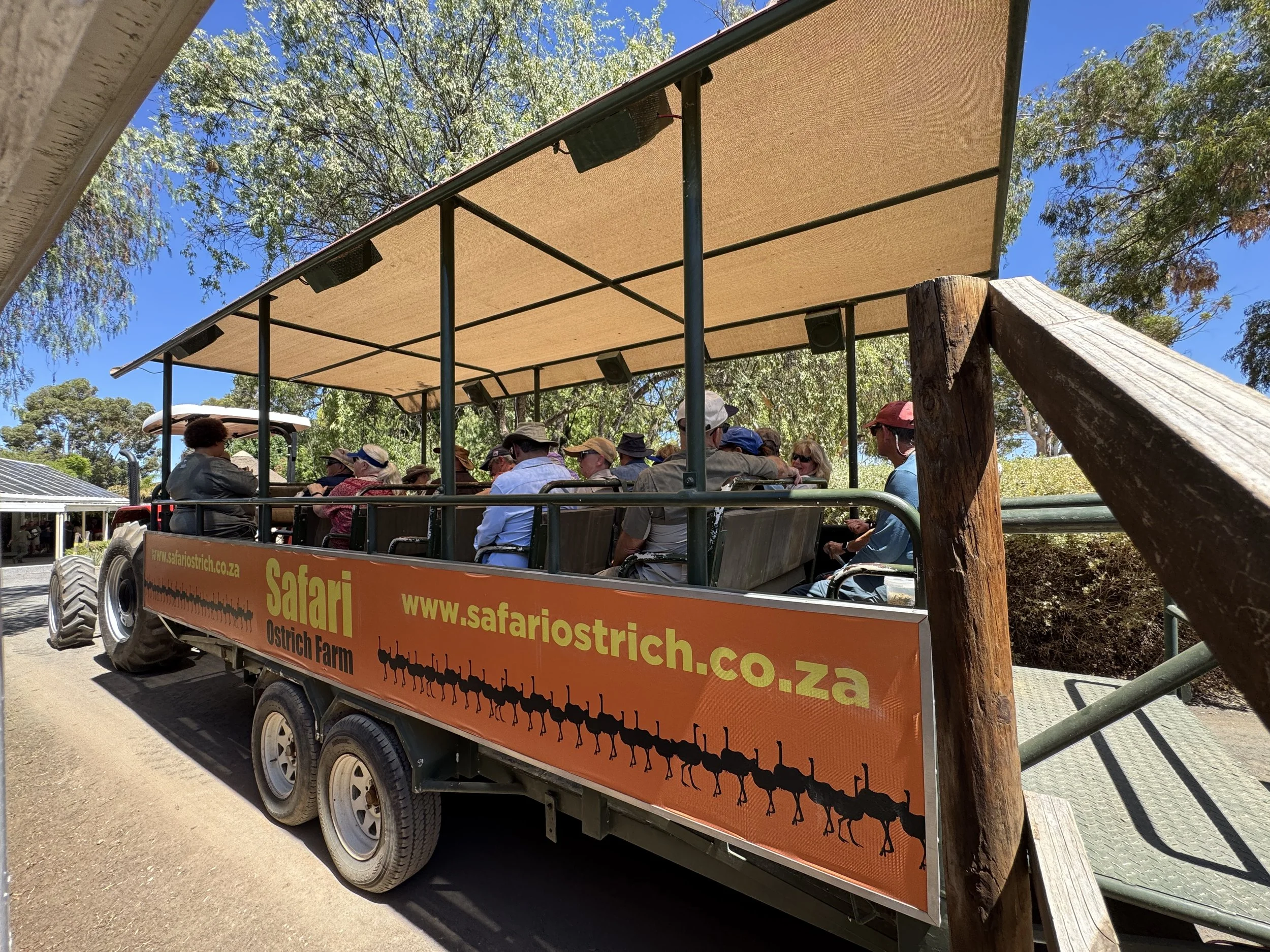
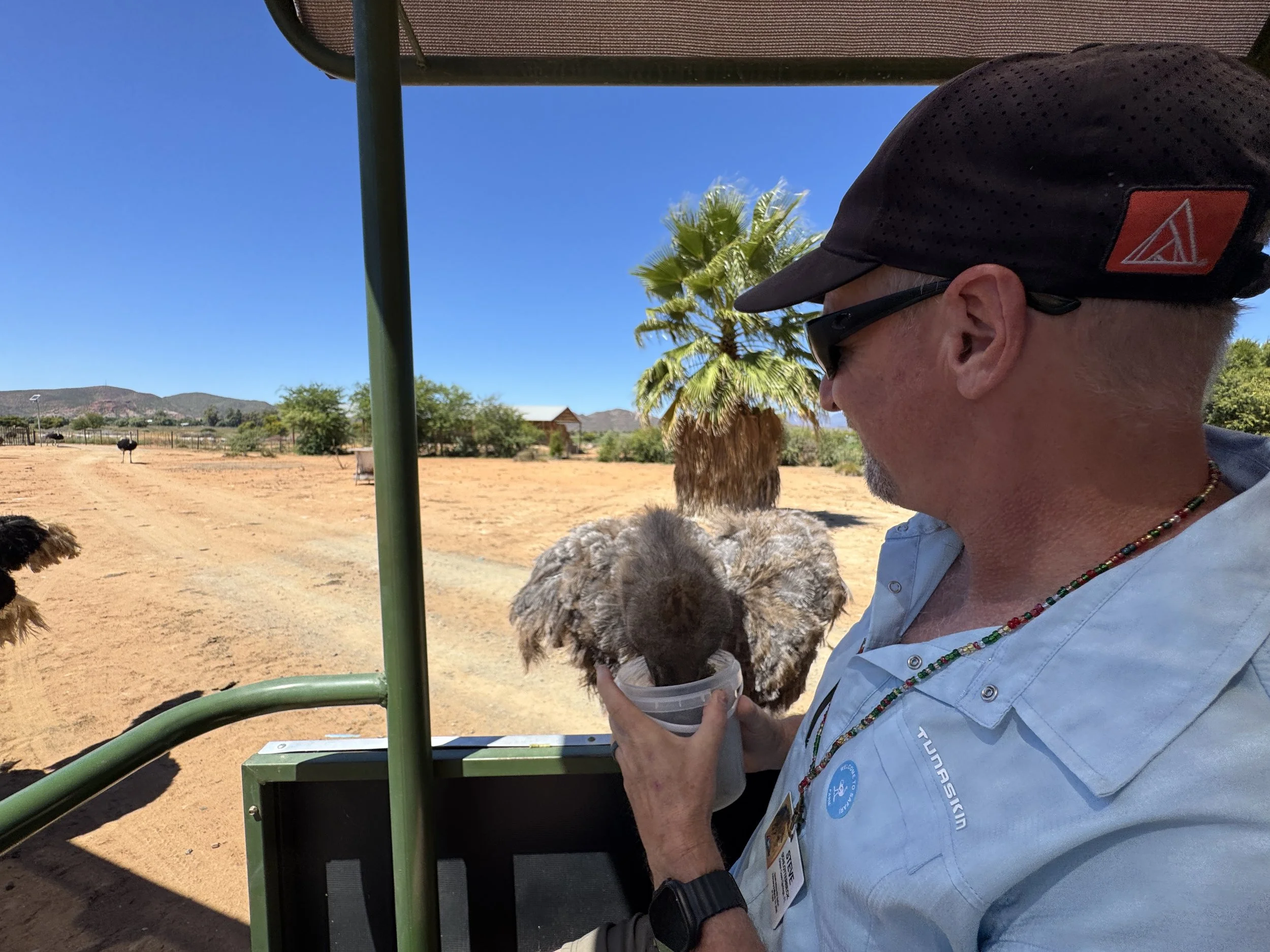
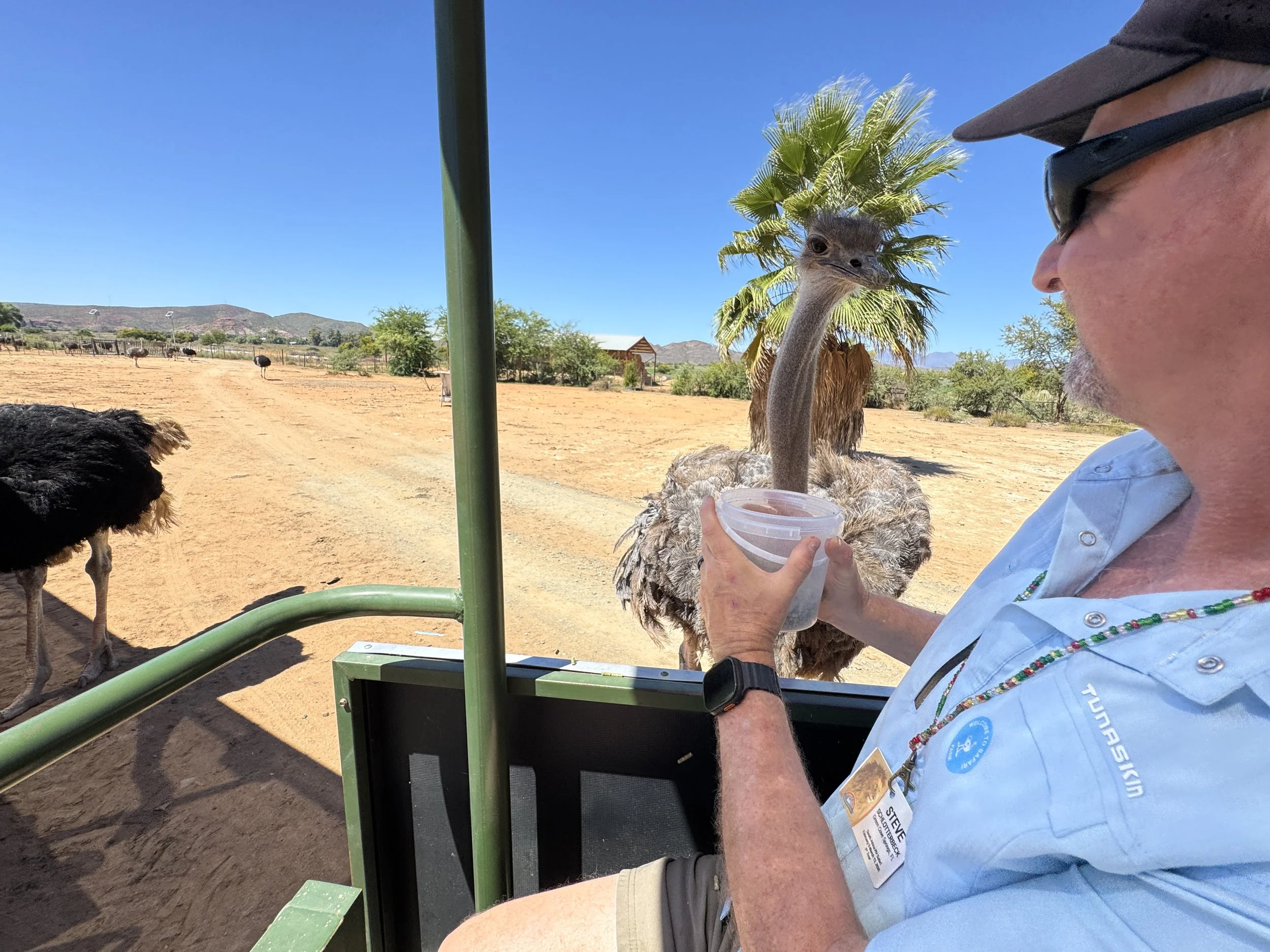
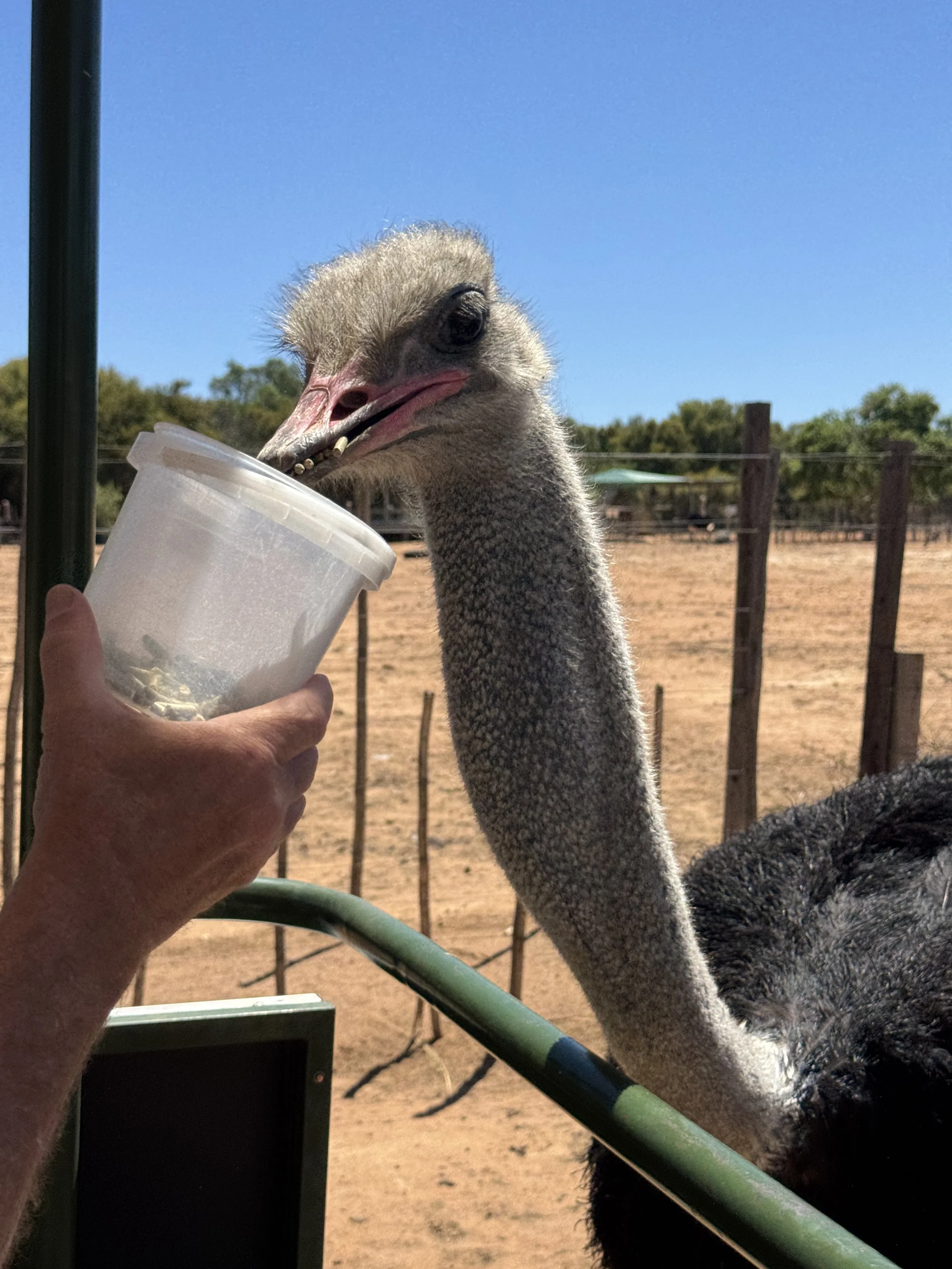
Our guide loads us onto trams pulled by a tractor, and we head out into the fields where the ostriches roam. The moment they spot the tram, they come running. Clearly, they know exactly what’s in those buckets. We hold our buckets out as the ostriches trot up alongside us. They’re enthusiastic eaters and not exactly neat about it. Their long necks bob in and out of the buckets, and pellets go flying everywhere. I’m pretty sure half of mine ended up scattered across the tram floor. One important tip: hold on tight. They’re strong and surprisingly bold, and they’ll snatch the whole bucket right out of your hands if you’re not careful. A couple of people learned that the hard way and watched their buckets disappear in a flash.
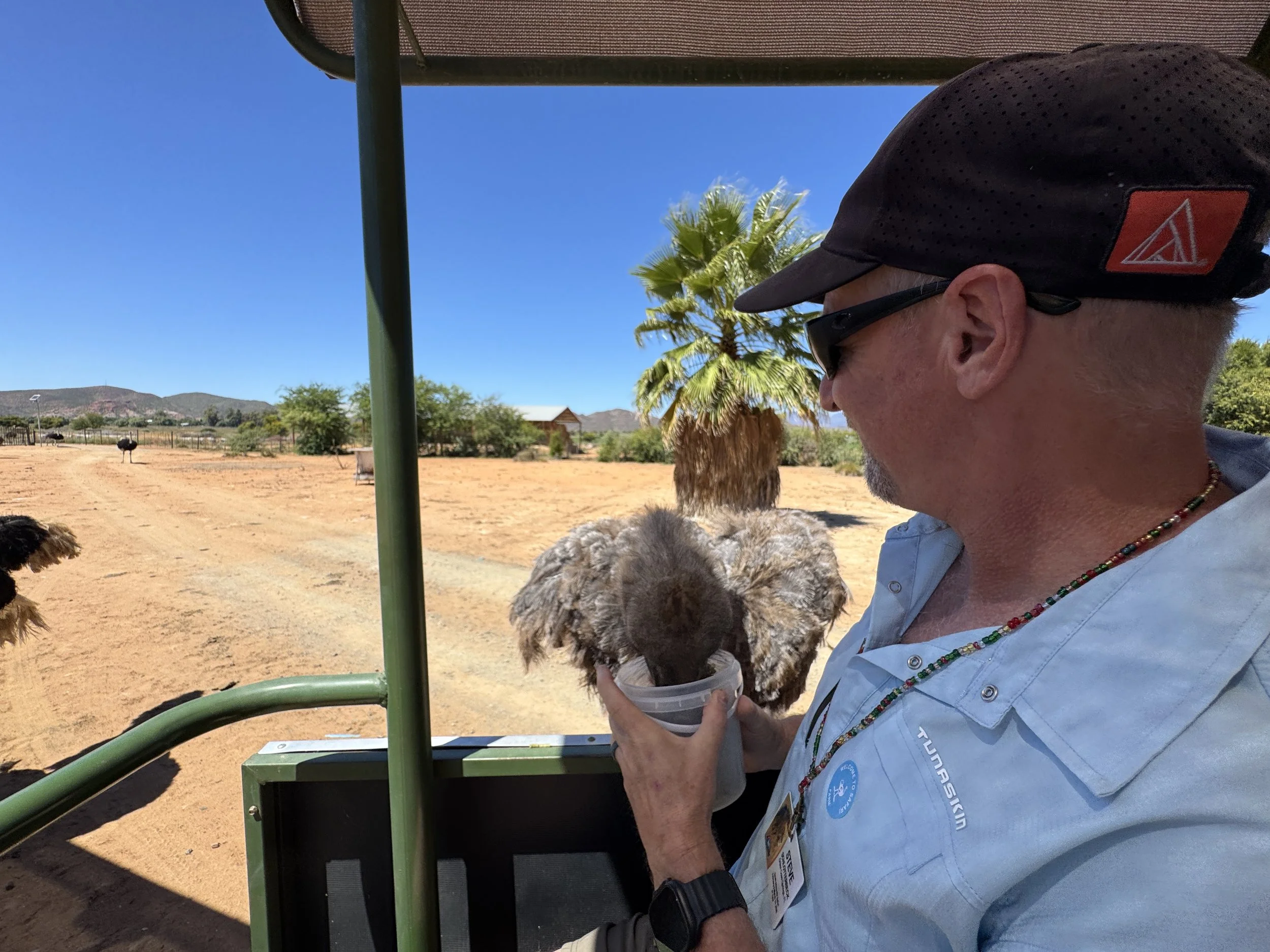
Steve feeding an ostrich
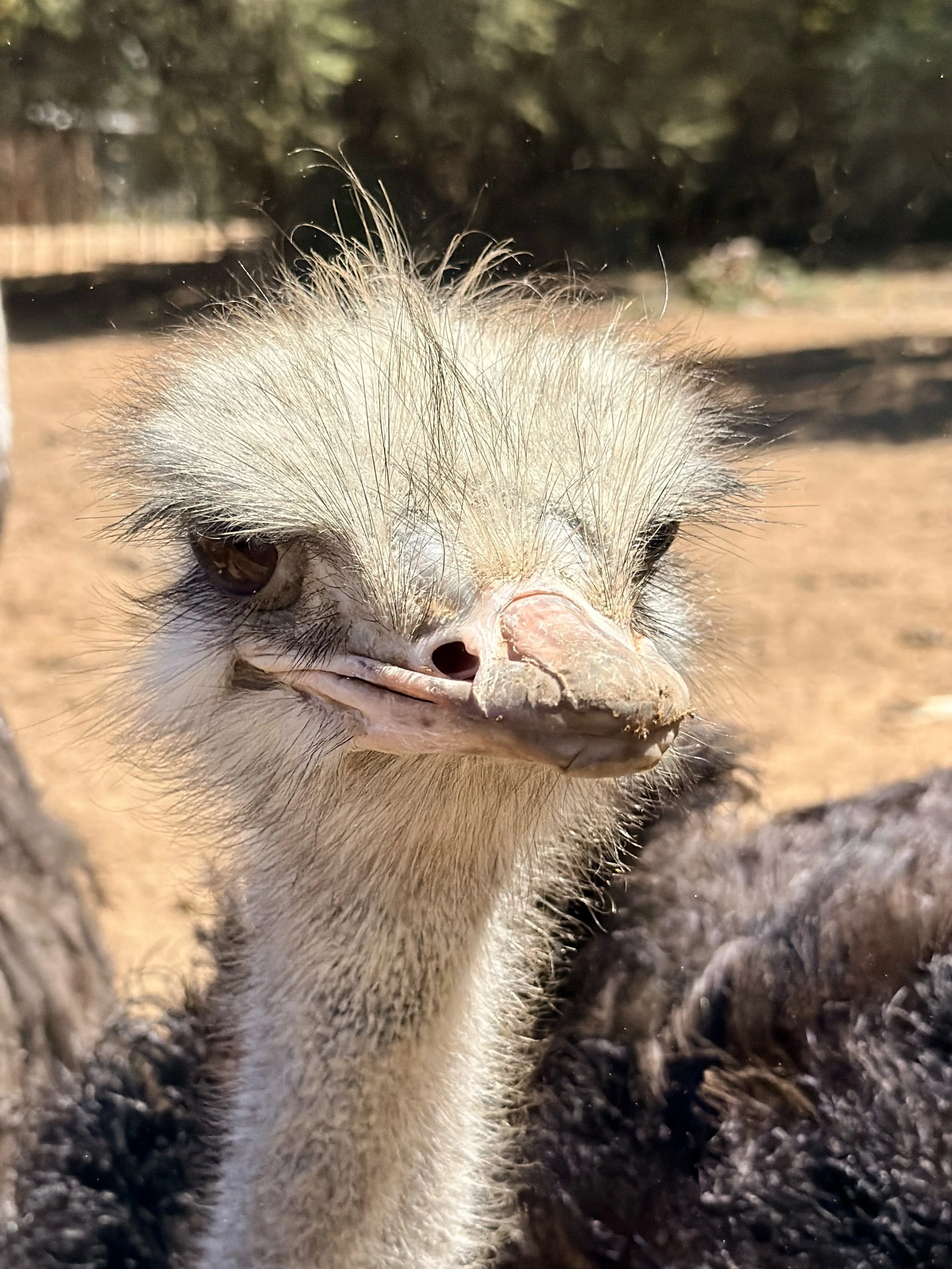
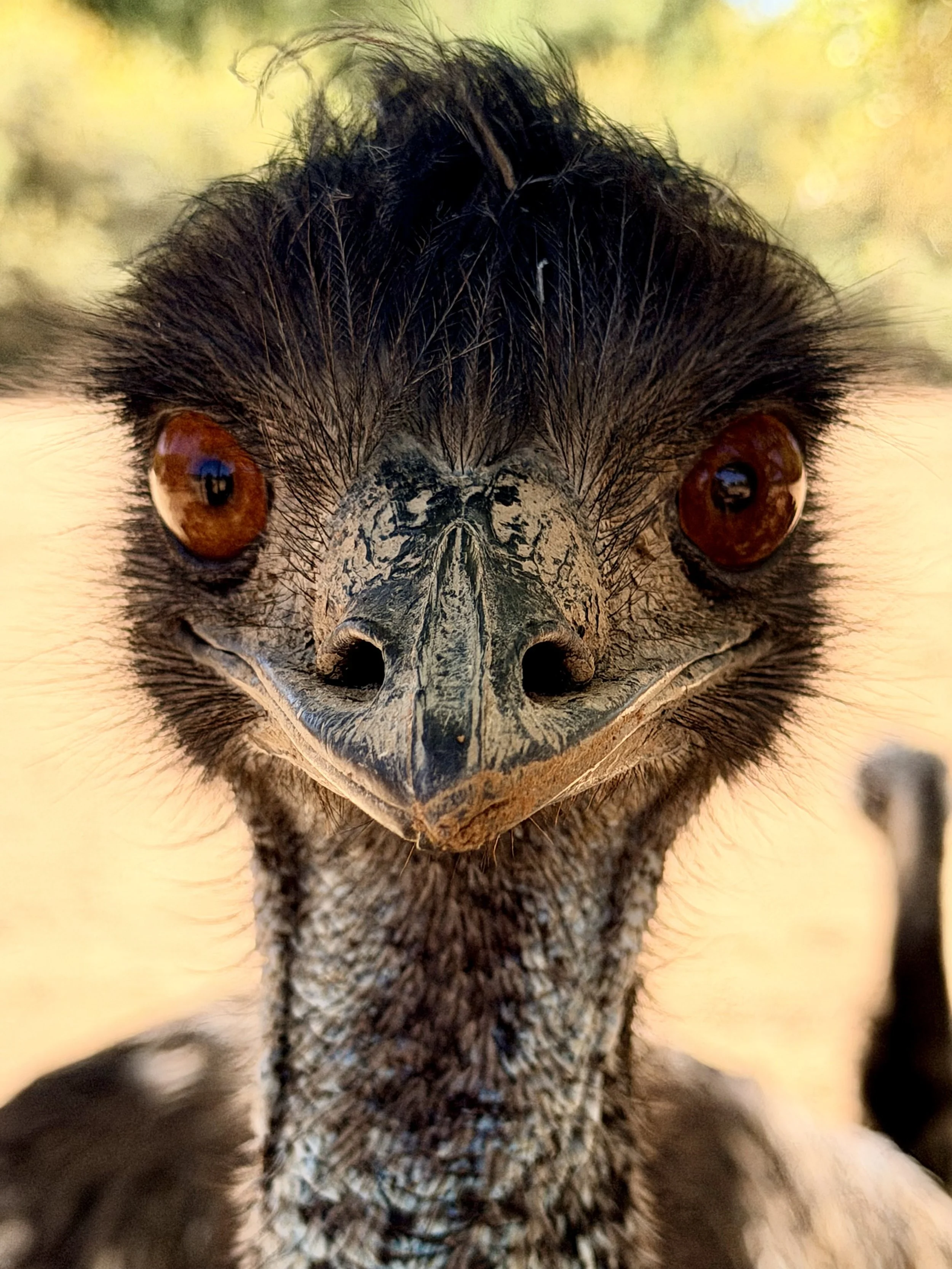
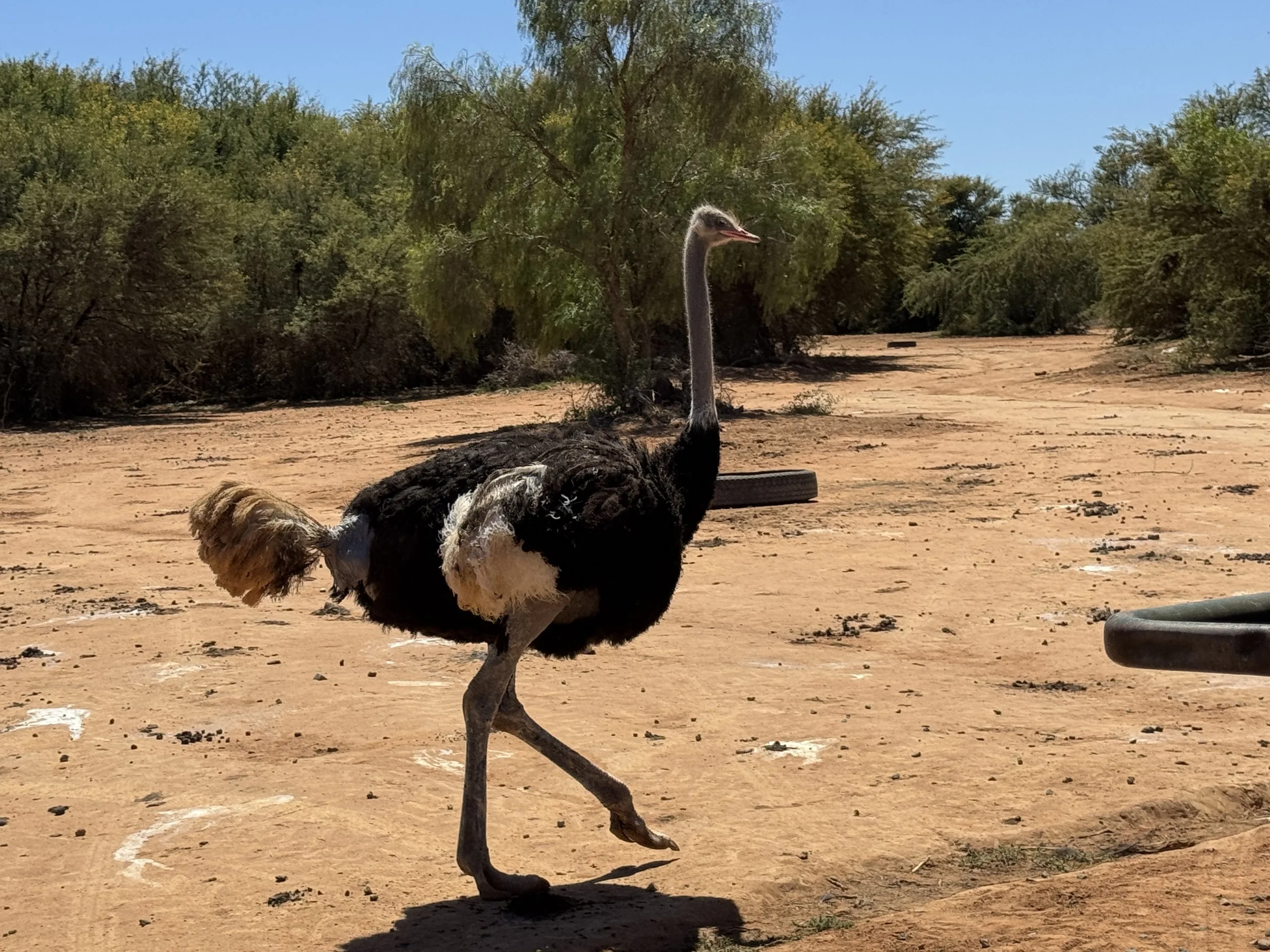
After climbing off the tram, we continue the tour on foot, wandering between a series of pens that house emus, full-grown ostriches, and a few adorable baby ostriches. Seeing them up close gives you a whole new appreciation for just how big these birds really are—especially when you’re standing only a few feet away.
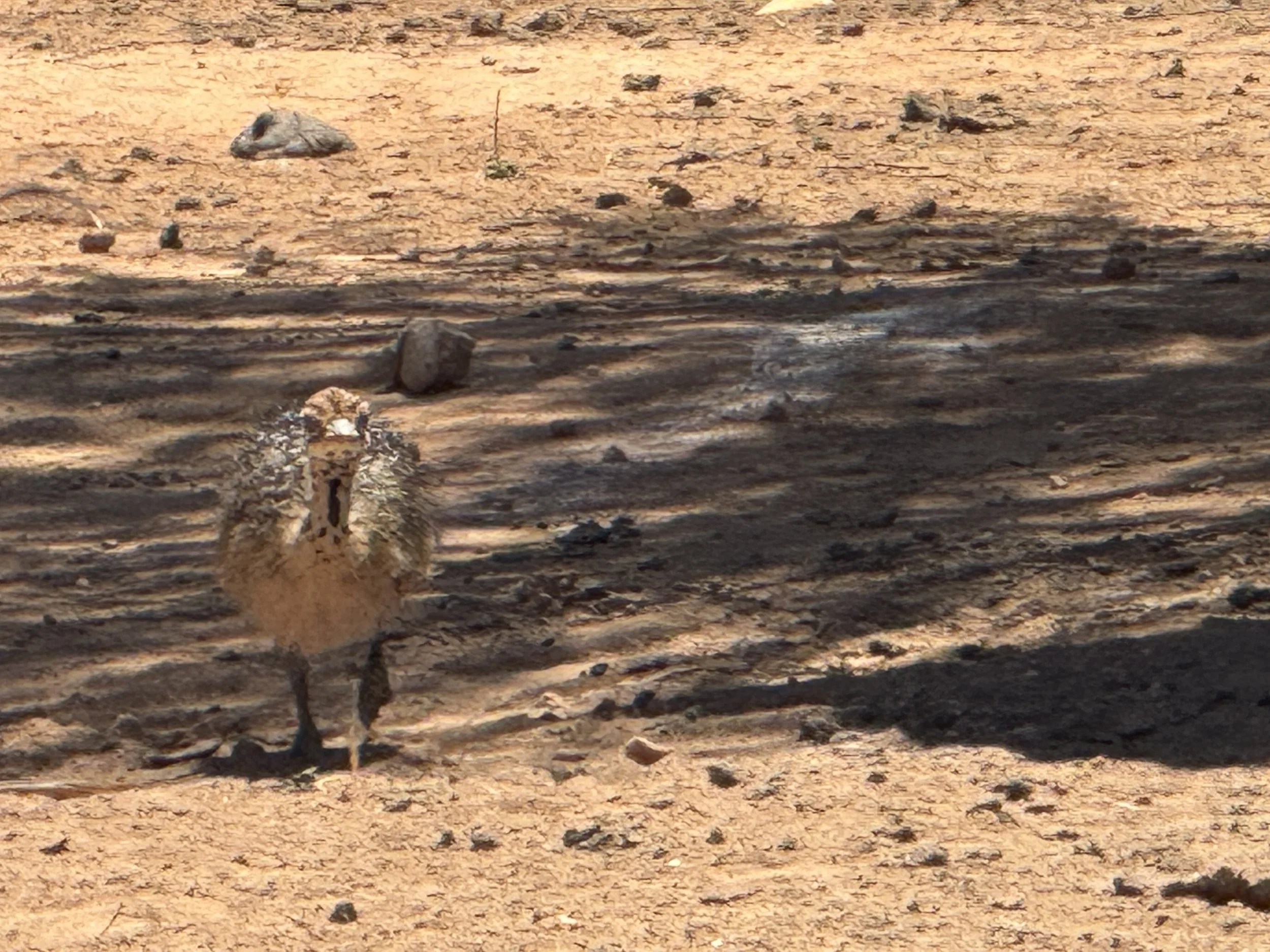
Baby Ostrich
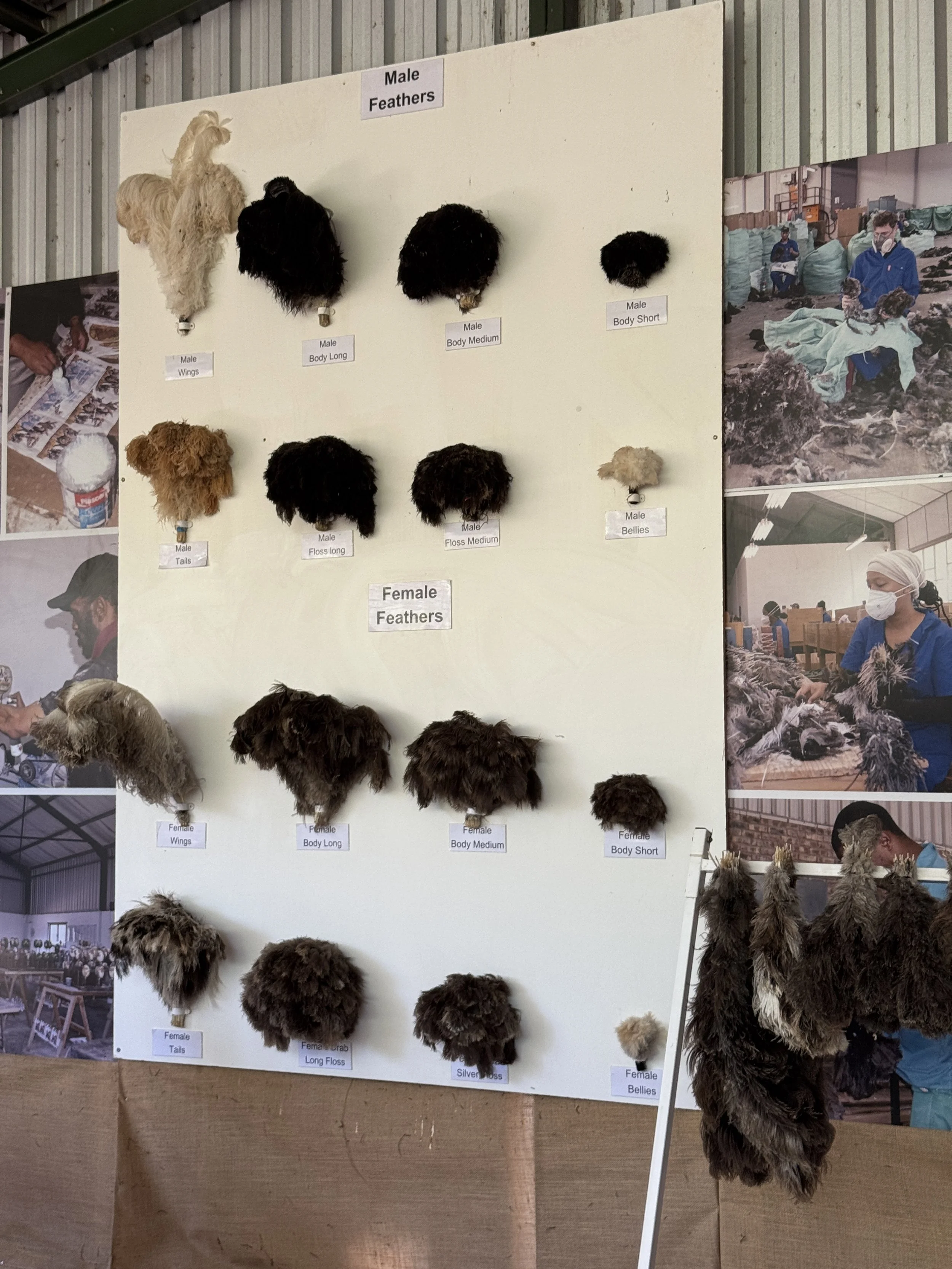
We gather together for a short talk where our guide shares more about ostriches and their surprisingly fascinating biology. One of the highlights is a demonstration of just how strong their eggshells are. To prove the point, someone from our group carefully stands on a cluster of eggs without cracking them. It’s impressive to see firsthand just how durable they are. From there, we head into one of the buildings for a deeper dive into all things ostrich. We learn about their breeding process, how their feathers are used, and how their skin is turned into leather. It’s interesting to discover how many different industries rely on these birds. By the end of the tour, it’s clear there’s a lot more to ostriches than just their size and speed.
We wrap up our time at the farm with a relaxed lunch in a beautiful outdoor setting. Long tables & fresh air make it the perfect spot to sit back after the tour. Since we’re at an ostrich farm, it’s only fitting that ostrich is on the menu. Lunch features an ostrich steak and sausage, both surprisingly delicious. The meal is rounded out with a hearty lentil soup, a crispy corn fritter that reminds me of a hush puppy, and a scoop of pasta salad. It’s a well-balanced spread and definitely satisfying after a busy morning. With full bellies and no complaints, we make a quick stop at the farm shop to pick up a few ostrich-themed products before piling back in and heading down the road to our next stop.
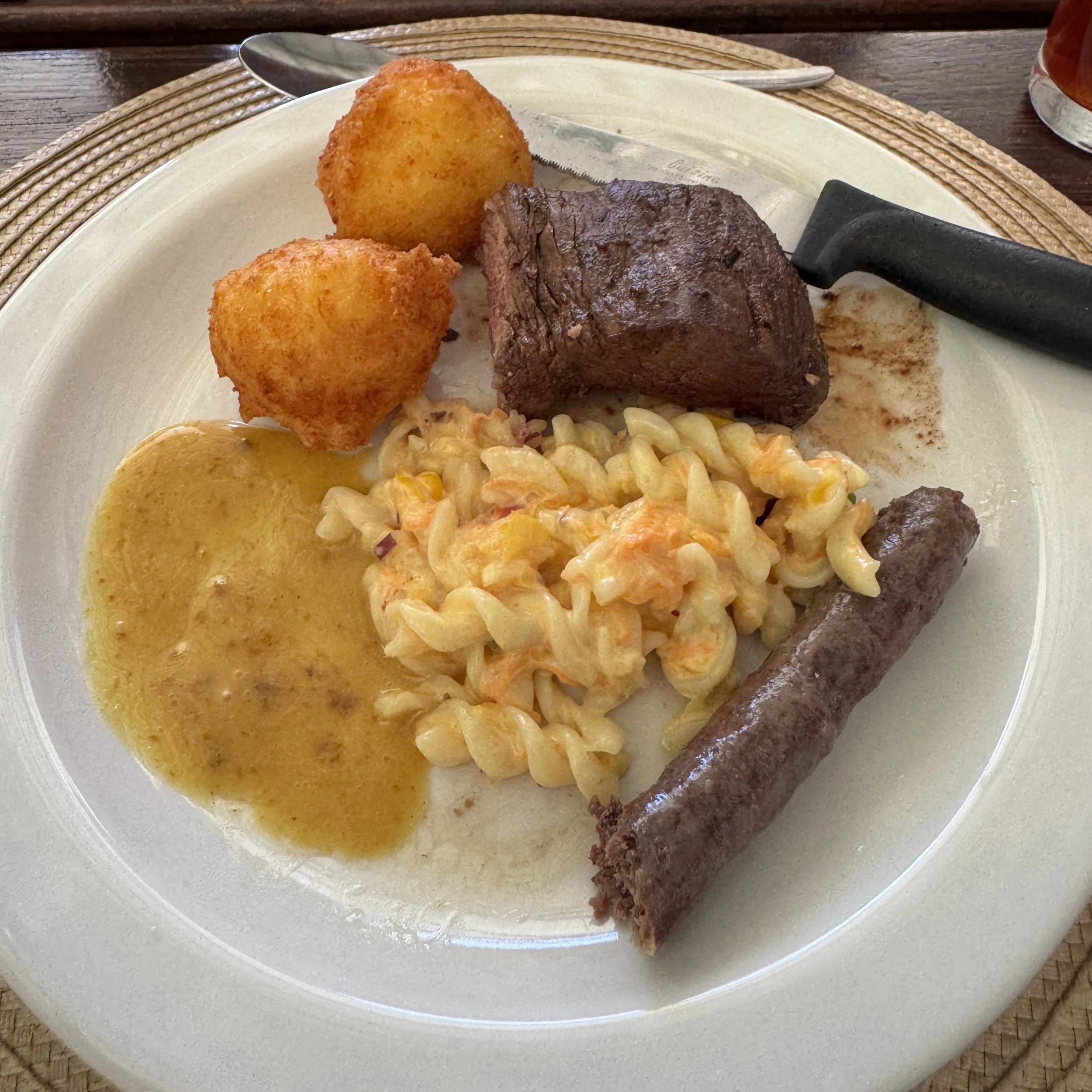
Ostrich steak and sausage lunch
A small navigational mishap adds an extra 70 kilometers to our drive when we miss a turn on the way out of Oudtshoorn. No big deal, though. The countryside is beautiful, and the unexpected detour just gives us a little more time to take it all in. With Google’s help, we eventually get ourselves pointed in the right direction. We pull into the campground, Woodbourne Holiday resort in Knysna, just in time for the next briefing—and surprisingly, we aren’t even the last to arrive. The setting is stunning once again, surrounded by nature. As a bonus, there’s even an owl nesting right in the campground, which makes the place feel even more special. Not a bad spot to end the day.
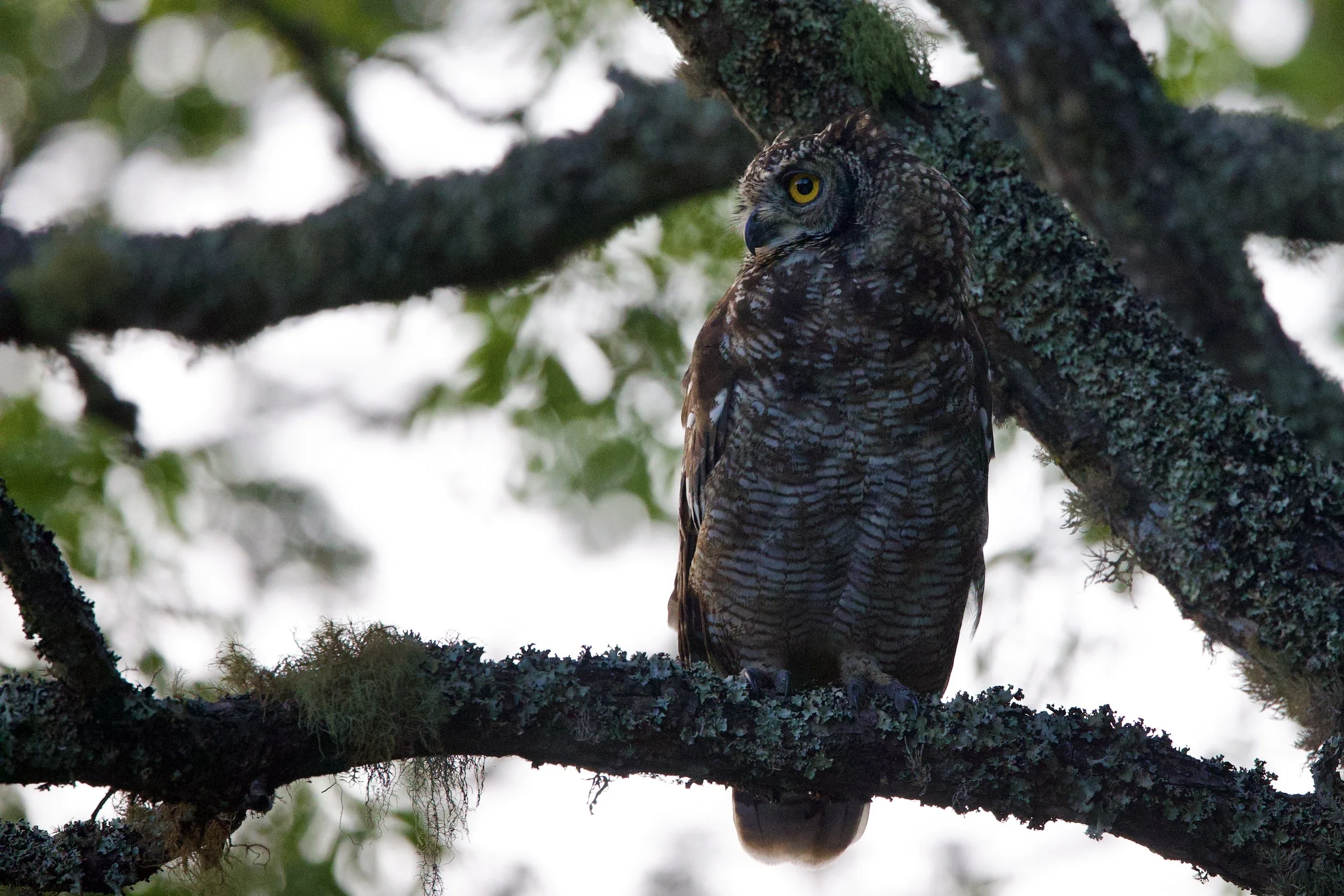
Spotted eagle-owl
Monday morning comes with another early start. We’re pulling out of the campsite at 7 a.m. sharp, headed for an organized stop at Knysna Elephant Park. Our visit begins with a short video and a safety briefing. One rule in particular stands out: don’t bend down. Apparently, elephants interpret that posture as a threat since many predators crouch before they attack. It’s a simple instruction, but one that makes you very aware you’re about to stand face-to-face with some very large animals. We’re handed buckets again—this time filled with fruits and vegetables—and climb aboard another tractor-pulled tram that takes us out into the field.
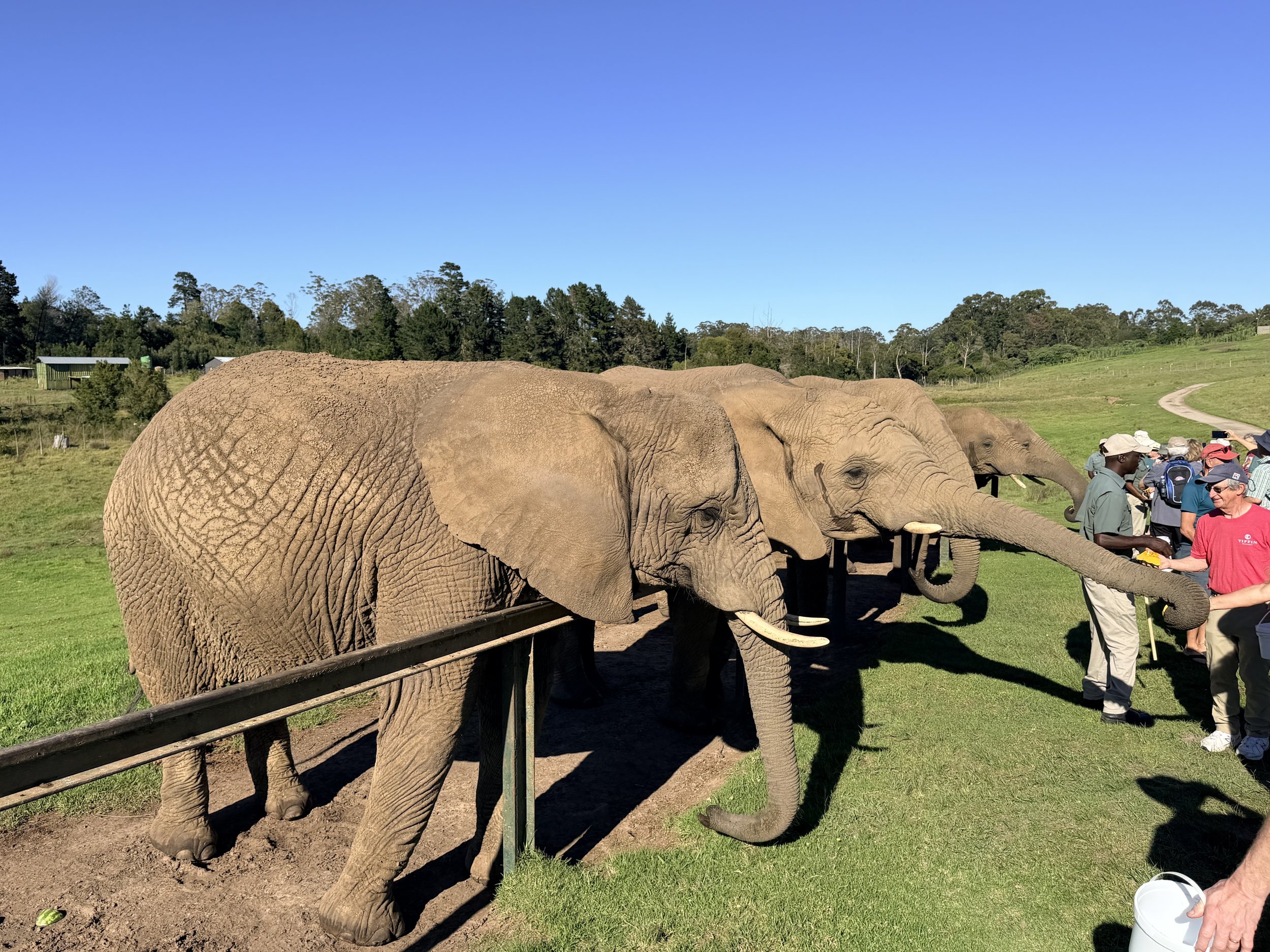
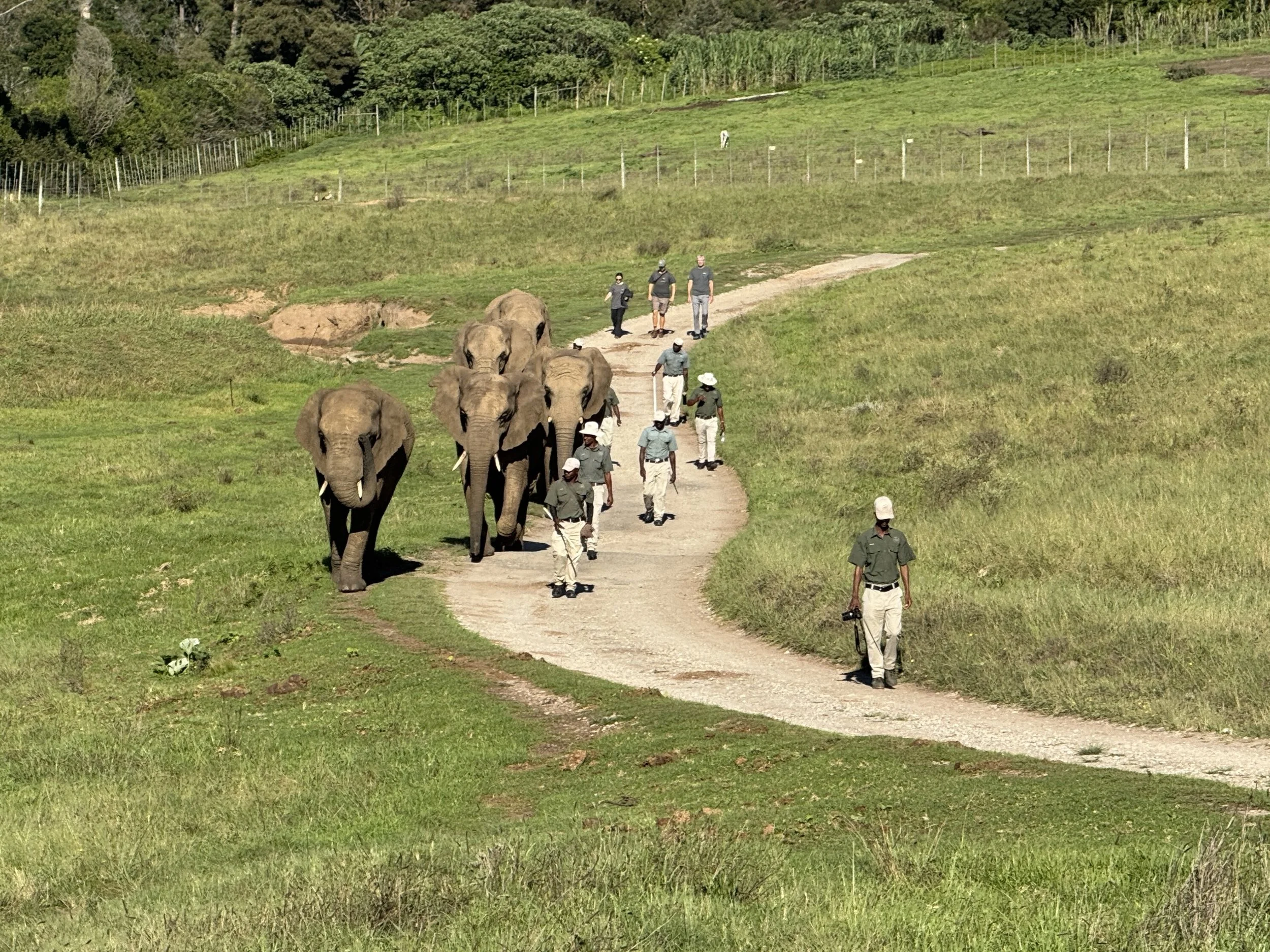
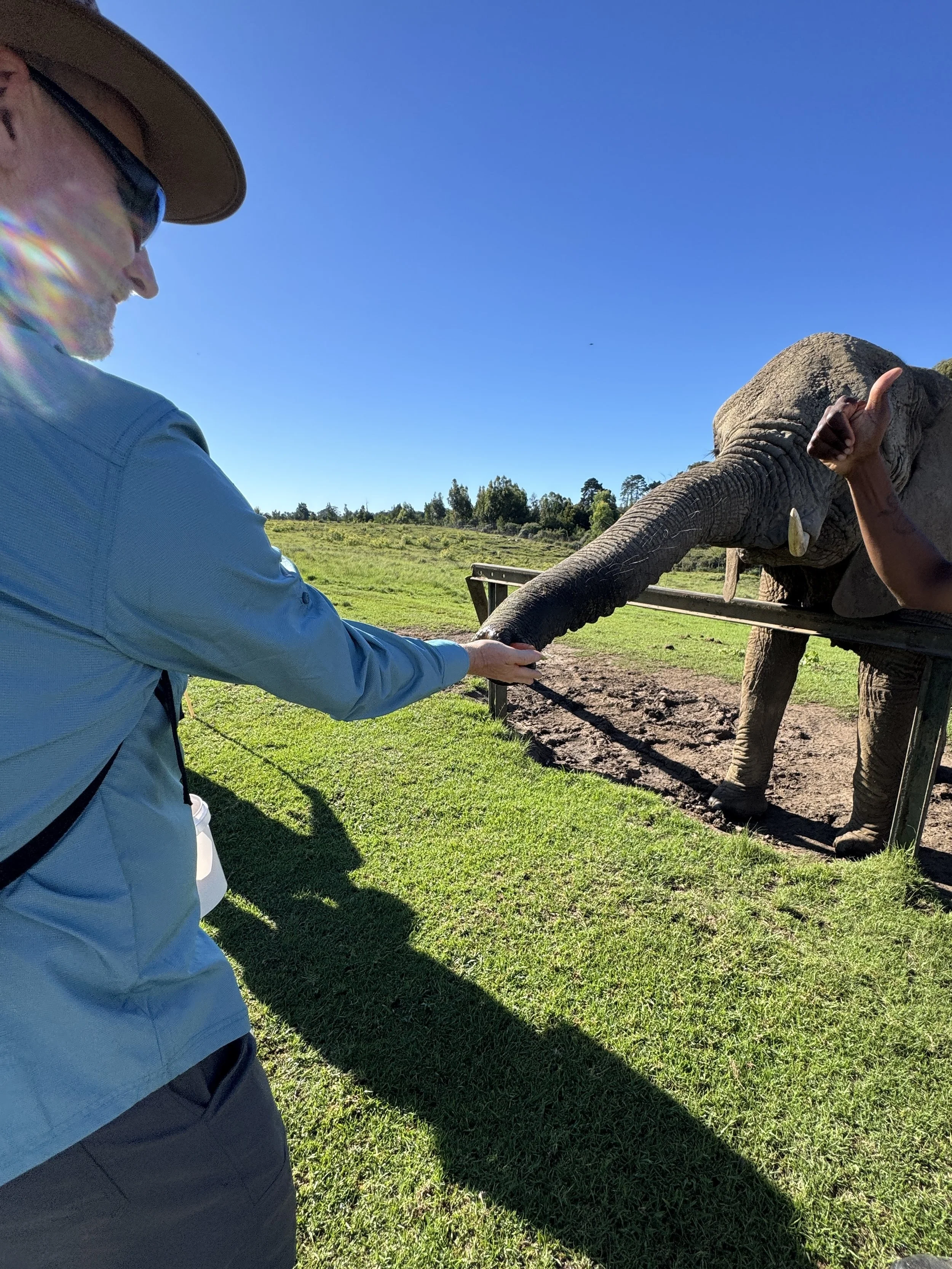
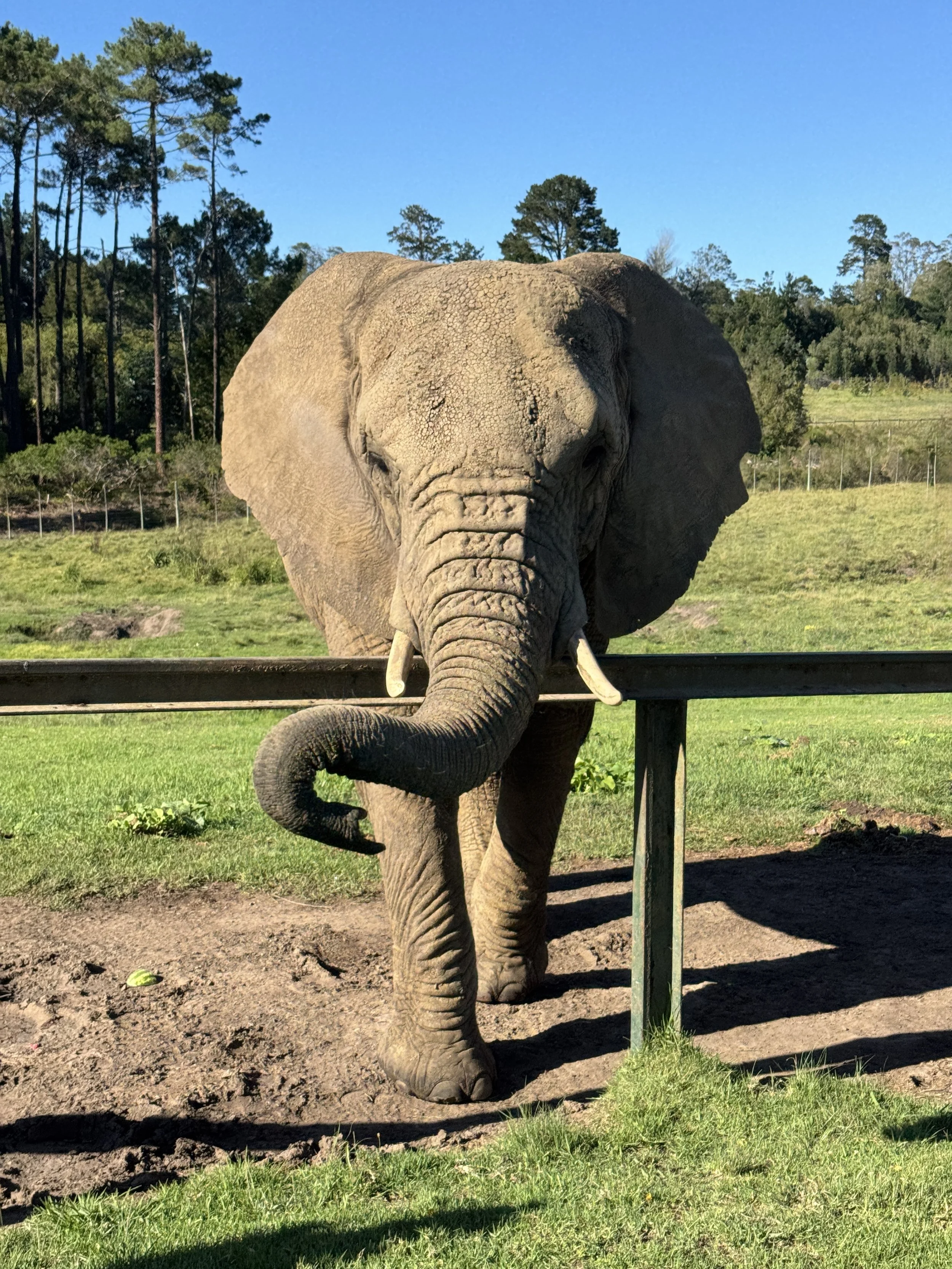
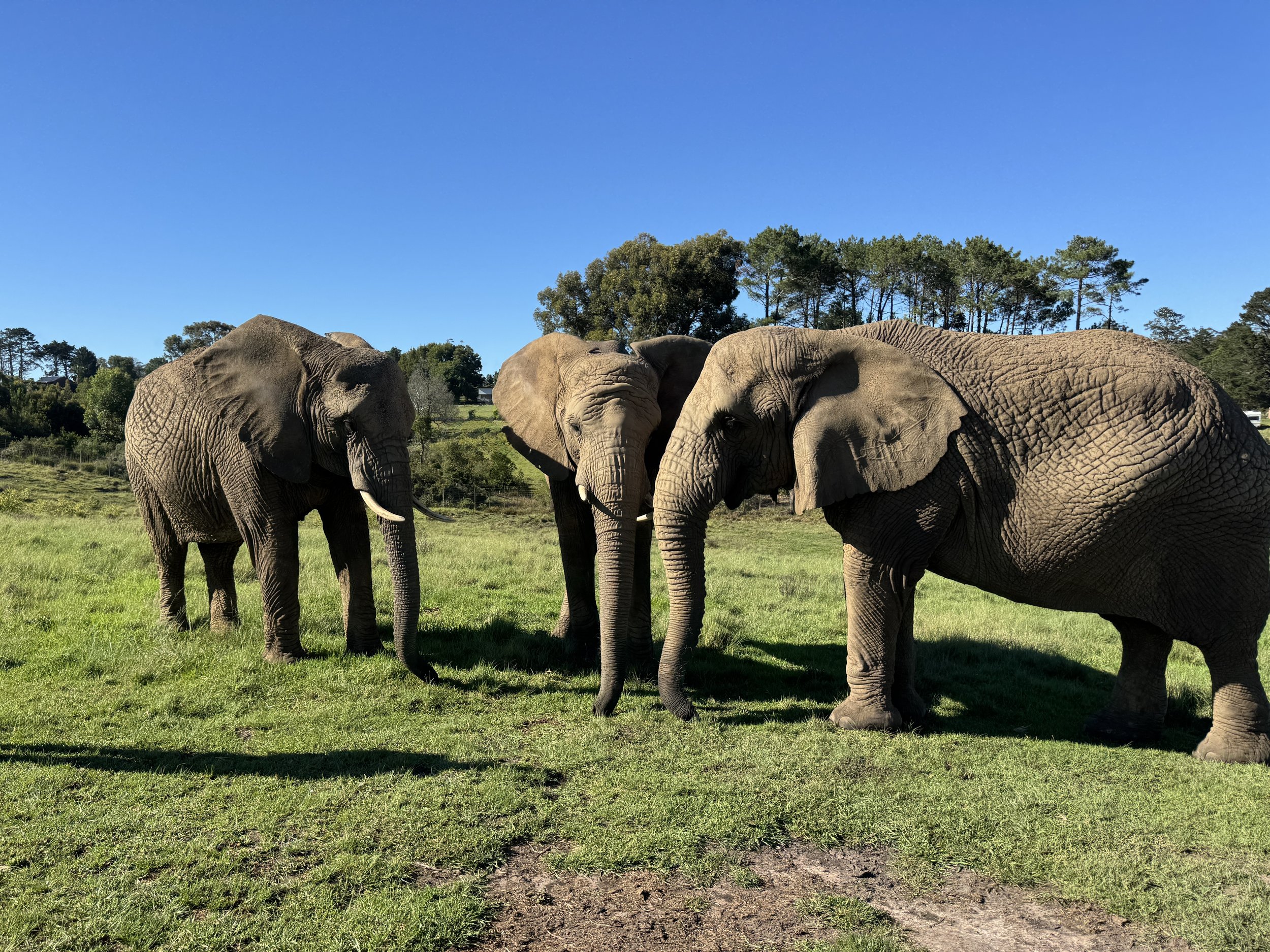
There are five female elephants in this group. With the help of the guides, they walk over to a low railing and line up behind it. Clearly, they’ve done this before. On the other side, we form our own line. One by one, we step forward holding out a piece of fruit or vegetable flat in the palm of our hand. Each elephant reaches out with her trunk to take the food. You can feel the rough texture of their skin, the strength and precision in the trunk, and occasionally a puff of warm breath as they grab their snack.
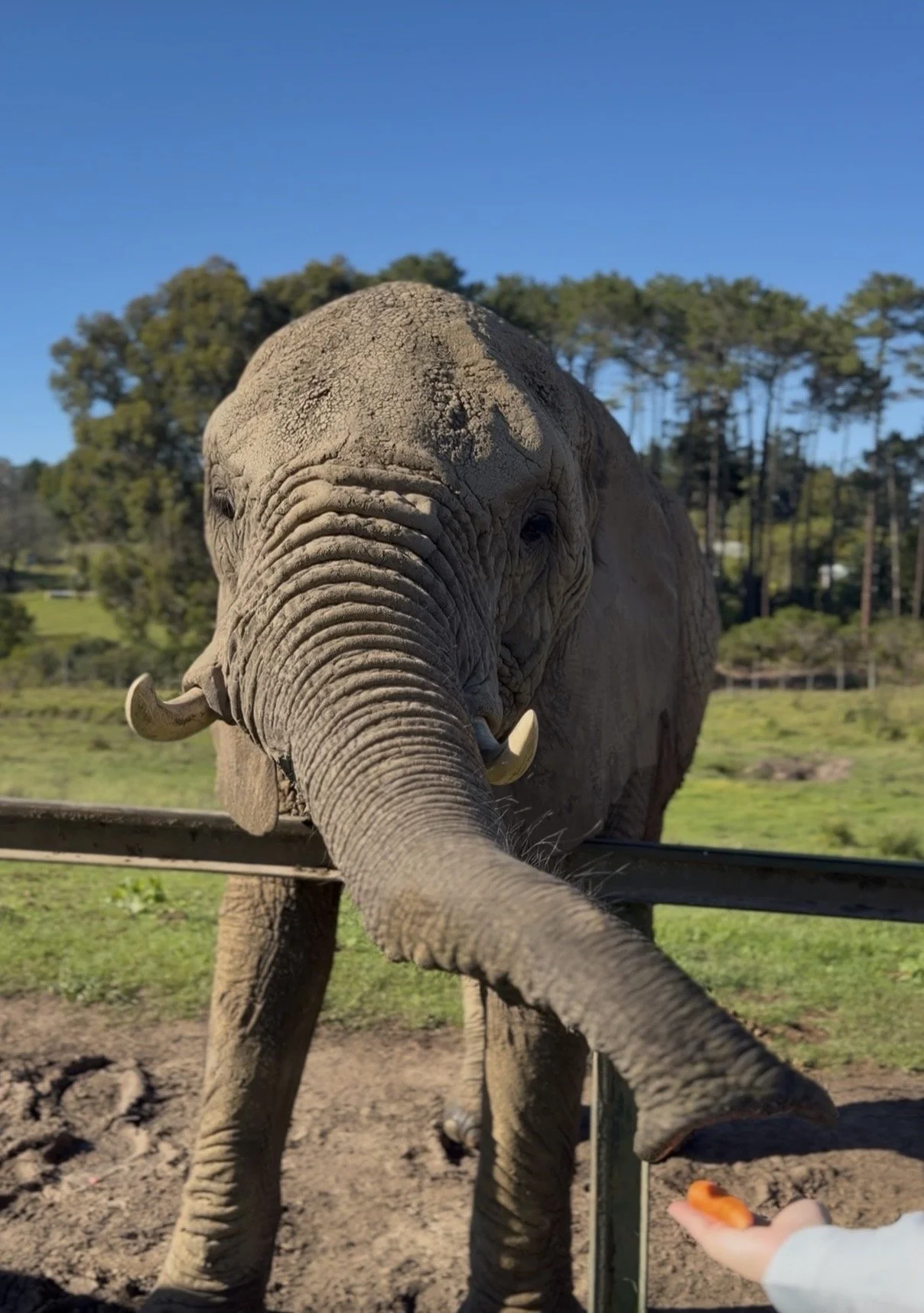
me feeding the elephant a carrot
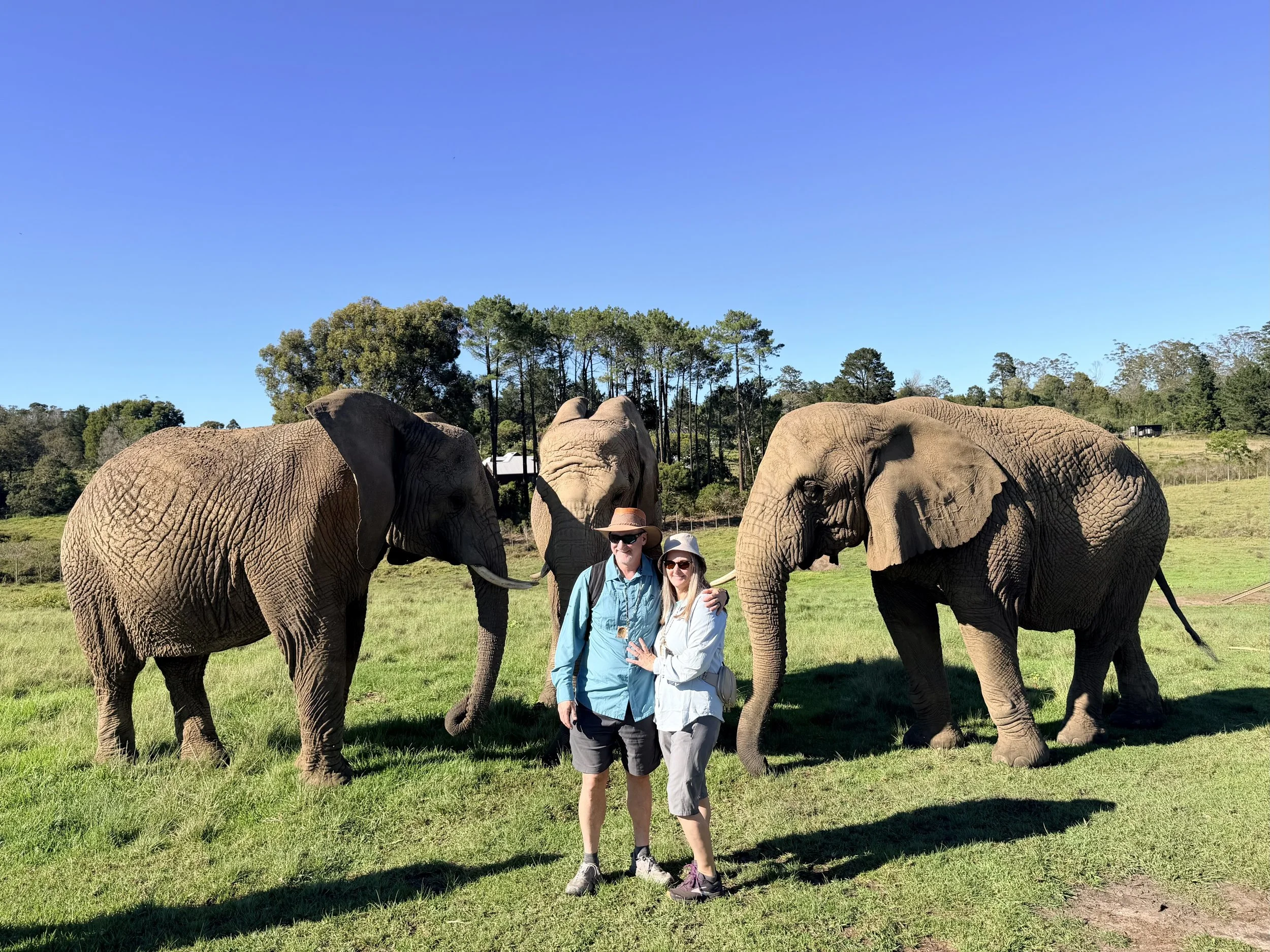
To top it all off, the guides bring three of the elephants out from behind the railing so we can get even closer. One by one, we step up for photos, standing beside these massive, gentle animals. Being that close—without the barrier—makes the experience feel even more surreal. It’s the kind of moment that calls for a camera, not just for the picture, but to help remember what it felt like to stand next to something so powerful and calm at the same time. It’s an incredible experience—intimate, humbling, and absolutely worth the early wake-up call.