Elephants & Zebras, Oh My
Fantasy South Africa RV Safari #6
On day 10 of our trip, we really started diving into the wildlife side of things. After leaving Tsitsikamma, we made our way to Addo Elephant National Park. The park is huge—covering about 633 square miles—which makes it the third-largest national park in South Africa. Only Kruger National Park and Kgalagadi Transfrontier Park are bigger. Needless to say, we were pretty excited to finally get into proper wildlife territory and see what animals we might spot. We spent three nights in the campground at Addo Elephant National Park, giving us lots of time to explore. And honestly, I could have easily stayed longer.
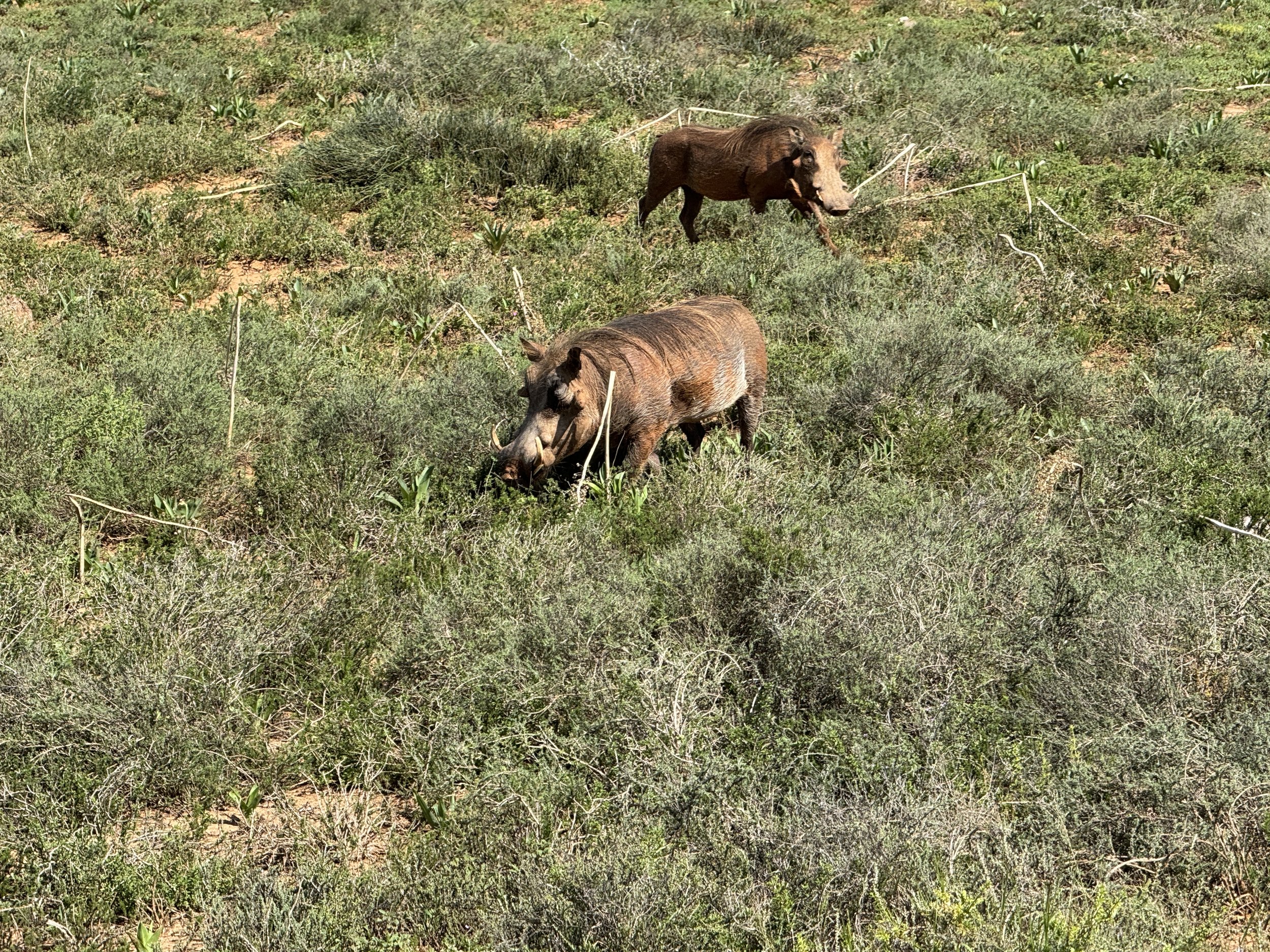
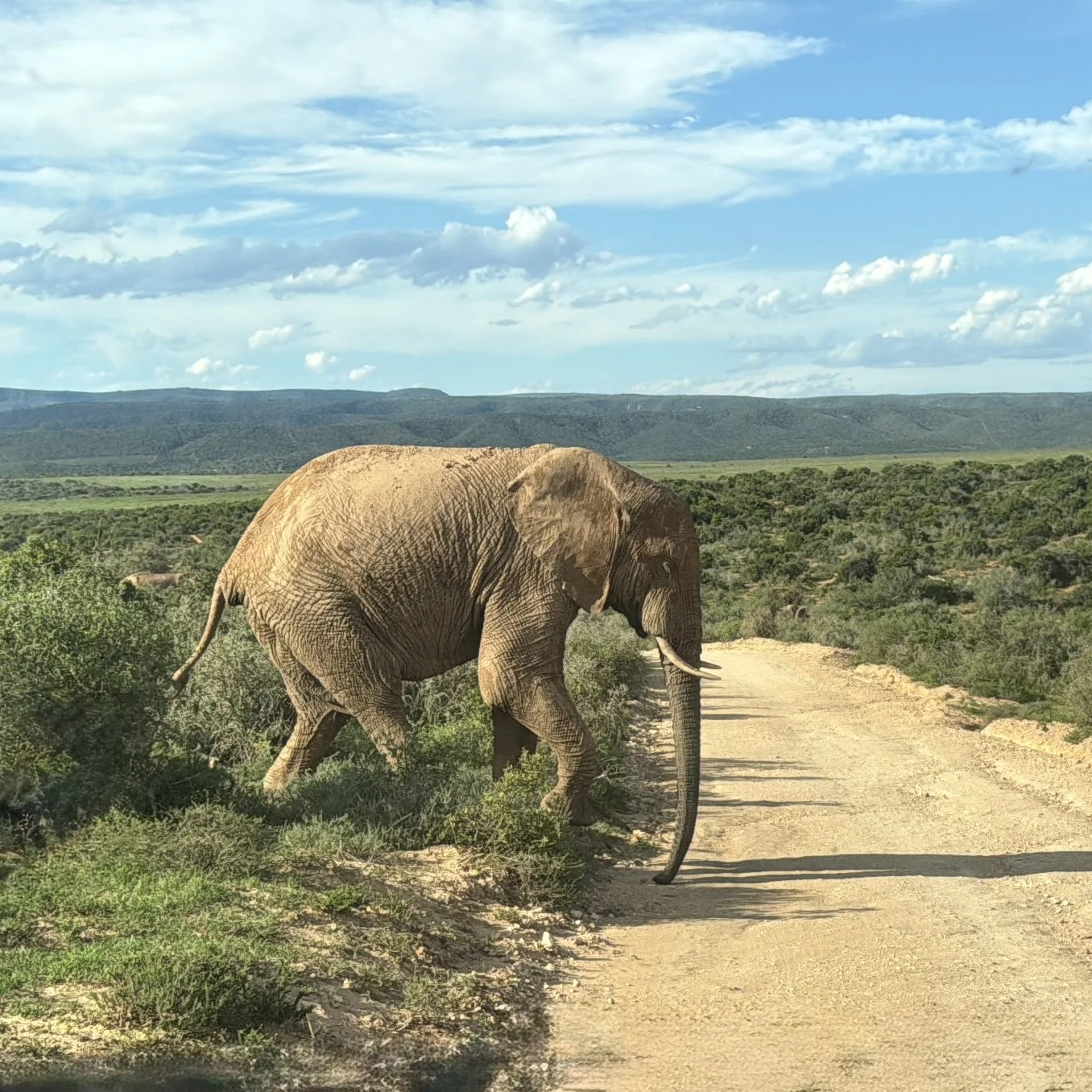
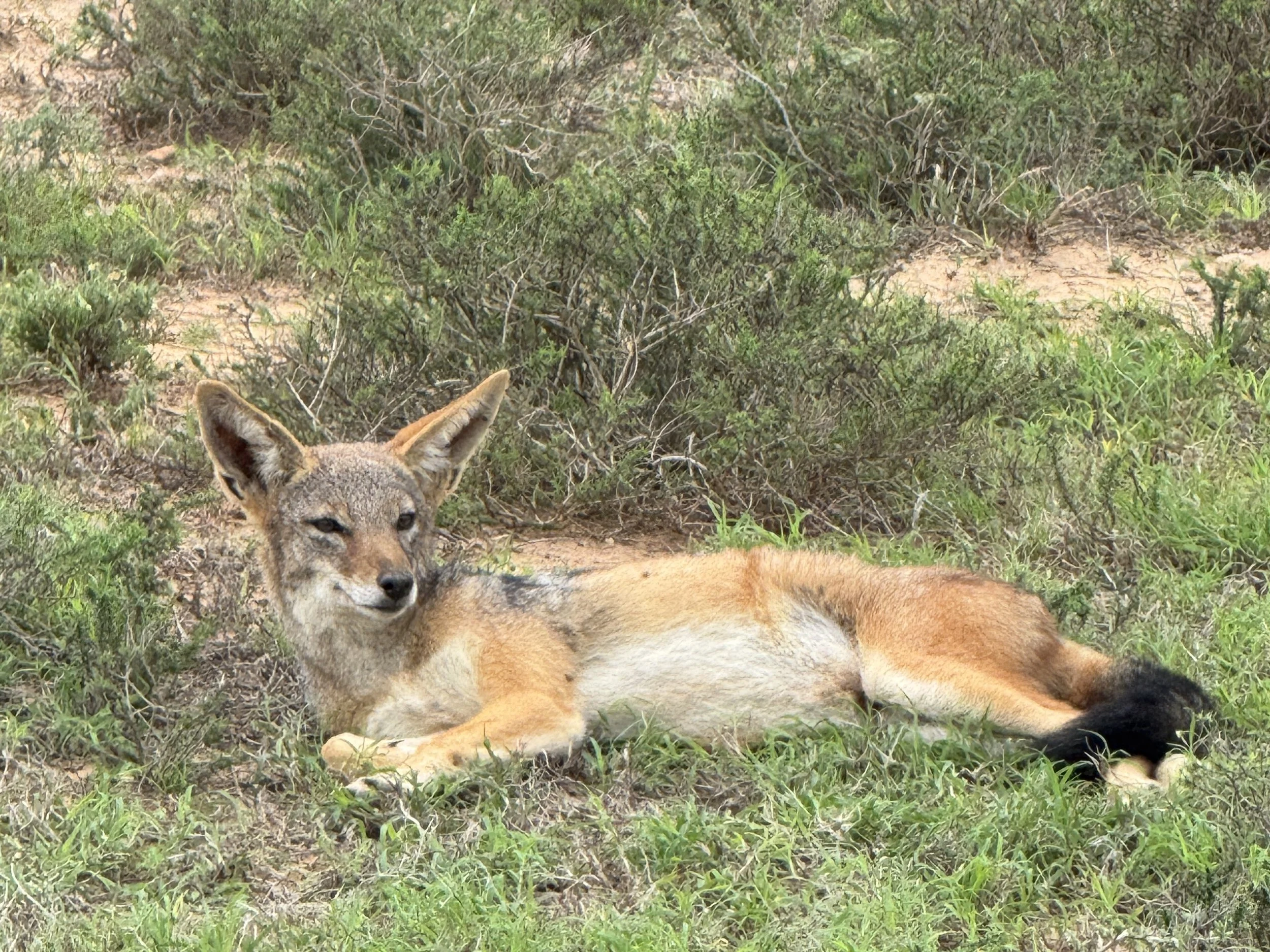
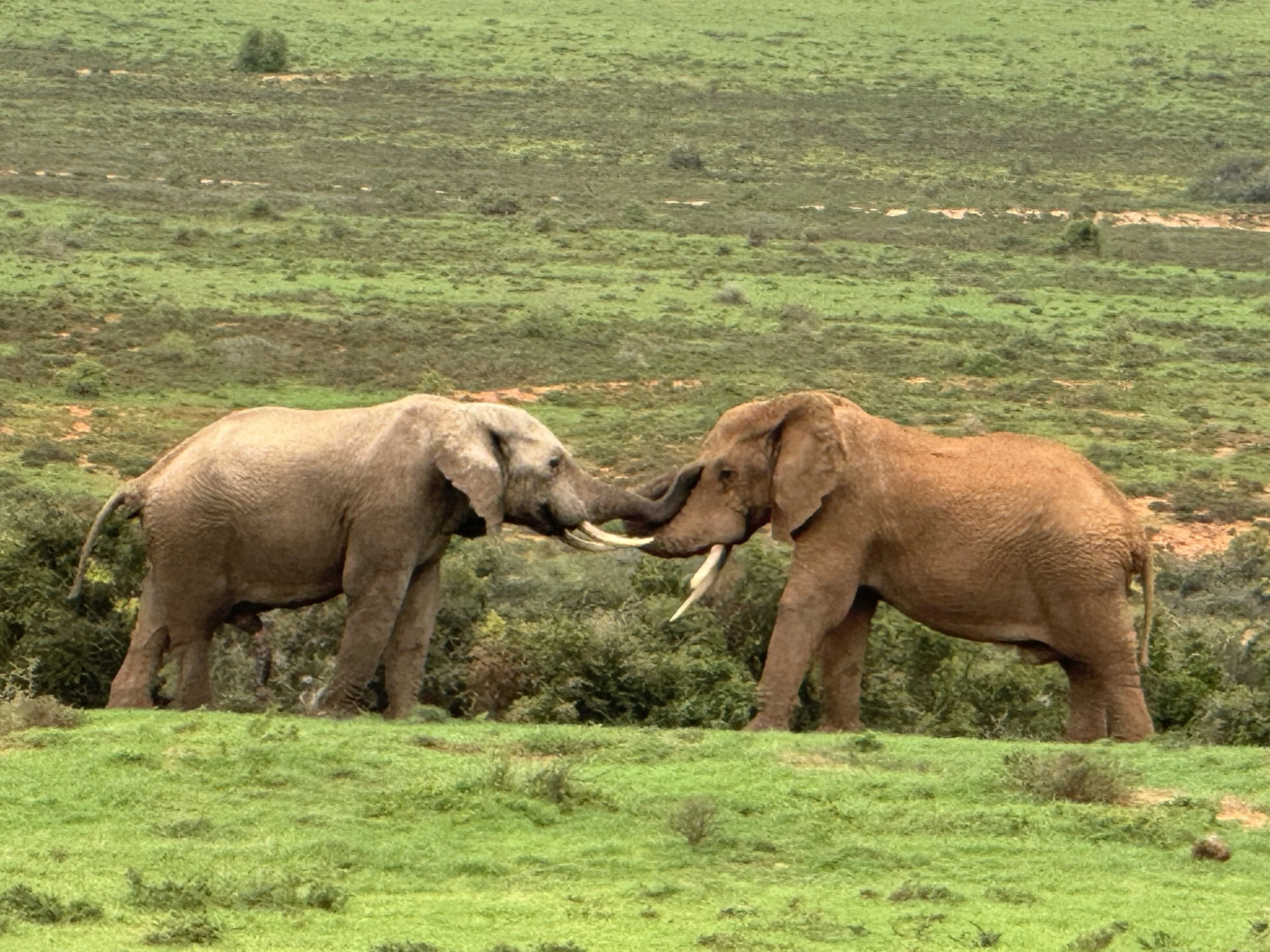
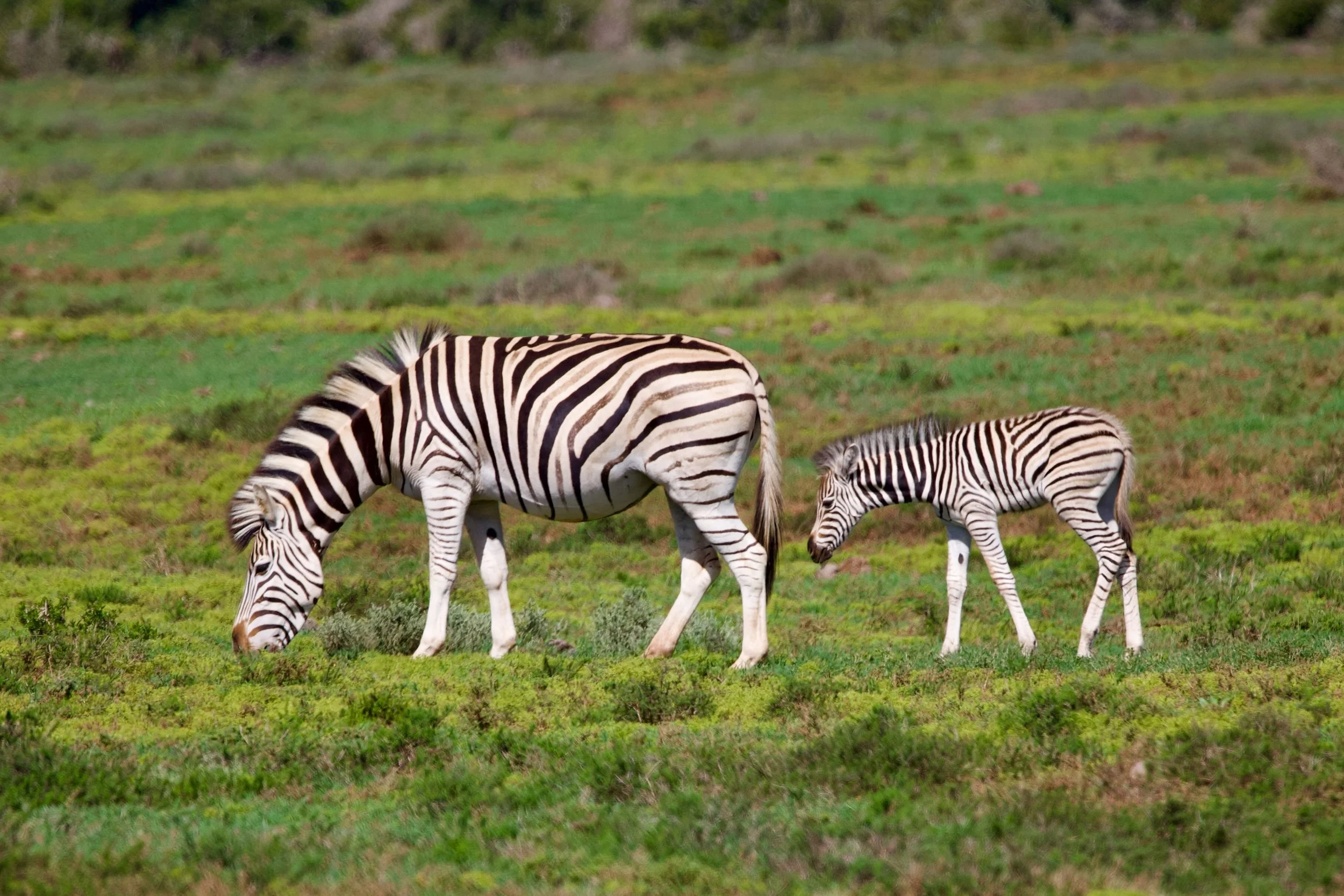
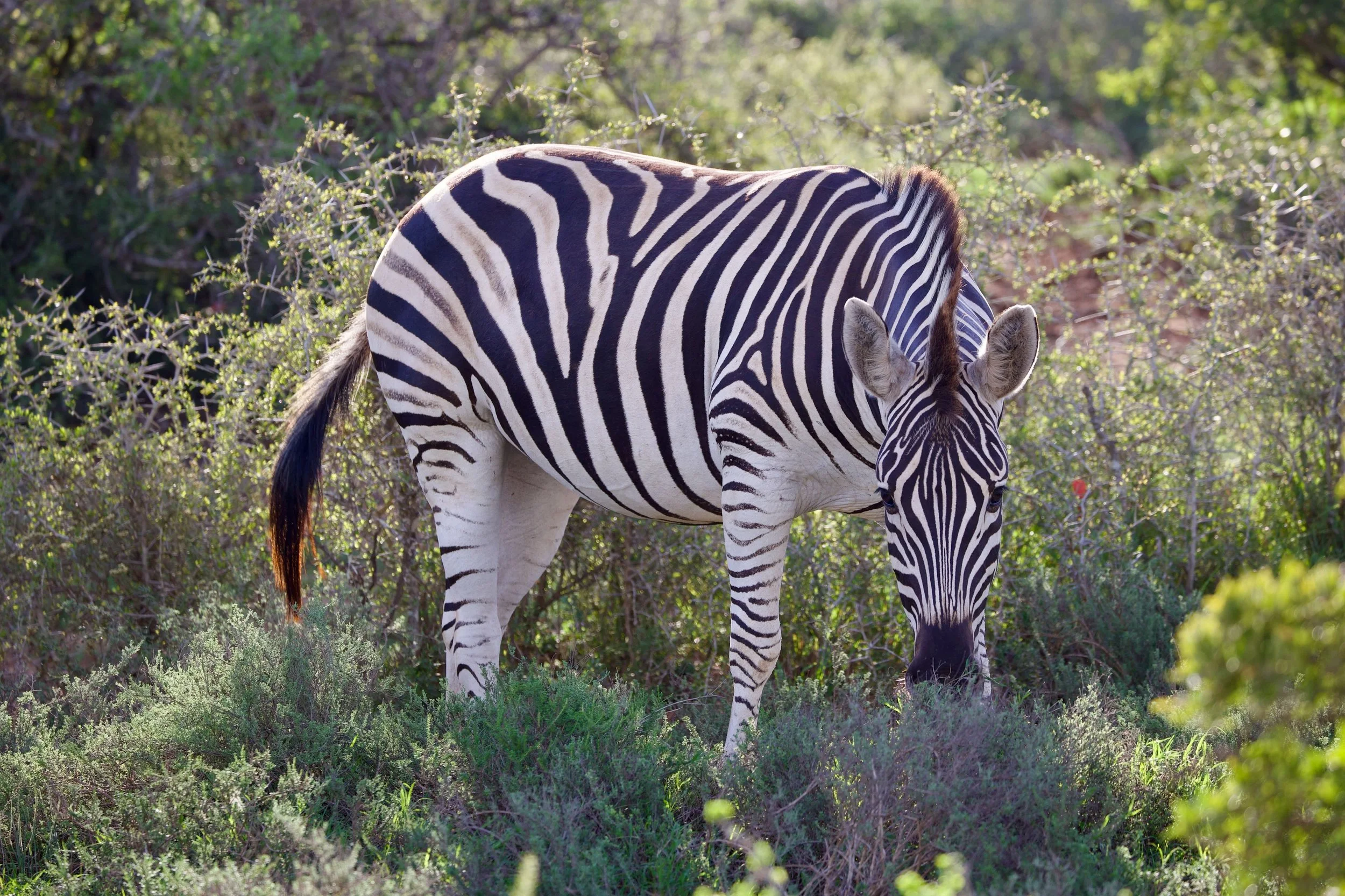
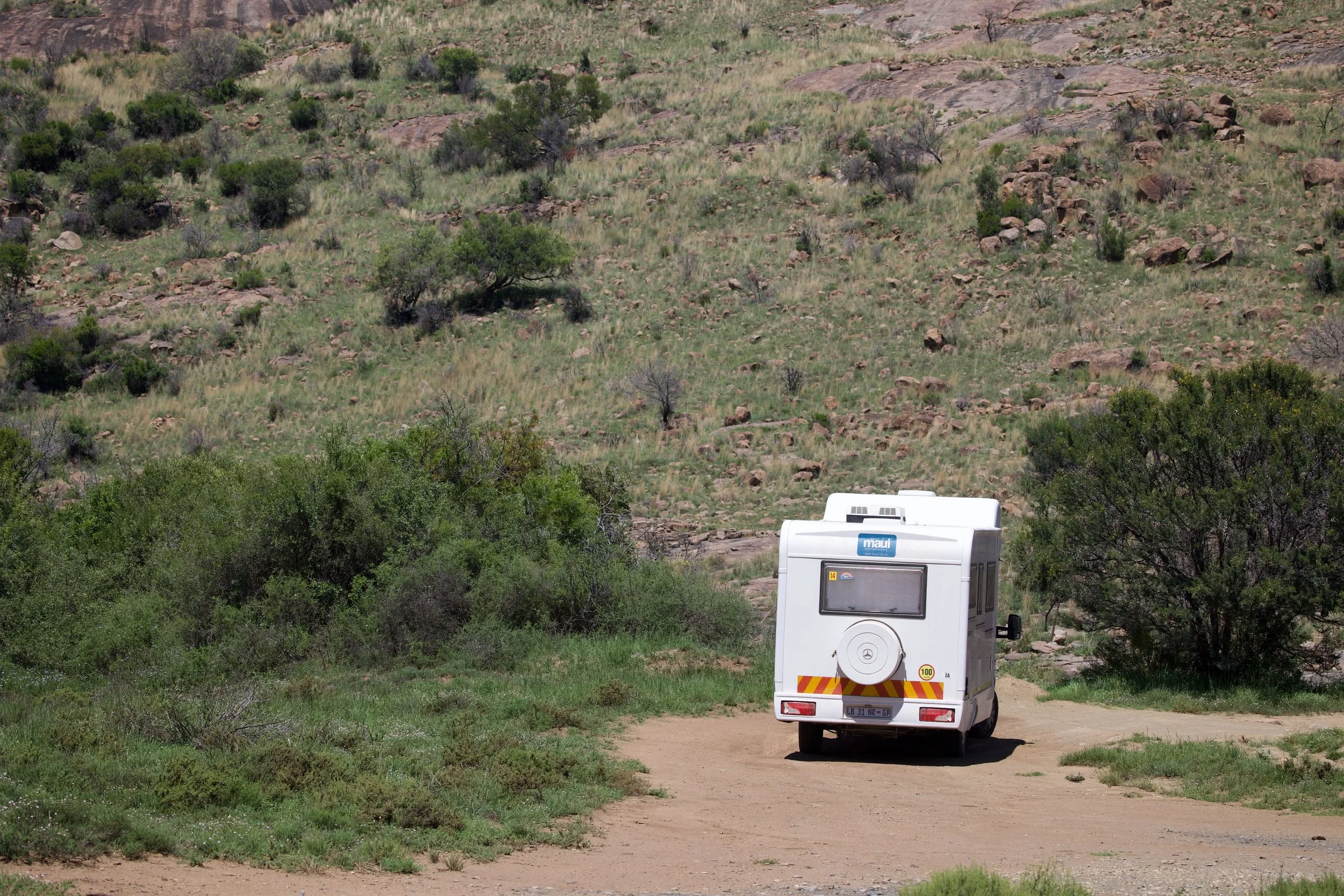
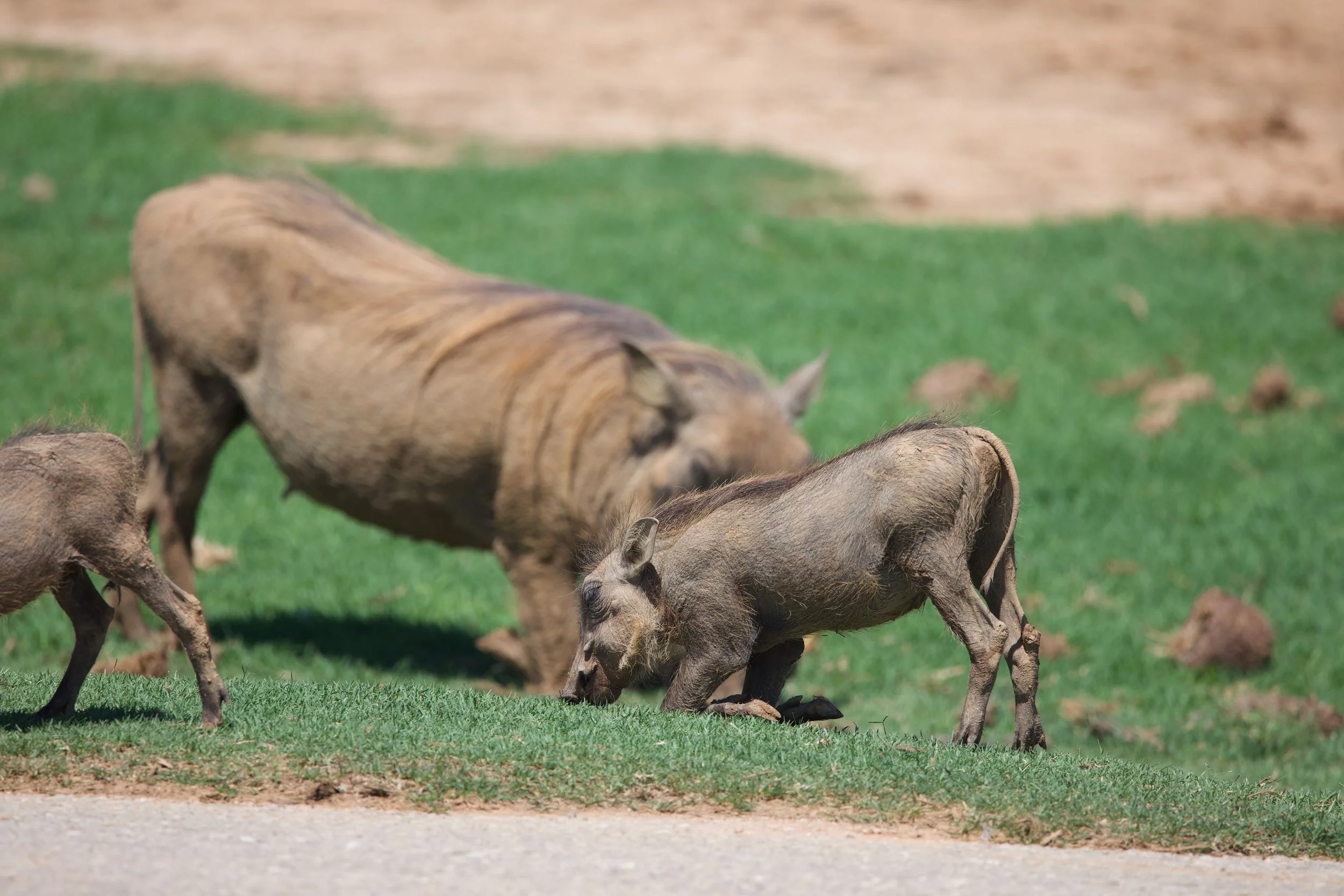
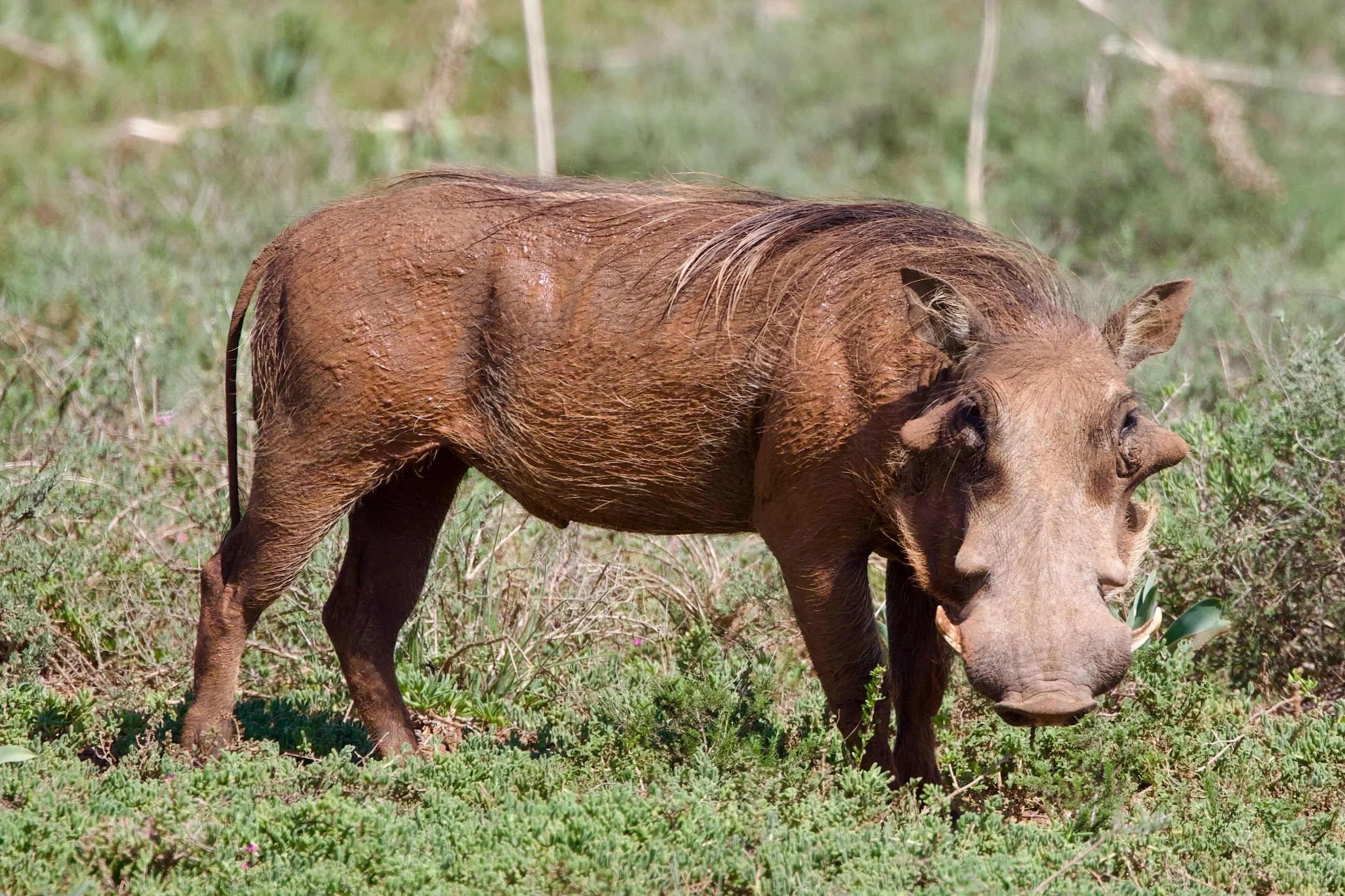
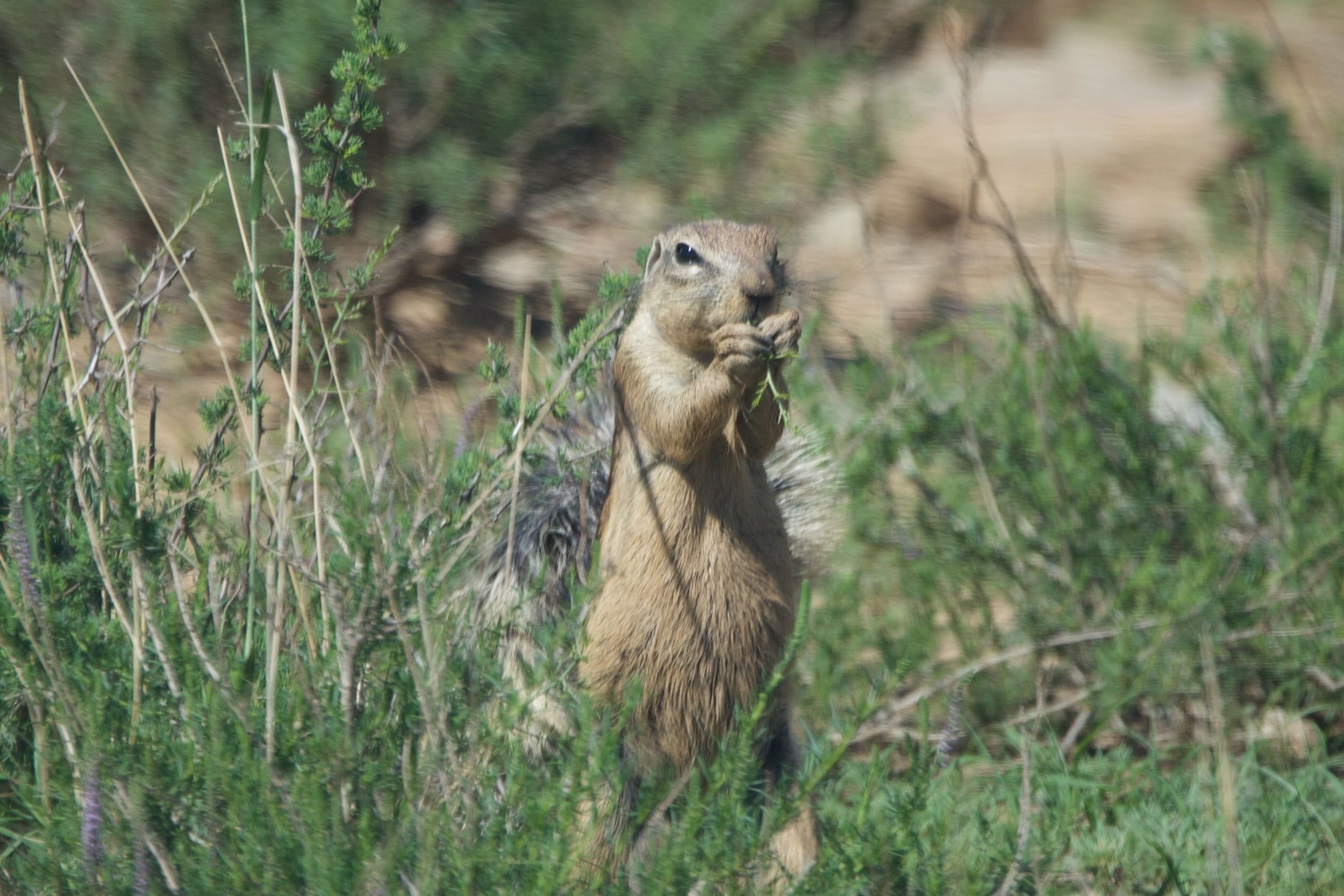
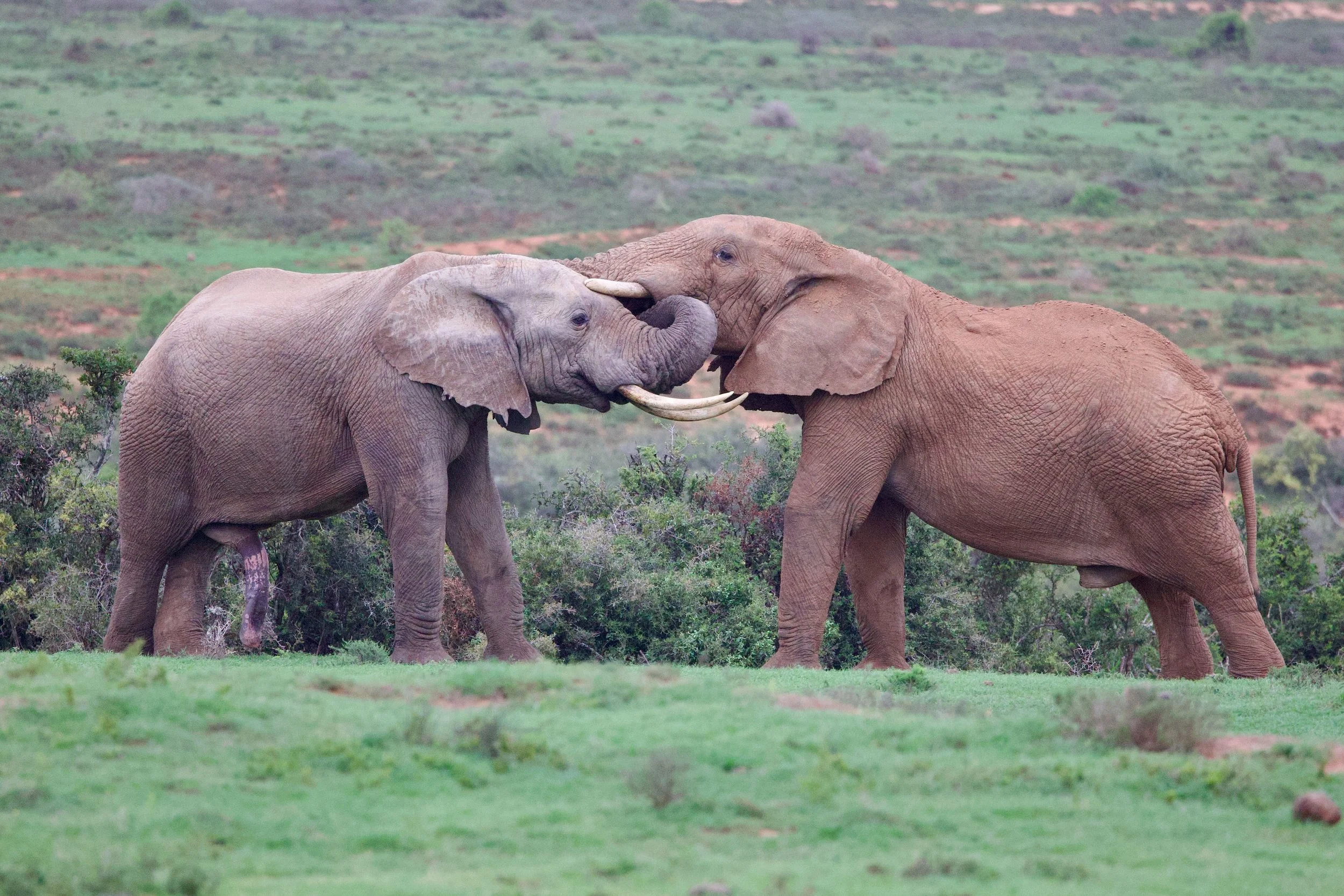
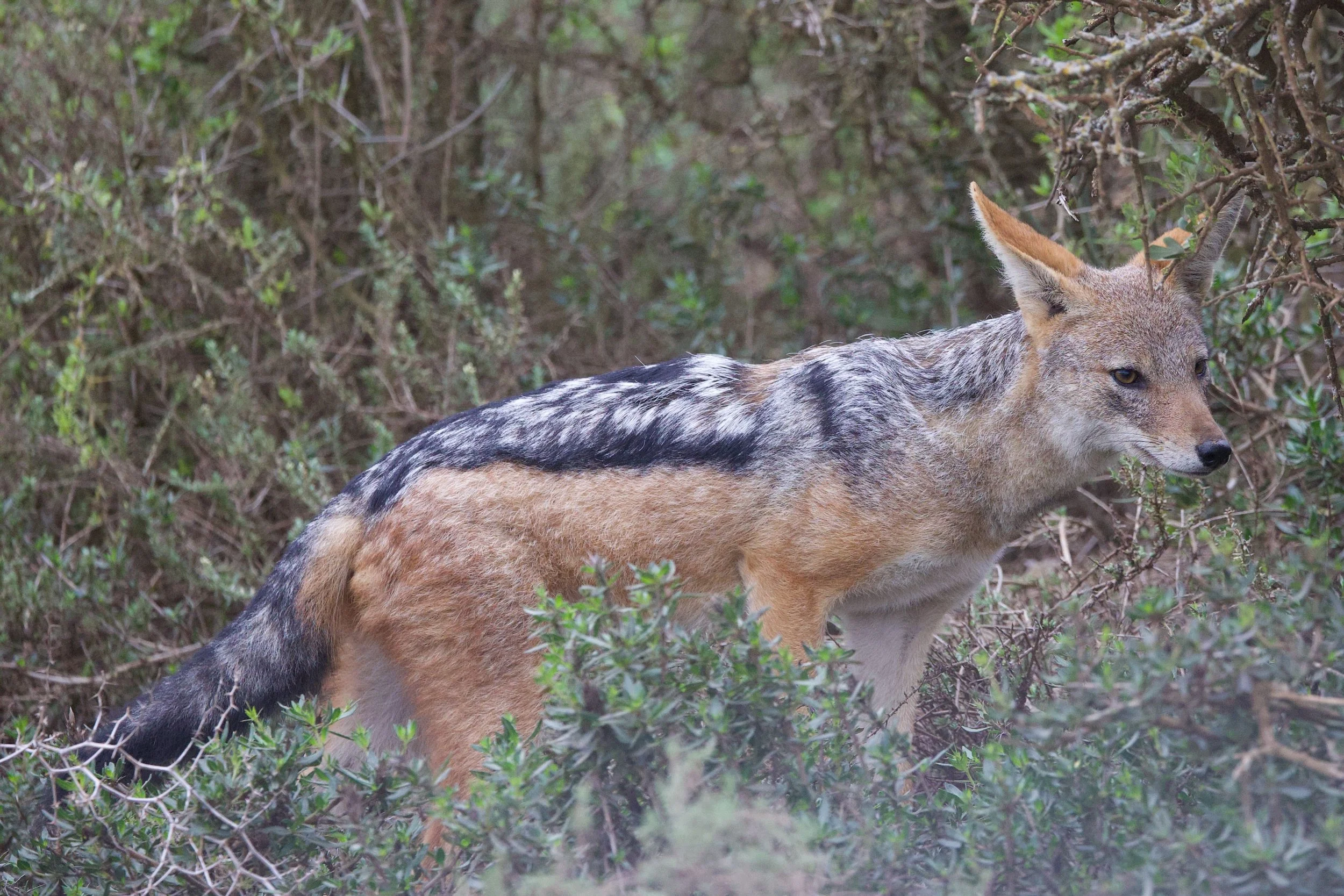
Most of our time was spent doing self-drive safaris, which felt a little funny at first in our big white campers bouncing along the dirt roads. But it quickly became one of the highlights of the trip. Everywhere we looked there seemed to be animals. We saw zebras grazing in the grass, warthogs wandering around, little mongooses and meerkats popping up, and of course the stars of the park—the elephants.
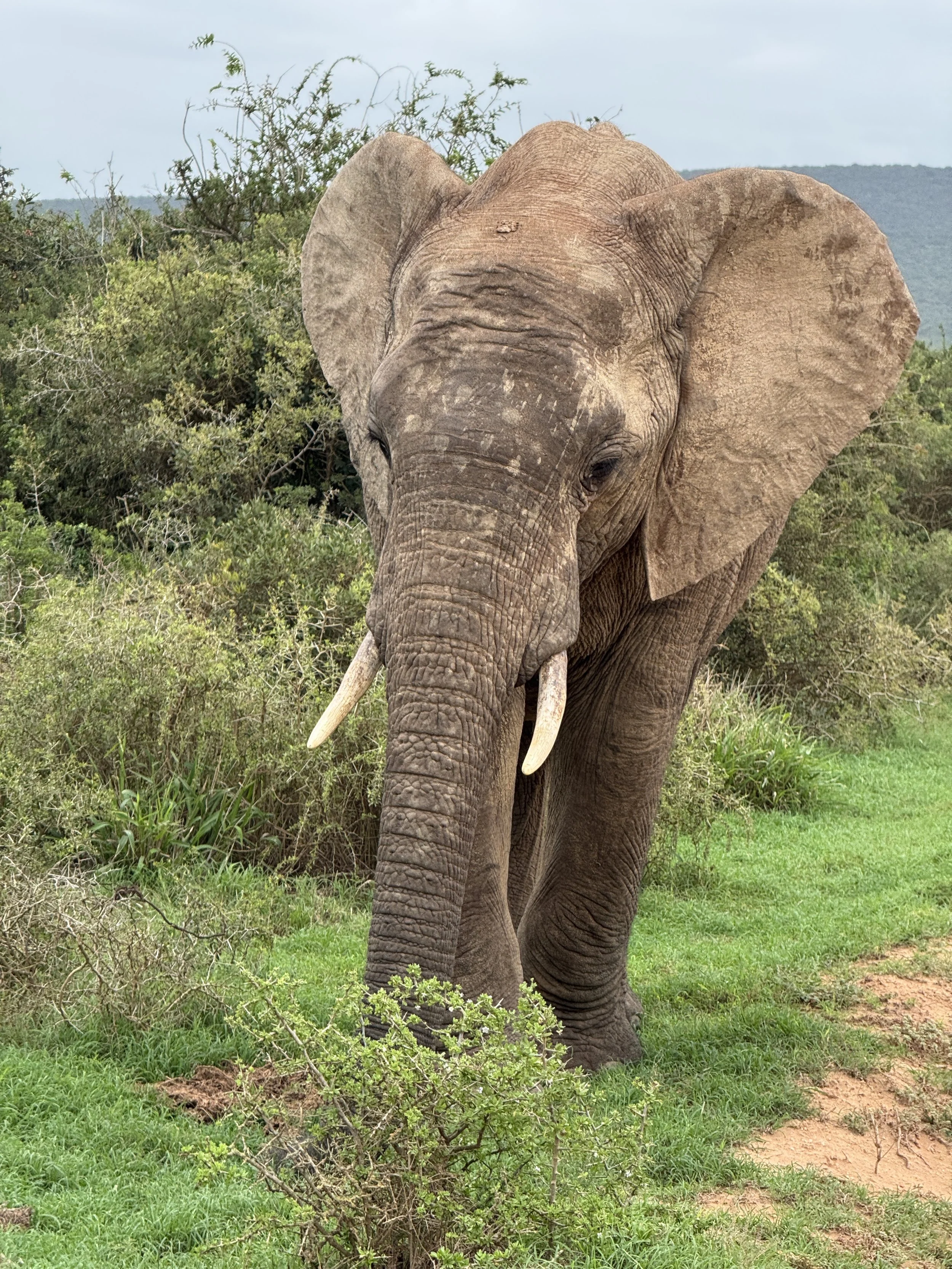
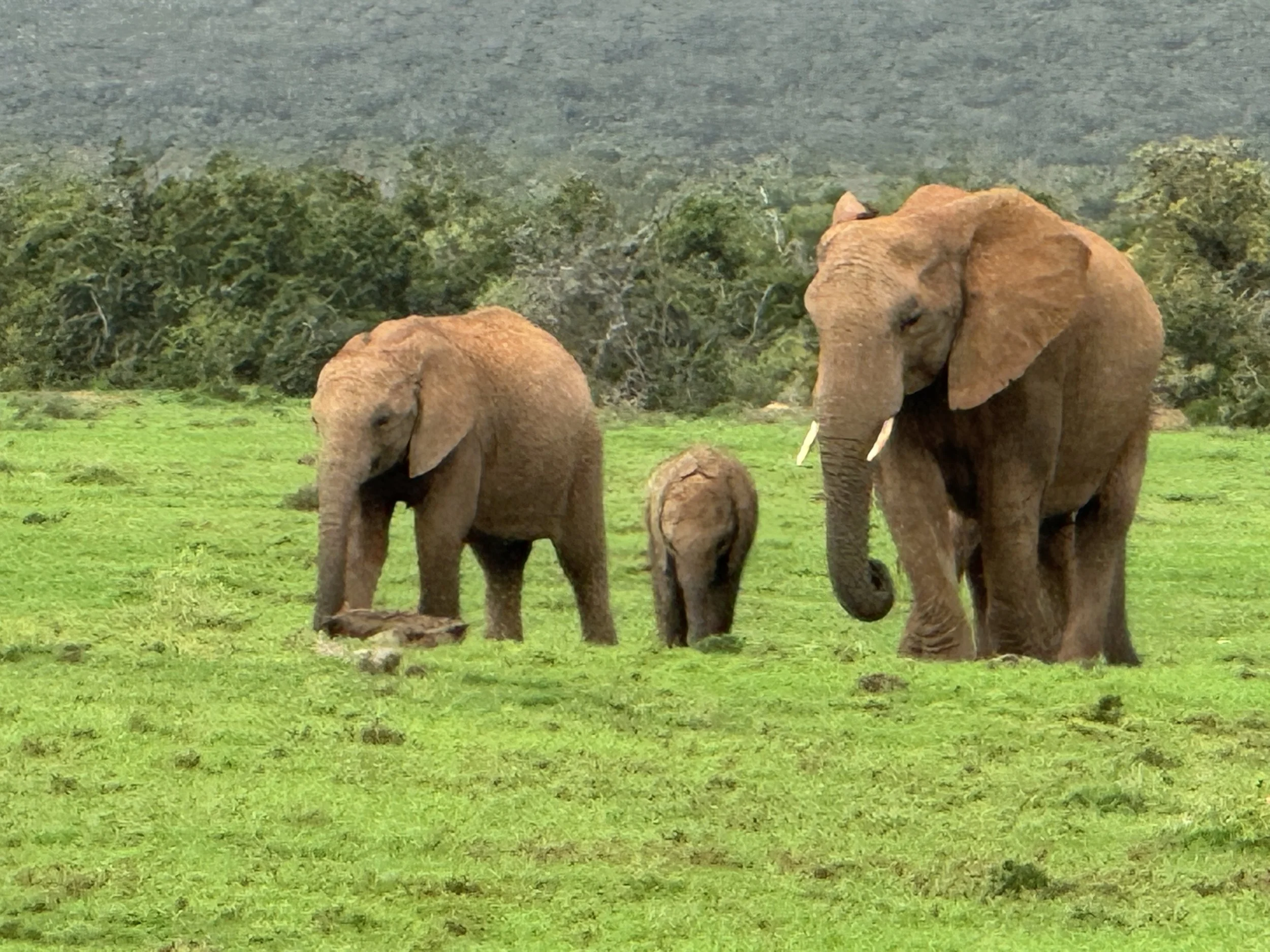
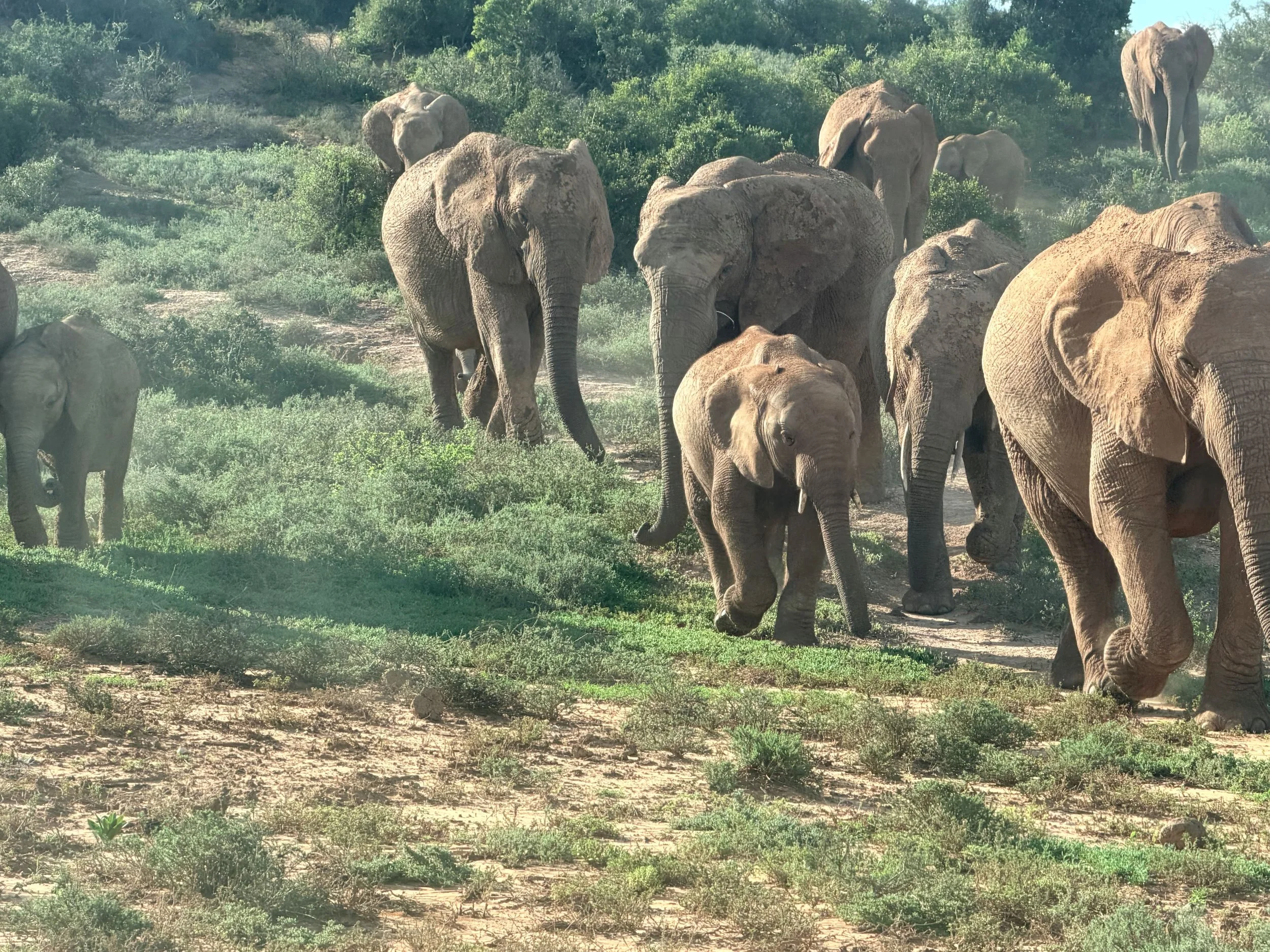
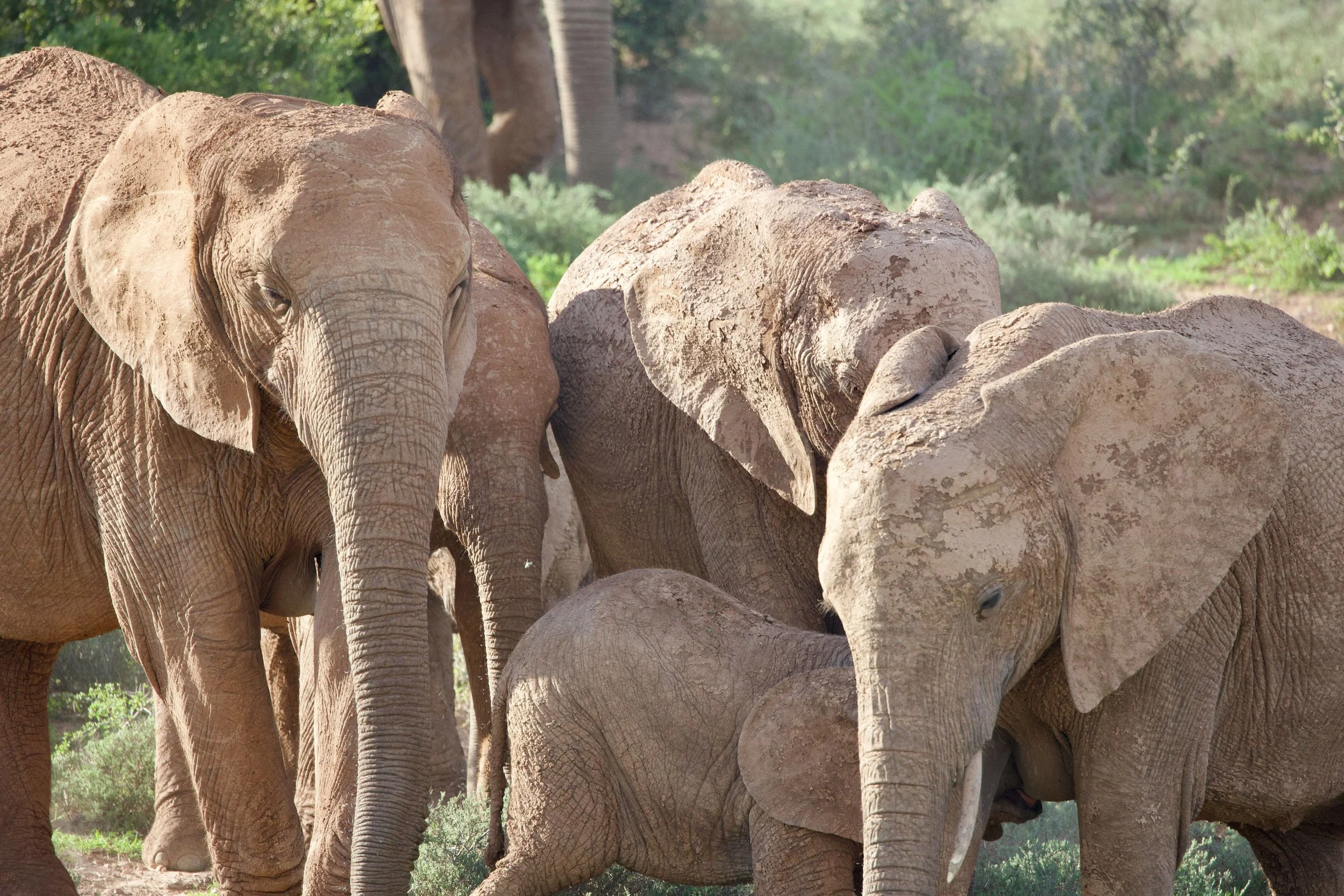
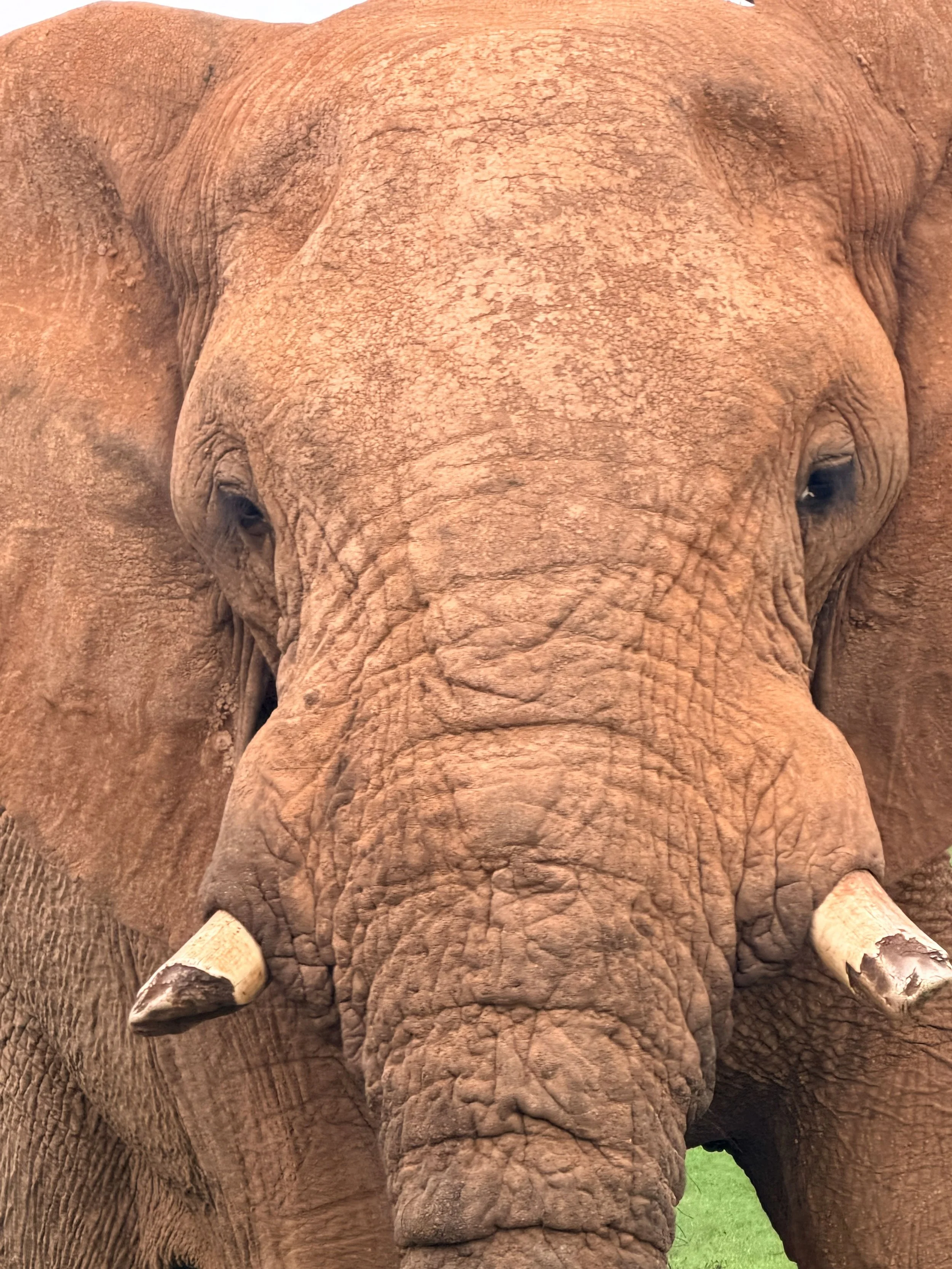
Seeing the elephants up close is something that really takes your breath away. Their size is incredible. A lot of times we would turn off the engine and just sit quietly, watching and listening. In the stillness you could hear them pulling up grass to eat or snapping branches as they moved through the brush.
One time a large herd suddenly came out of the bush, and before we knew it we were completely surrounded. It was exhilarating being that close. The larger elephants formed a protective circle around the tiny babies as they crossed the road—most of them right in front of us, with a few passing behind the camper. One elephant walked so close to our window I swear I could have reached out and touched it. I think it was somewhere in those moments, sitting quietly among them, that I completely fell in love with elephants.
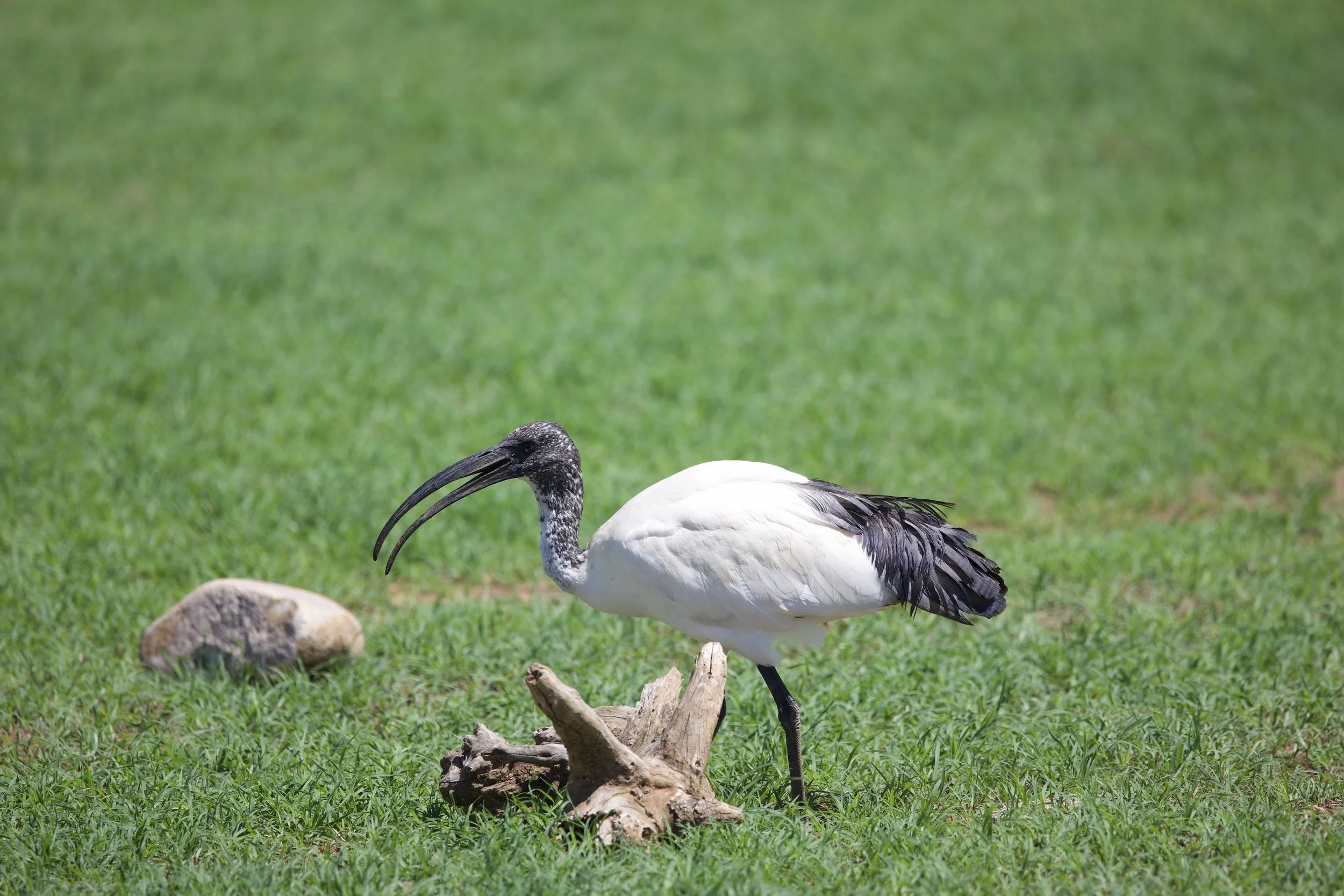
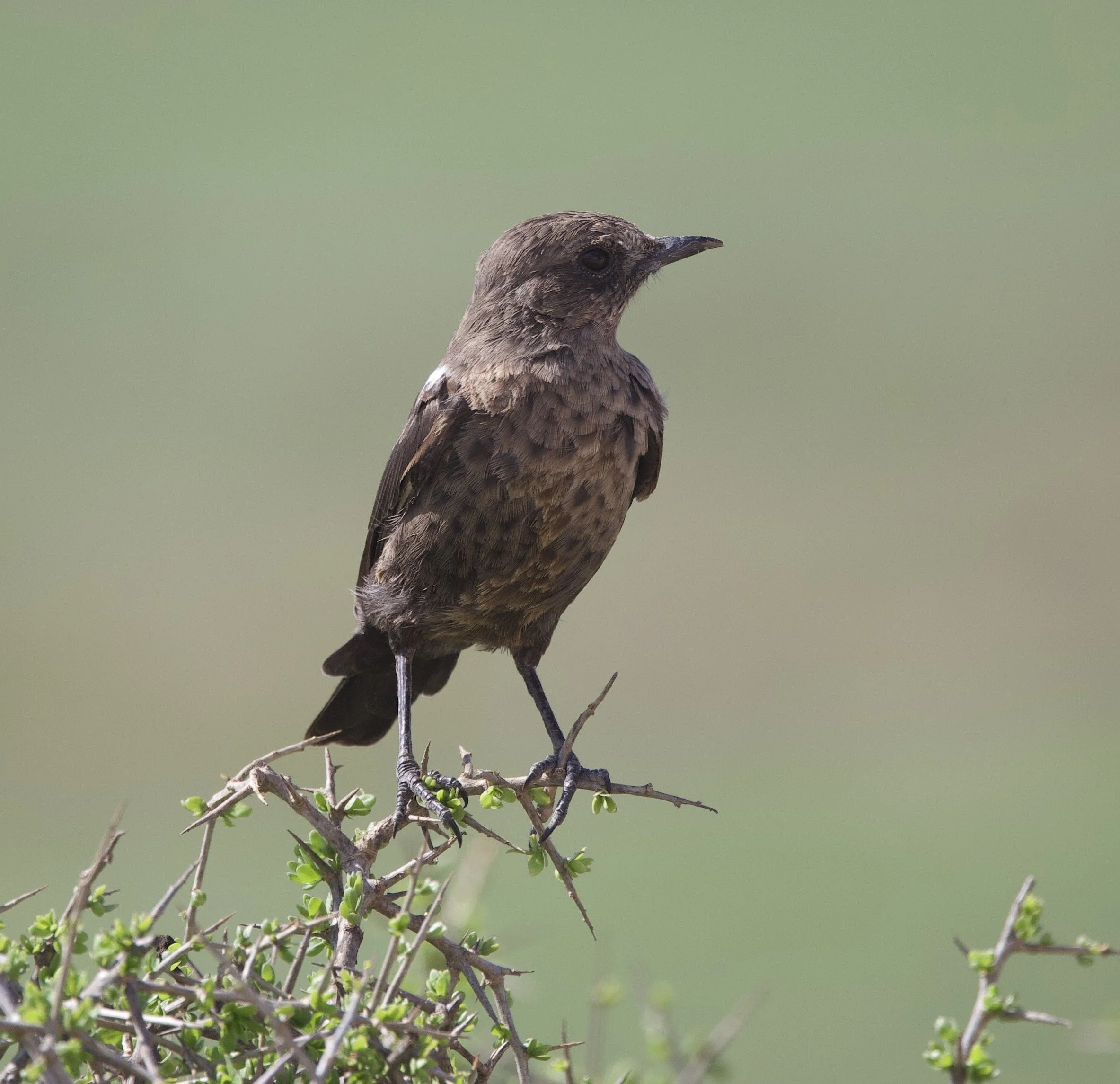
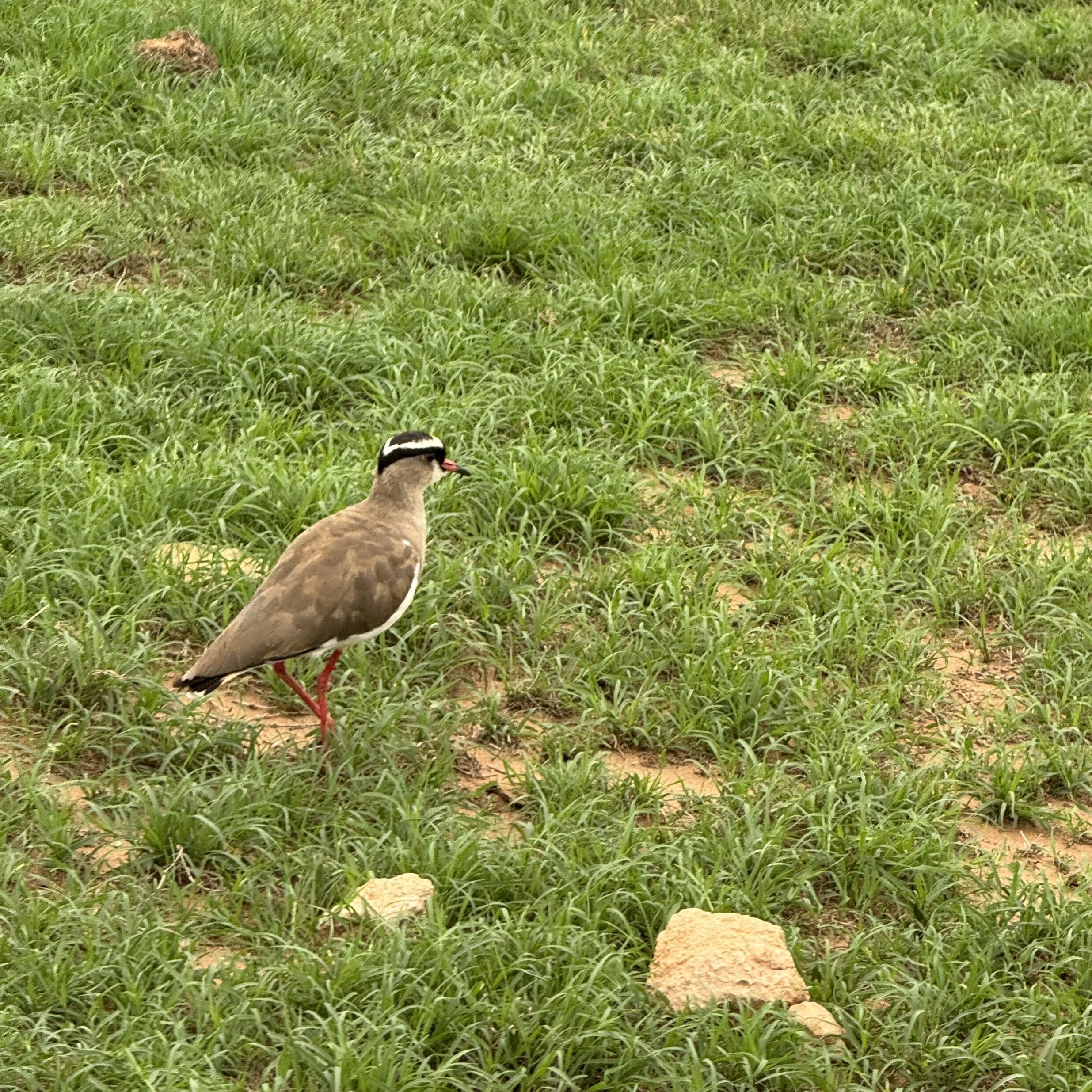
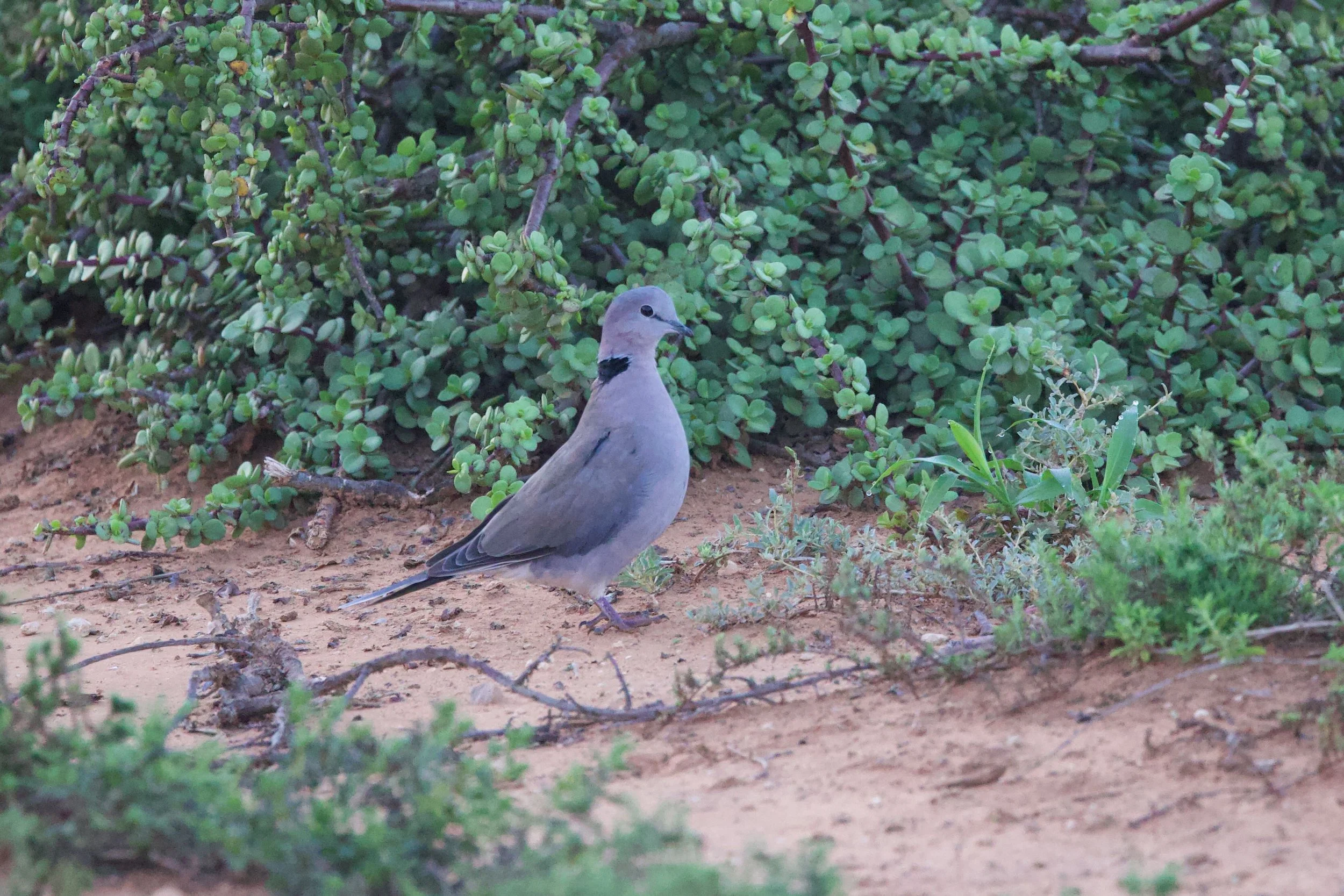
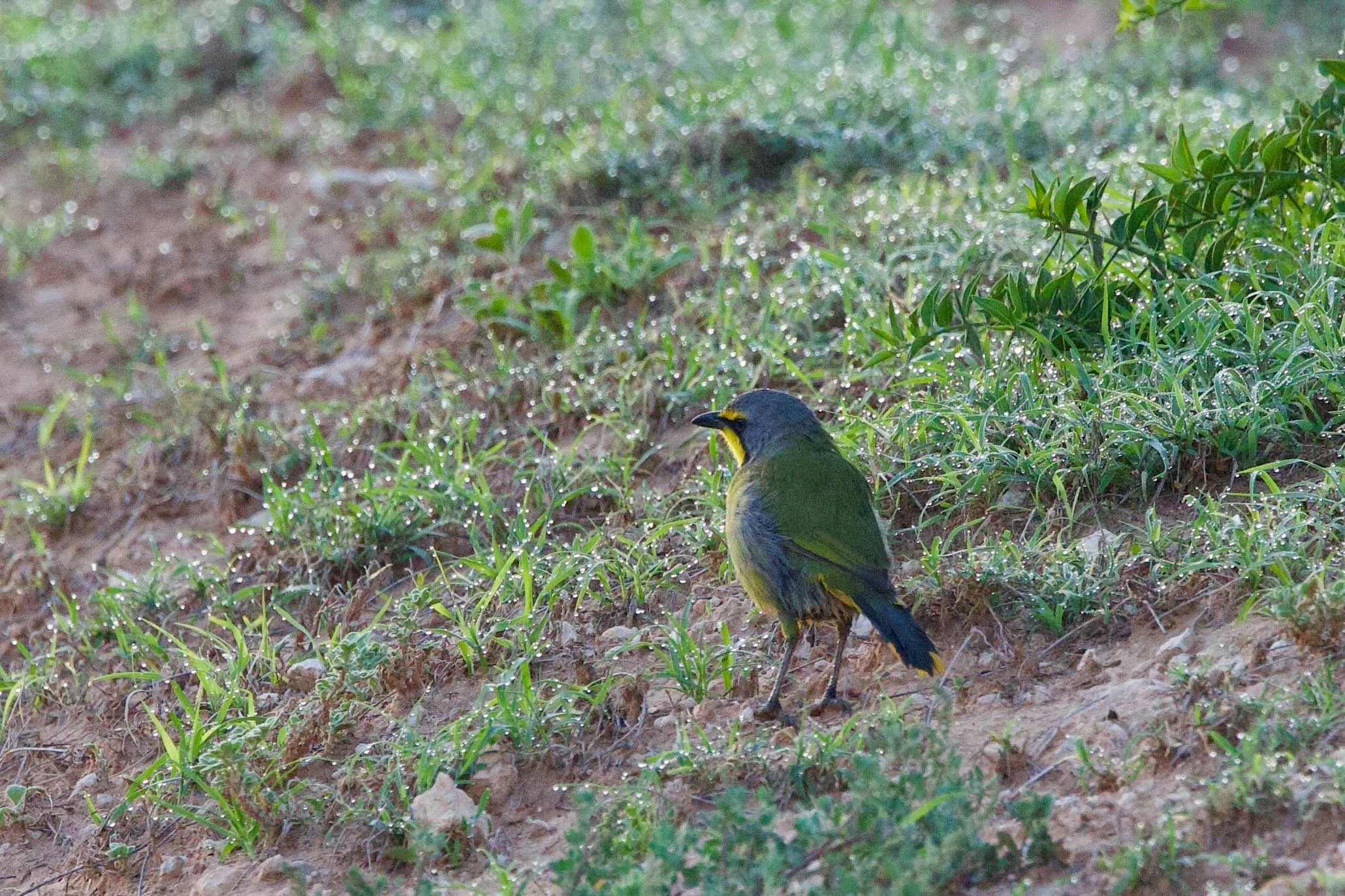
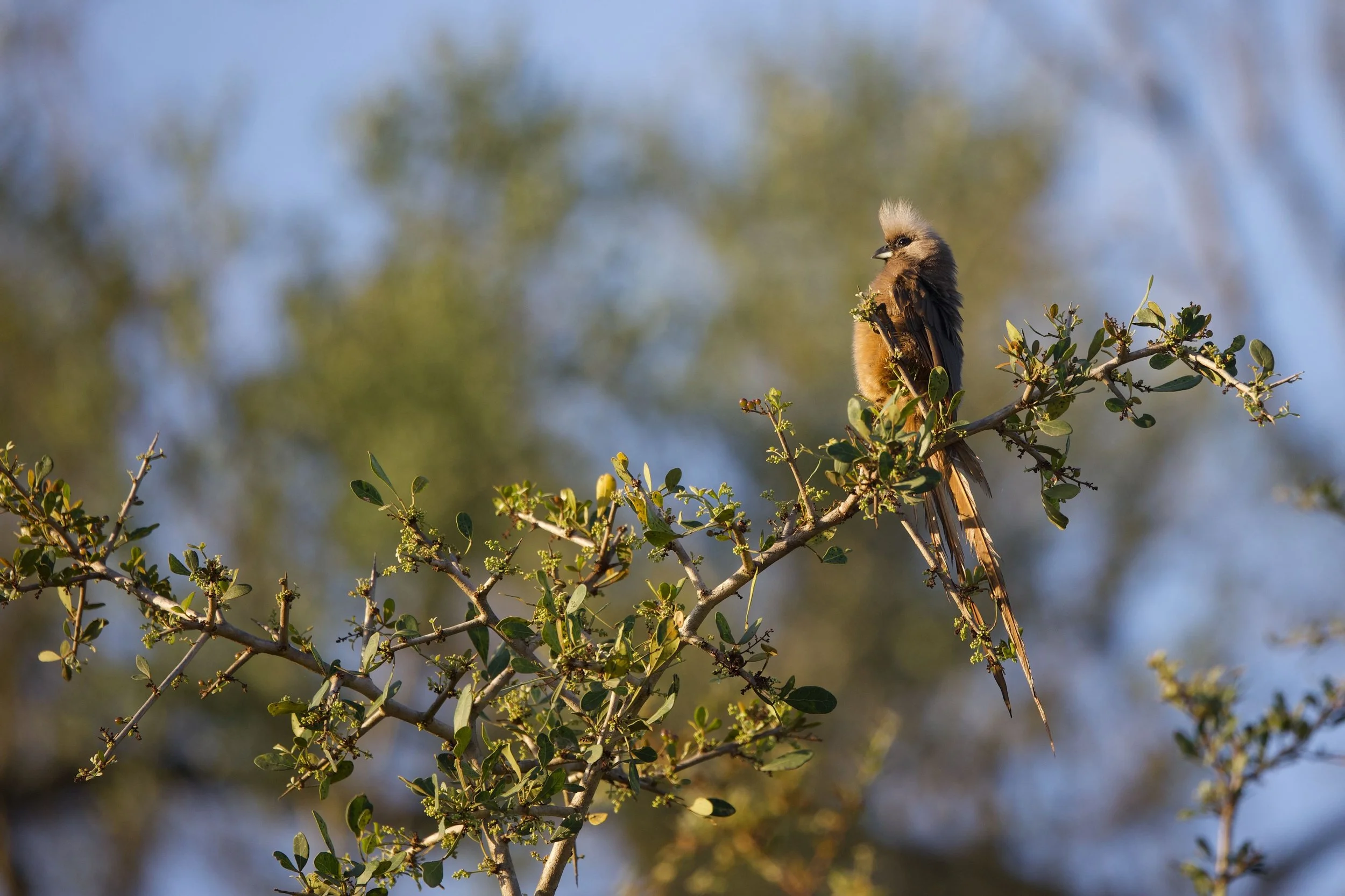
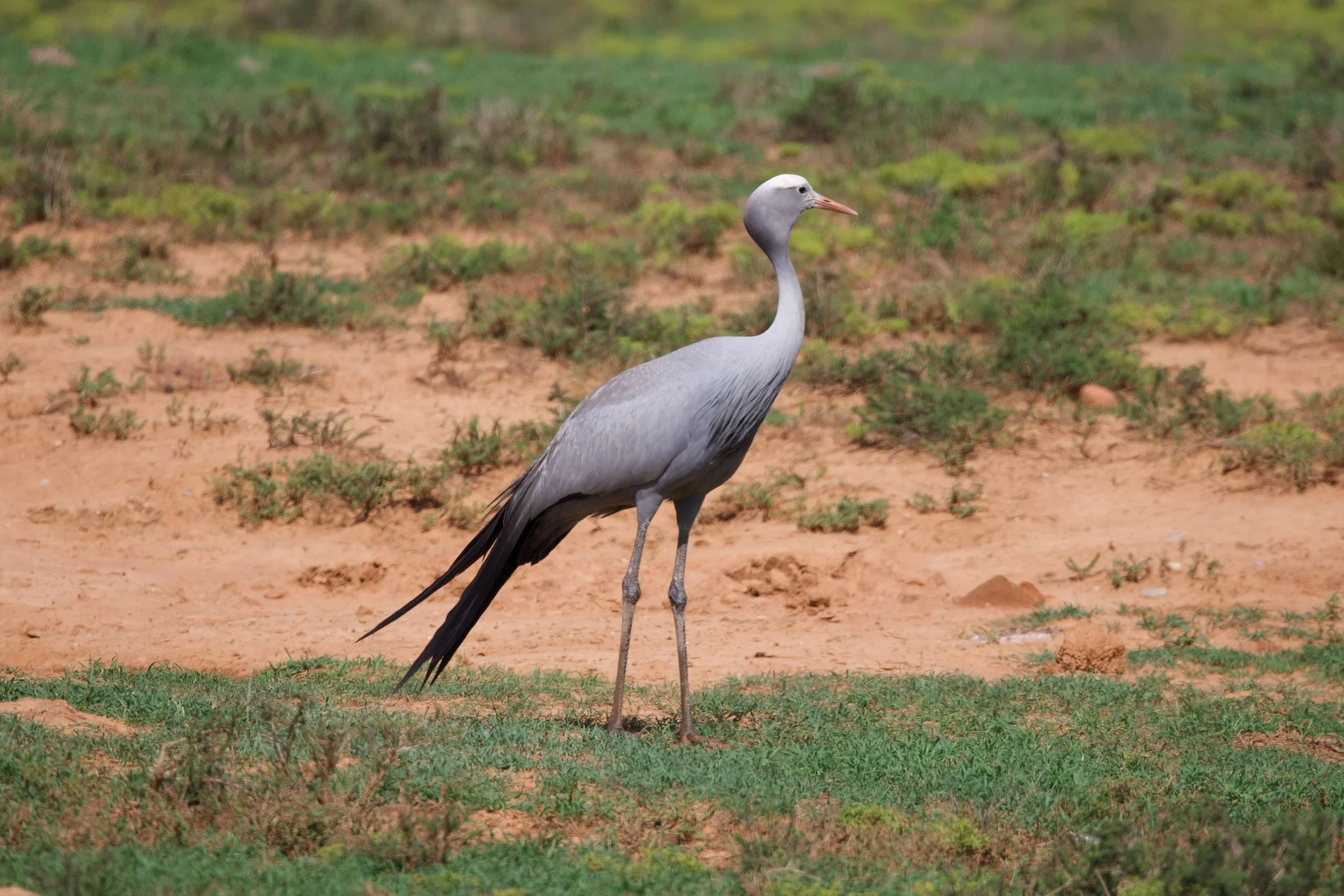
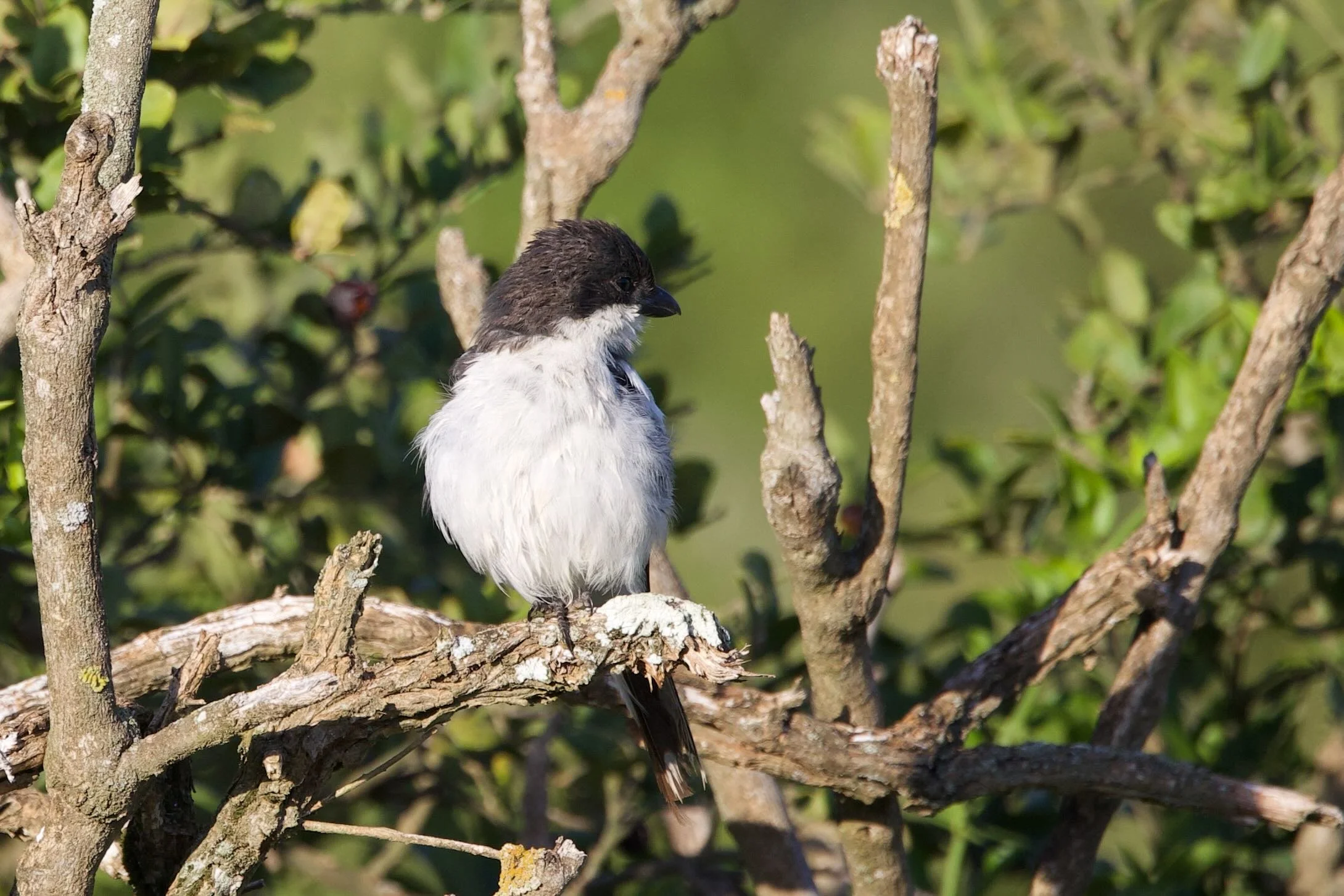
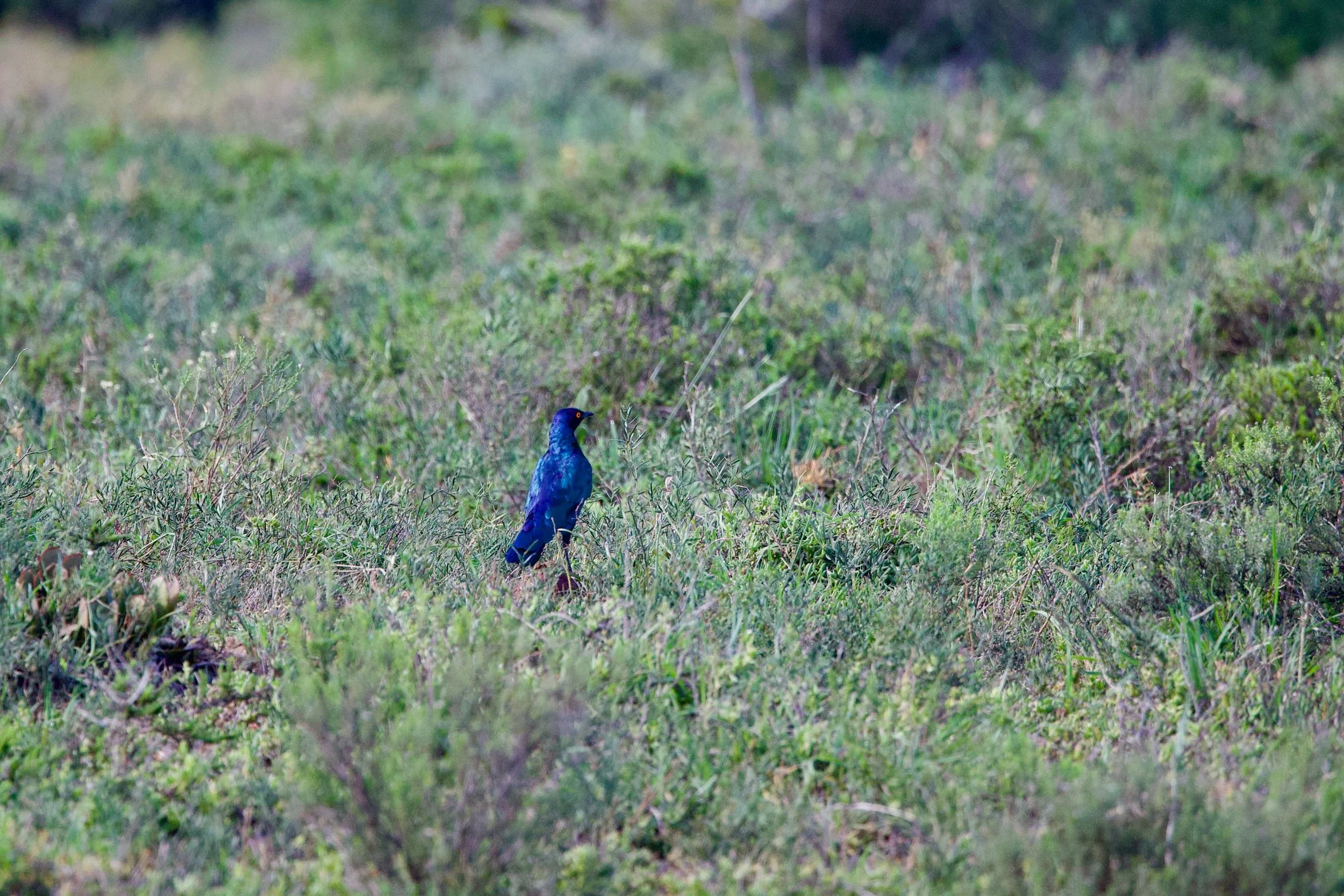
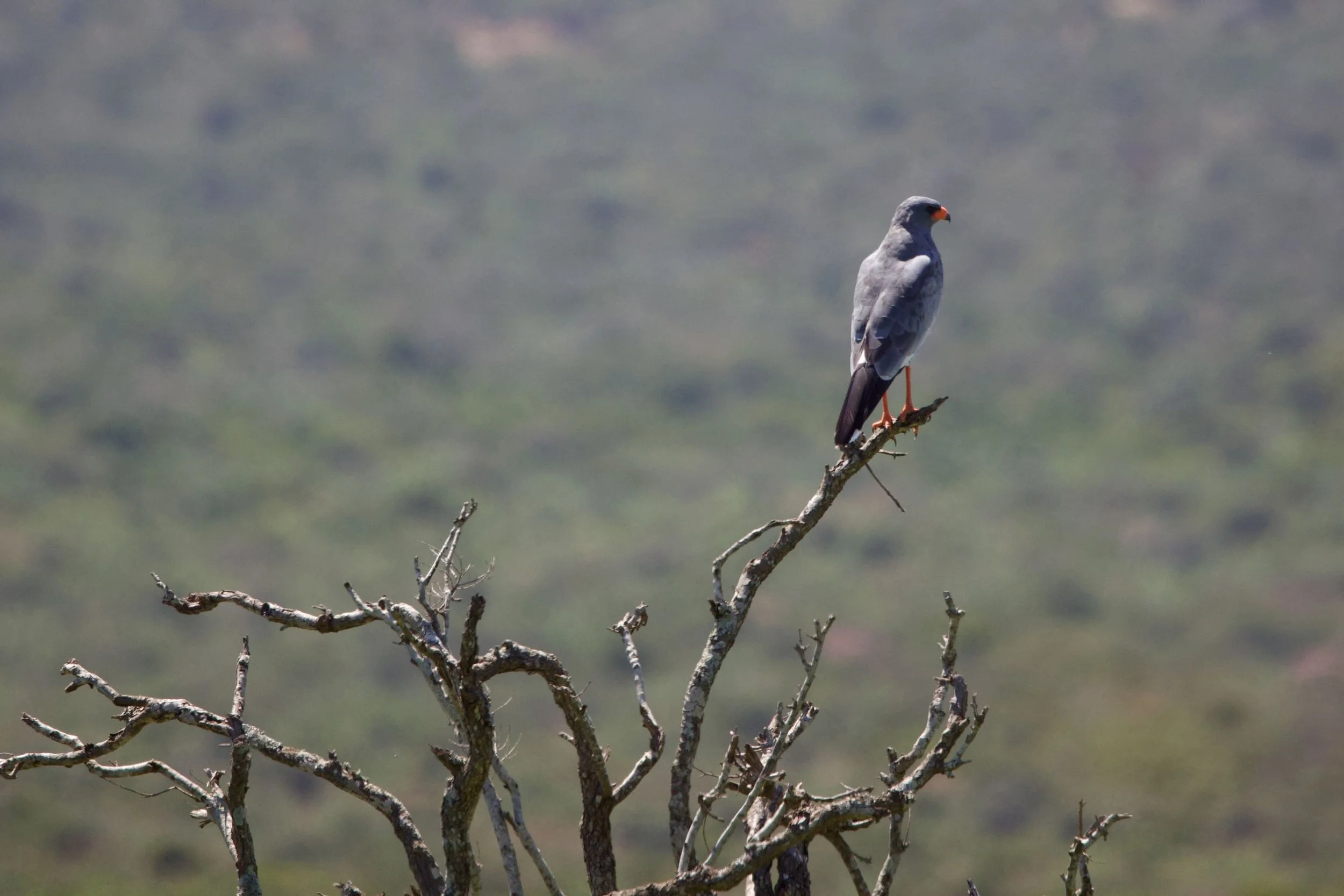
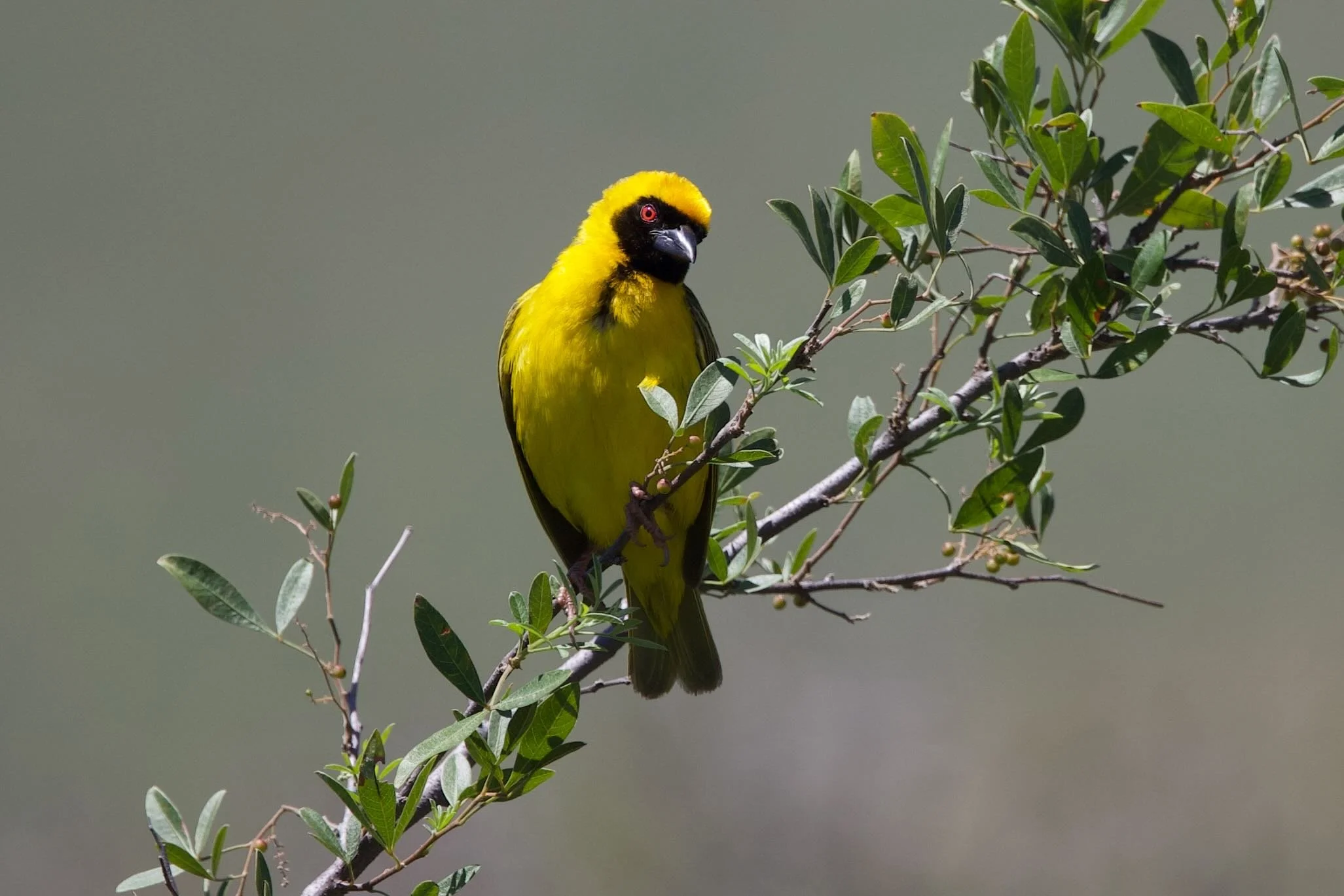
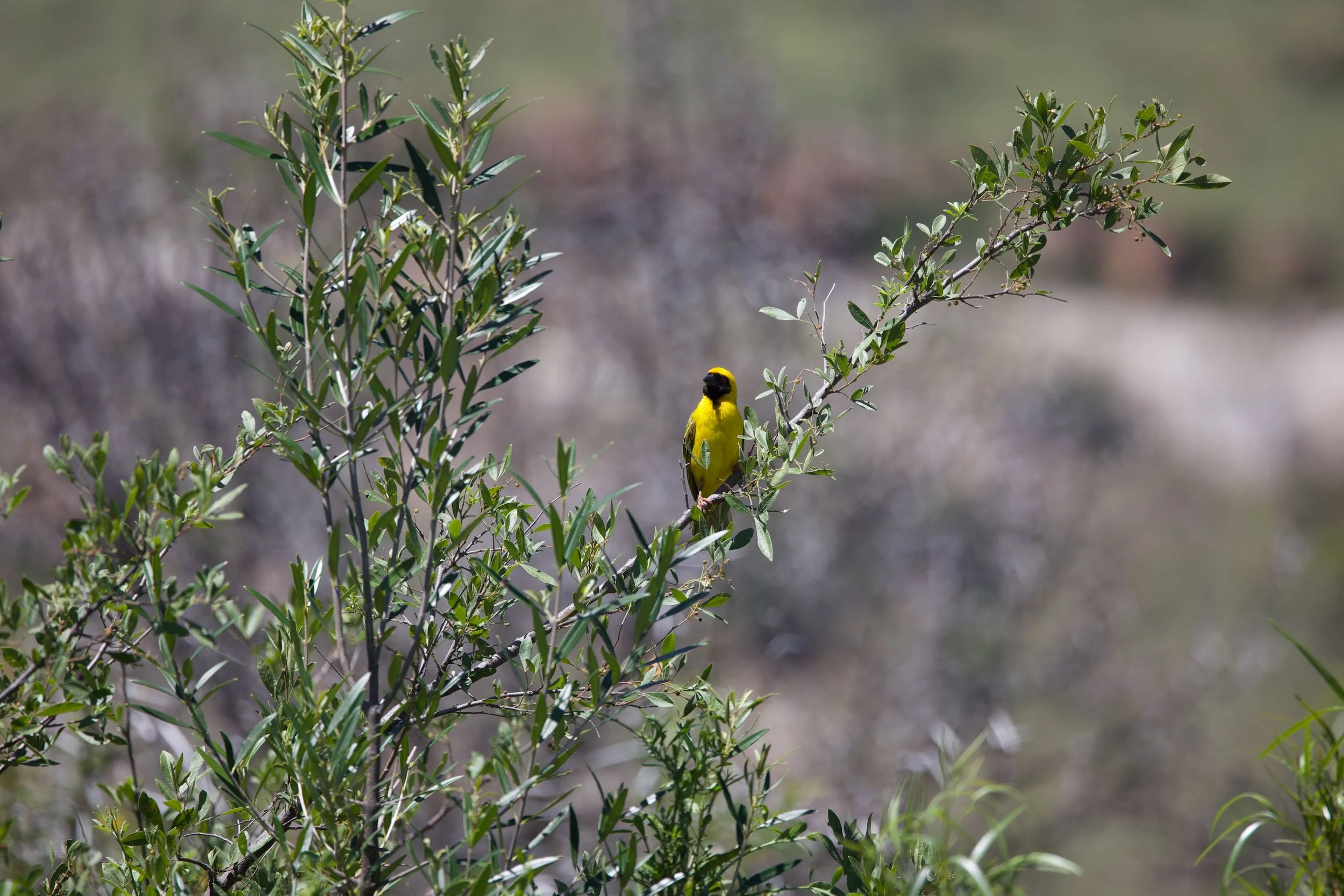
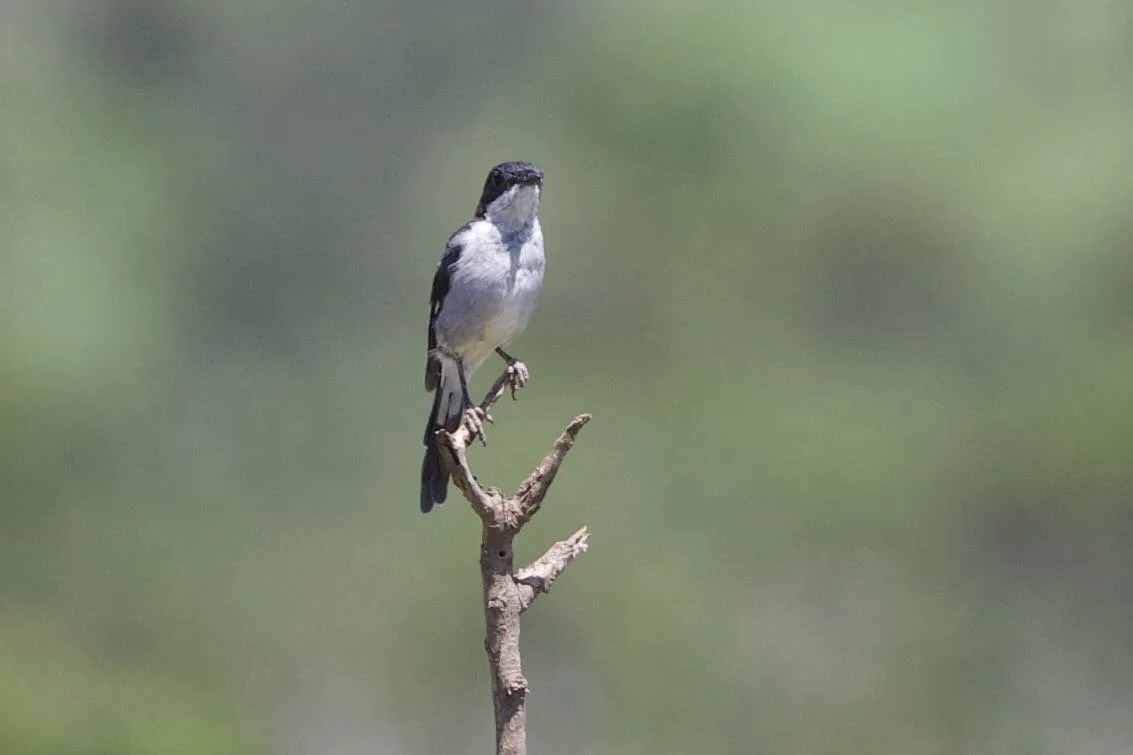
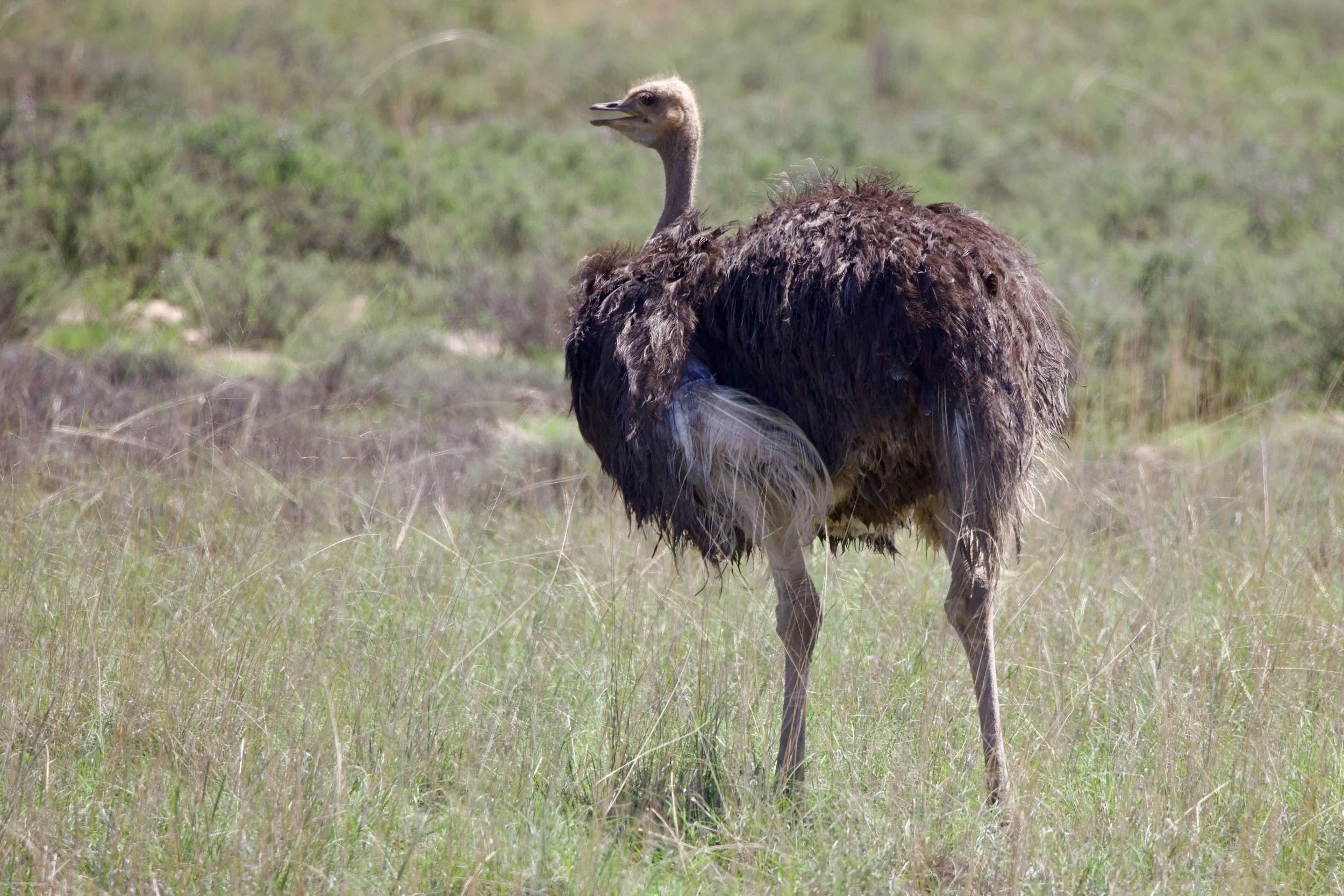
We also saw a wide variety of birds, many so different from what we see in the US, with long tail feathers and bright colors.
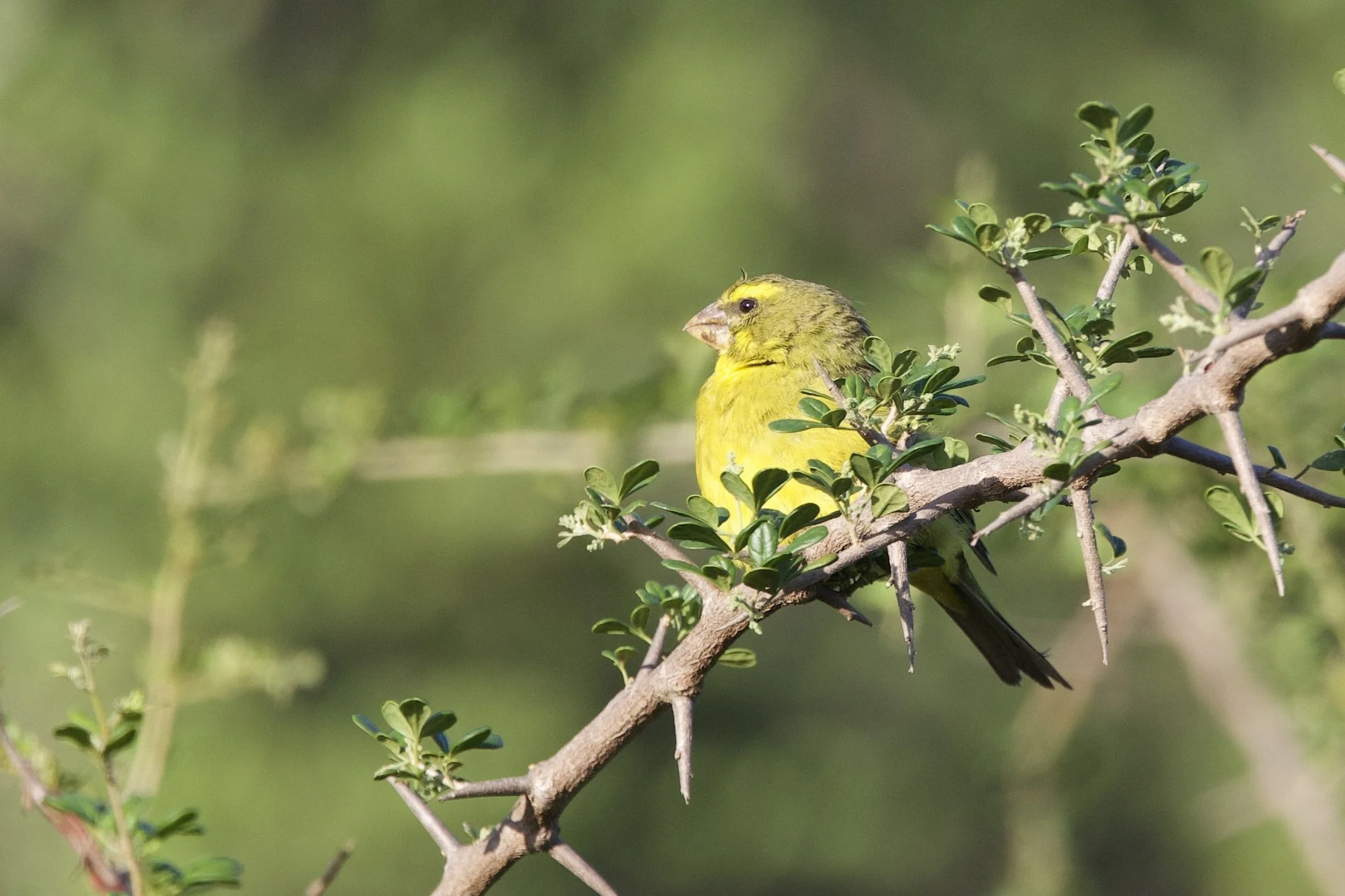
Brimstone Canary
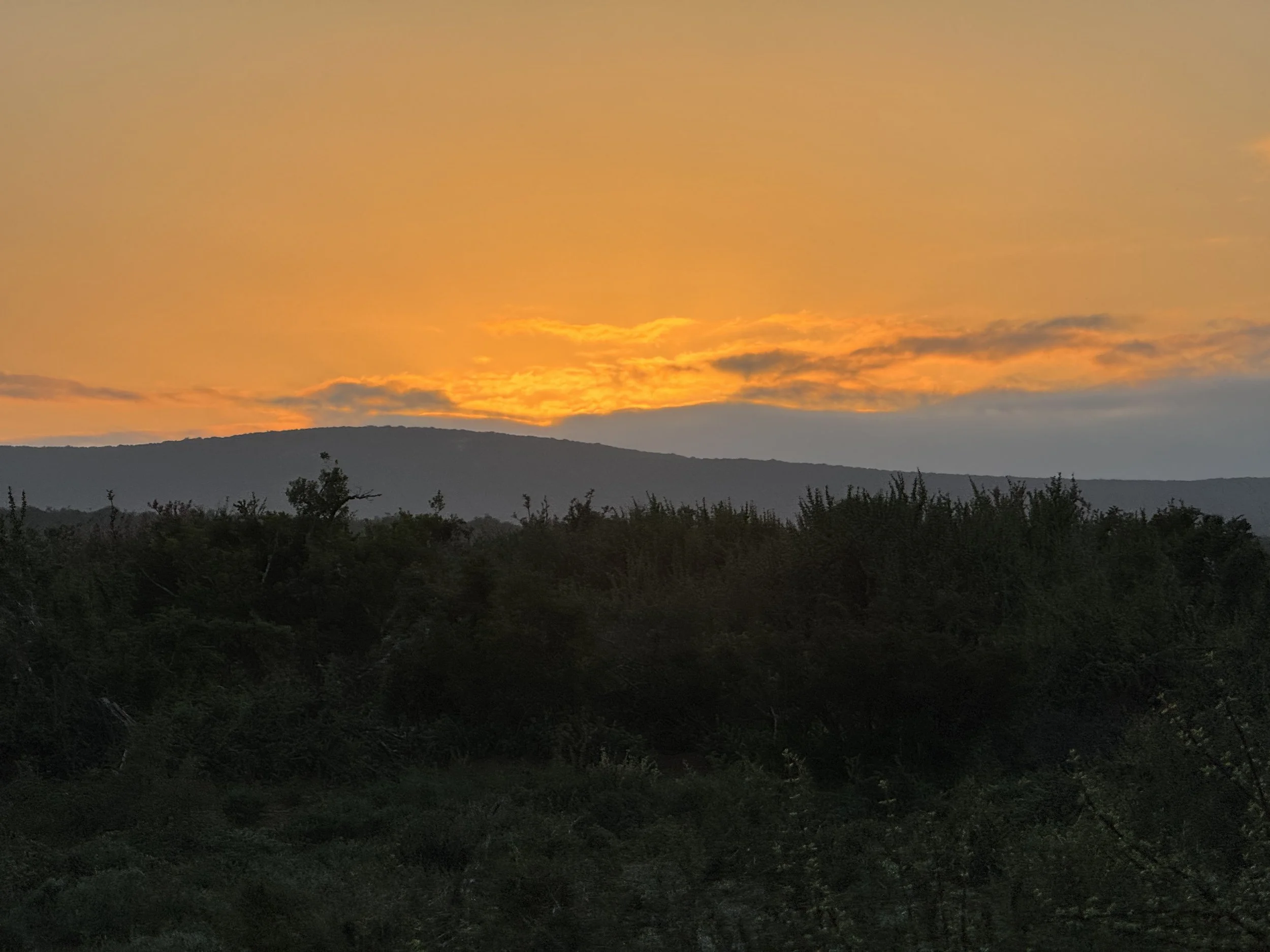
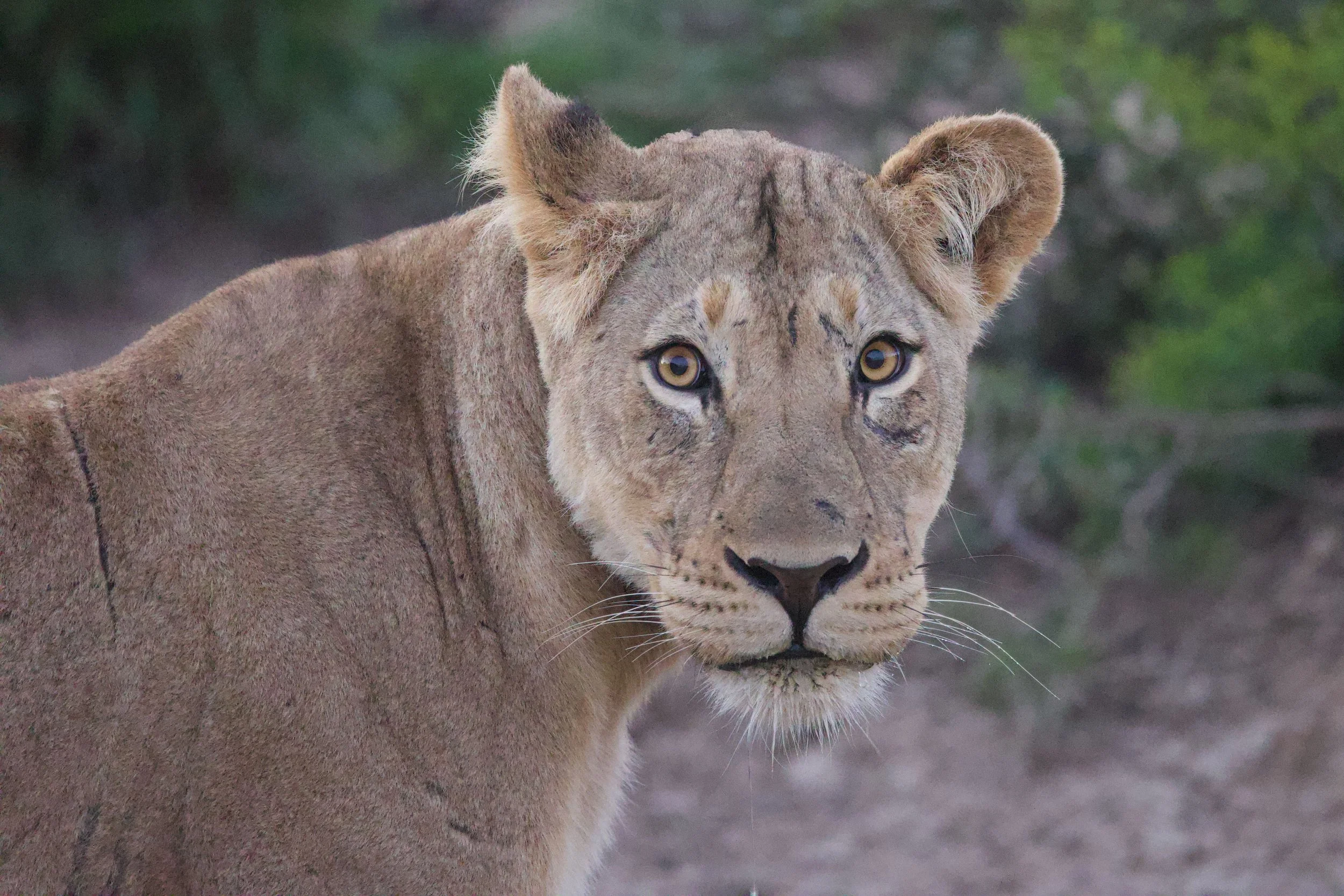
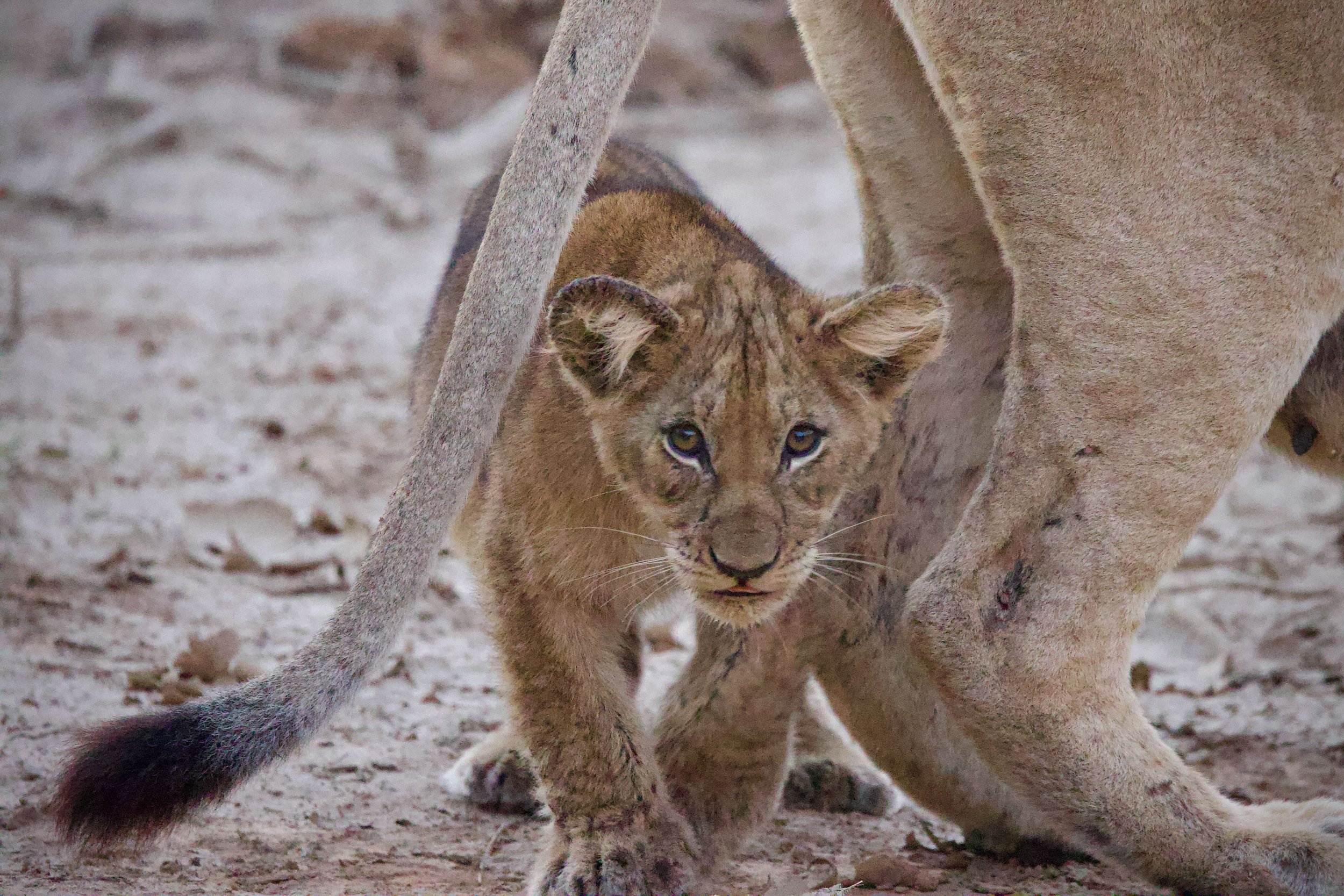
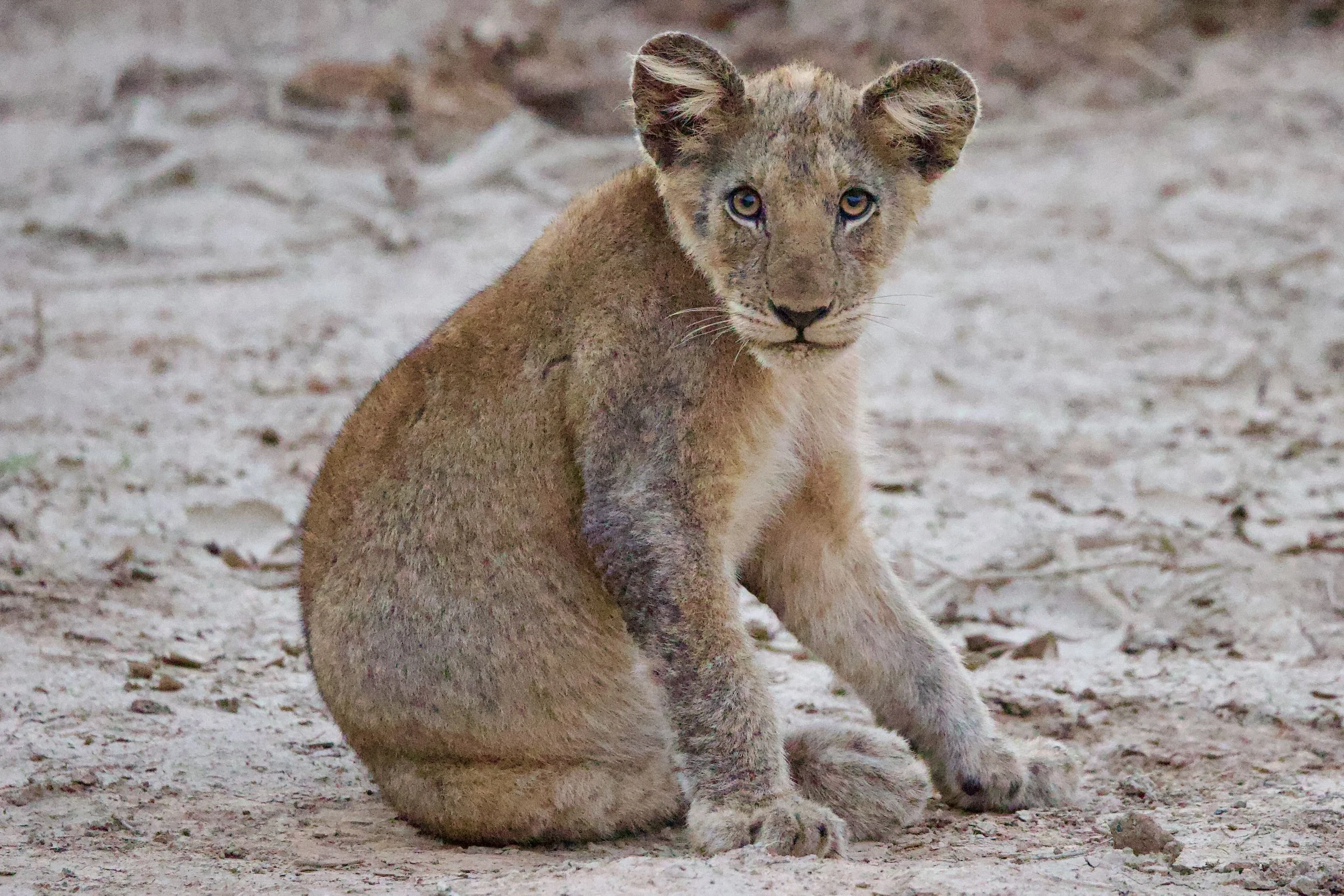
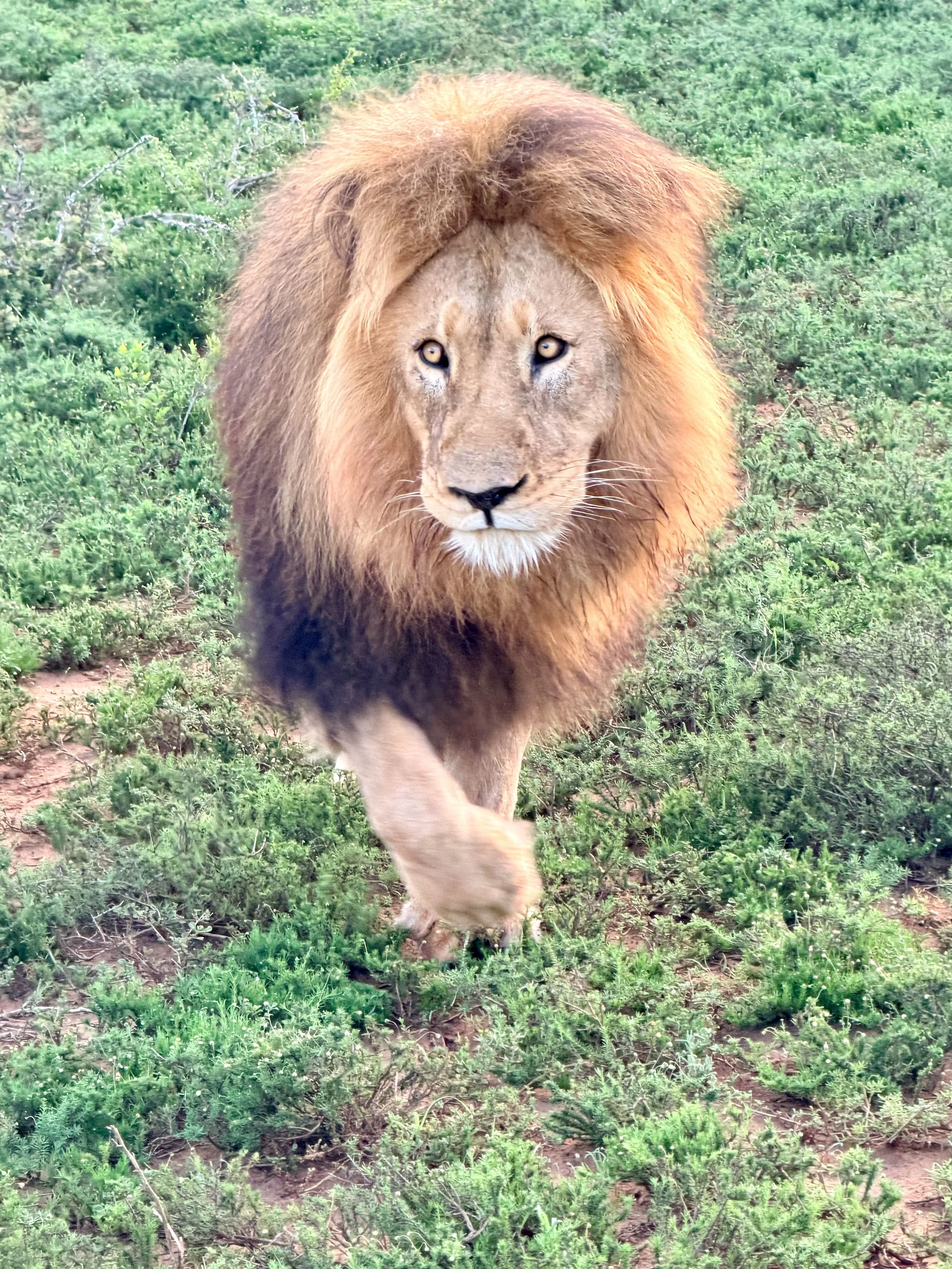
Another big highlight of our self-drive safari in Addo Elephant National Park was getting into the park right when the gates opened at 5:30 a.m. Driving in at that hour, with the sun rising, was incredibly peaceful. The park was quiet and still, and the soft morning light made everything feel a little magical. Not long after entering, we came across something really special—a lioness with her four cubs. She was sitting and staring at us at first, but when it became clear we weren’t a threat, the five of them calmly trotted down the road. We slowly rolled along a good distance back, trying not to disturb them.
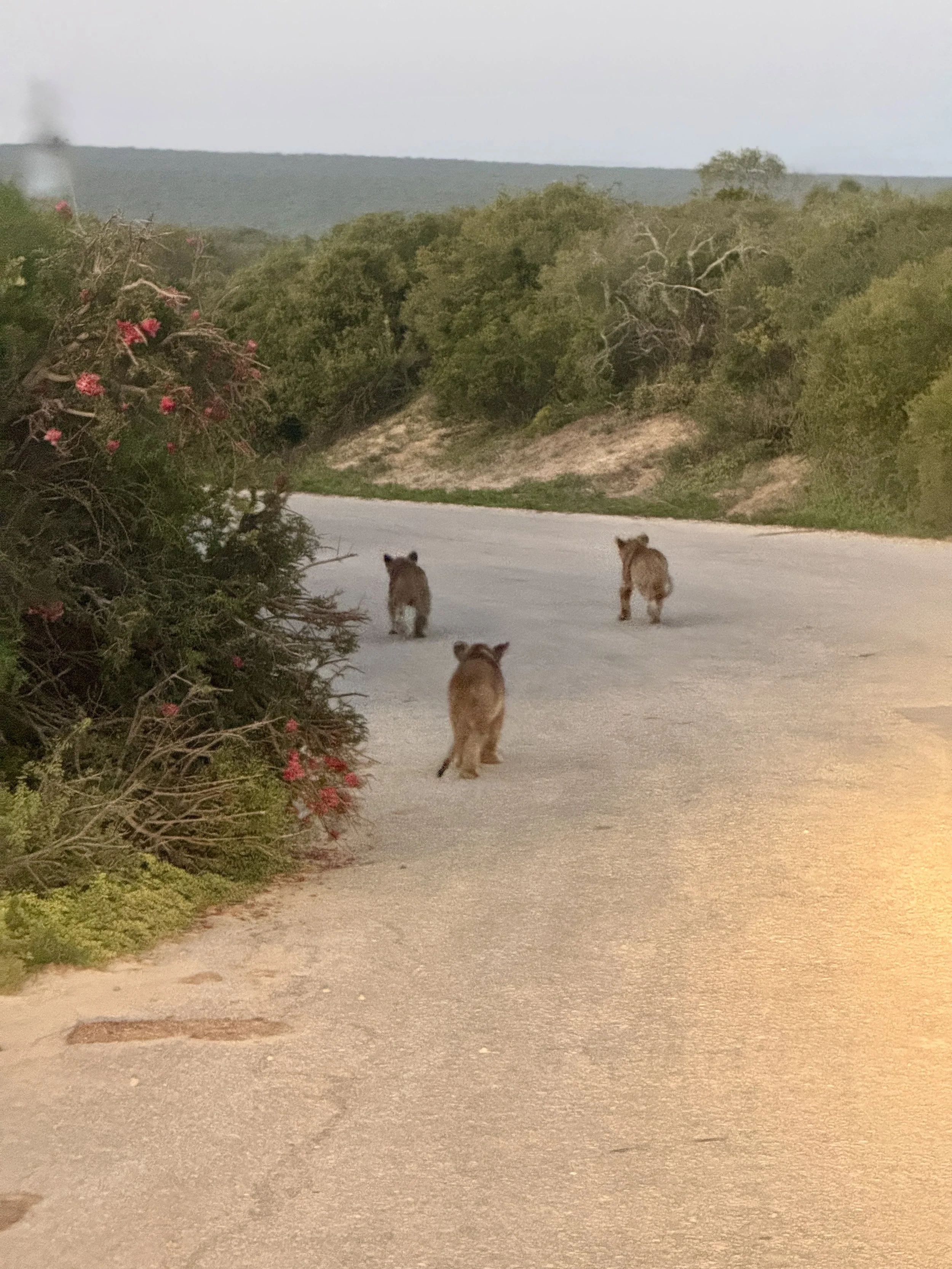
cubs walking down the road
After a short while they stopped at a small puddle of water just off the side of the road. Once again we turned off the engine and just sat quietly, taking it all in. We were so close we could actually hear the lioness drinking as she lapped up the water. The cubs gathered around too, though one of them clearly had other ideas. Instead of drinking, the little guy decided it was playtime and started batting and biting at his mom’s tail while she tried to drink. It was one of those moments that felt completely surreal watching this wild little family going about their morning just a few feet away from us.
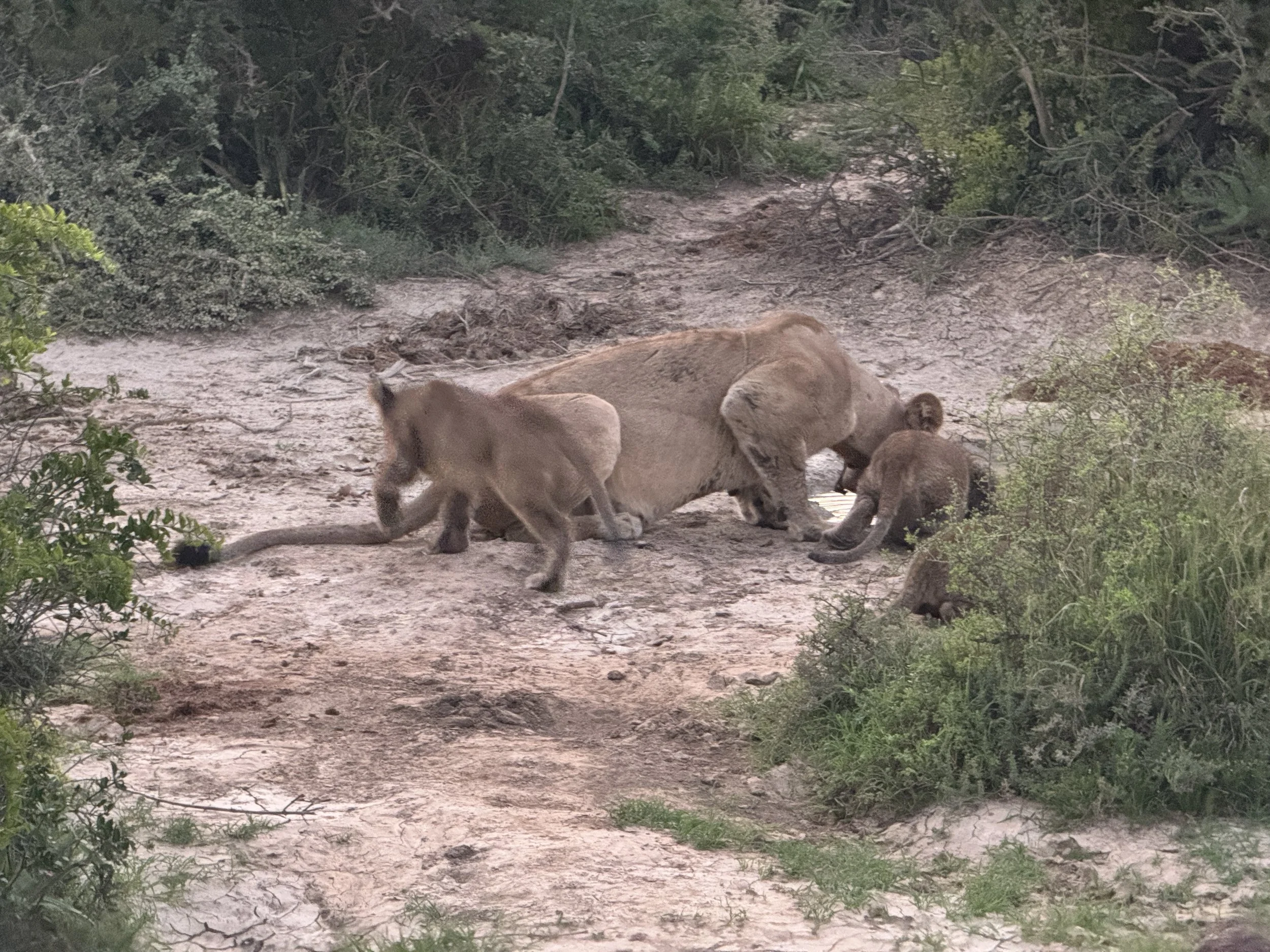
mom and cubs having a morning drink
We also made time for a couple of guided tours while we were in Addo Elephant National Park. One was a night drive that we signed up for ourselves, and the other was a mid-morning tour that was included with our group. The park actually offers several options throughout the day, including sunset and night drives, though we skipped the sunset one. The guided drives were great because they gave us a chance to learn more about the animals and their habitats, and the guides have an incredible ability to spot things you would probably drive right past on your own.
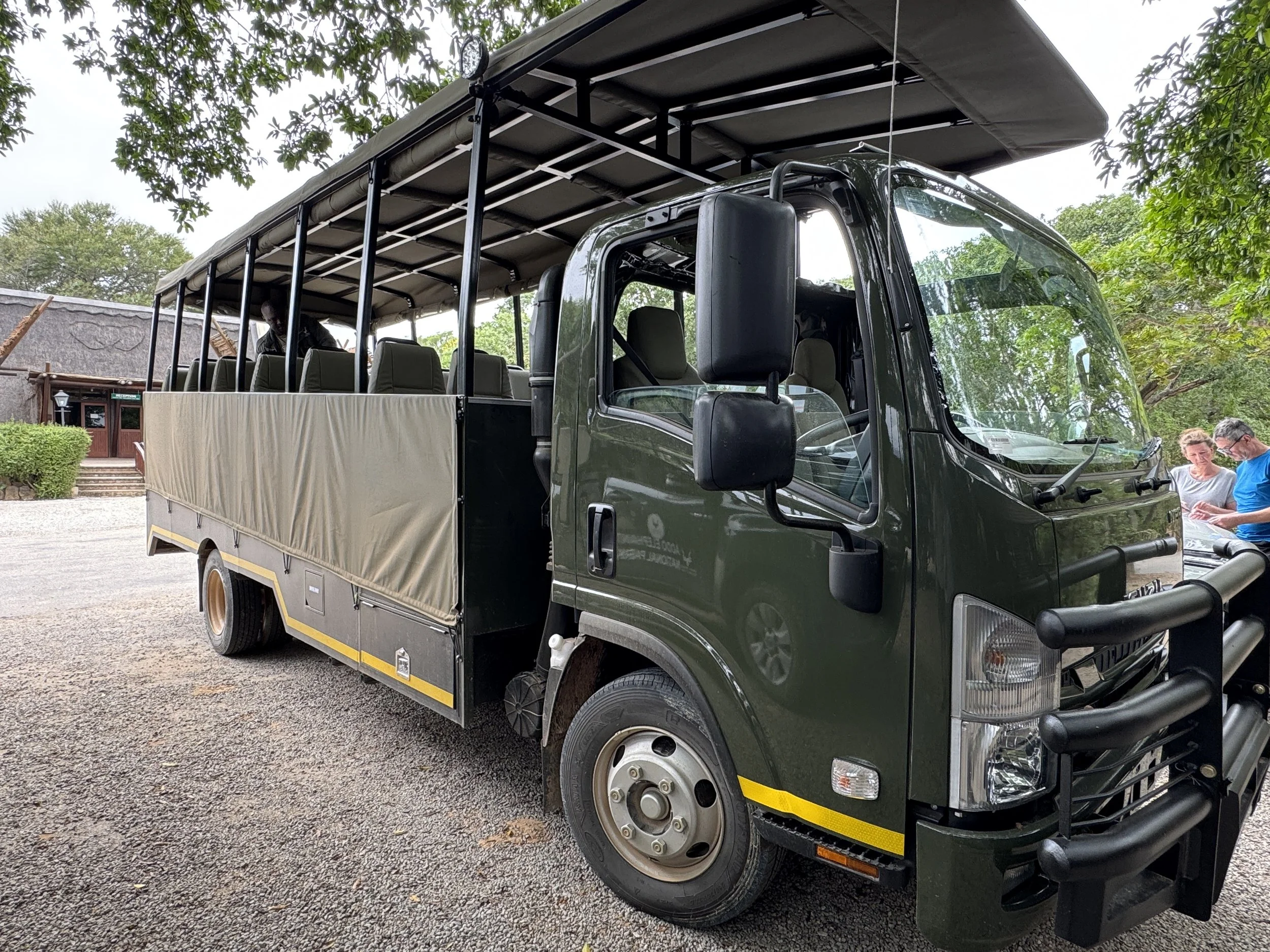
guided safari truck
On the night drive, the very first place the guide took us was a lookout point. At first we were thinking, how are we going to see anything up here in the dark? Earlier that afternoon we had actually stopped there ourselves and gotten out of the camper for a look around—there are signs that say you can exit your vehicle “at your own risk.” Well… it turns out that spot is where a different lioness and her one cub like to sleep. Sure enough, there they were. The guide used a spotlight so we could see them, and the lioness didn’t seem bothered at all. Her cub, on the other hand, clearly wasn’t a fan of the light and kept trying to wake mom up. She barely reacted—just stretched out a paw and gently held him down, clearly just wanting to go back to sleep.
The night safari also gave us the chance to spot a few creatures we hadn’t seen during the day. Once the sun goes down, a whole different group of animals starts to come out. With the help of the guide’s spotlight, we were able to see things like a scrub hare, a spring hare, and even an owl quietly hunting in the dark. It was a completely different experience from the daytime drives and a fun reminder that the park is just as active at night as it is during the day.
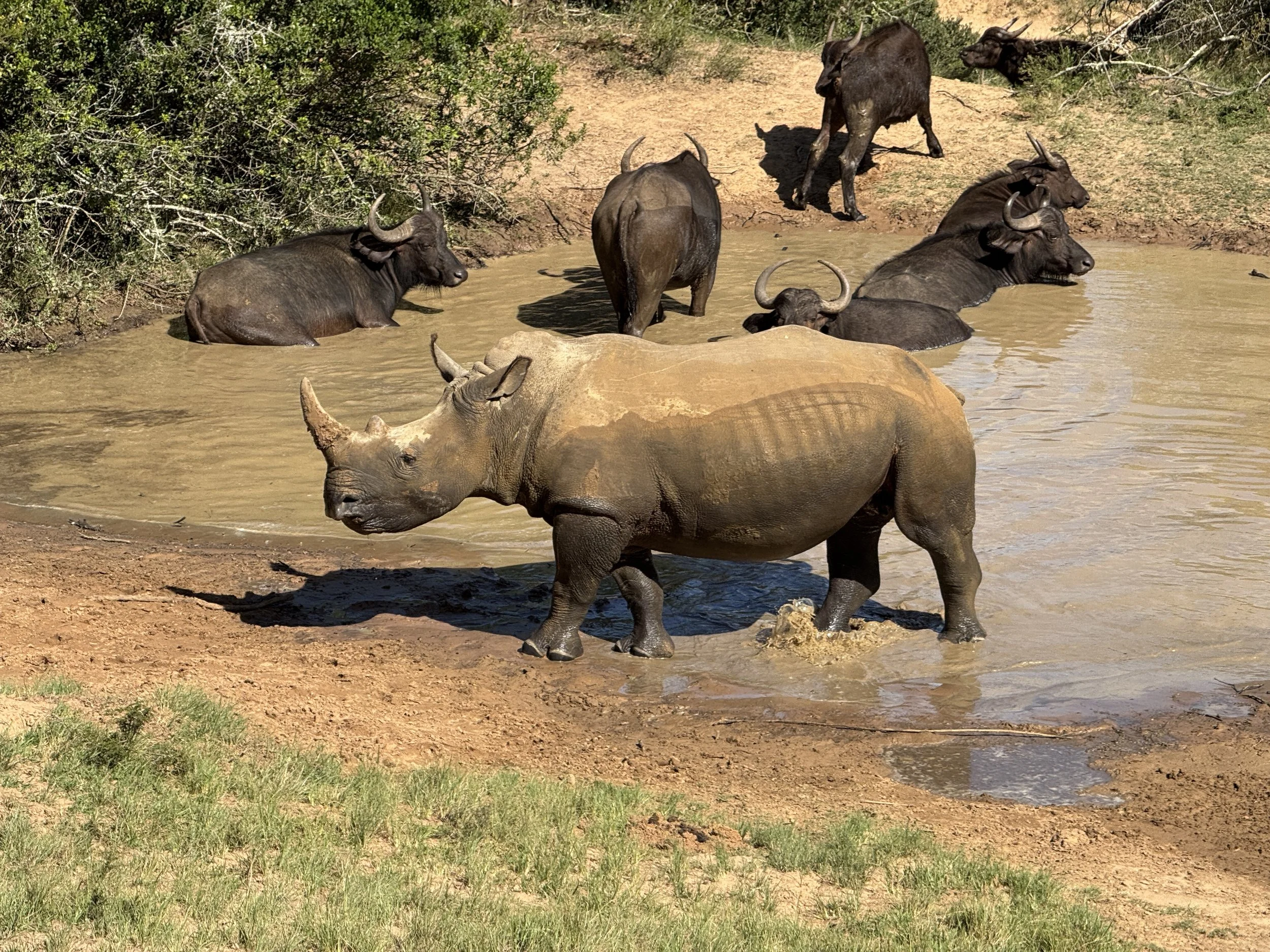
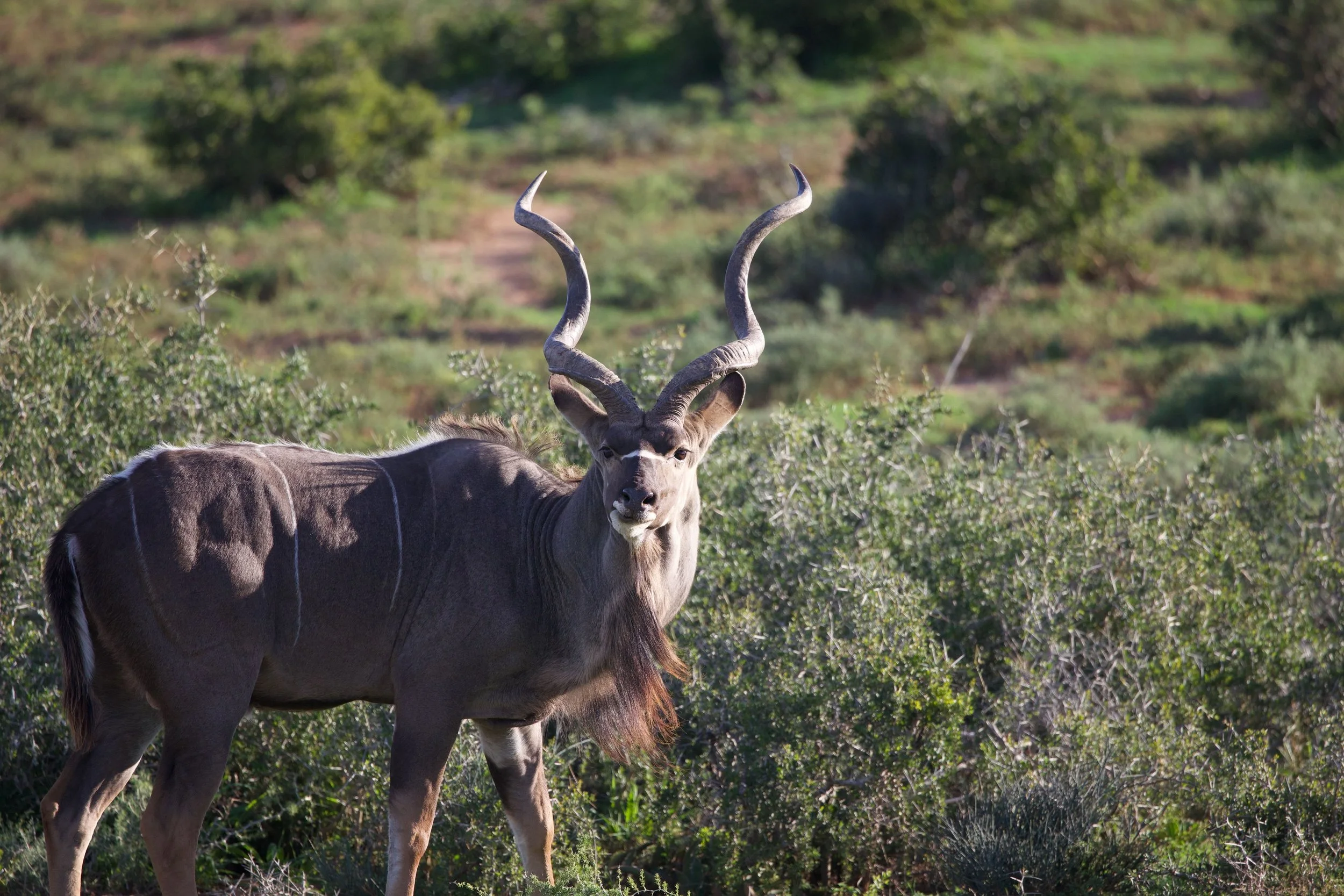
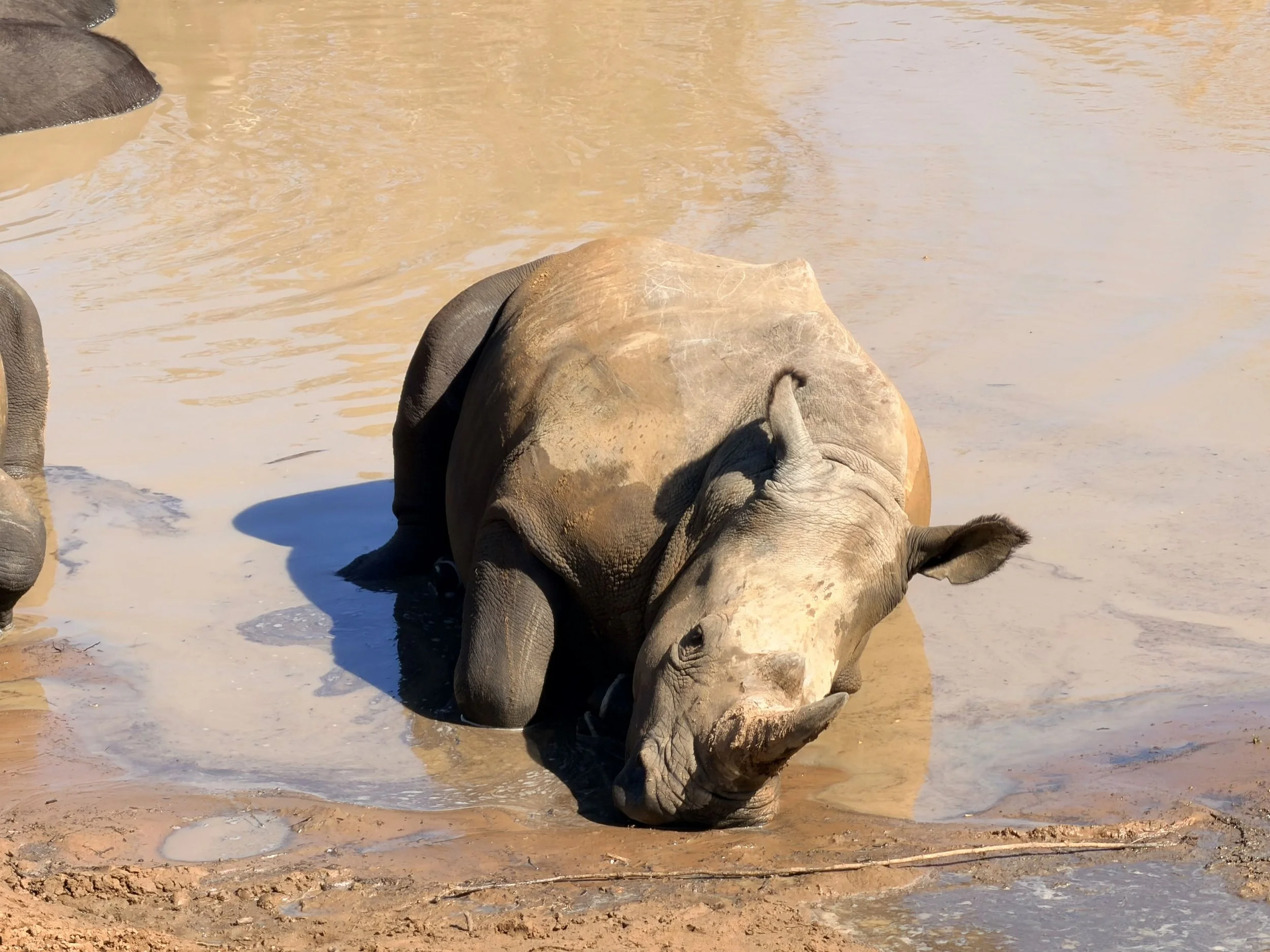
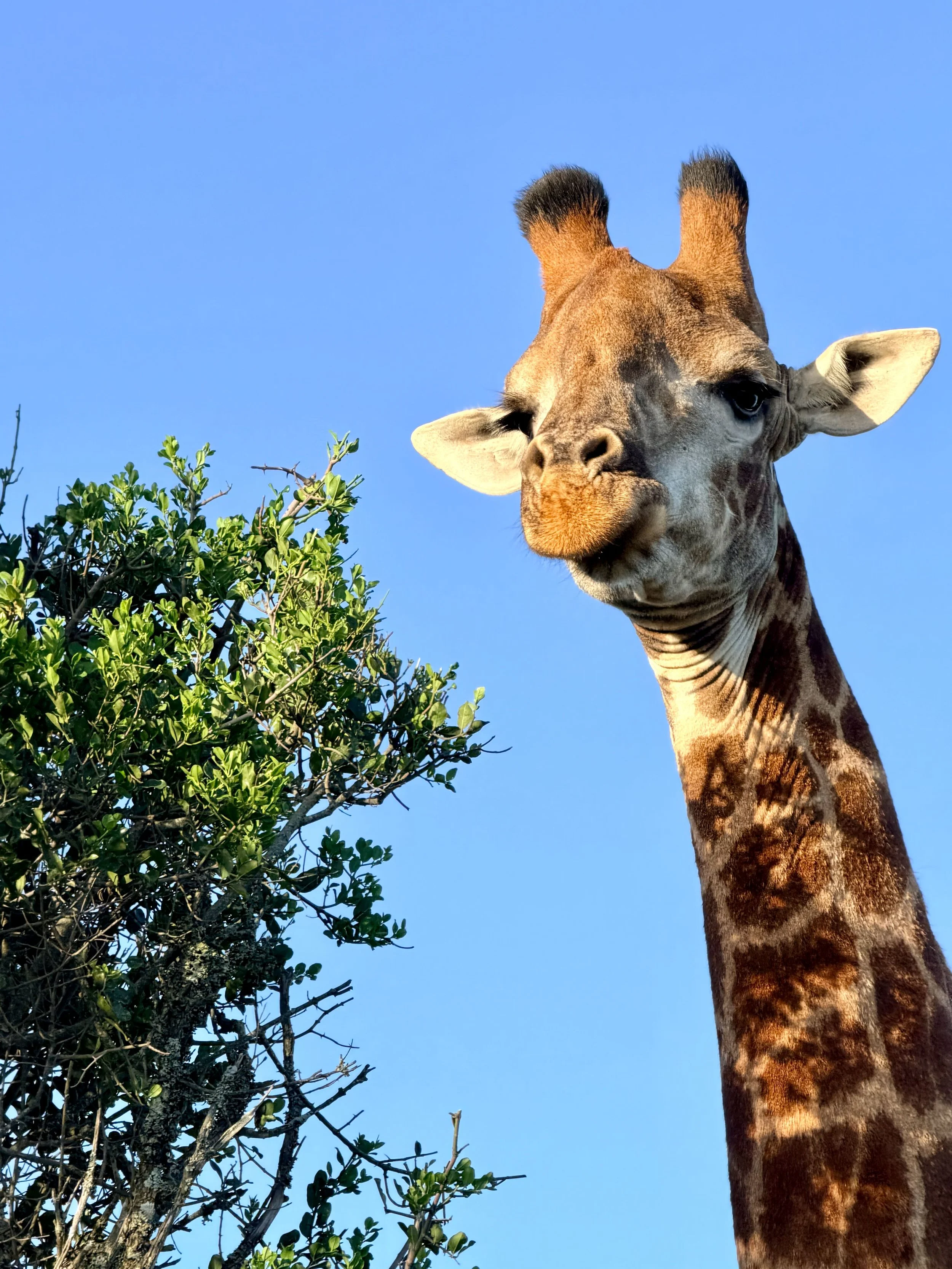
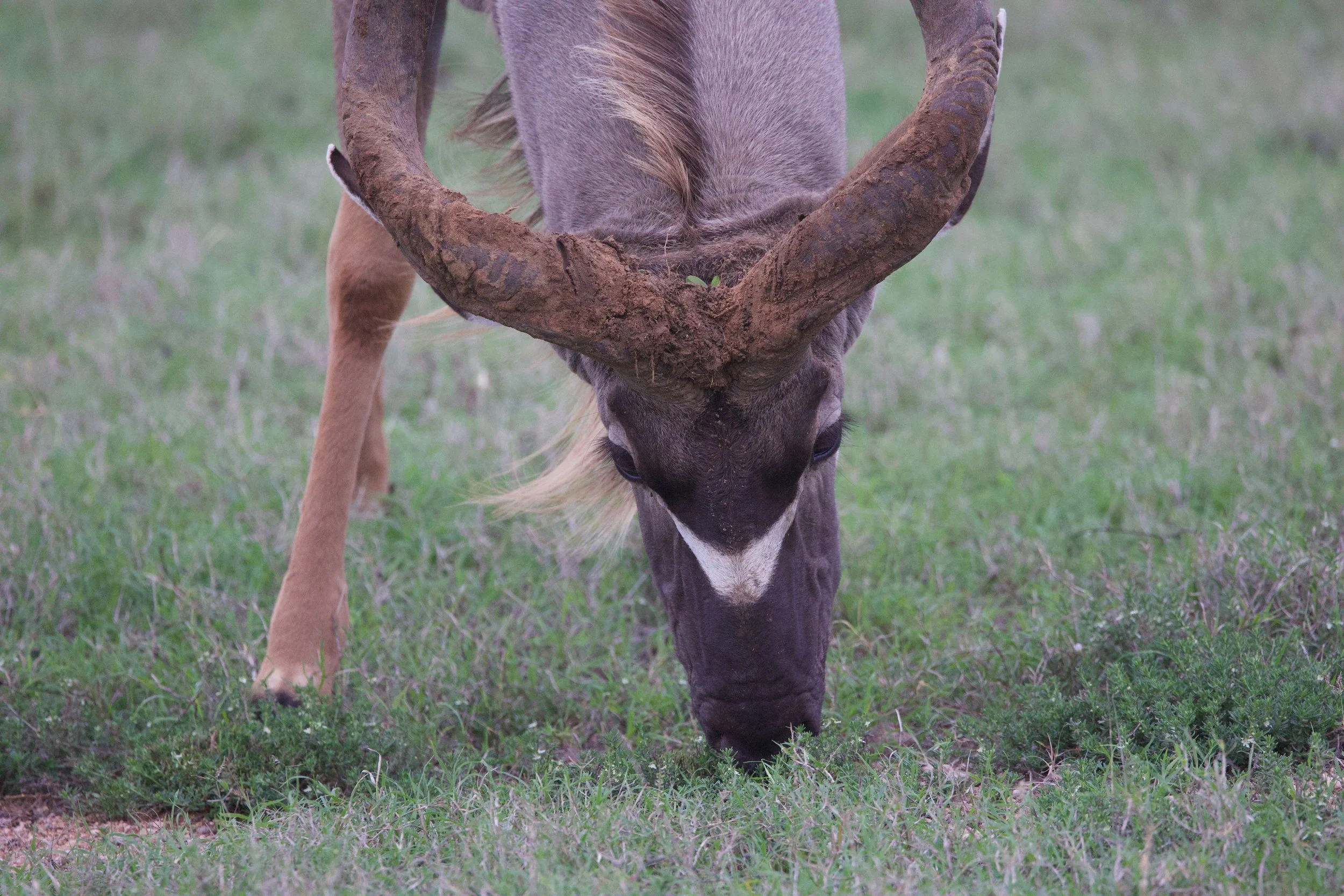
In addition to doing our own self-drives and guided safaris in Addo Elephant Park, our group also visited a private reserve called Scotia Safari Game Reserve. We split up into smaller groups of about eight people and piled into safari trucks to head out for more animal spotting. While we saw plenty of wildlife in Addo, the private reserve gave us a chance to see a few animals we hadn’t come across yet, including giraffes, waterbuck, and white rhinos. After the safari drives, the evening wrapped up with a braai, a traditional South African barbecue that’s about much more than just grilling meat. It’s really a social gathering—people hanging out around the fire, sharing food, drinks, and good conversation. For dinner they served grilled kudu, which I had never tried before. It turned out to be incredibly tender and absolutely delicious.
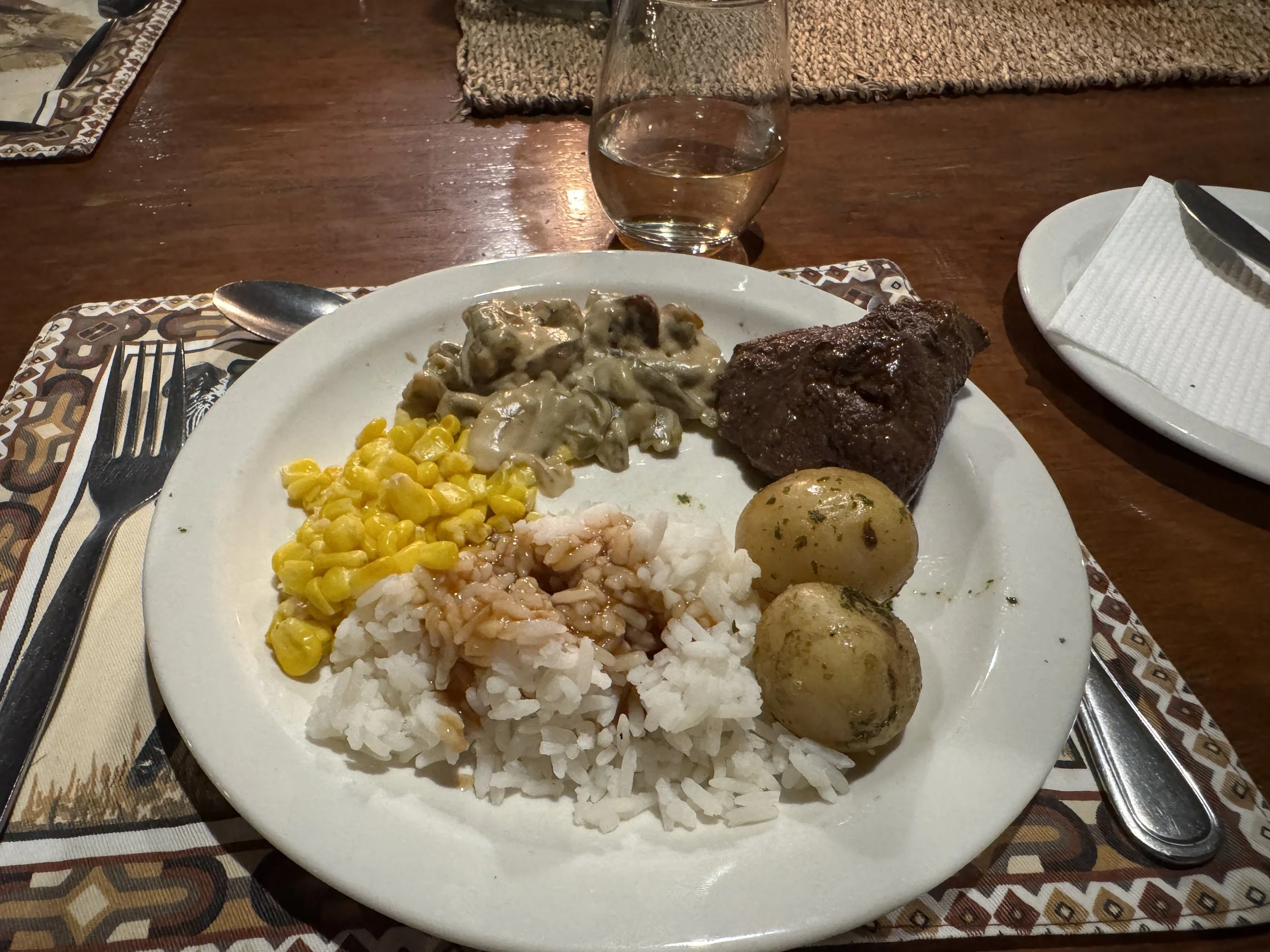
Kudu for dinner
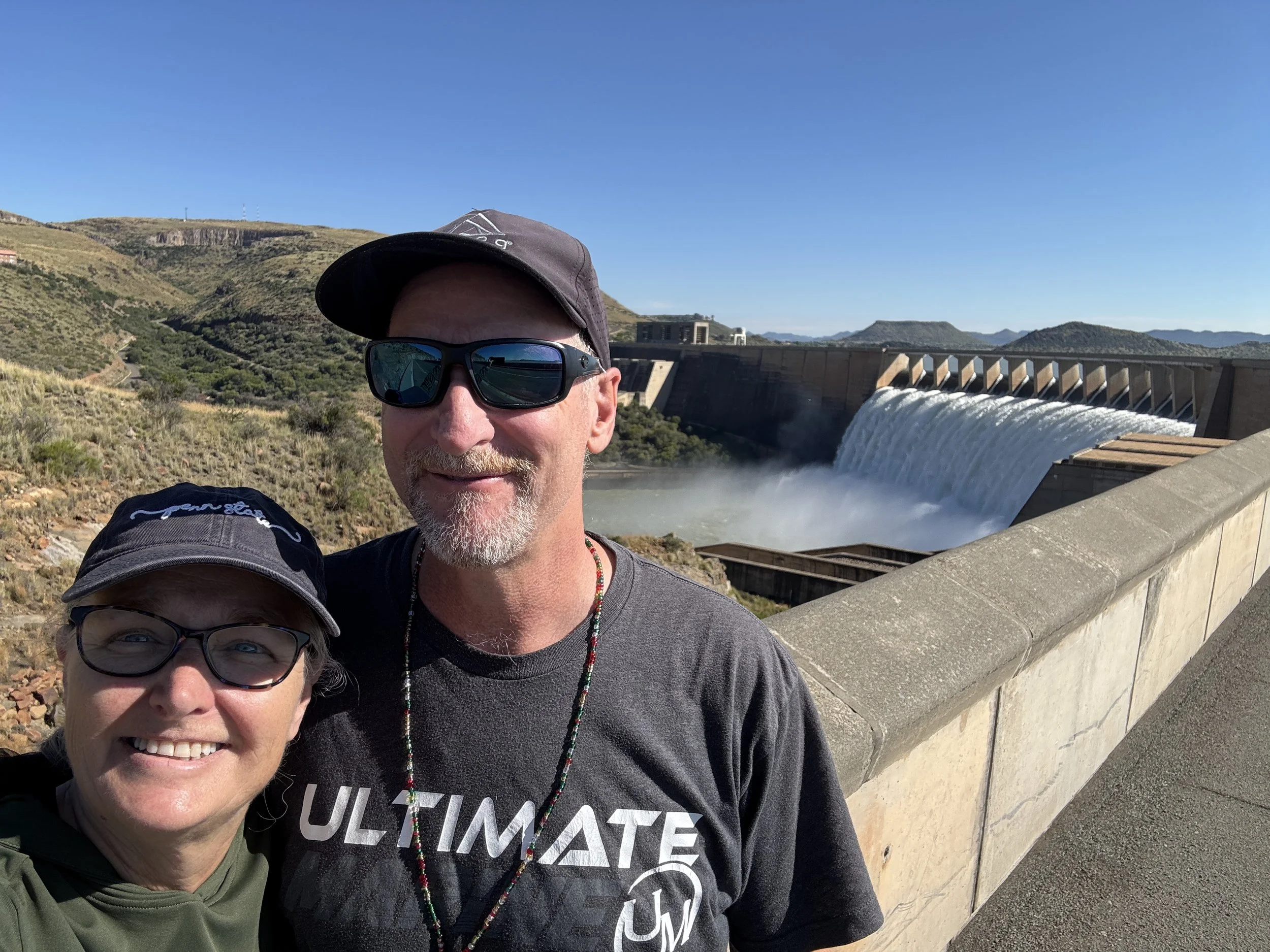
Sadly, our time in Addo Elephant National Park eventually came to an end. After a few incredible days surrounded by wildlife, we packed up the campers and hit the road again. Our next stop was Gariep Dam, where we stayed at Gariep Dam Forever Resort. The campground sits right by the water and is part of the largest reservoir in South Africa, making for a pretty beautiful place to park the campers and relax after all the excitement of safari life.
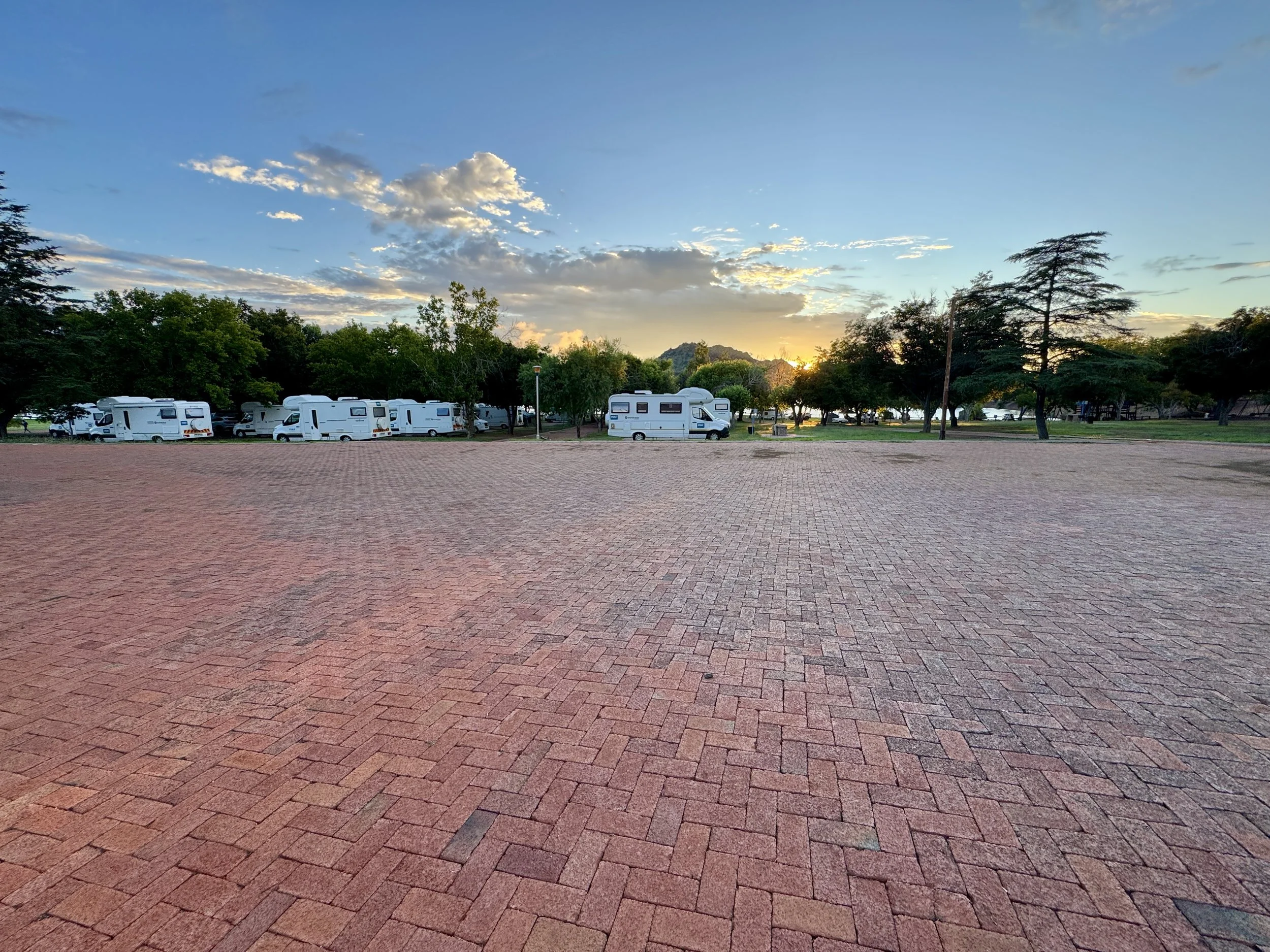
camping Gariep Dam
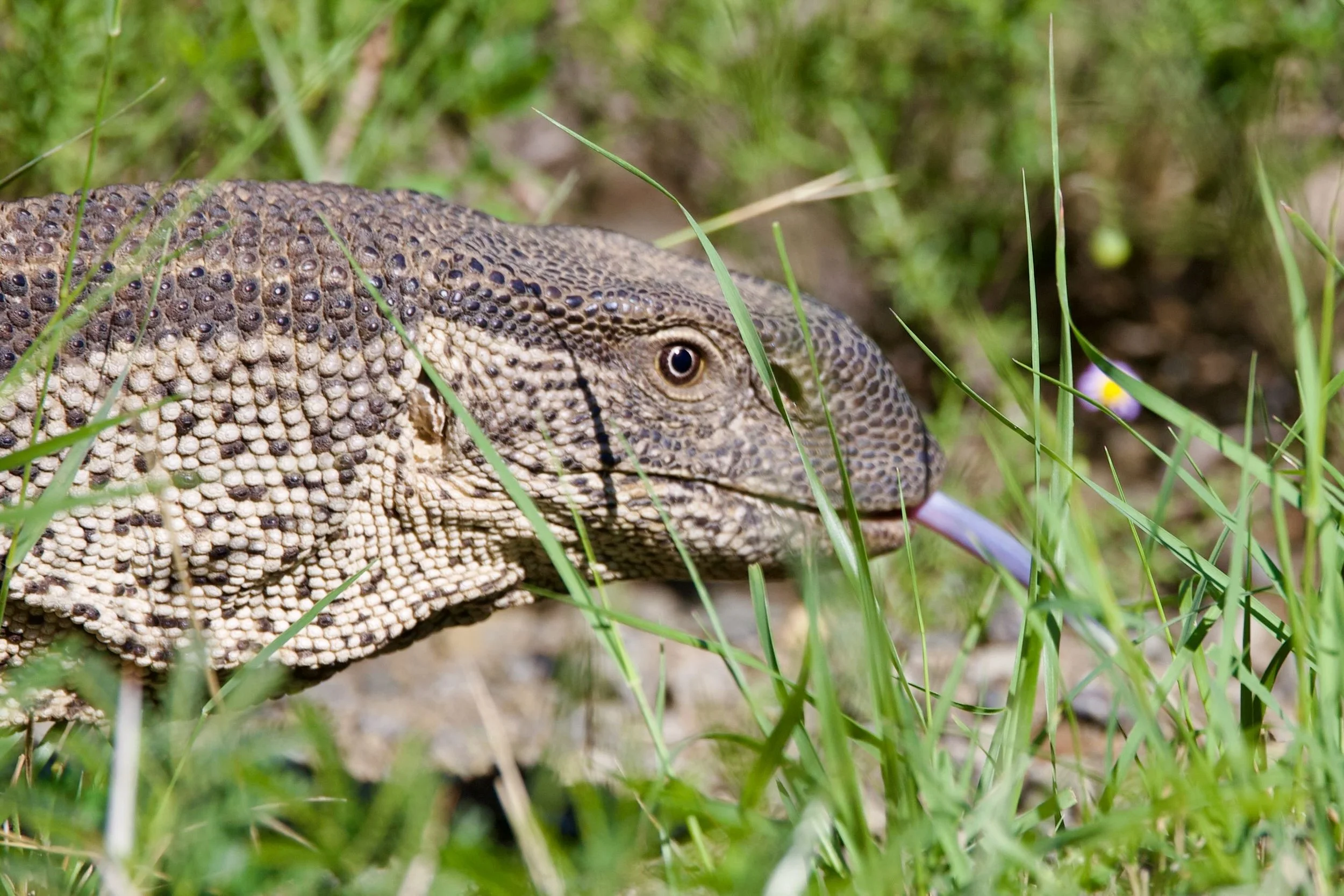
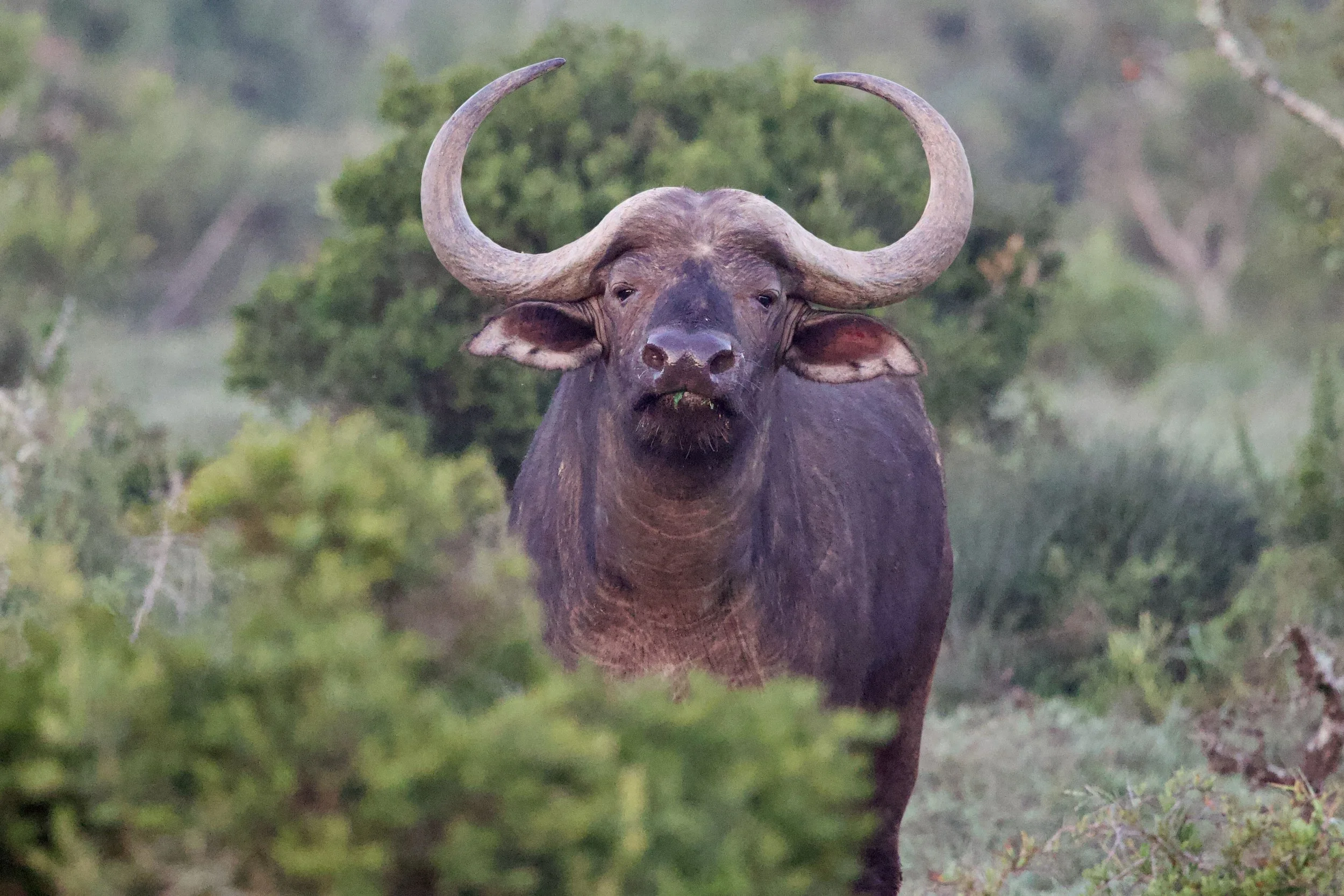
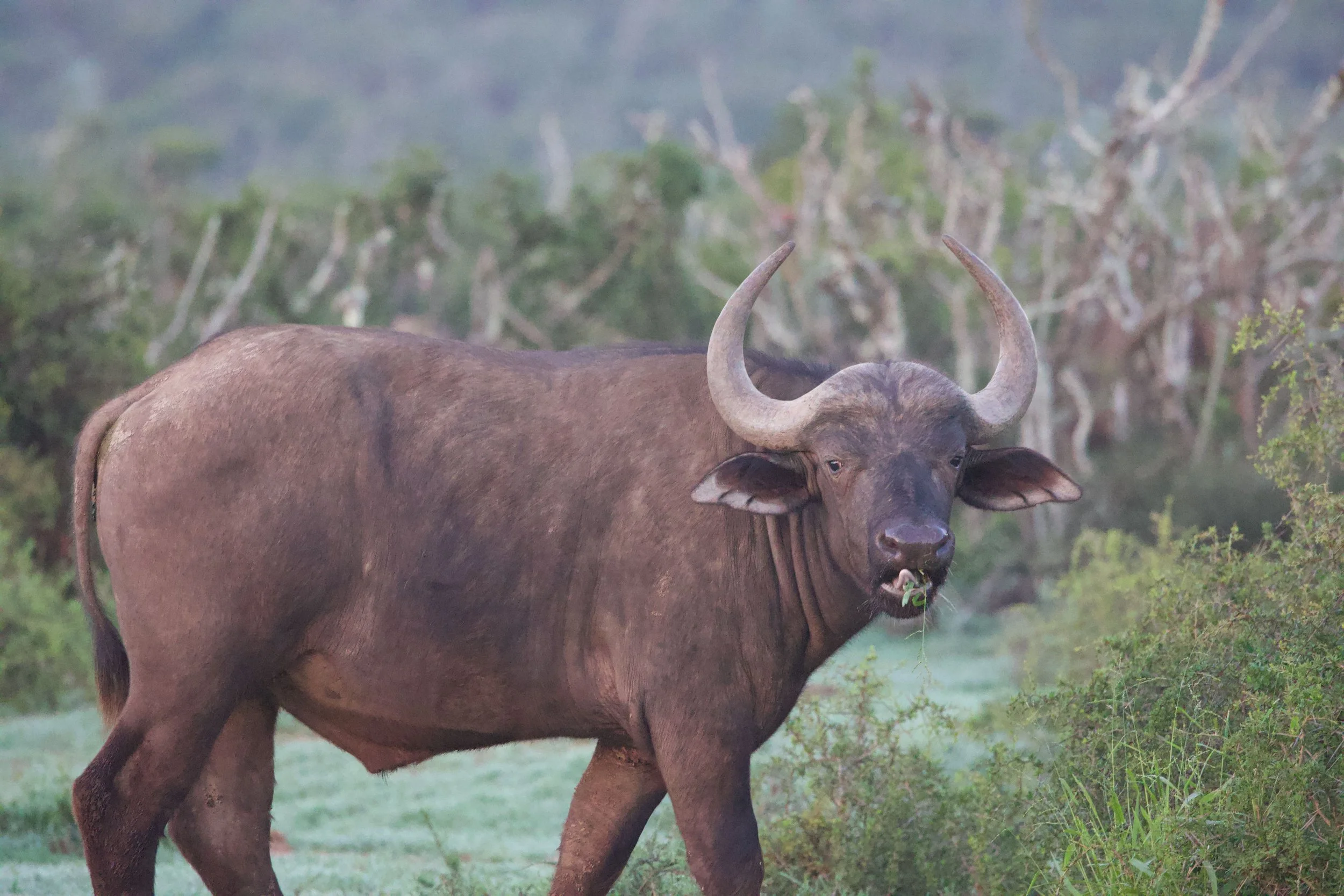
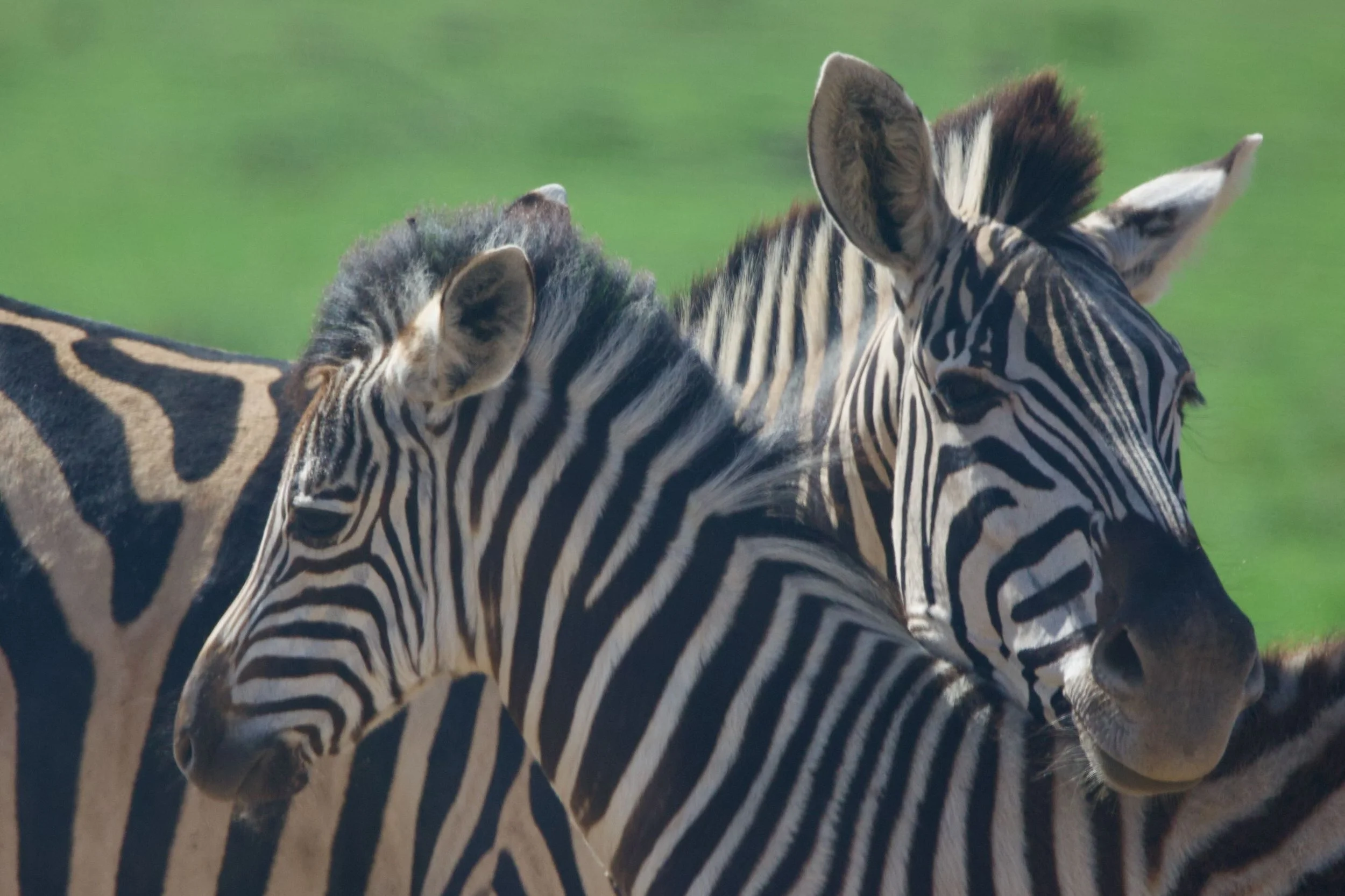
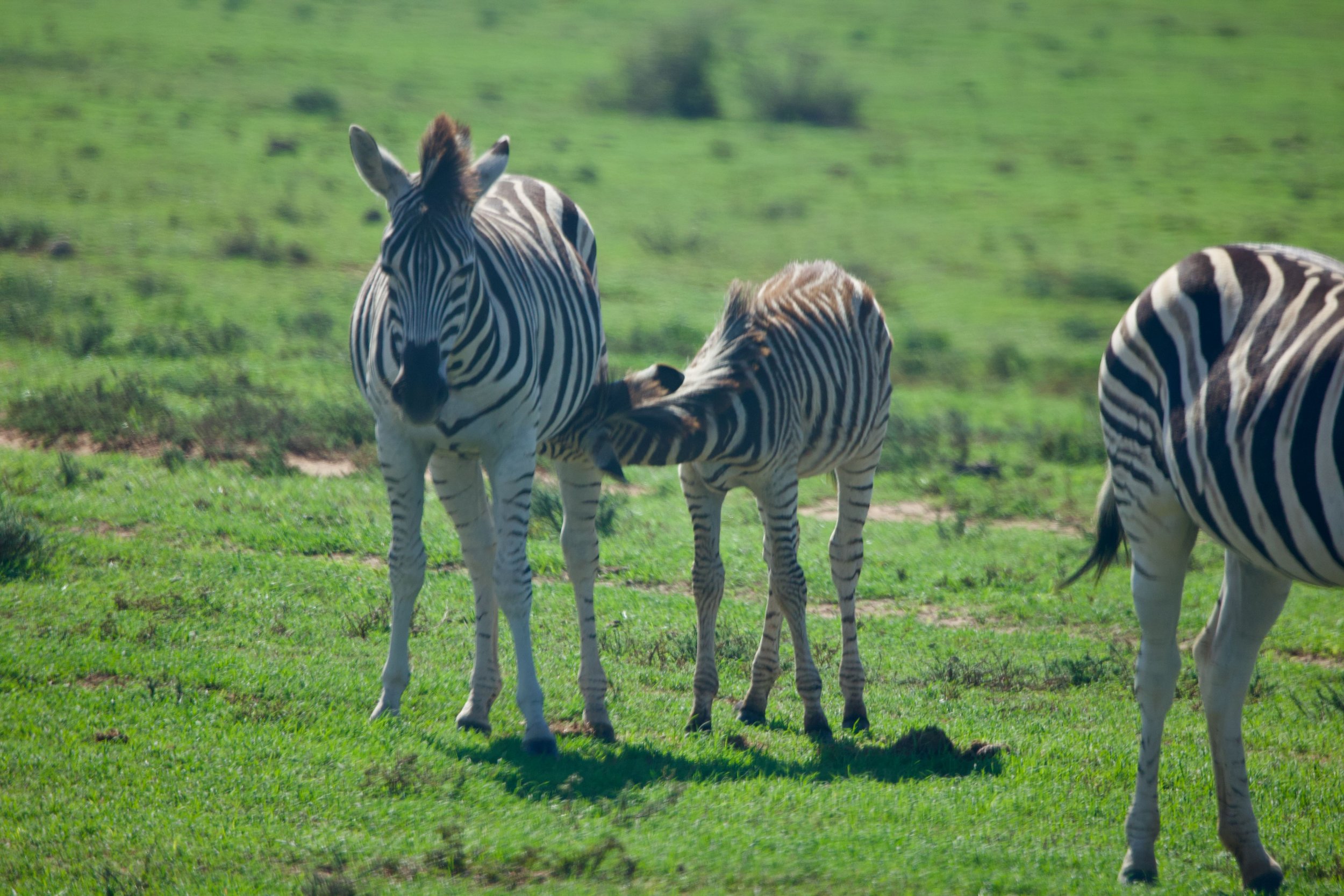
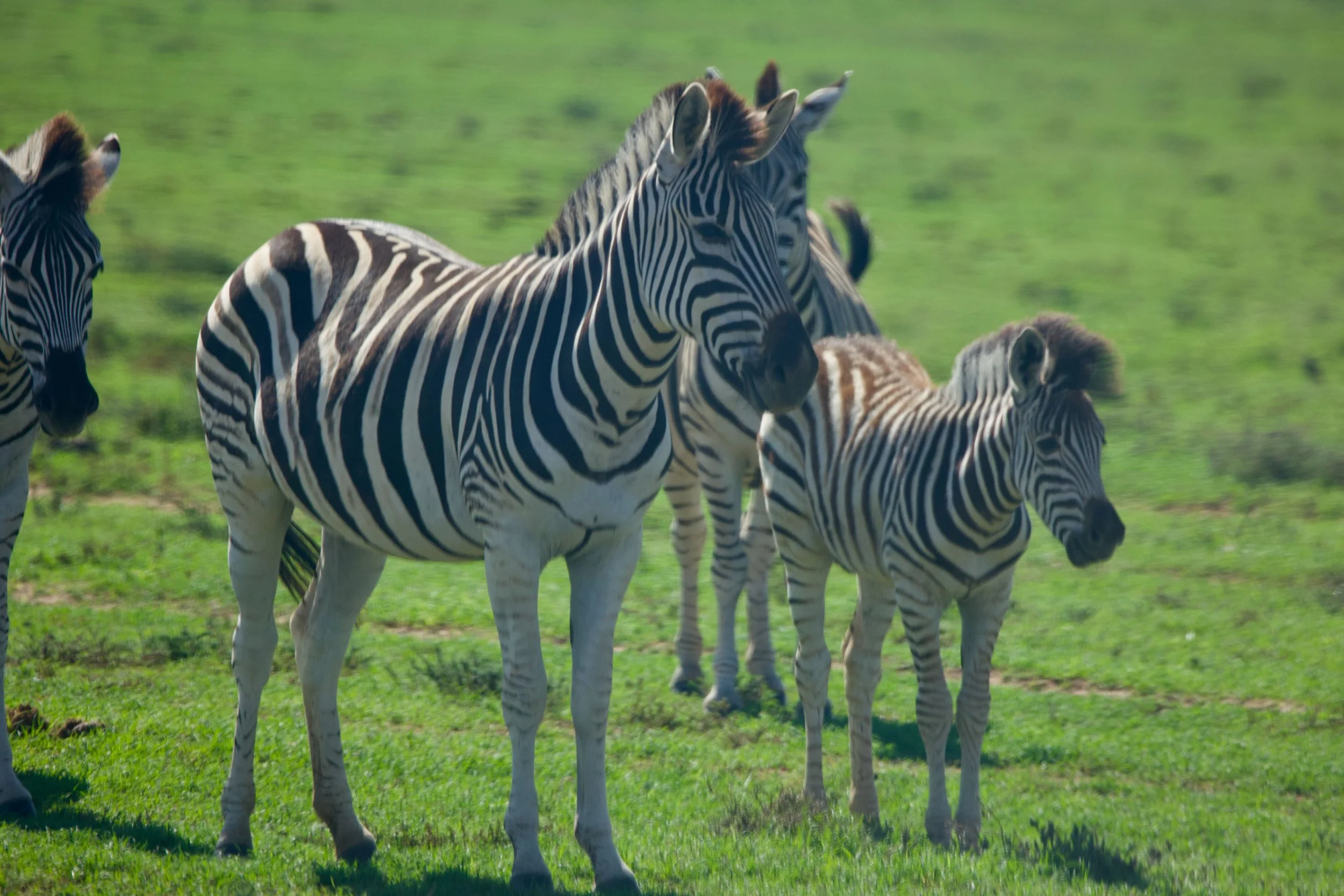
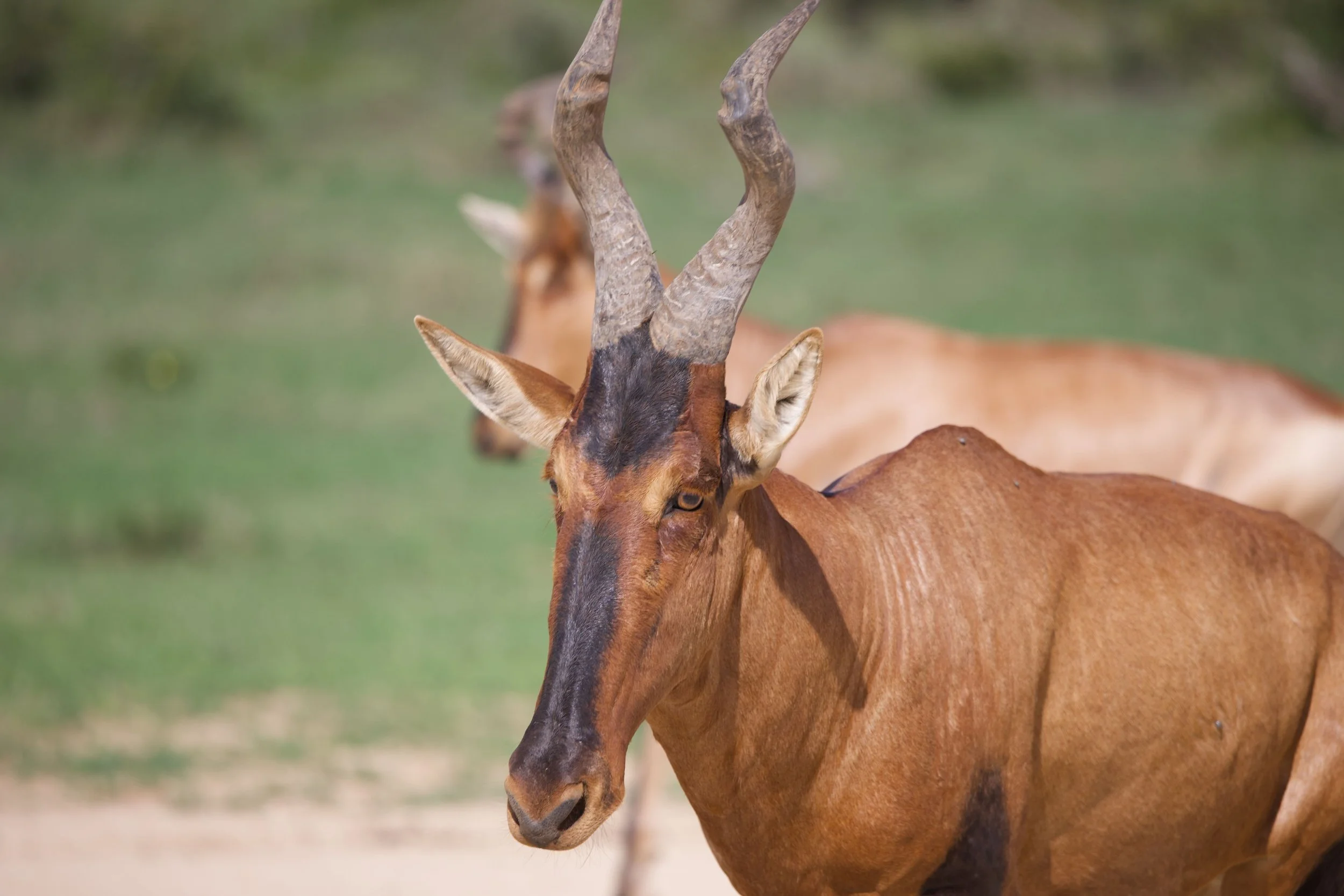
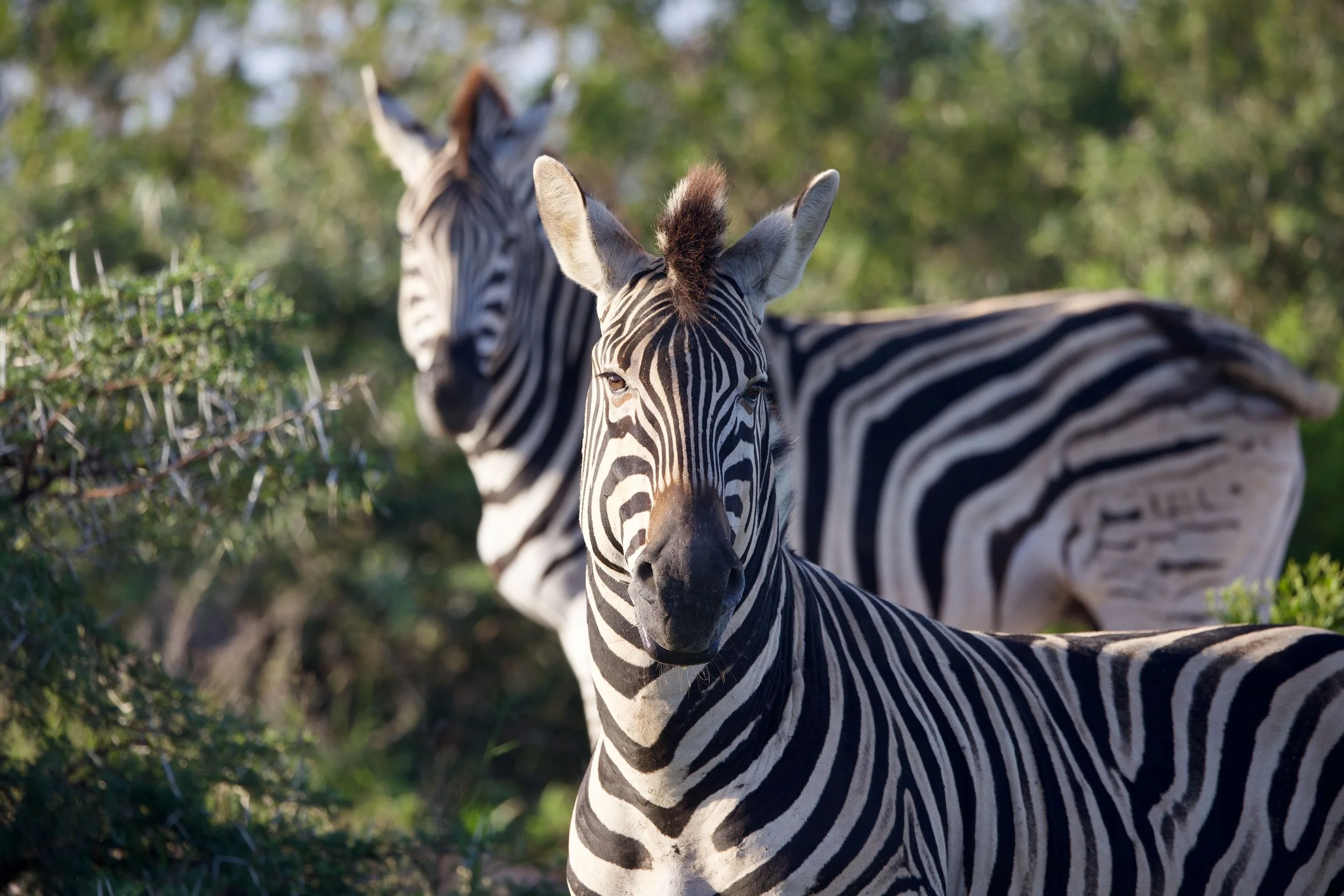
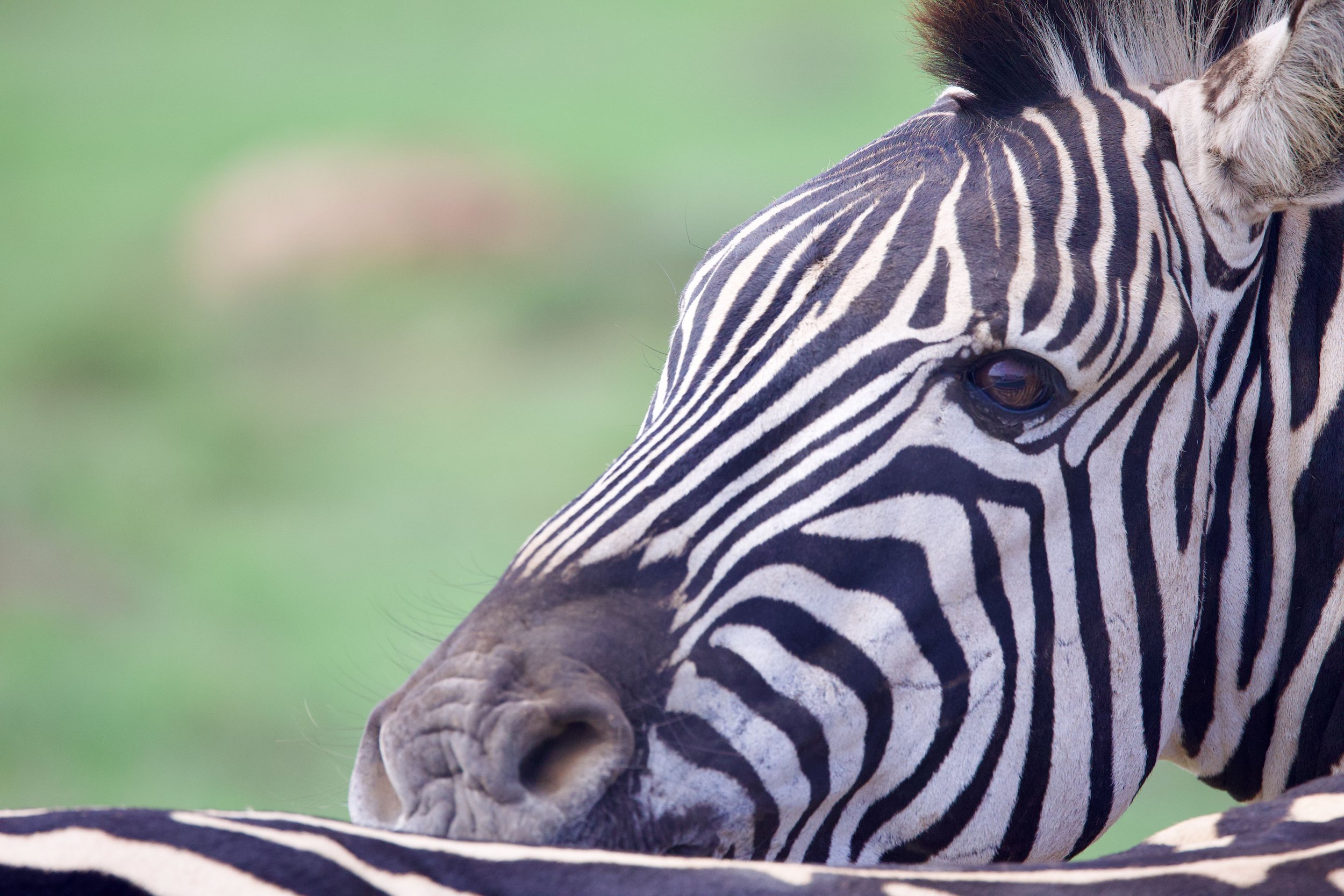
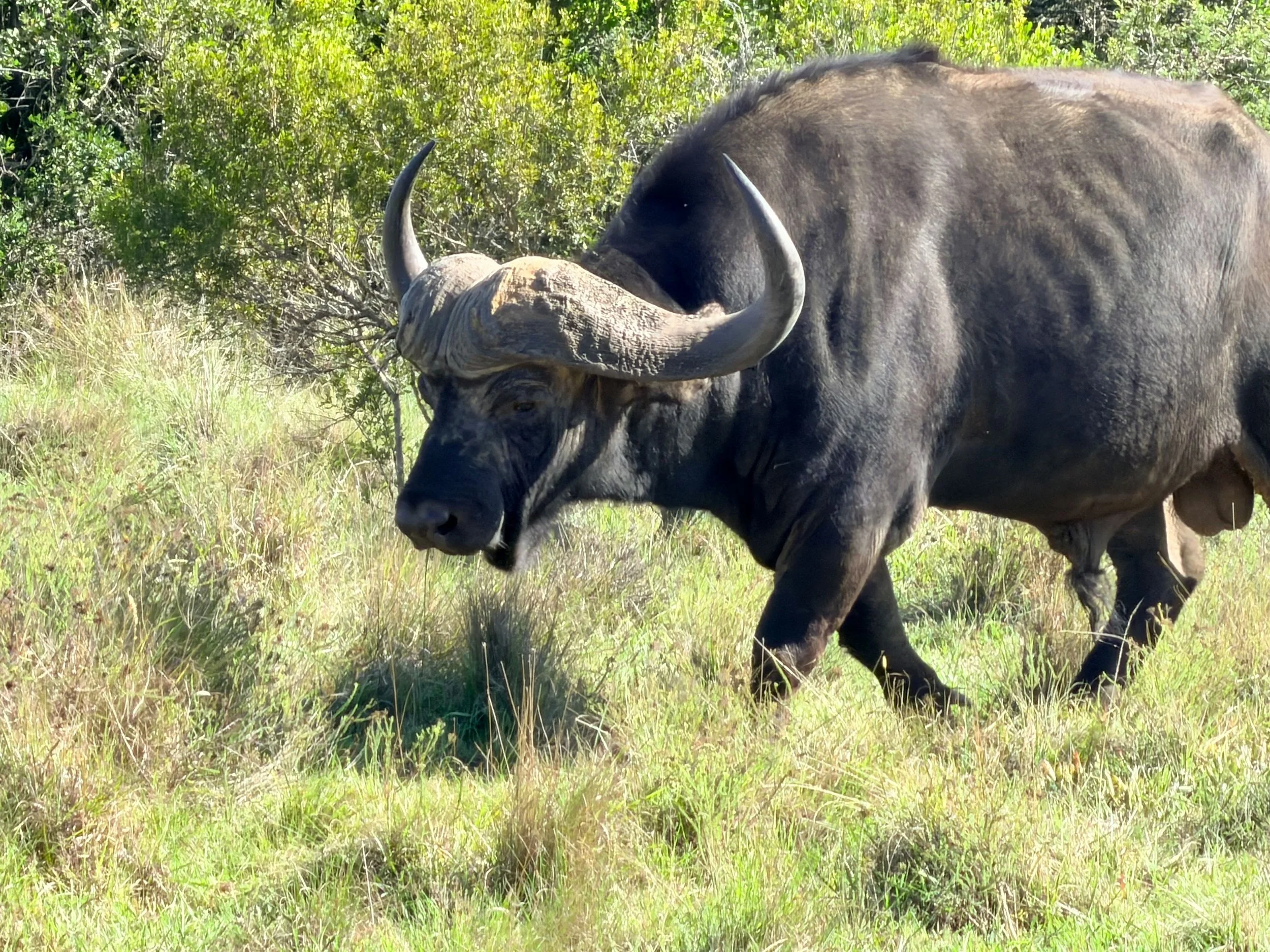
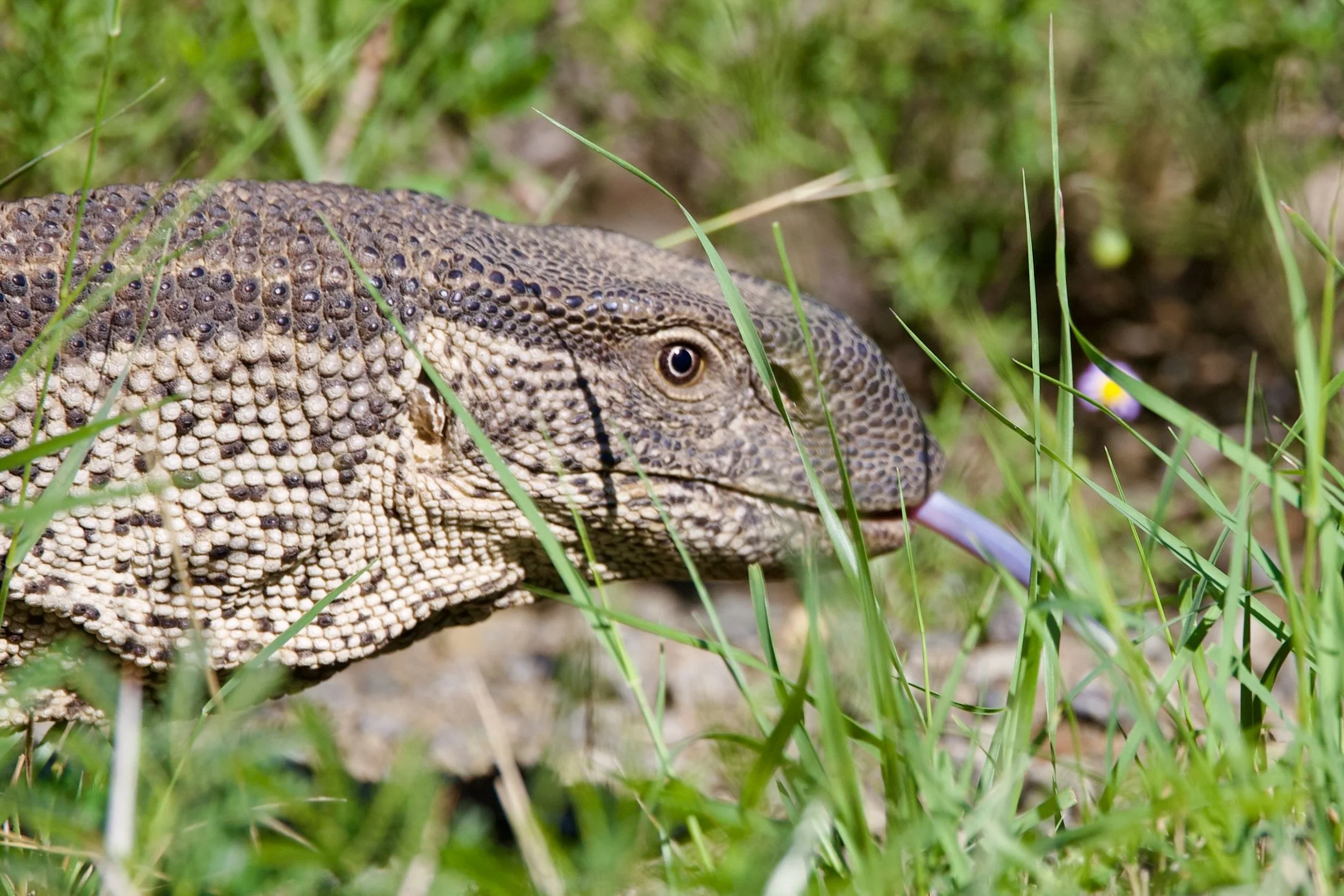
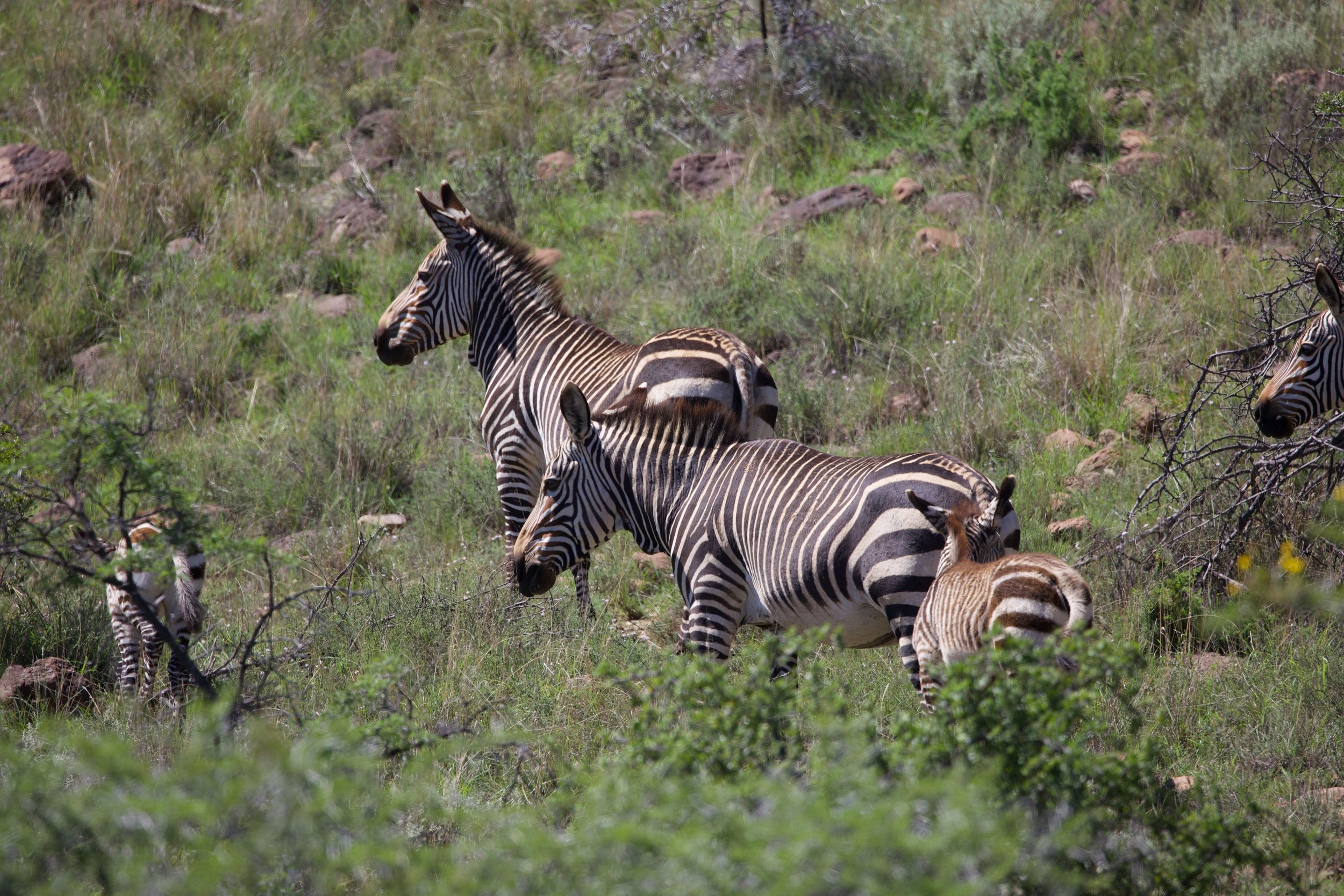
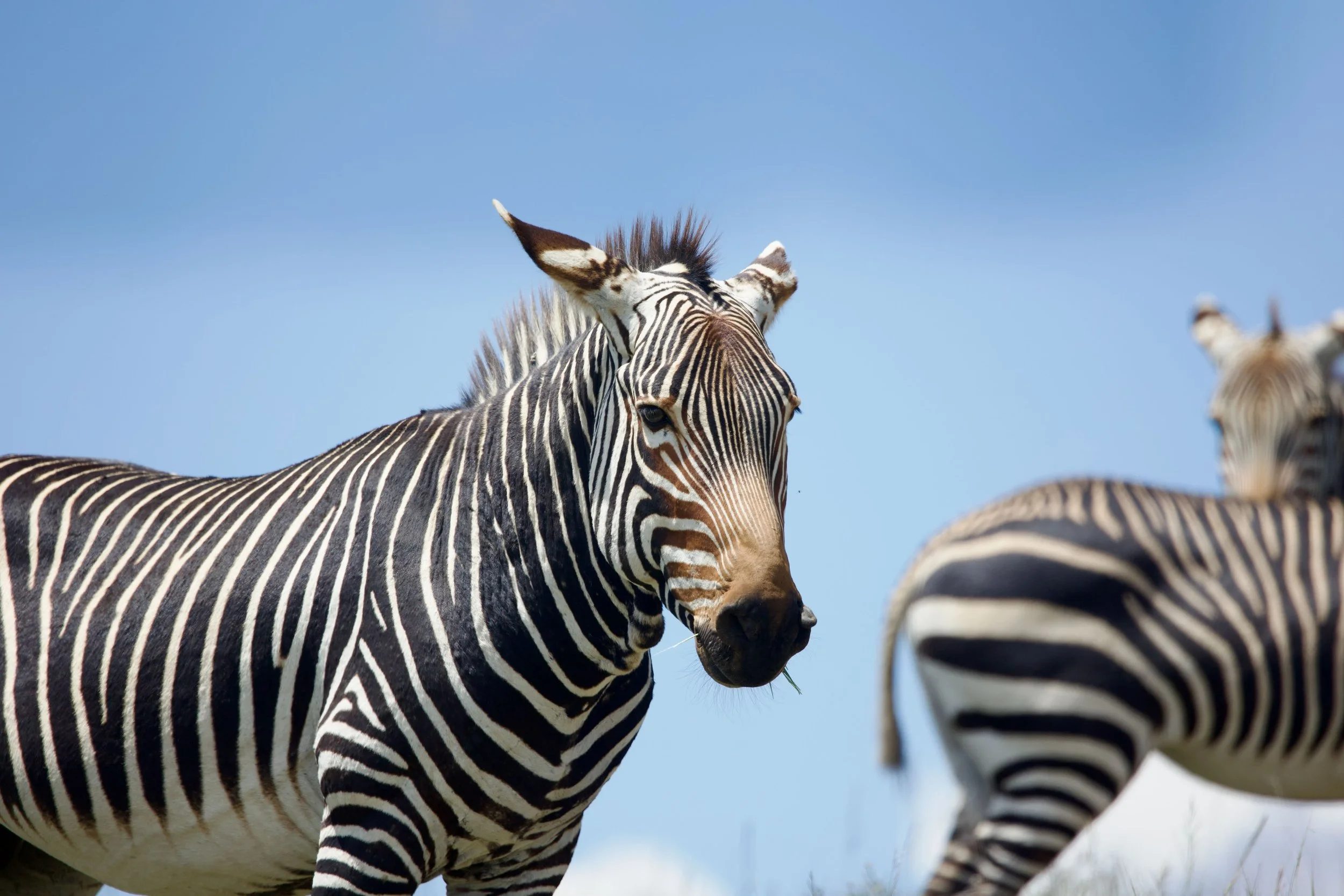
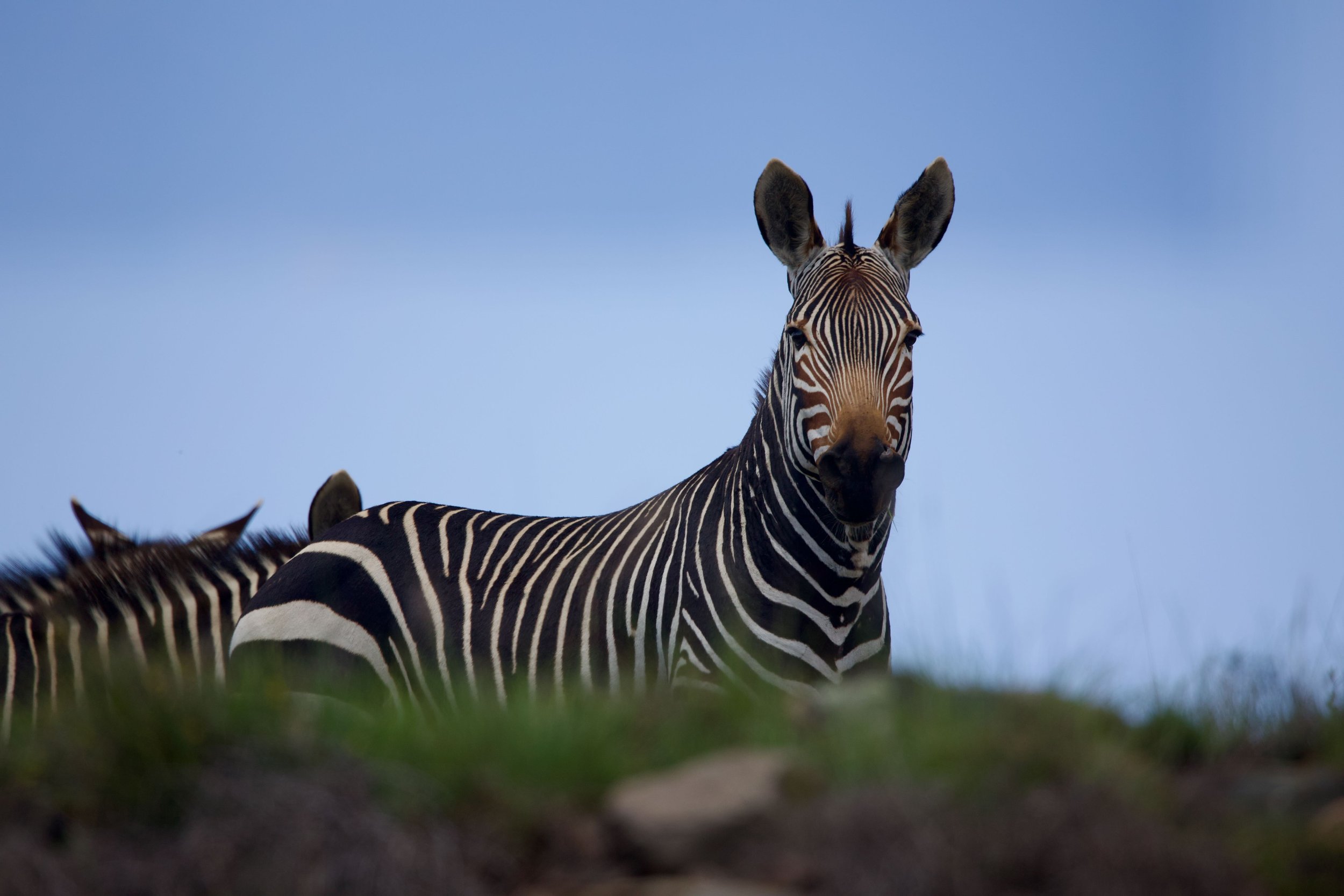
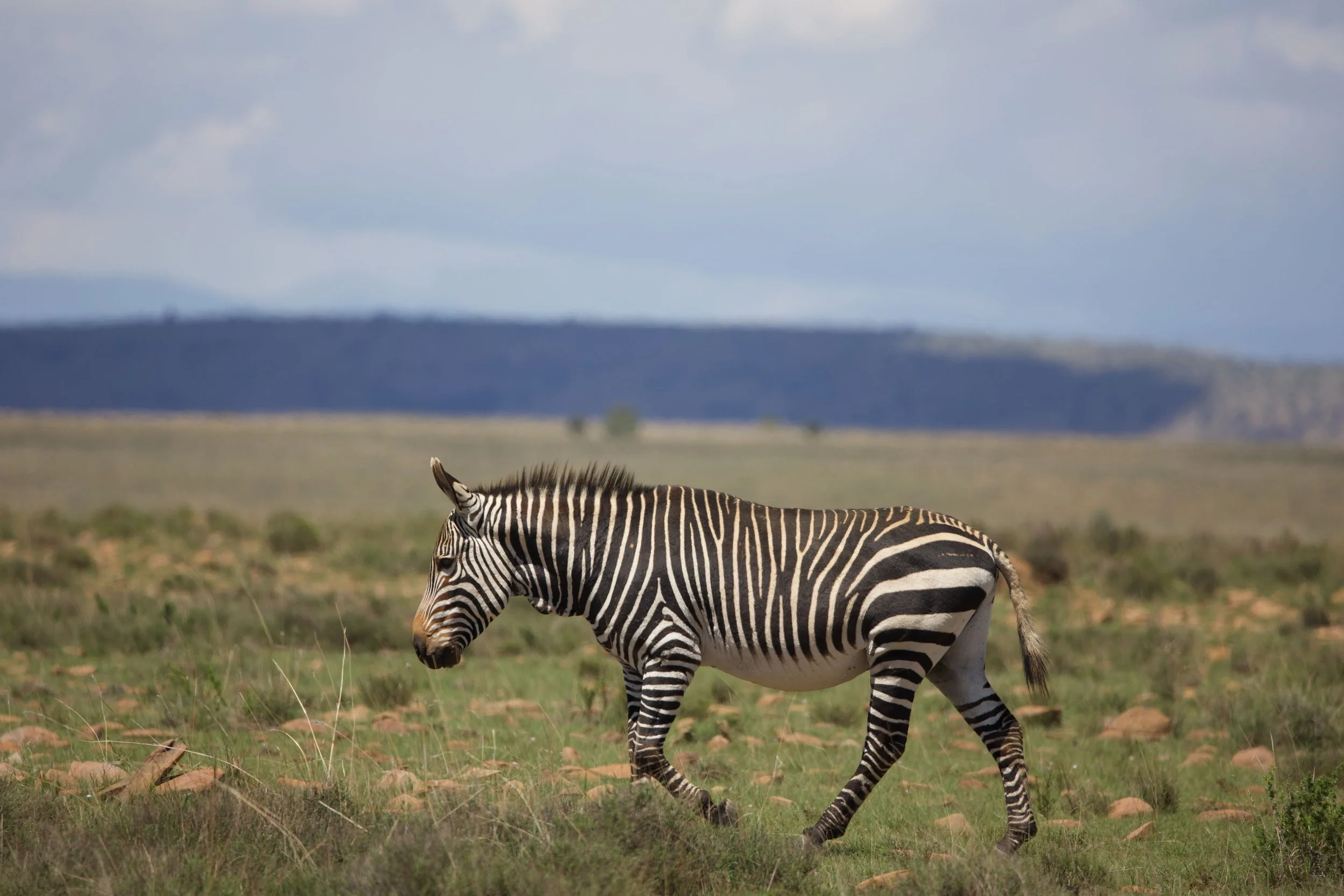
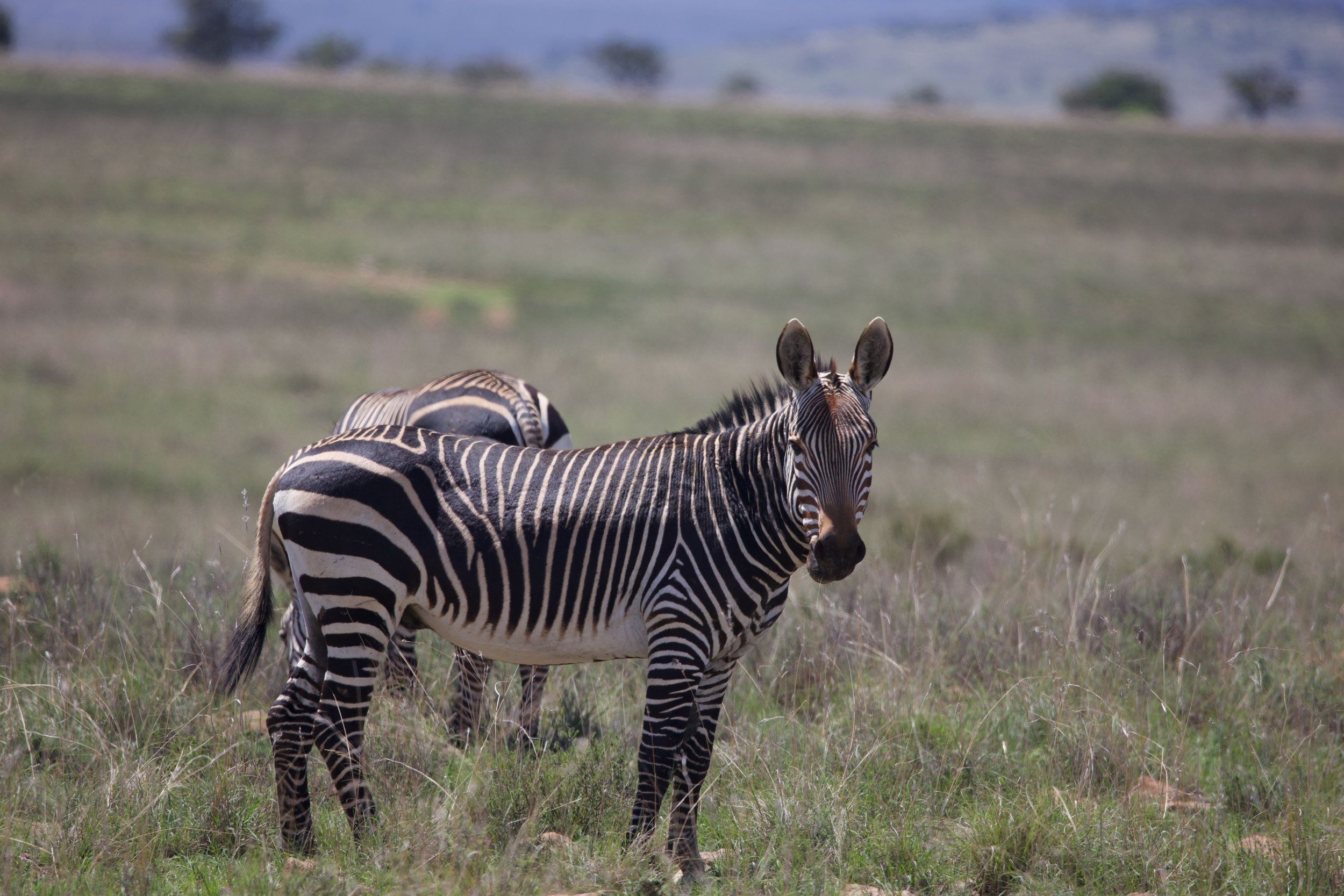
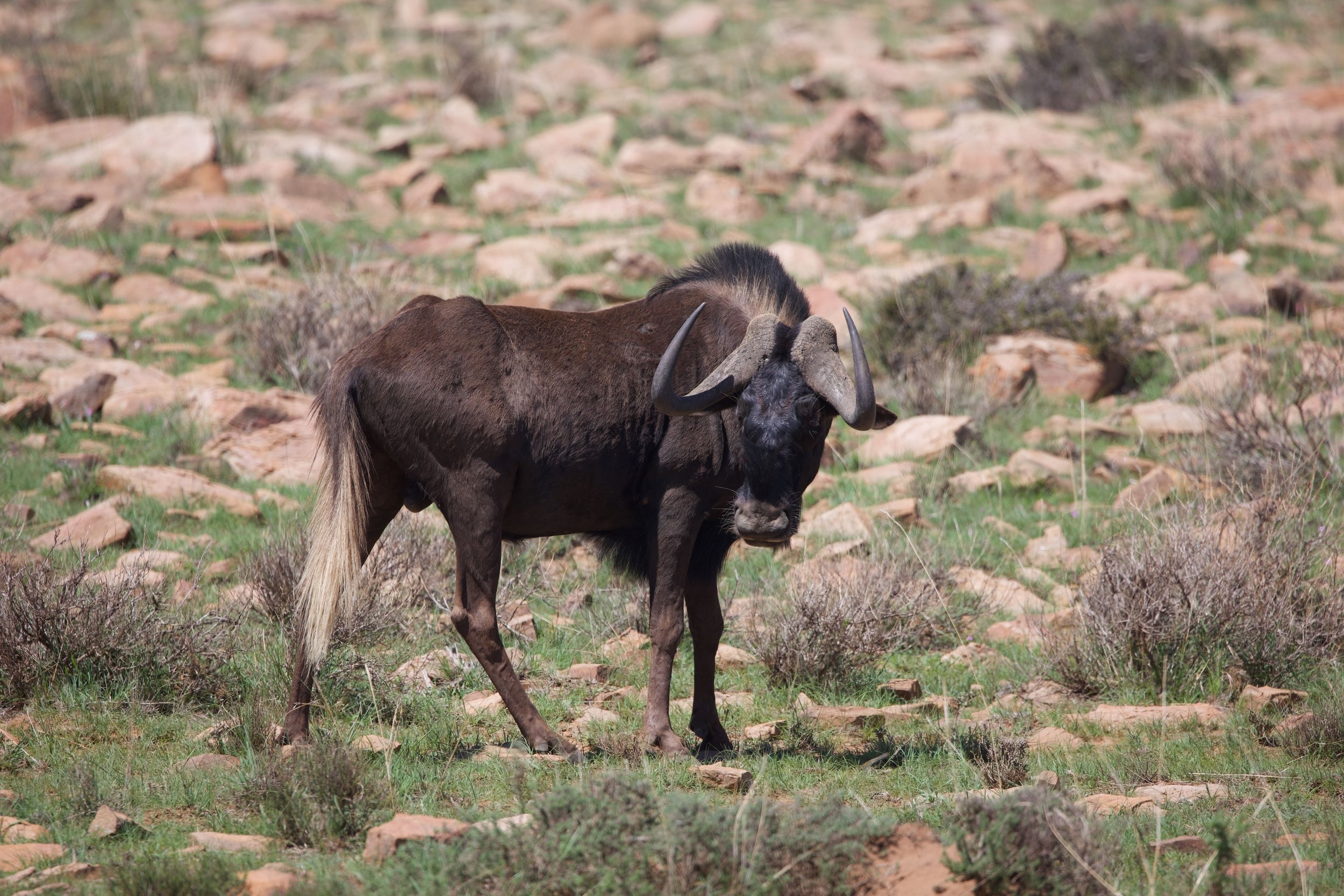
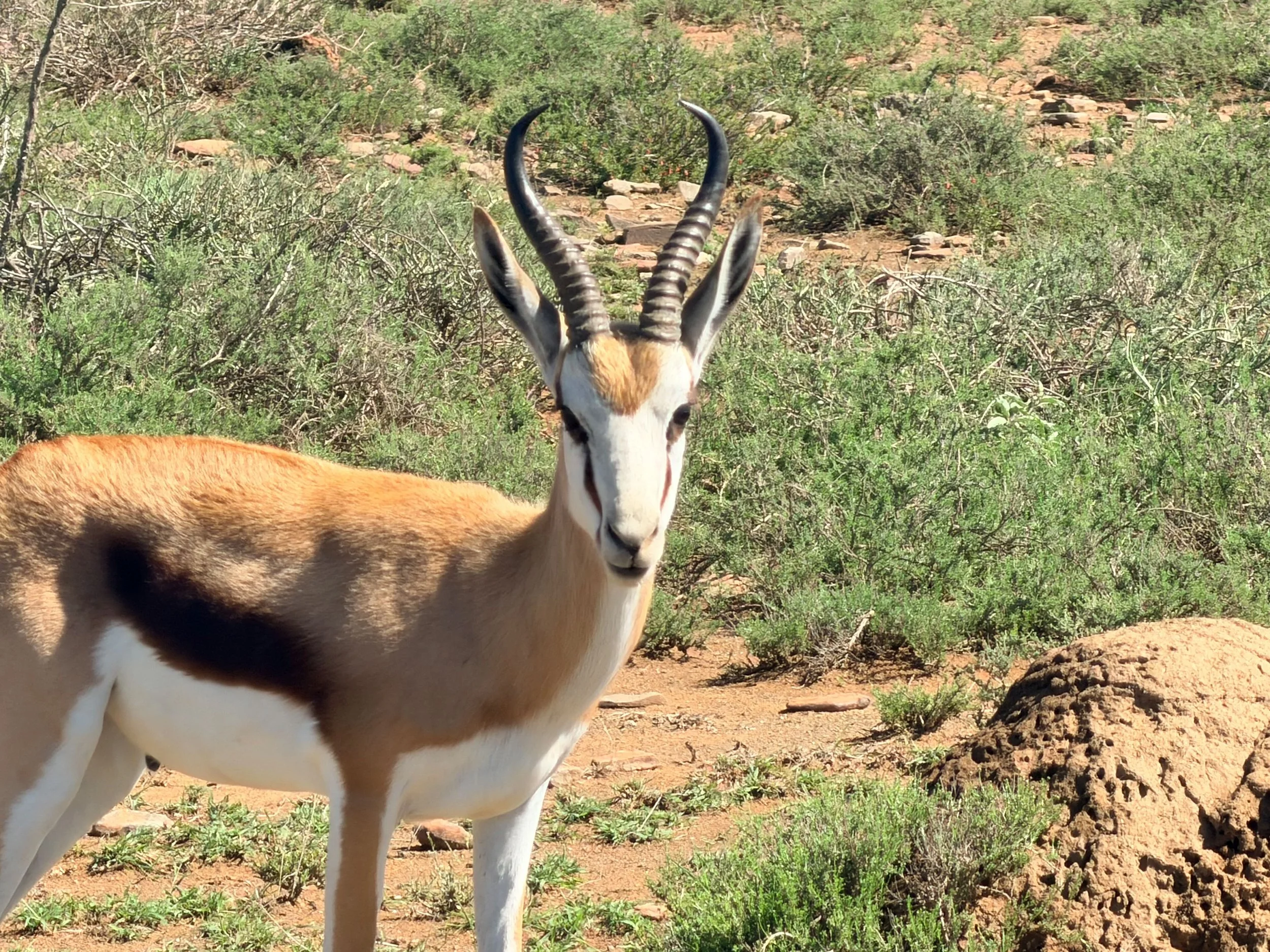
Thankfully, we did get one more safari in the travel, as on the way to Gariep Dam, we were able to stop at Mountain Zebra National Park, a stunning and relatively quiet wildlife park. The park was originally established to help in the conservation of the Cape mountain zebra, which had been hunted almost to extinction. Today their numbers have rebounded, and the park is a great place to see these iconic animals up close. Most the zebras we see in the other parks are plains zebras, which have a fainter brown stripe between the black stripes. Beyond the zebras, the park is home to a variety of wildlife not just the cape mountain zebra, and we saw many including cape buffalo, springbok, blesbok, wildebeest, hartebeest, rock monitor, and various bird, with the best sighting being a pin-tailed whydah that almost looks like a large dragonfly in flight.
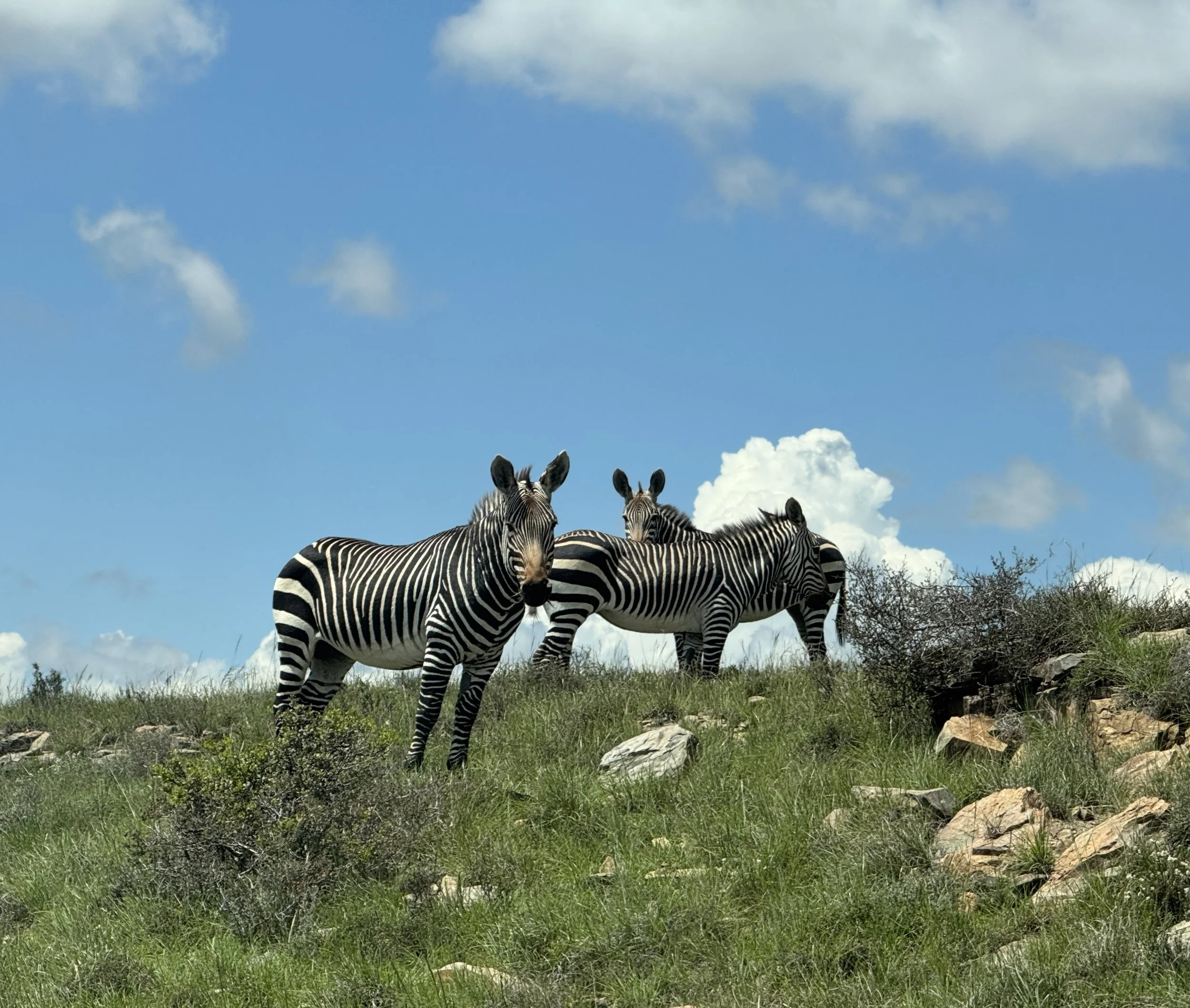
Cape Mountain Zebra
One of the highlights for me was the drive from one camp to the other, which took us right through the town of Cradock—a place that had recently come to life for me in a book I’d read. The town itself is charming, with a mix of Cape Dutch and Victorian-style buildings, many featuring crisp whitewashed walls. As we drove through, it was buzzing with activity—people moving about, shops opening, and daily life in full swing. On the outskirts, we passed through the townships, densely populated areas historically created under apartheid to segregate non-white communities. Here, housing ranges from modest brick homes to corrugated metal shacks. Despite the economic challenges, these communities are full of resilience, rich cultural expression, and a strong sense of community, which was truly striking to witness firsthand.
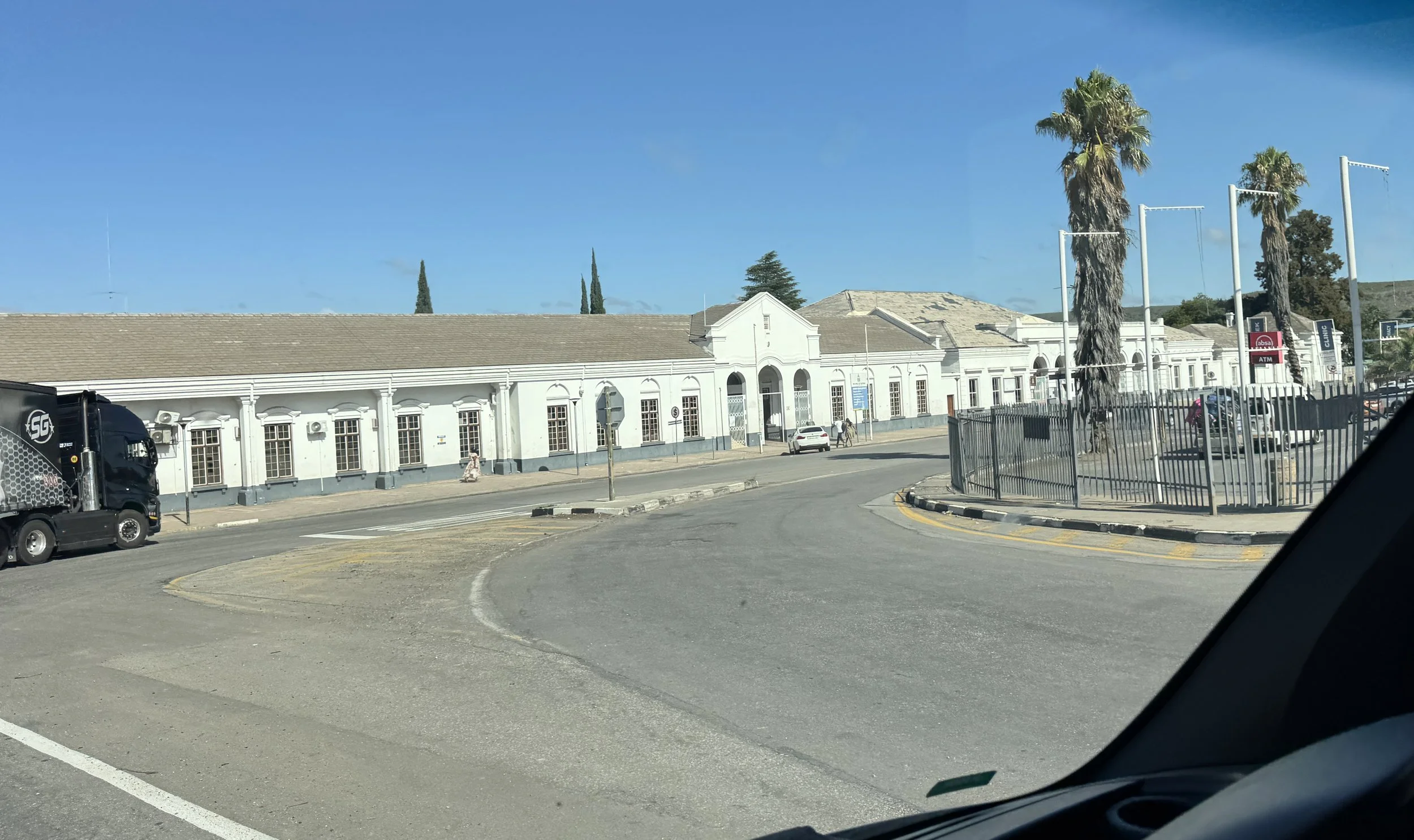
Craddock