A little Culture Too
Fantasy South Africa RV Safari #7
Steve and I dreamed about South Africa for the wildlife and safaris, but we ended up experiencing some great local culture as well. A few of the cultural stops were organized as part of our group tour, while others were places our guide suggested that we checked out on our own.
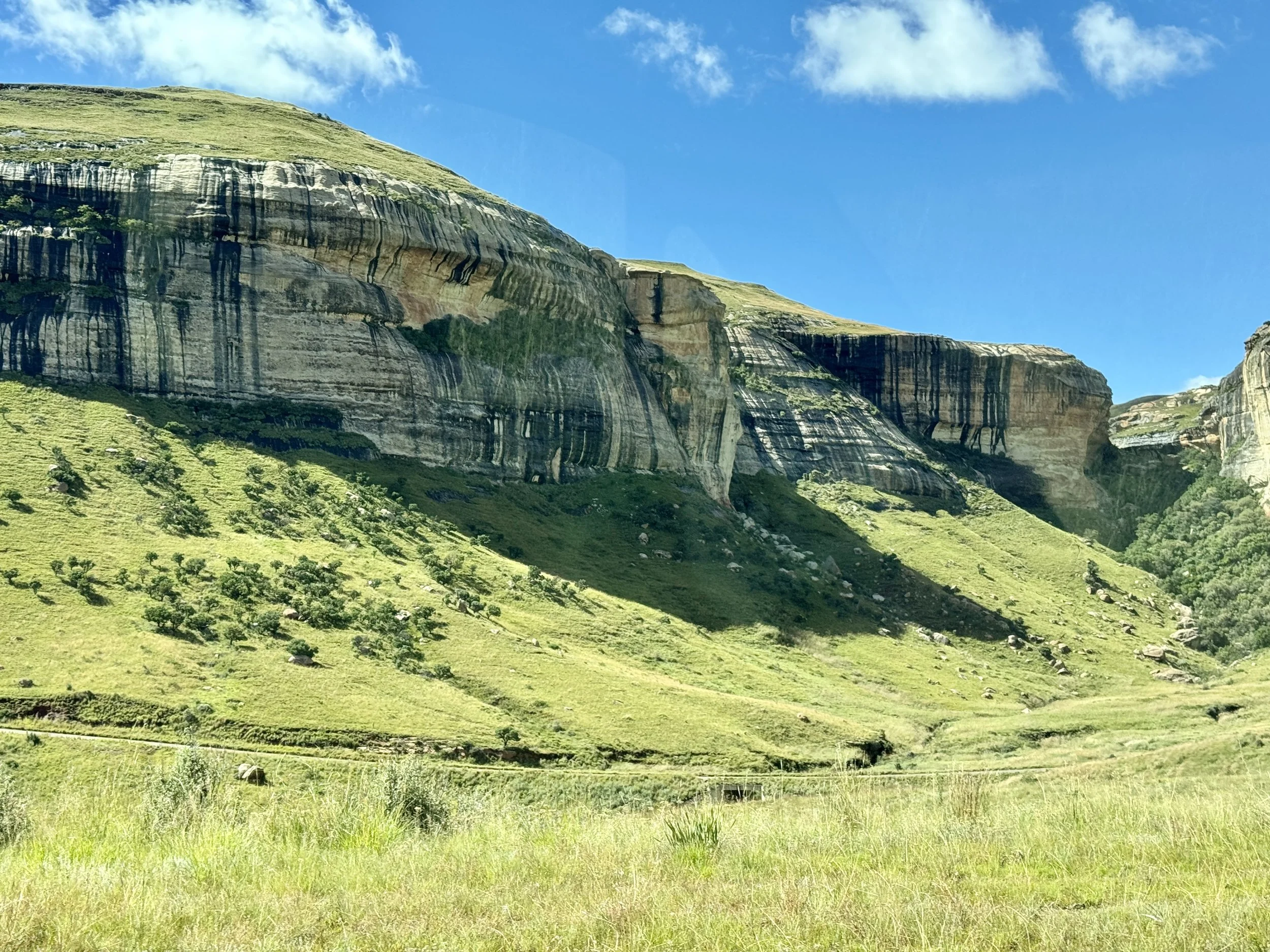
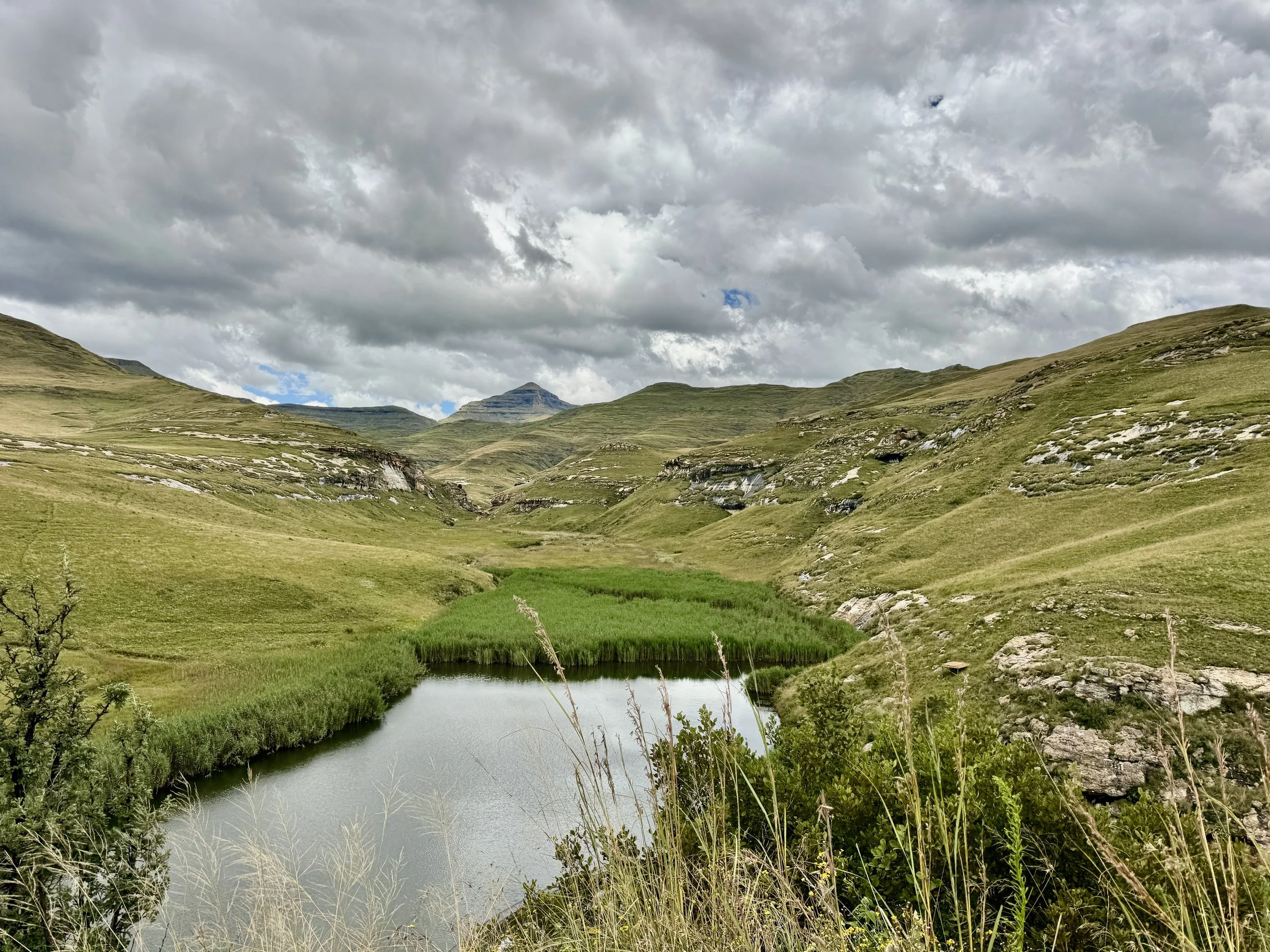
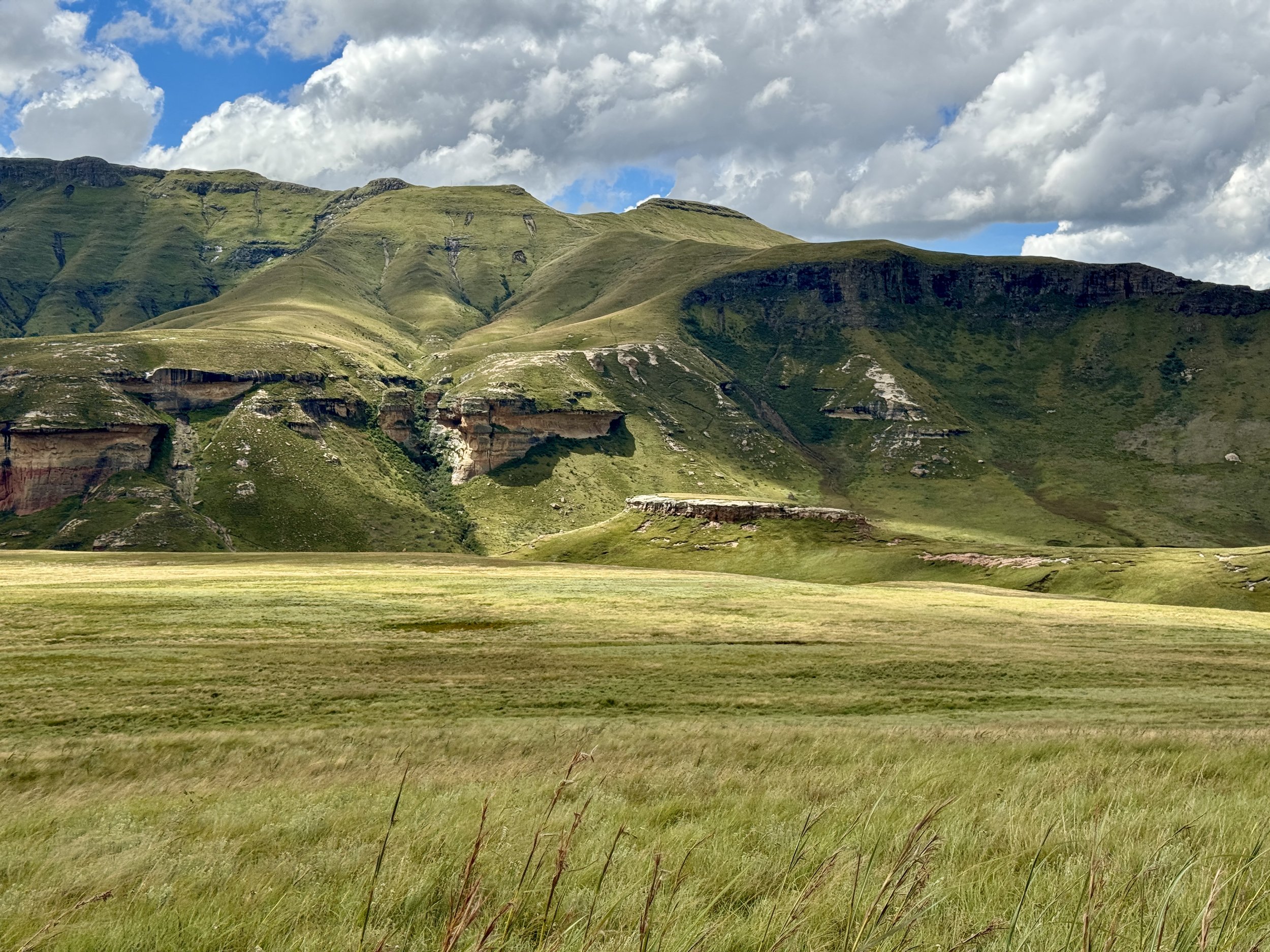
Our first group cultural experience took place while we were staying in Golden Gate Highlands National Park.
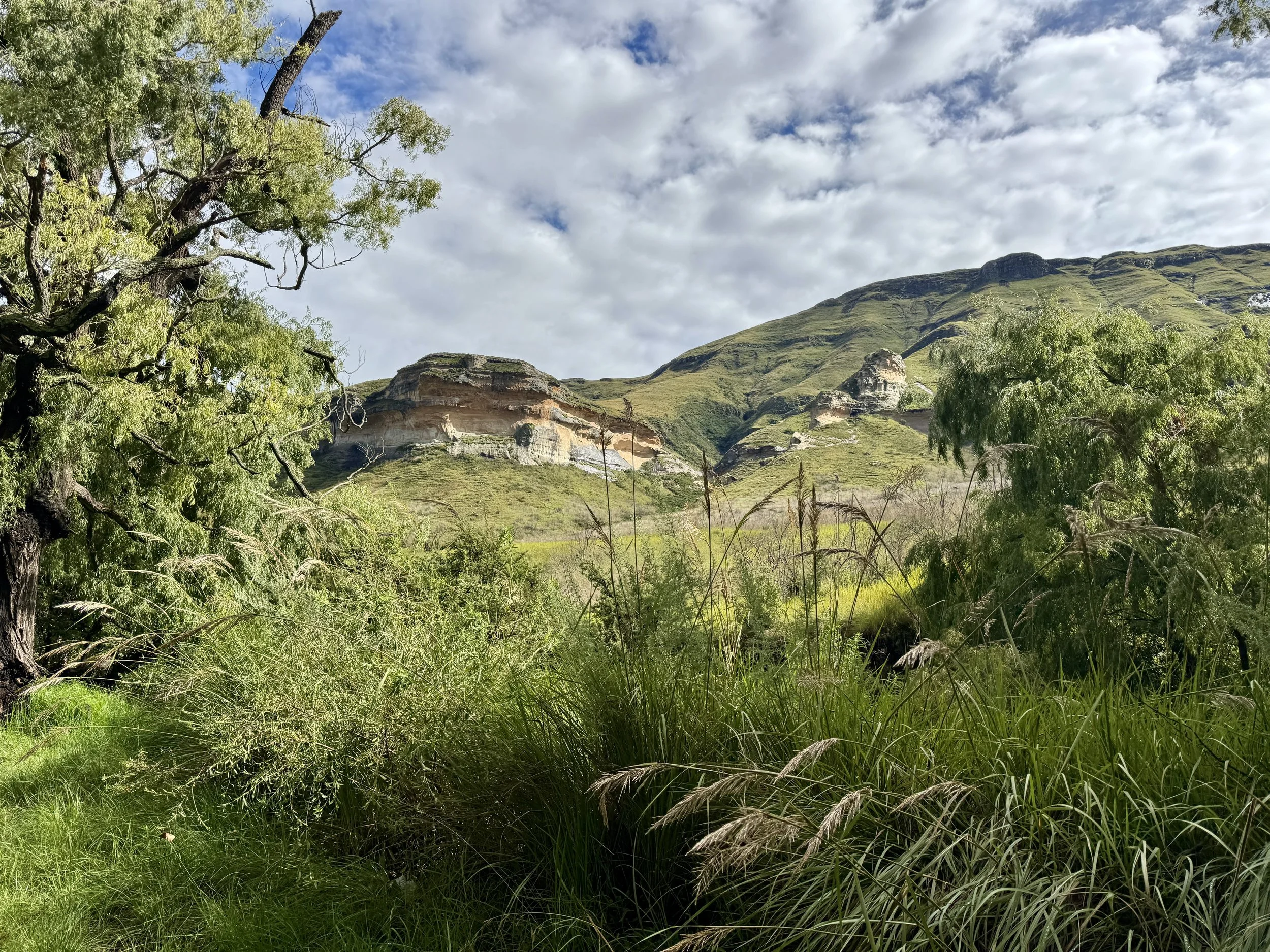
Golden Gate Highlands National Park
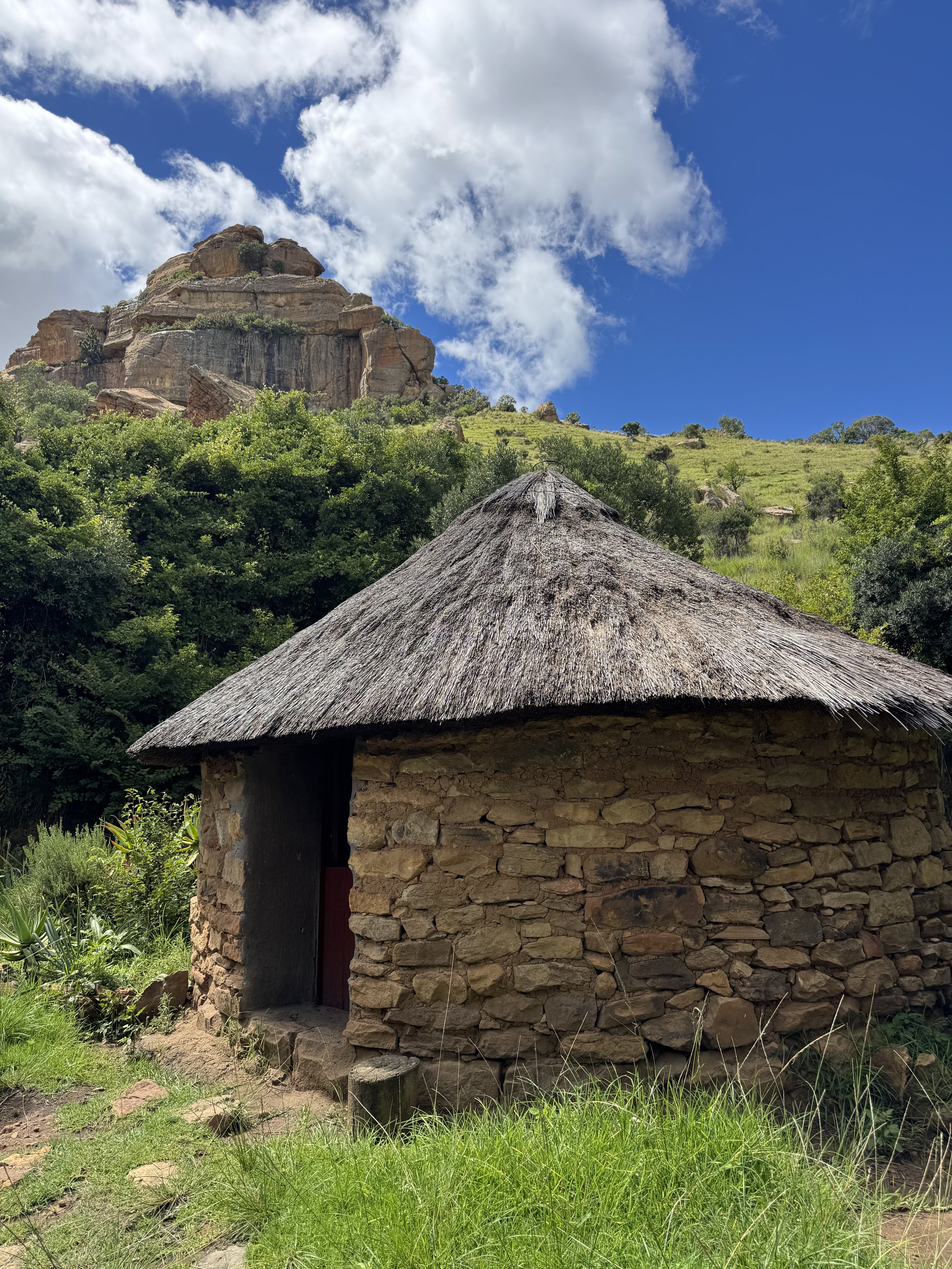
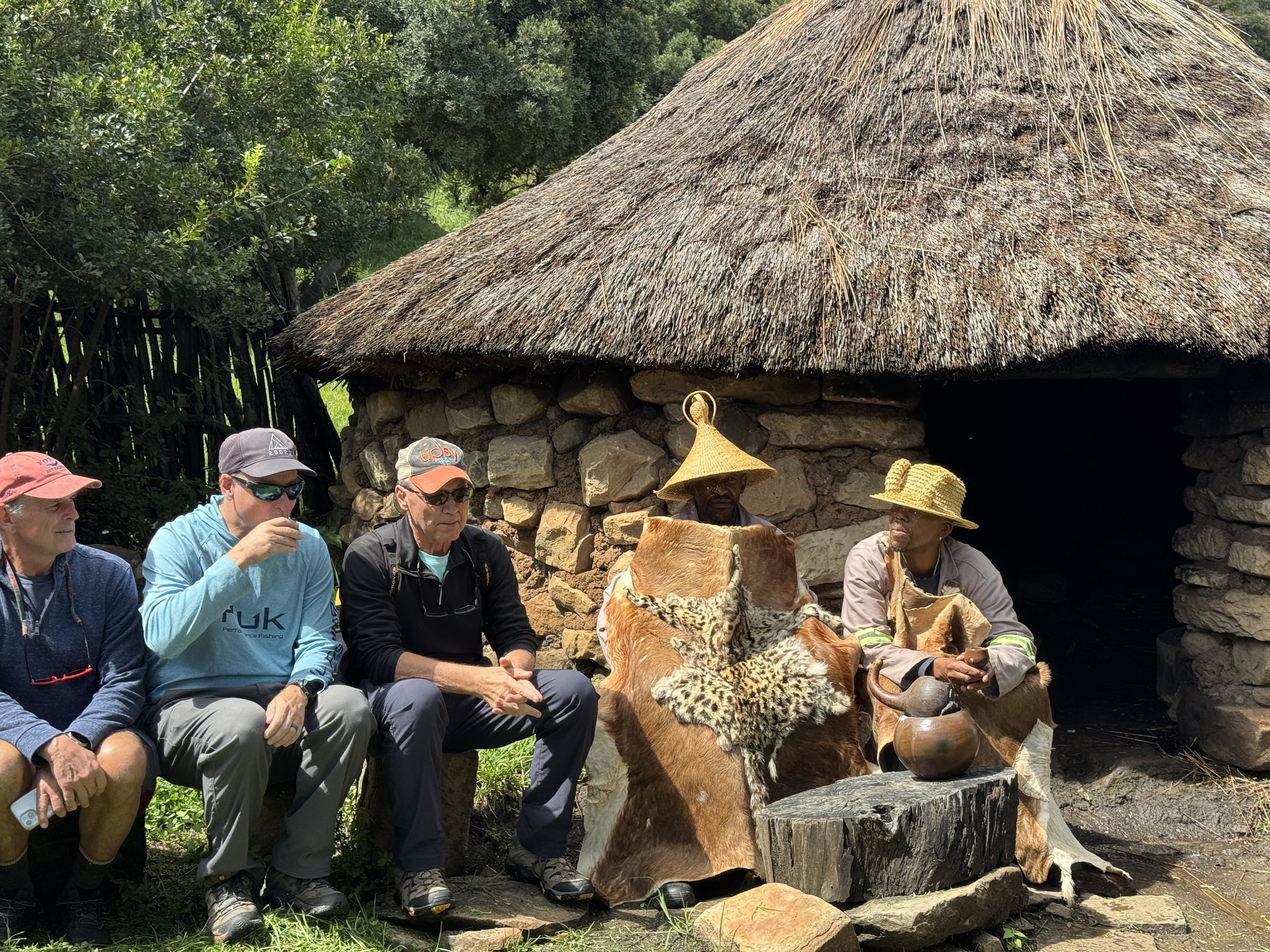
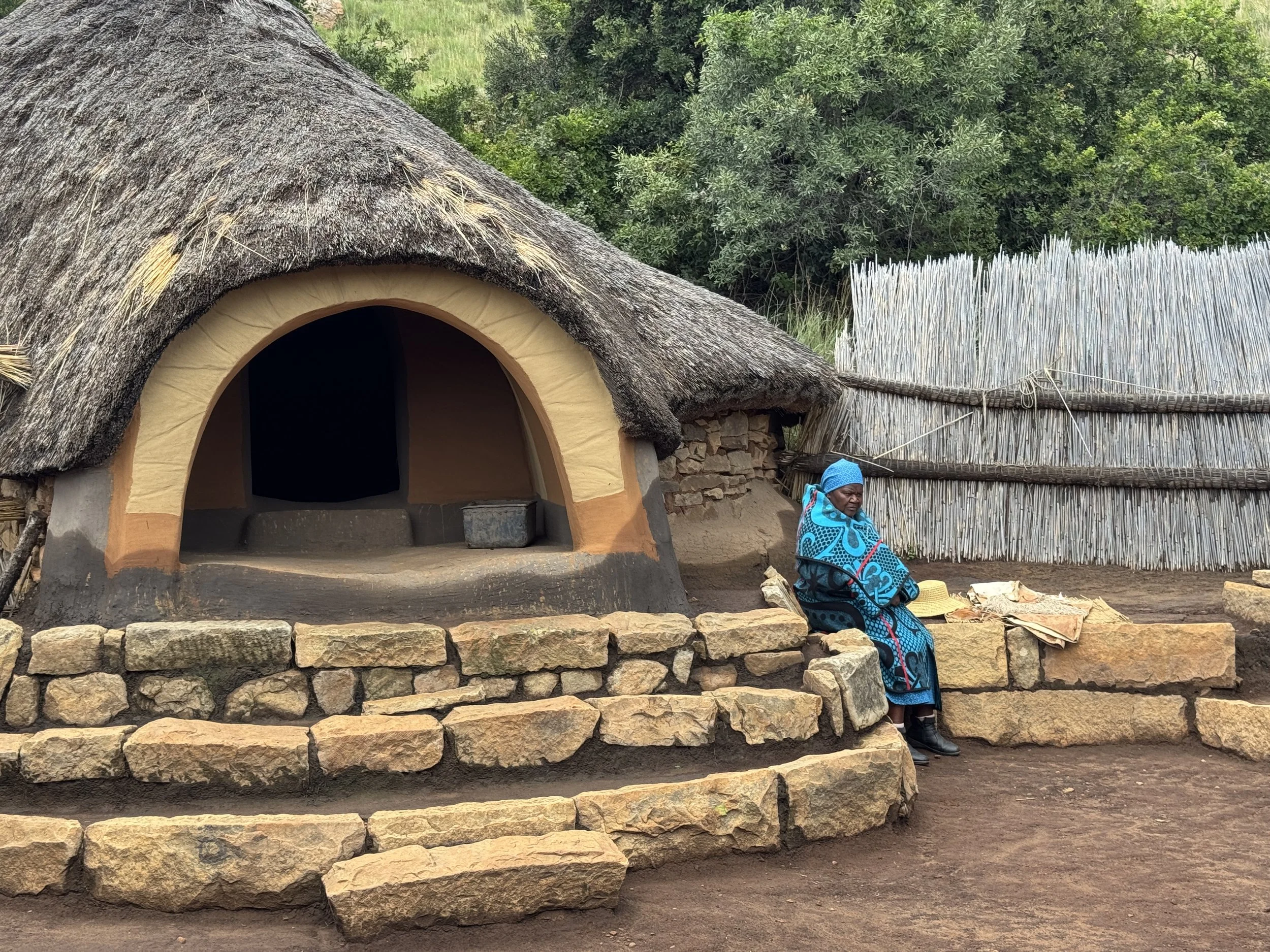
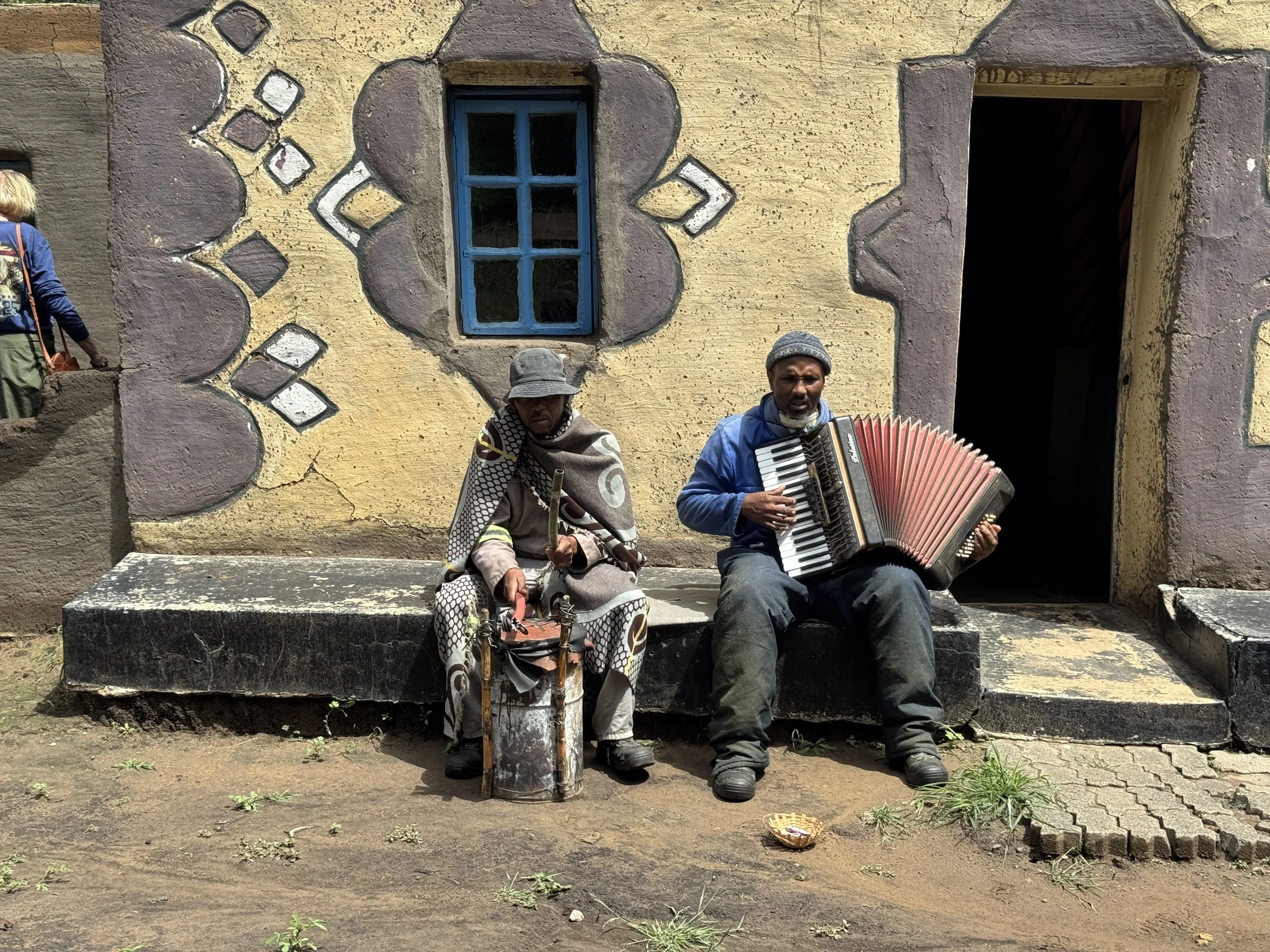
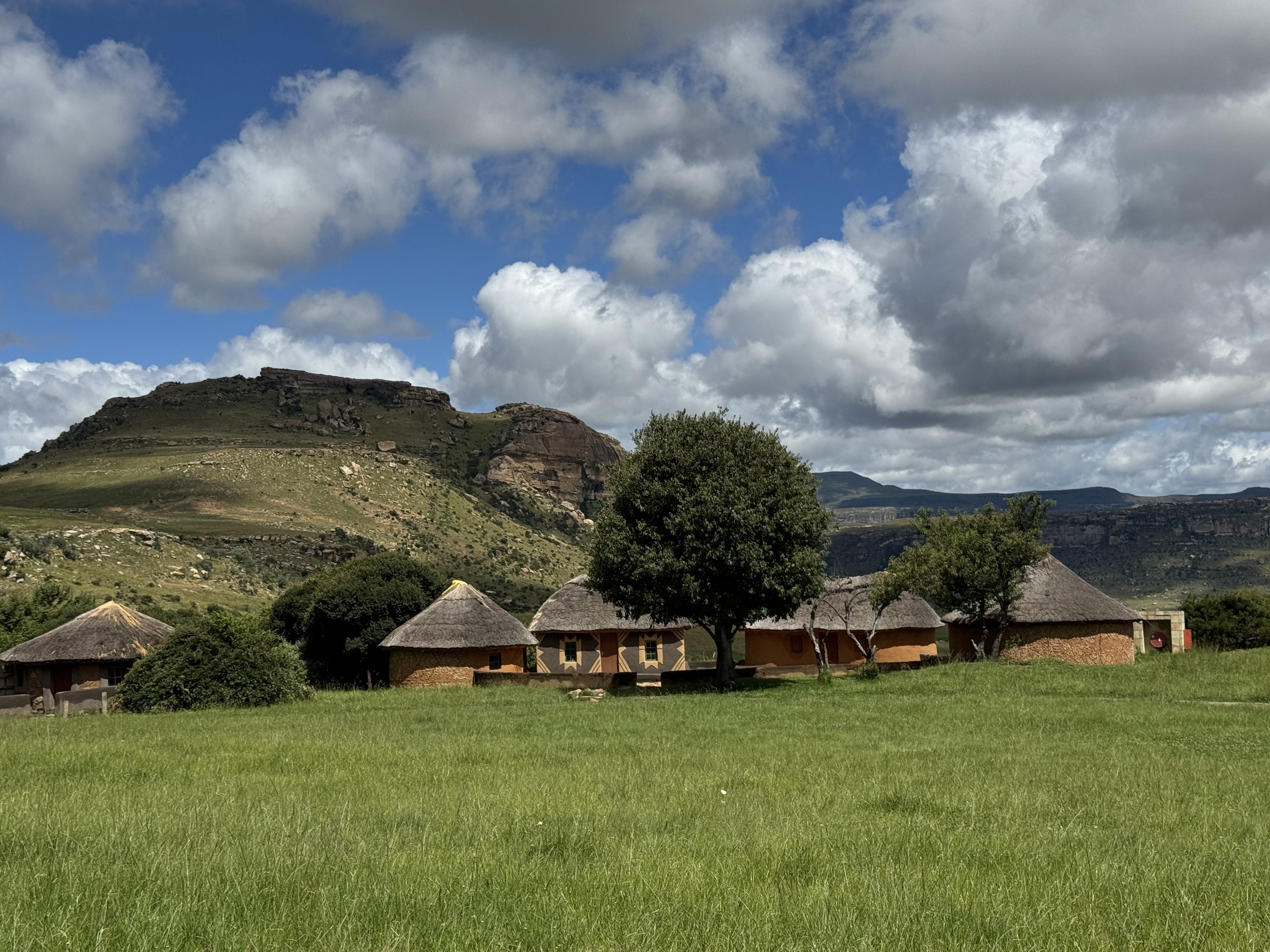
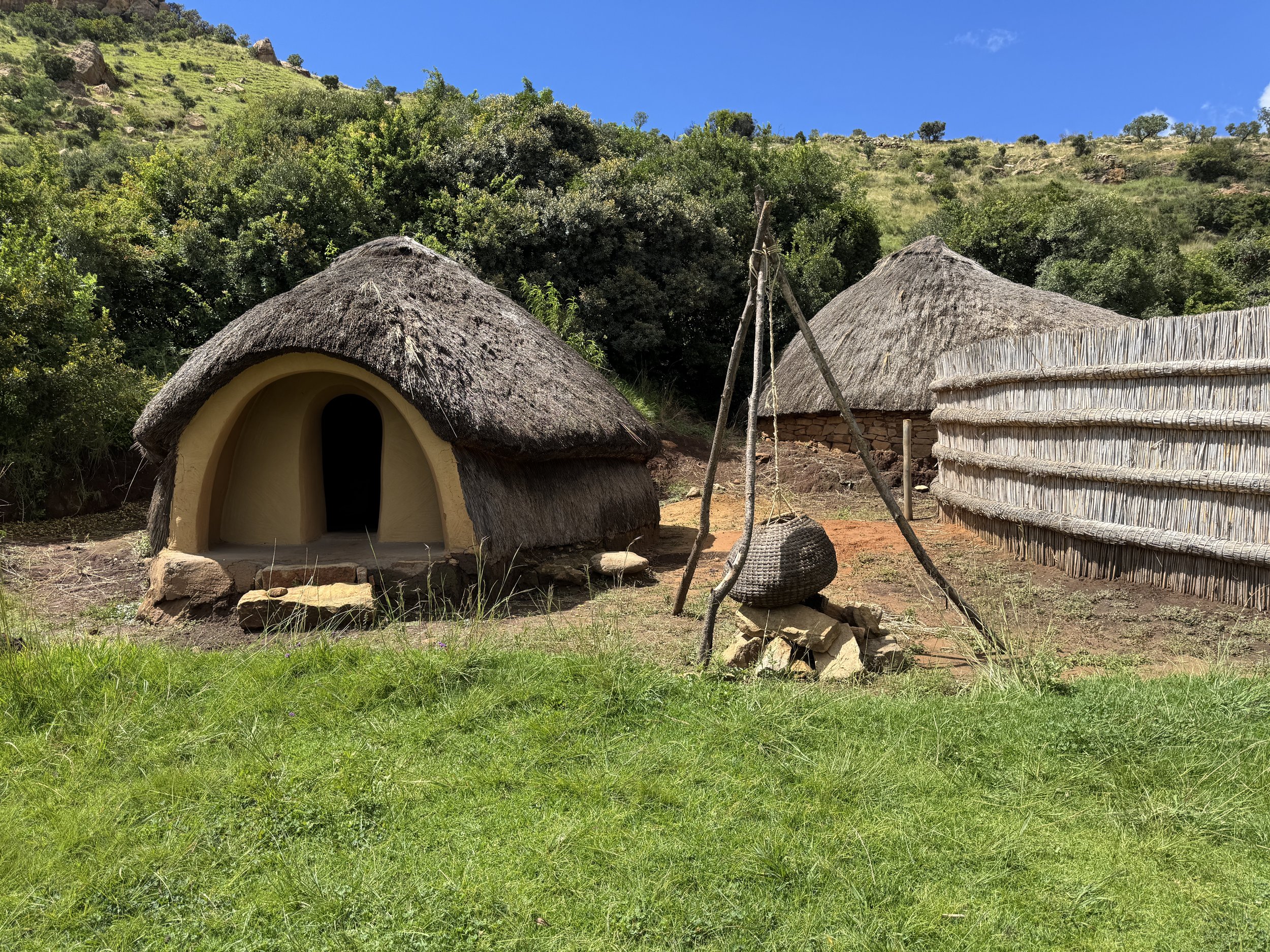
Just up the road from our camp was the Basotho Cultural Village. The site includes a rest camp designed to resemble an 18th-century Sotho village, along with replica homesteads that represent different periods from the 16th century to the present day. As we toured the village, we learned about traditional Basotho clothing, customs, and daily life—and even had the chance to sample some local beer and foods.
Basotho Cultural Center
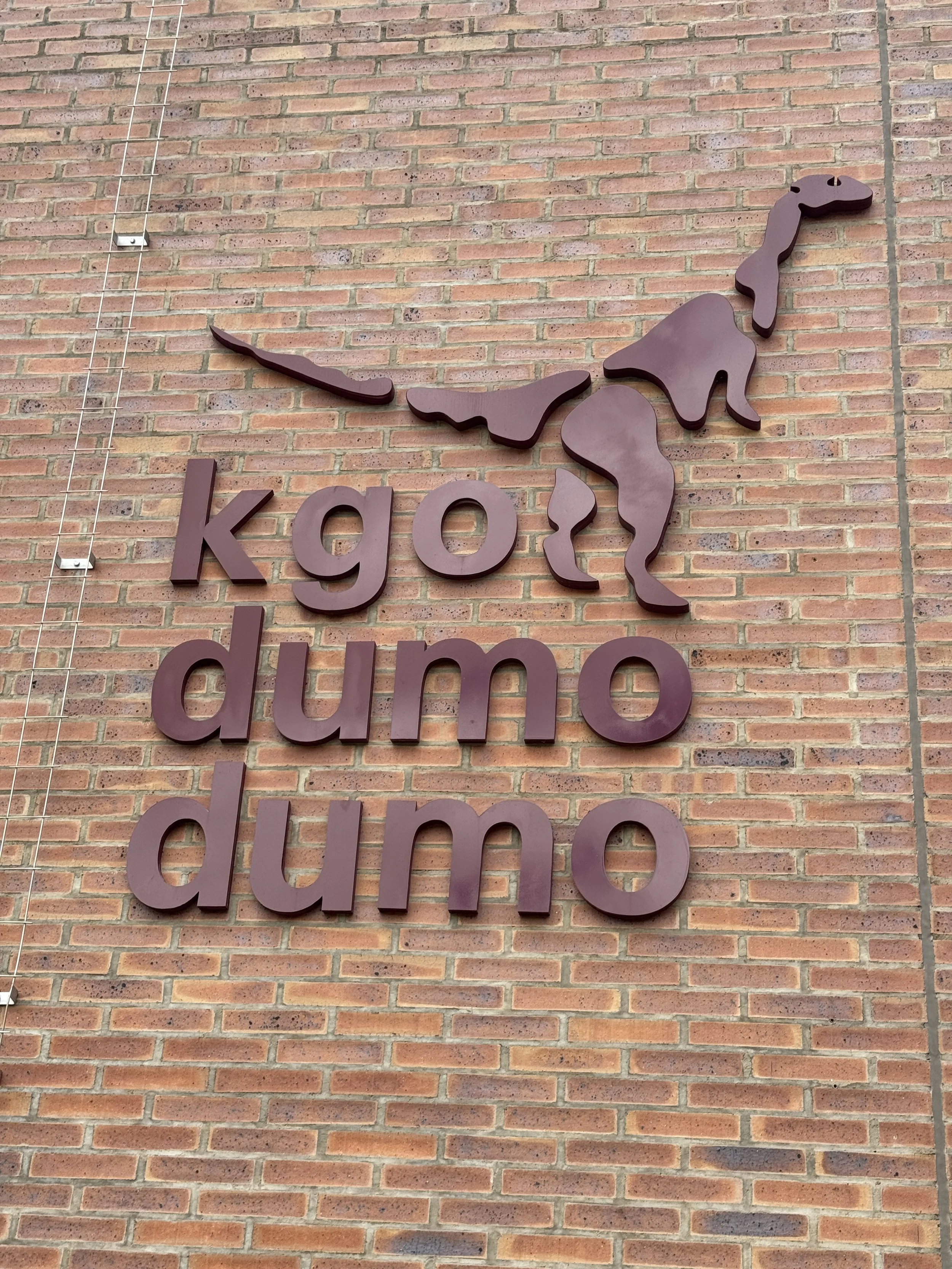
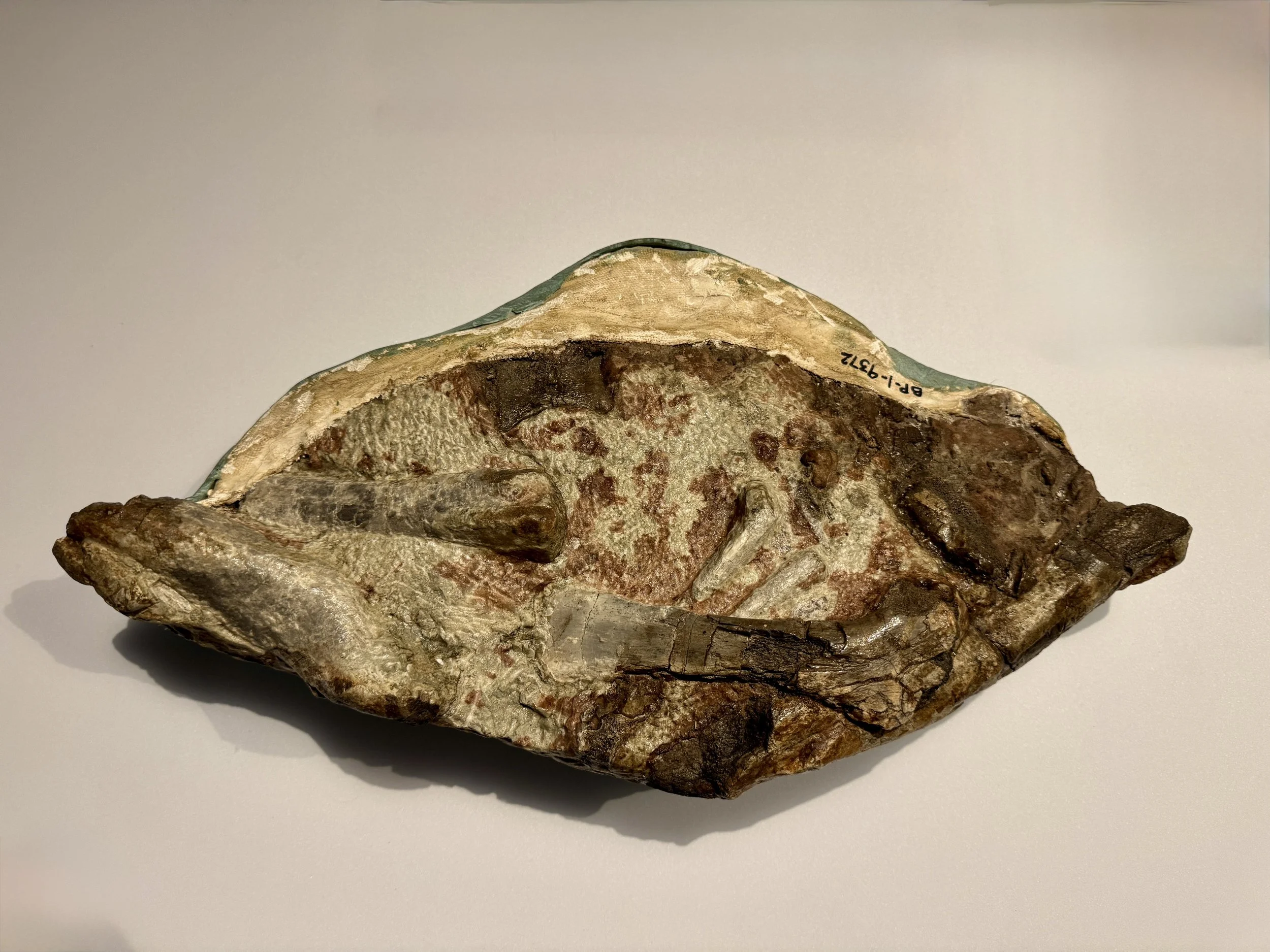
While in Golden Gate Highlands National Park, we also visited the brand-new Kgodumodumo Dinosaur Interpretation Centre. The museum is built on a site where important fossil discoveries have been made, including dinosaurs from the Late Triassic period. One of the finds in the park was seven fossilized dinosaur eggs that were uncovered during road construction. The eggs belonged to Massospondylus, a long-necked dinosaur that lived around 190 million years ago. Another major discovery in the area was the fossil of a massive plant-eating dinosaur called Ledumahadi mafube. This giant weighed about 12 tons—roughly twice the size of a large African elephant. It was amazing to learn about creatures that lived long before humans.
fossil at dinosaur museum
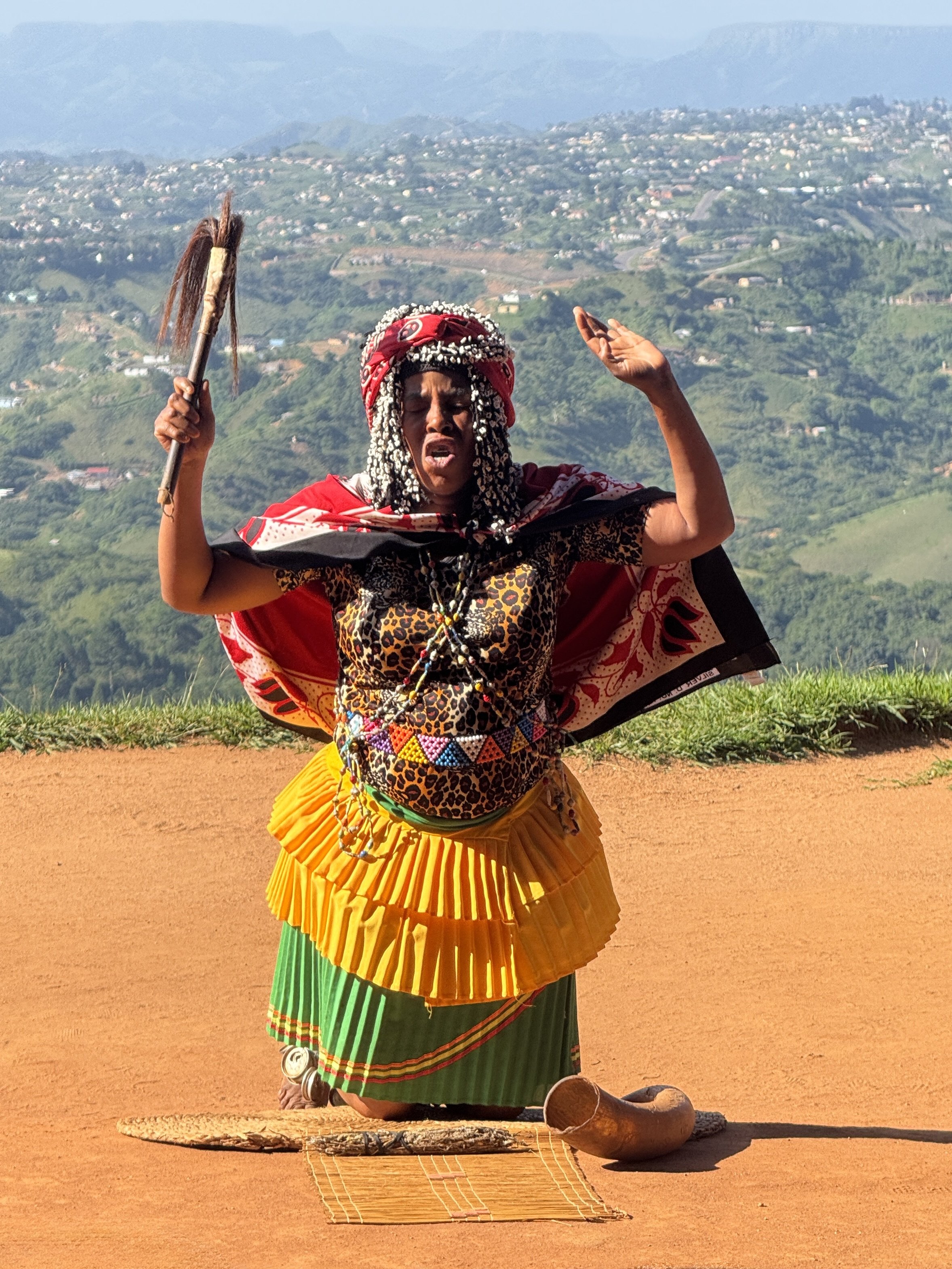
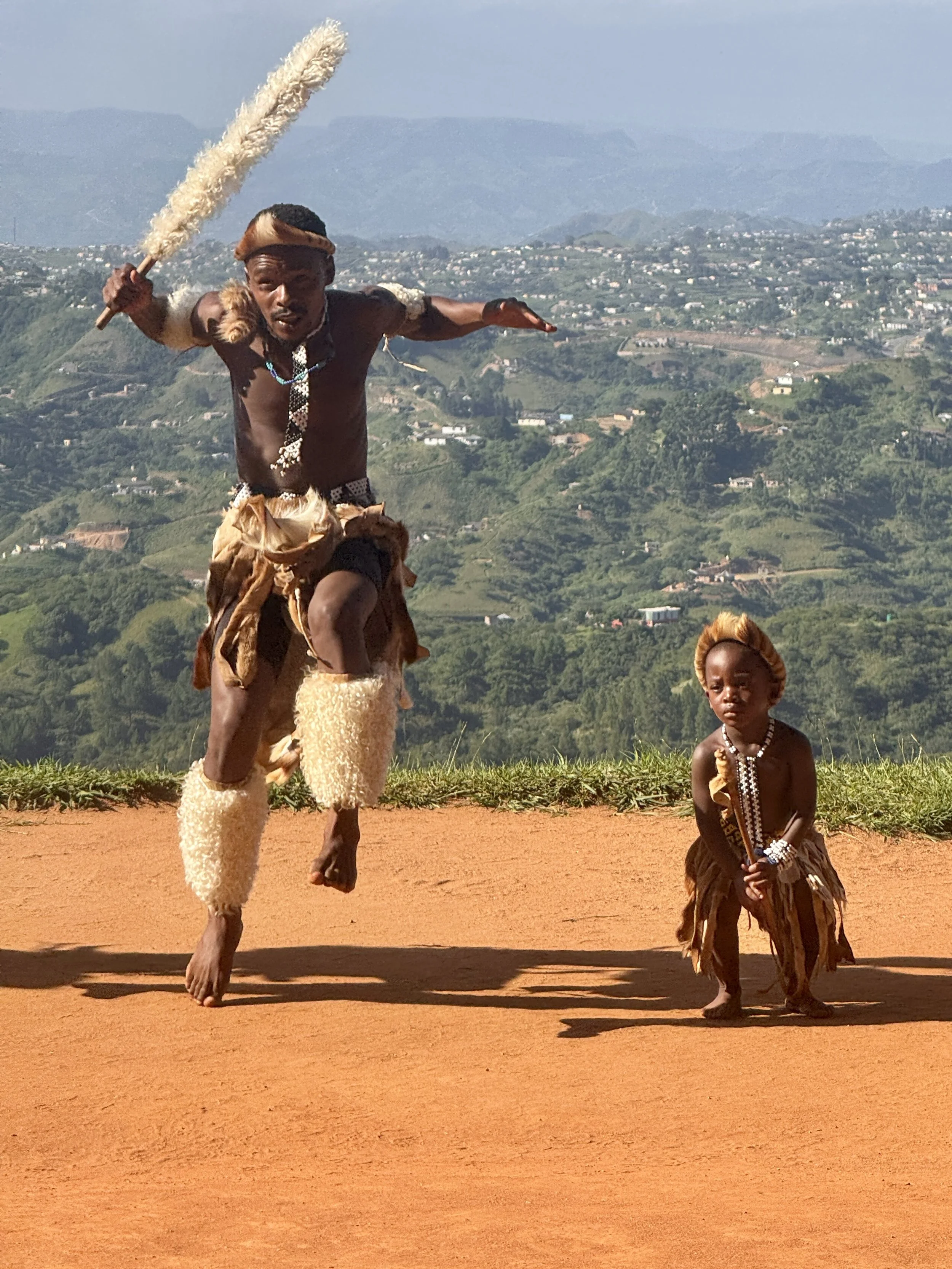
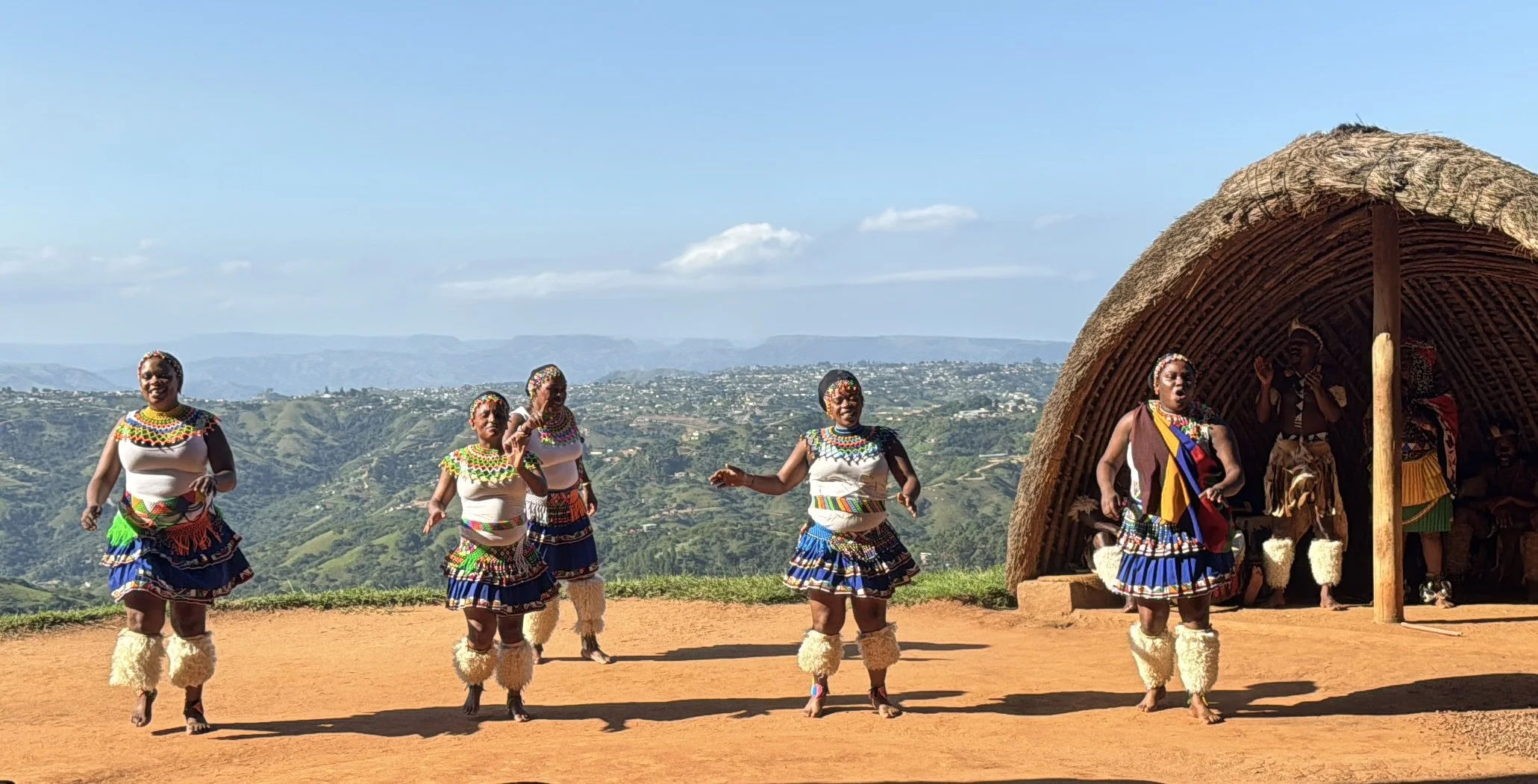
Our second organized cultural experience took place at PheZulu in Durban, where we watched a performance by Zulu dancers. The show was impressive, with performers dressed in traditional attire demonstrating their incredible skill, grace, and agility. Adding to the magic of the moment was the breathtaking backdrop overlooking the stunning Valley of a Thousand Hills.
dancers at pheZulu
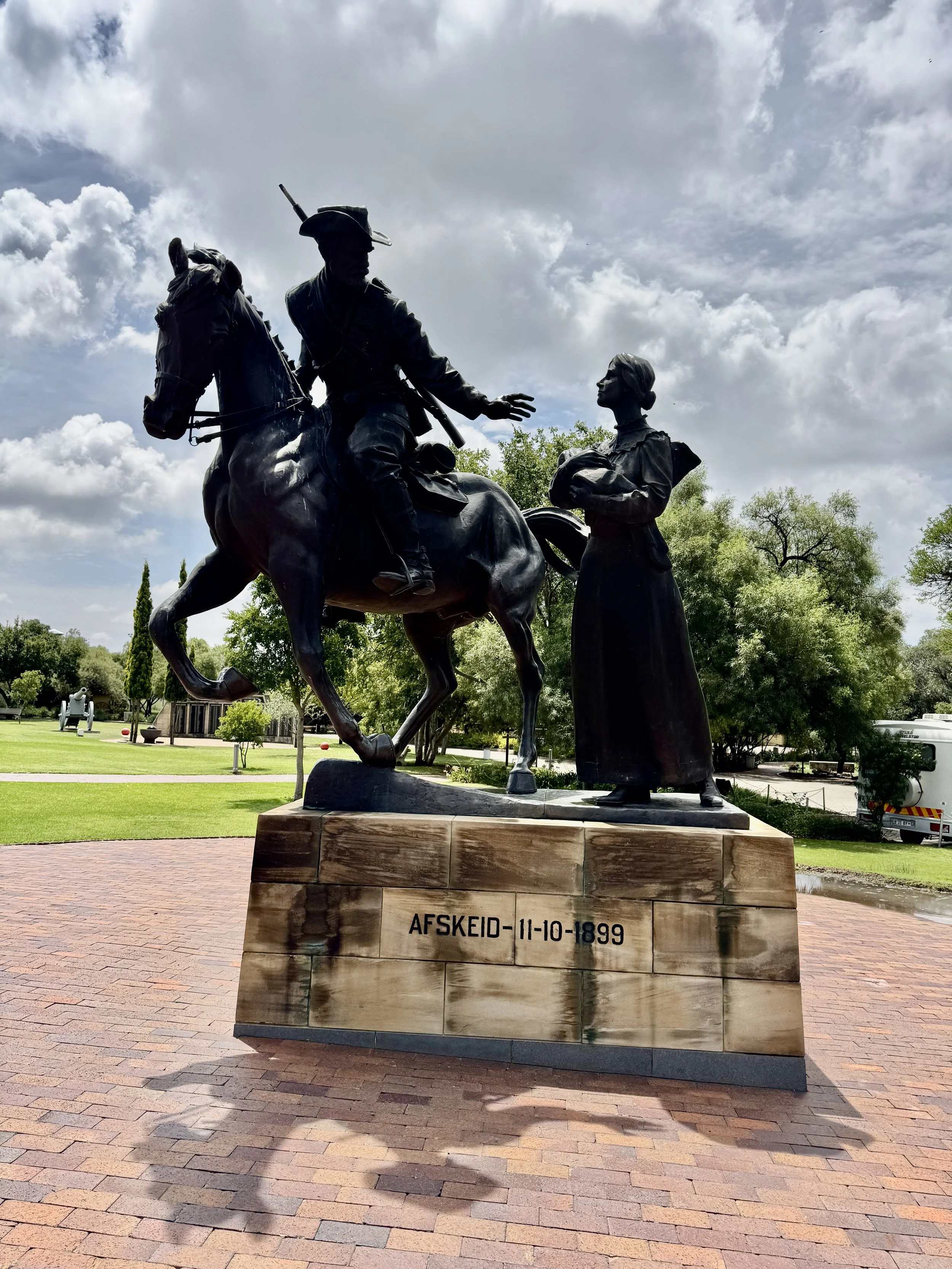
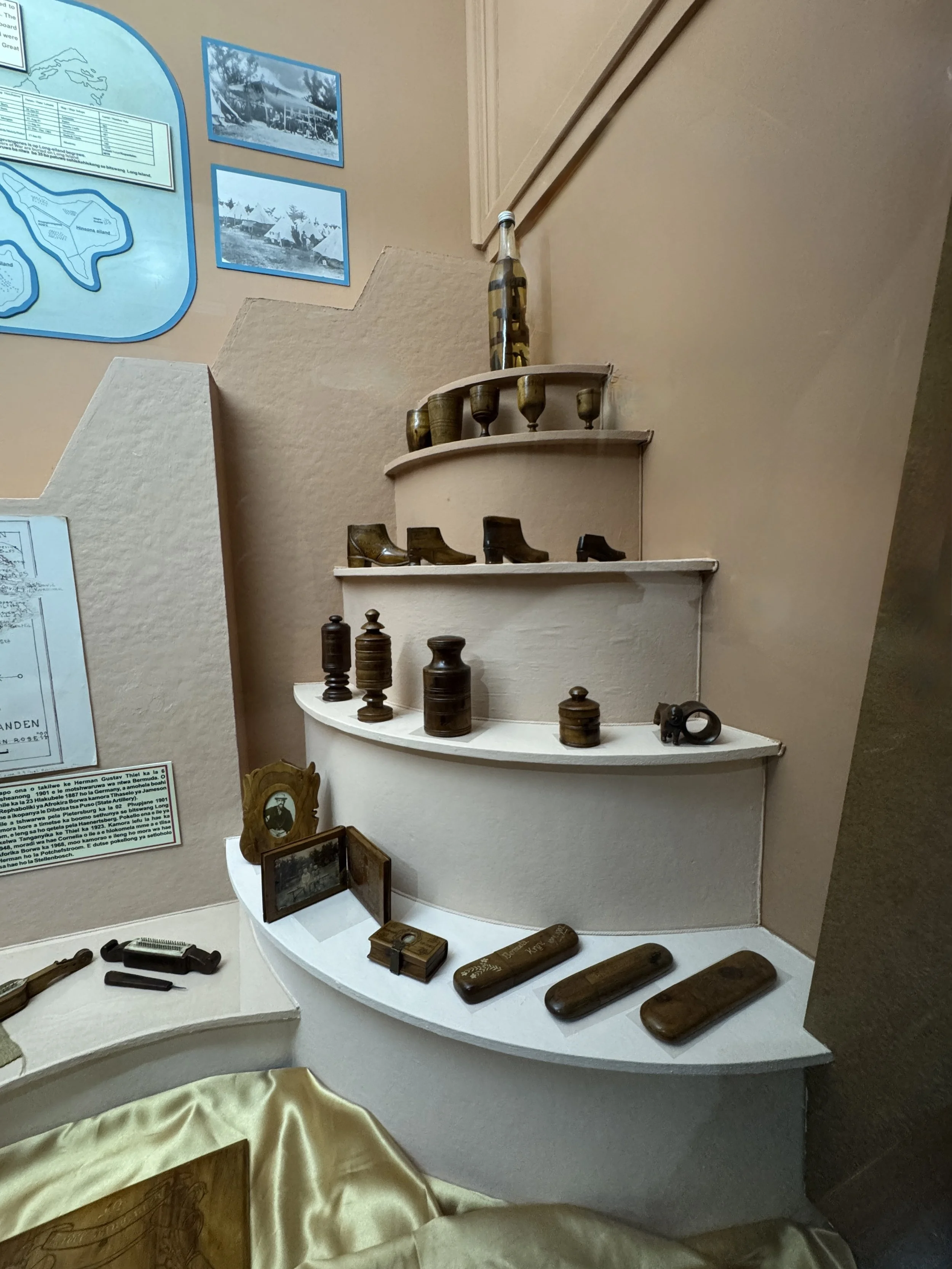
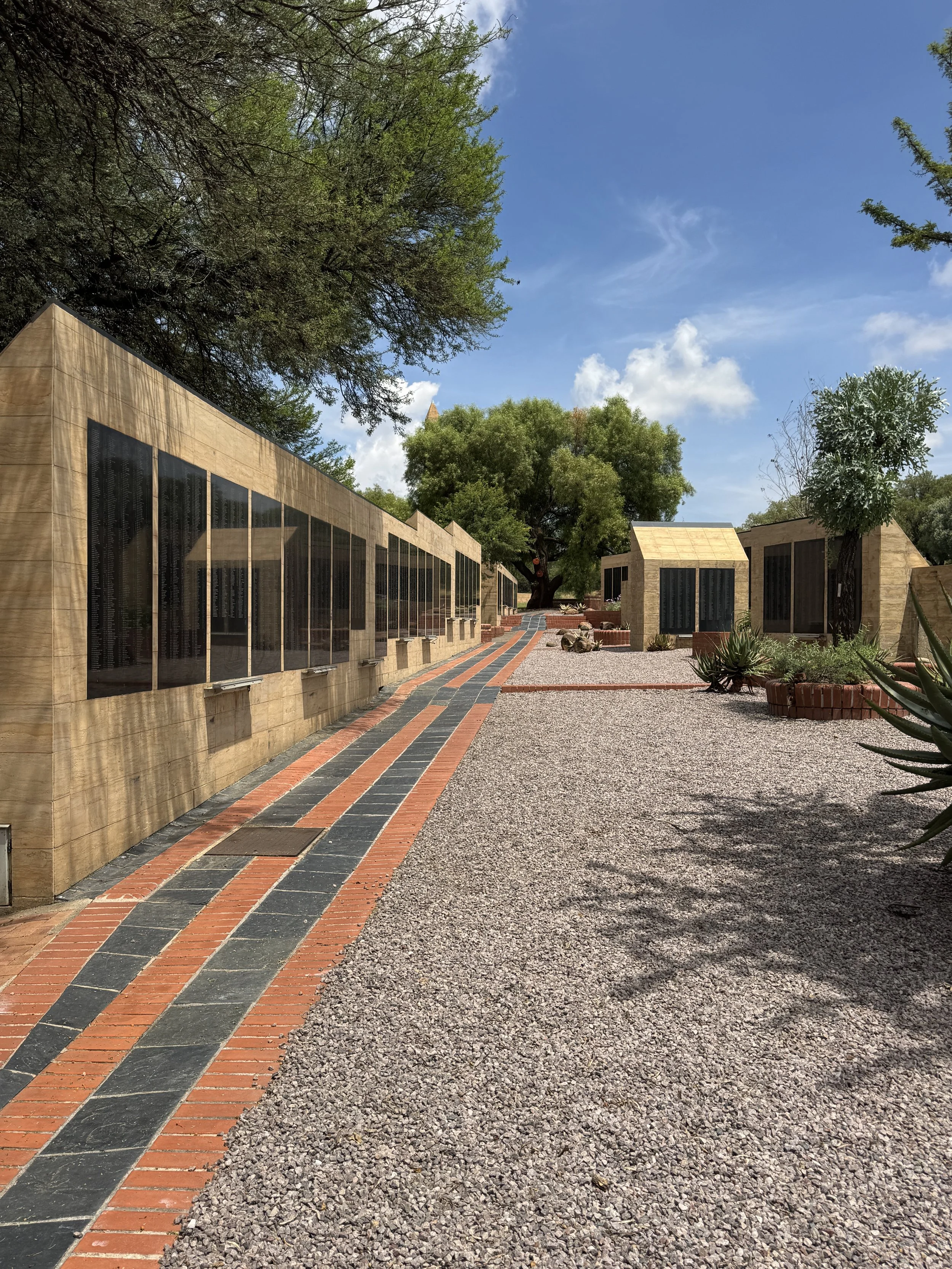
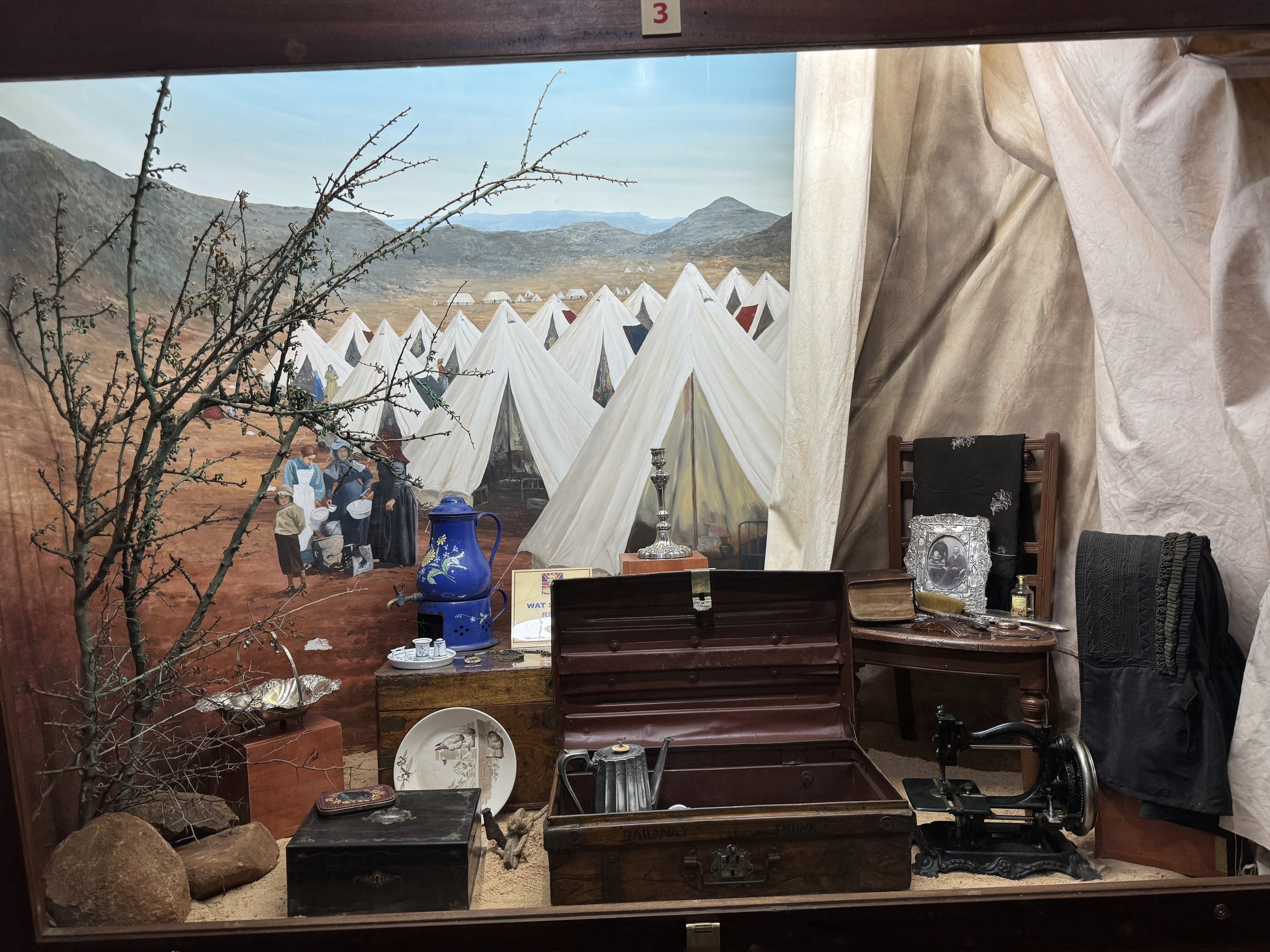
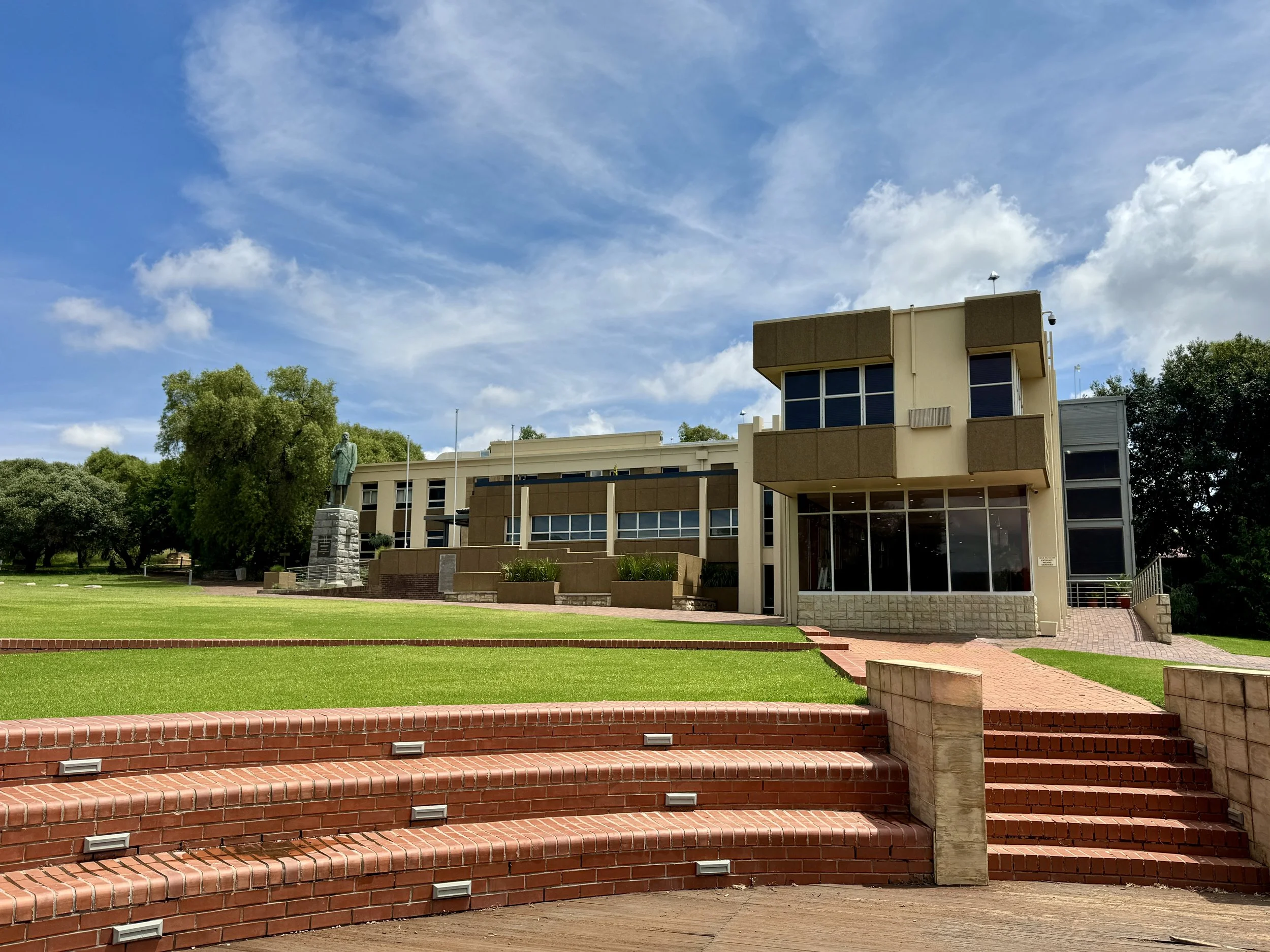
On travel days, we often have the freedom to make a few stops along the way. Our group leaders usually offer suggestions, and one such stop was the Boer War Museum in Bloemfontein. Although I had heard of the Boer War before, I didn’t actually know much about it. The Boer War was fought from 1899 to 1902 between the British Empire and the Boer republics—the South African Republic and the Orange Free State. The conflict grew largely out of British imperial ambitions and the discovery of gold in Boer-controlled territories, which intensified the struggle for power, control, and independence in the region.
Boer War Museum
At the museum, we began by watching an informative video that provided helpful historical context. Afterward, we wandered through the exhibits, taking in artifacts from the era and reading the informative plaques that explained the events and personal stories connected to the war. It was a fascinating and educational stop.
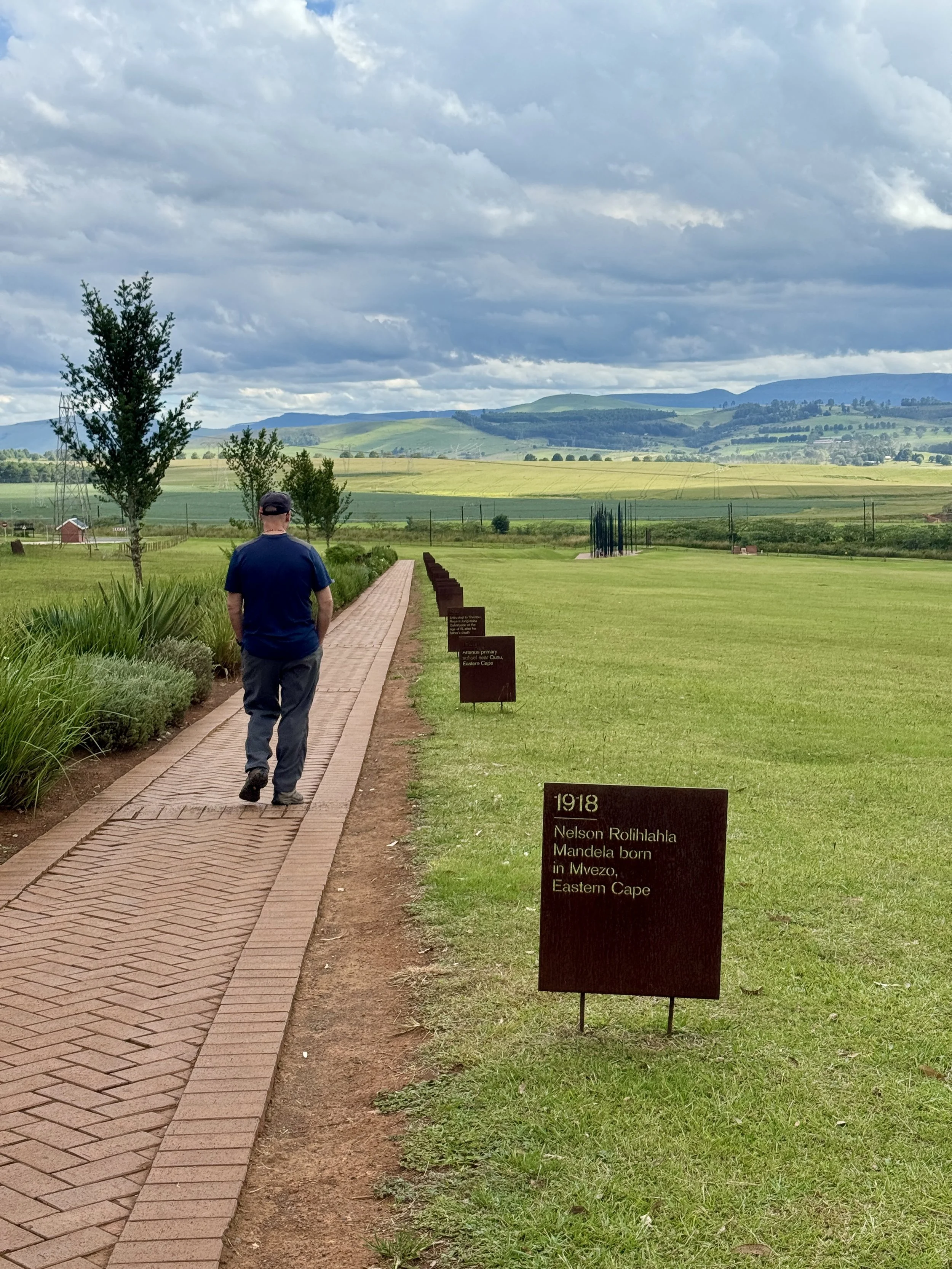
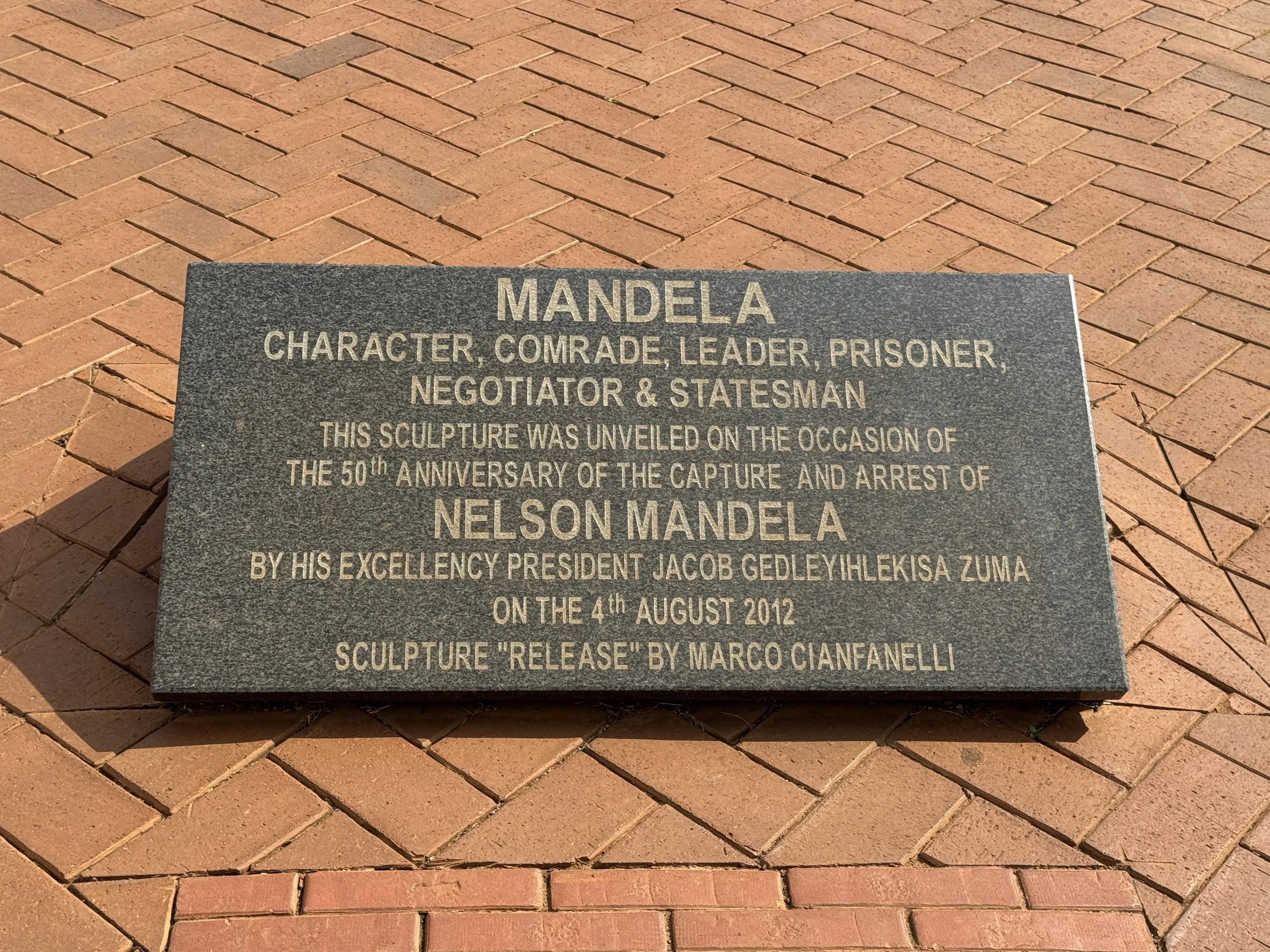
Another cultural stop recommended during one of our travel days was the Nelson Mandela Capture Site in Howick. This location includes both a museum and a sculpture marking the place where Nelson Mandela was arrested in 1962. The museum tells the story of Mandela’s life and the long struggle against apartheid, while also providing broader context about South Africa’s apartheid era. Through multimedia displays, photographs, and historical artifacts, the exhibits walk visitors through the challenges, sacrifices, and determination that shaped the movement for equality and justice. From the museum, it’s a short walk along a pathway to the actual capture site. There, a remarkable sculpture stands as both a memorial and a work of art. The installation is made up of 50 steel columns ranging from six to ten meters tall. At first glance, the columns appear abstract, but when viewed from a specific vantage point along the path, they come together to form the image of Nelson Mandela’s face. The sculpture stands at the exact location where Mandela was captured.
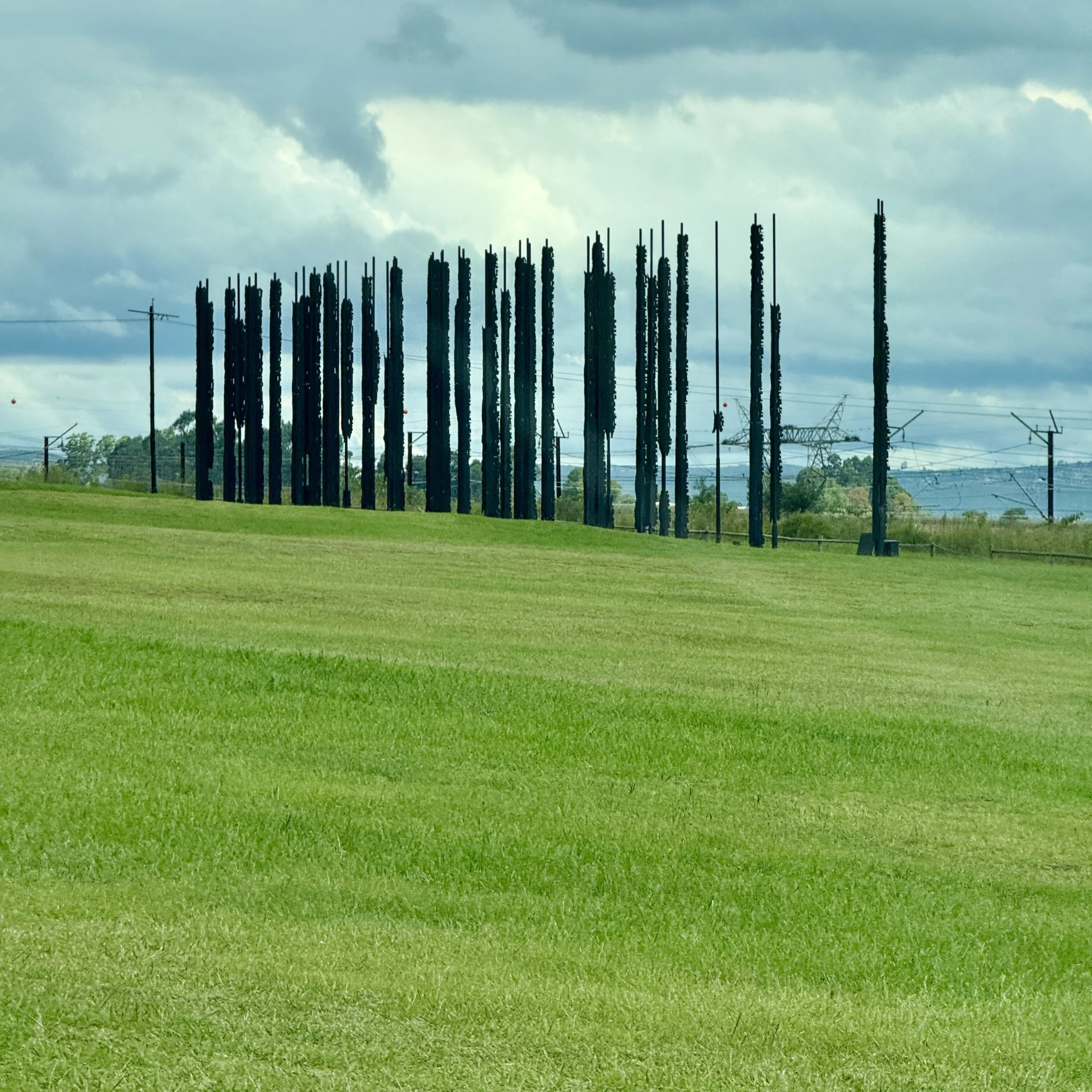
Mandela sculpture from road
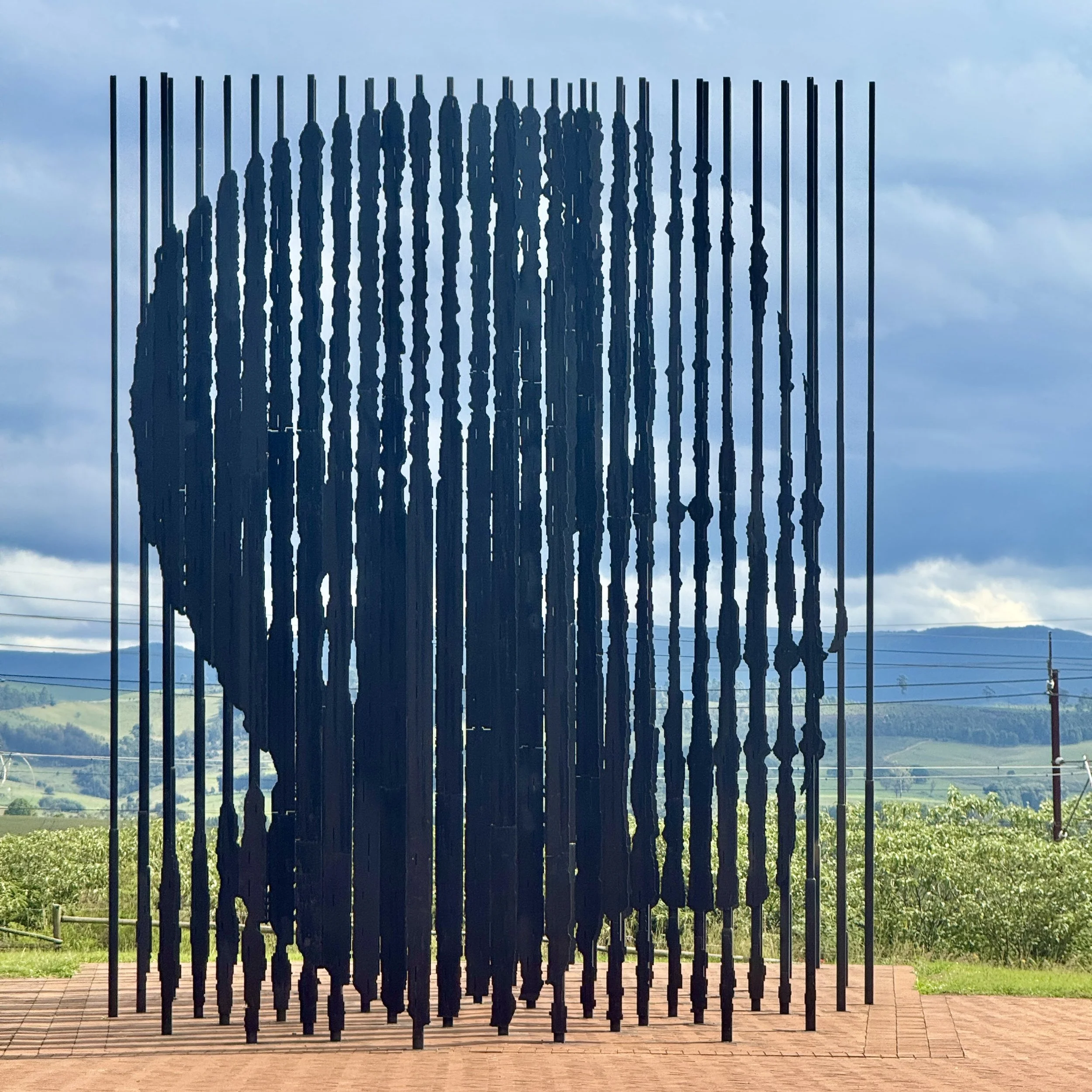
Mandela sculpture when viewed from specific spot
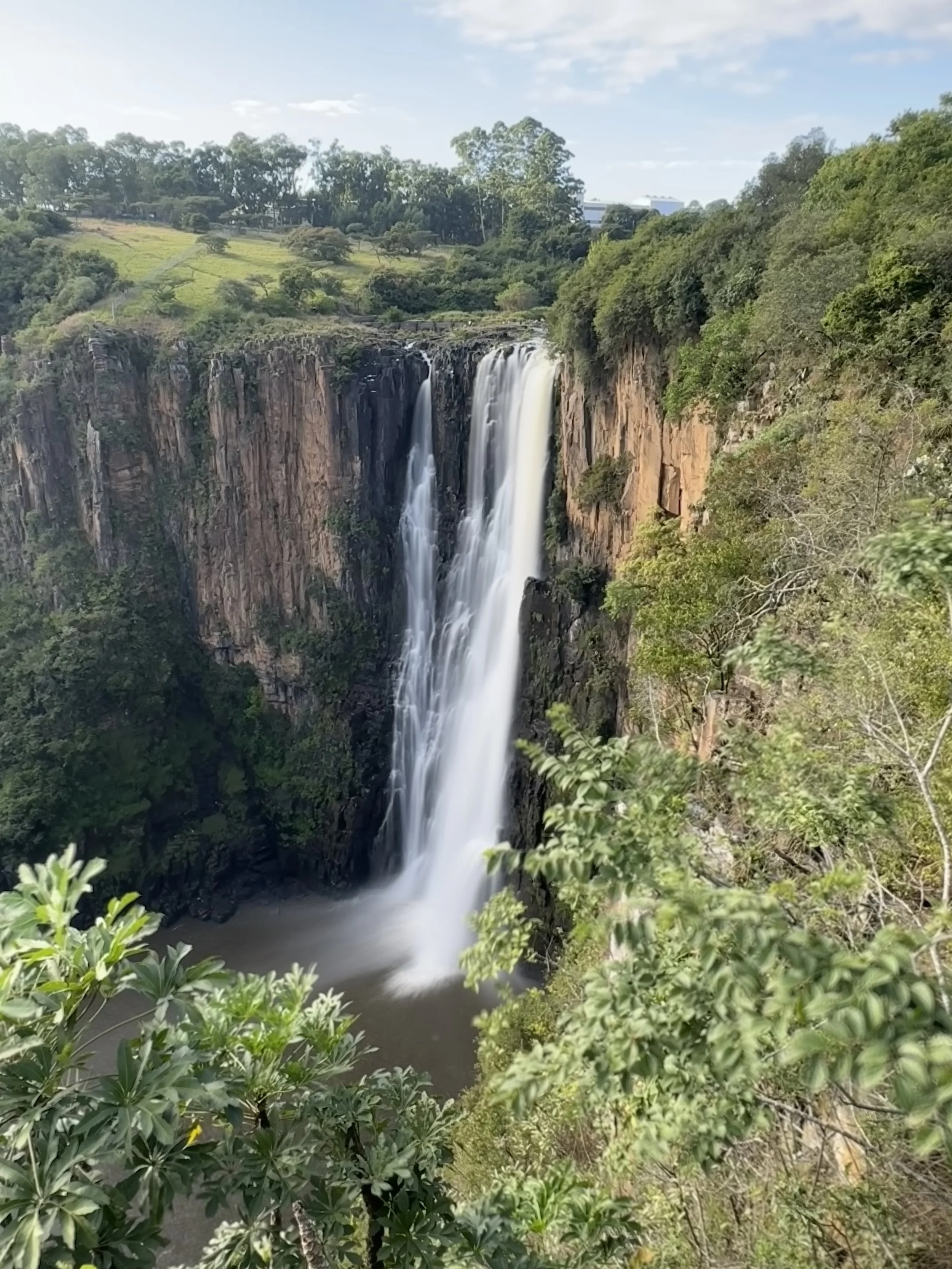
On one of our many driving days, we made a stop at Howick Falls. At first glance, it seemed like a simple scenic viewpoint—and it certainly delivered on that. The falls are strikingly beautiful, with water plunging dramatically into the gorge below. But what made the stop memorable wasn’t just the view. Above the falls, along the river, we noticed a group of women carefully washing clothes in the water. You would assume they are doing laundry for their own families, but for many of them it’s actually a business. Each day they carry loads of laundry down to the river and wash it by hand, using the flowing water as their workspace. Moments like that reminded us that travel isn’t only about the landscapes you see, but also the lives quietly unfolding around them.

women doing laundry at top of falls
While the wildlife and safari experiences were still the highlight of the trip for me, it was also fascinating to learn more about the history of this remarkable country.