Hike, Cruise, And Drive
Fantasy South Africa RV Safari #8
While we enjoyed experiencing the culture, we were excited to return to the wildlife. Ahead of us were more self-drive safari adventures, a river cruise, and even a hike—each offering another chance to connect with the incredible animals and landscapes that had drawn us there in the first place.
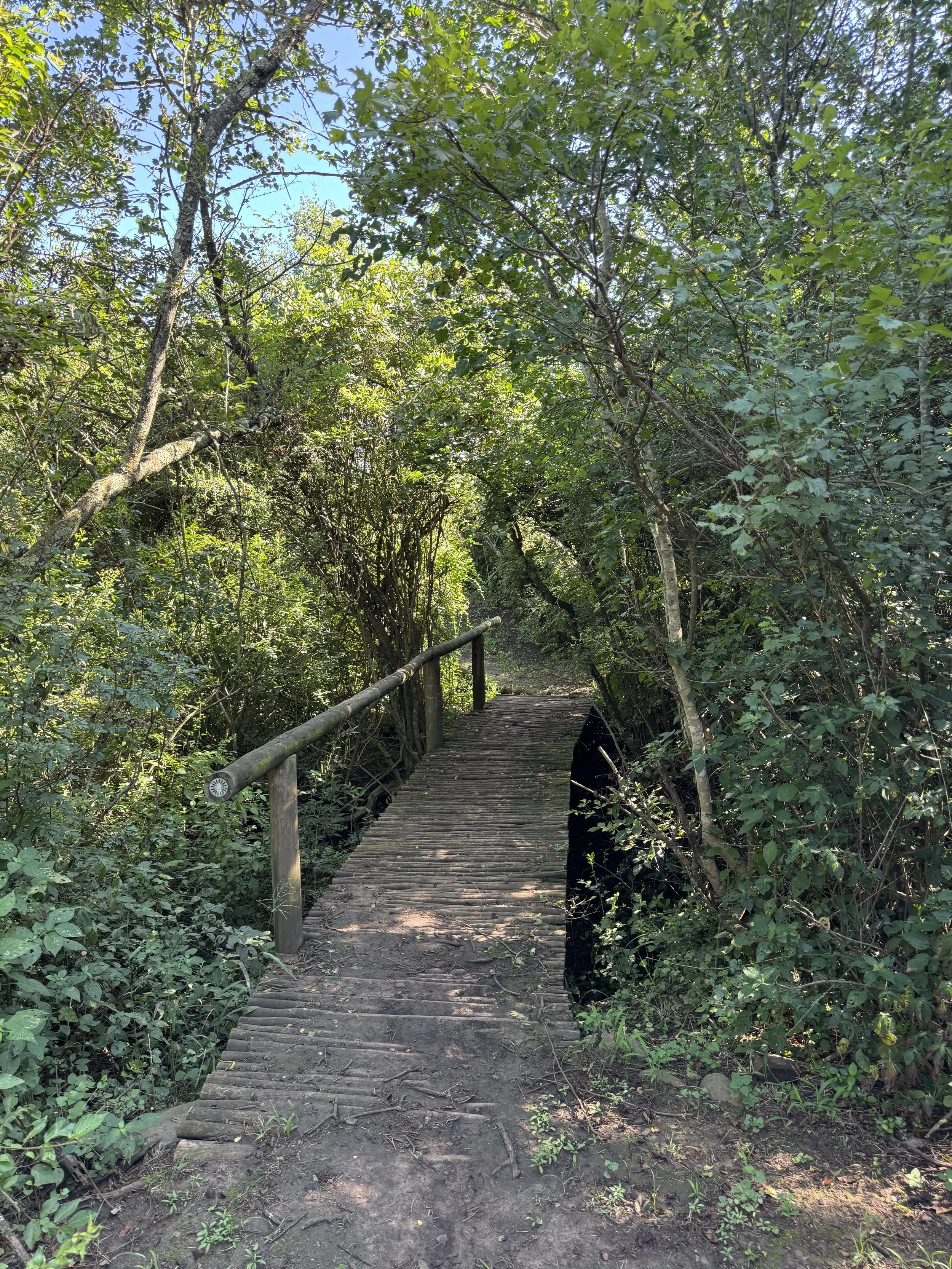
Our next adventure was a hike. While researching our driving route, Steve discovered a small park called Bisley Valley Nature Reserve. Located just about 7 km from Pietermaritzburg, the 865-acre reserve is fully fenced and free of predators. What it does have, though, are giraffes, zebras, impalas, and a wide variety of birdlife. With several hiking trails and a couple of bird blinds scattered throughout the reserve, it was a fun place to explore on foot. We didn’t spot many birds during our walk—aside from some bright red bishops near a small pond—but we could certainly hear them calling from the trees all around us.
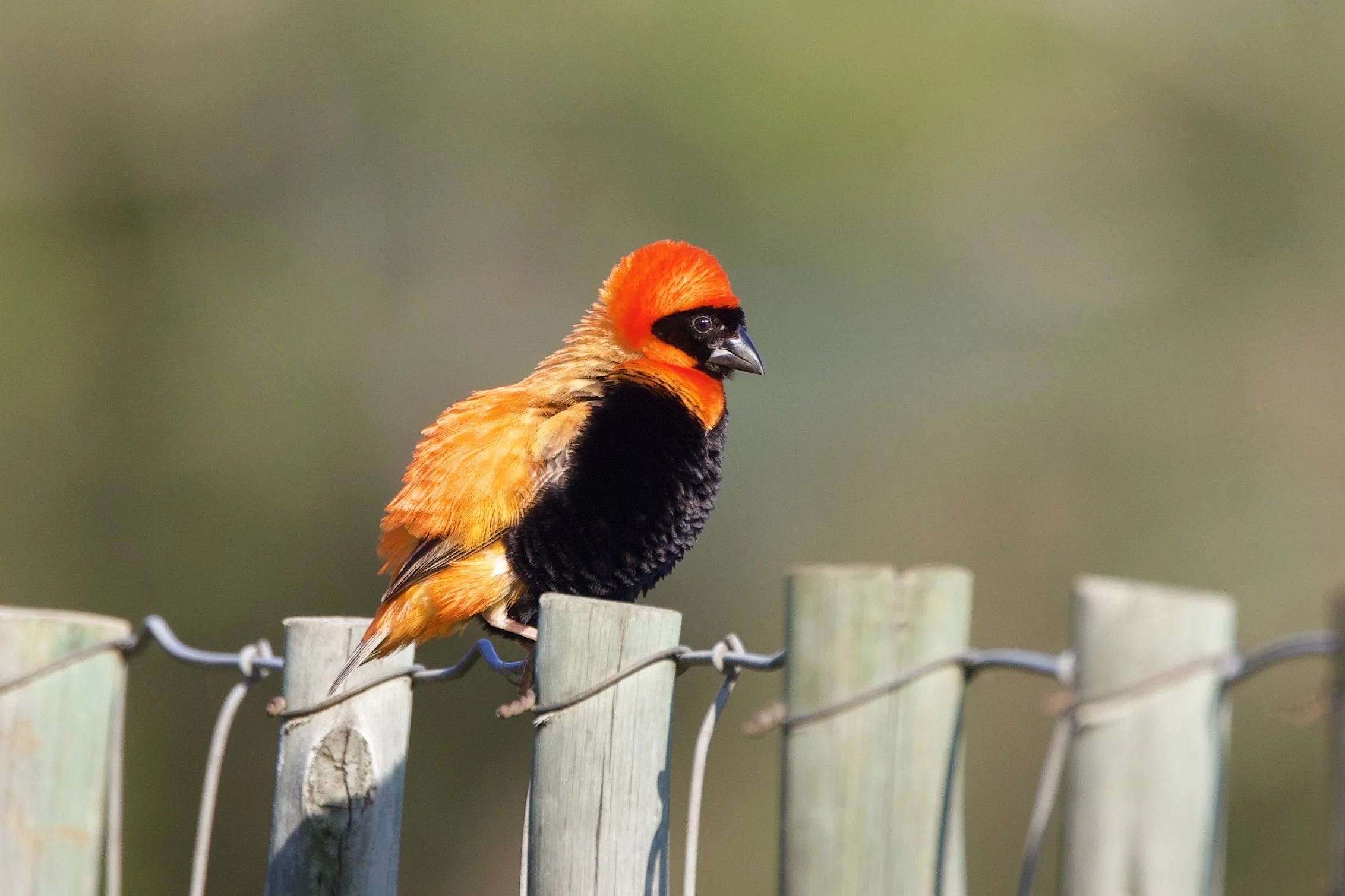
Southern Red Bishop
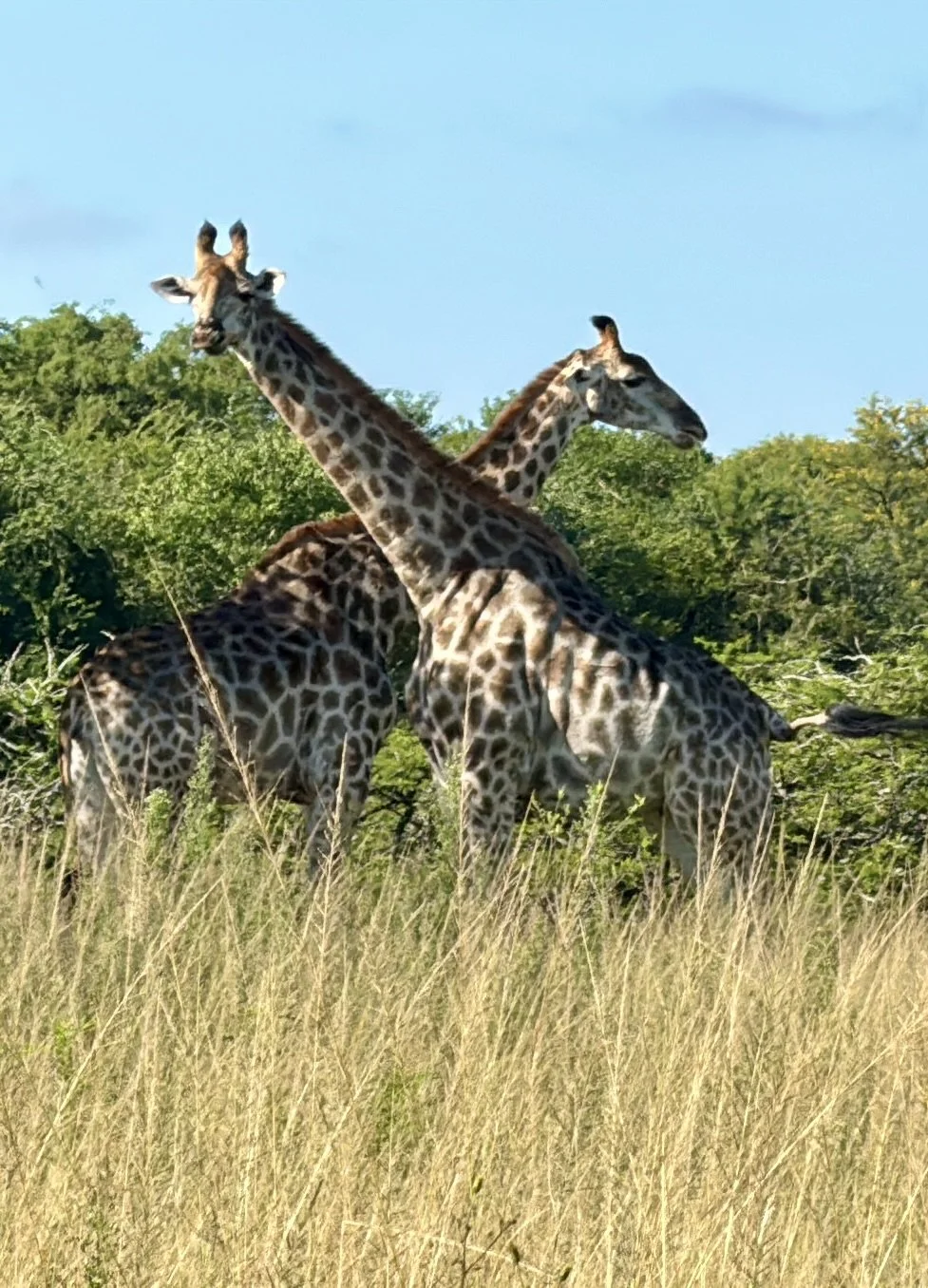
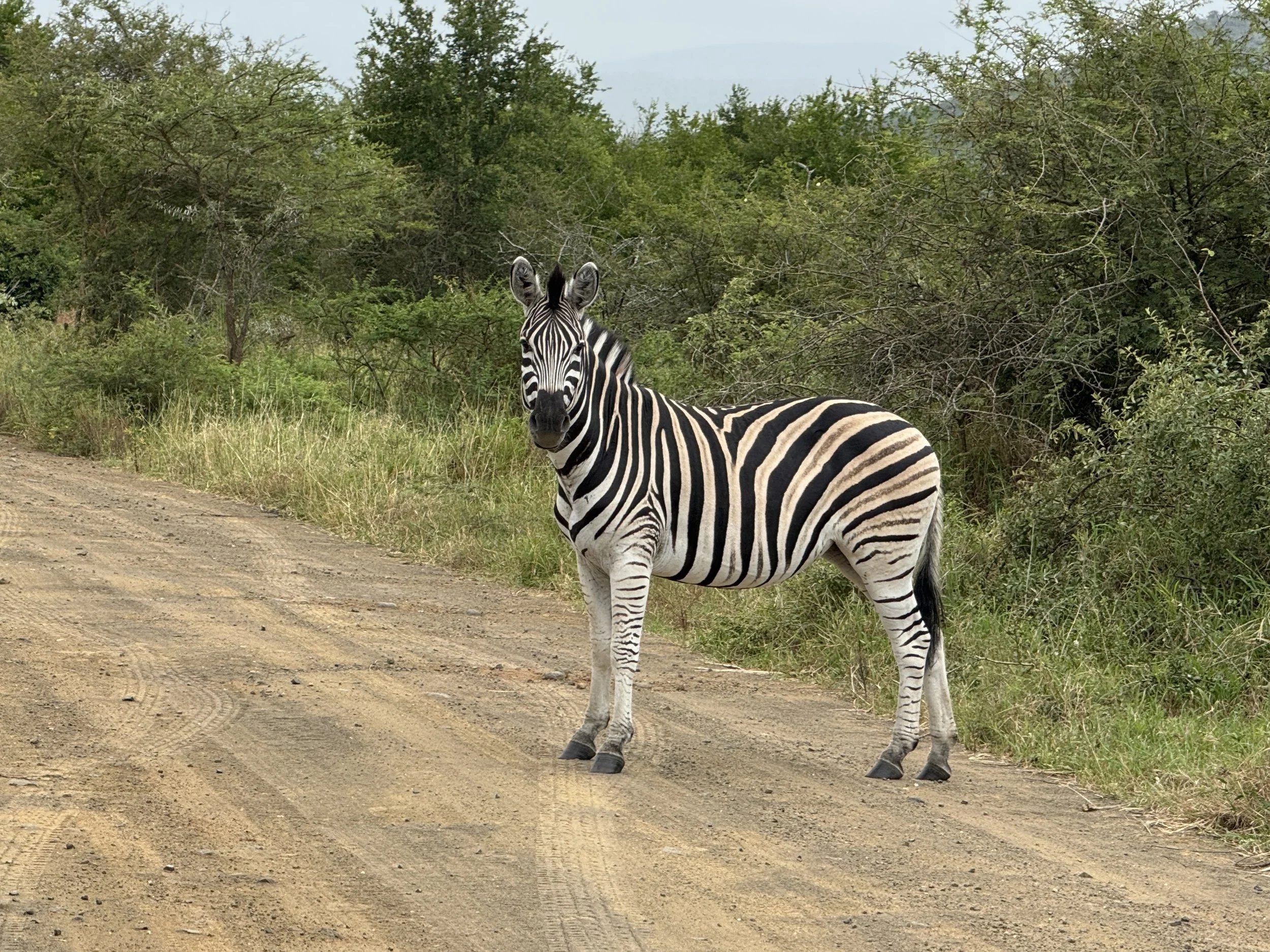
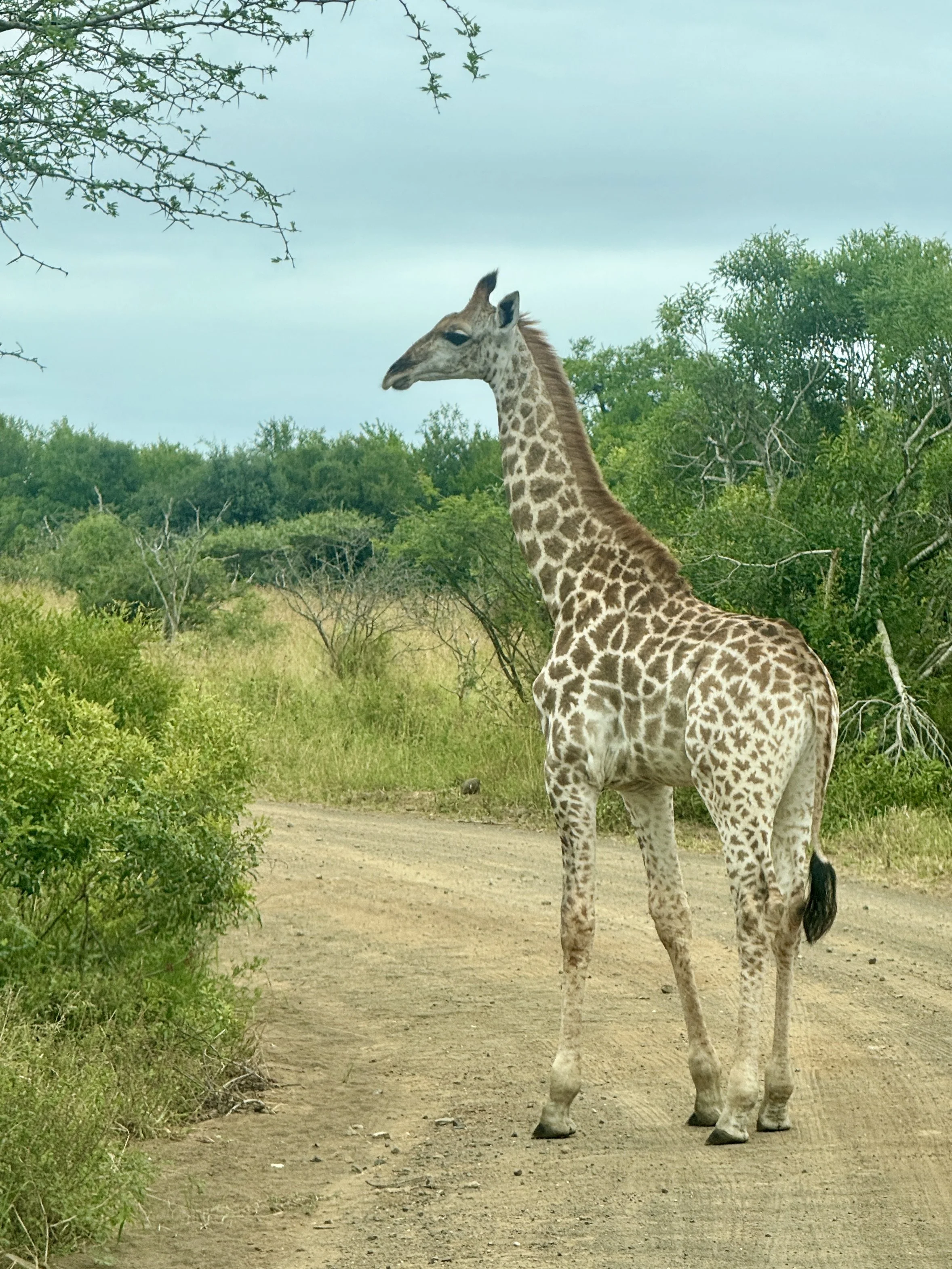
The larger wildlife made up for it. We saw several giraffes and zebras along the trails, and a couple of the giraffes seemed especially interested in us. Every so often we’d notice their heads popping up above the trees, watching us. Each time they appeared, they seemed just a little closer. Eventually one of them stepped right out onto the path, studying us while slowly inching forward. He was clearly curious—but he also got a bit closer than we were comfortable with. Standing there on the ground, without a vehicle, you gain a new appreciation for just how incredibly tall these animals are.
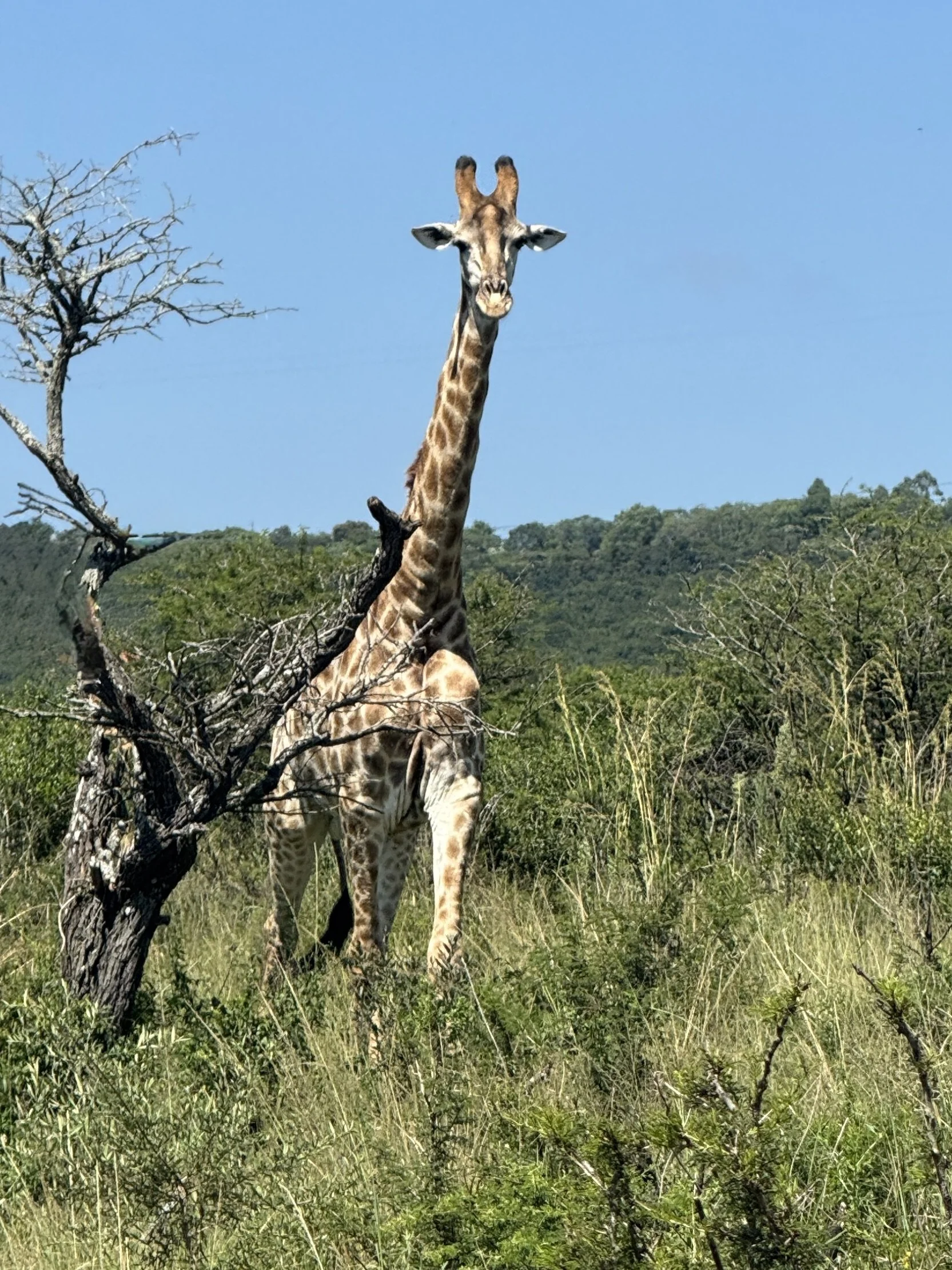
a very curious giraffe
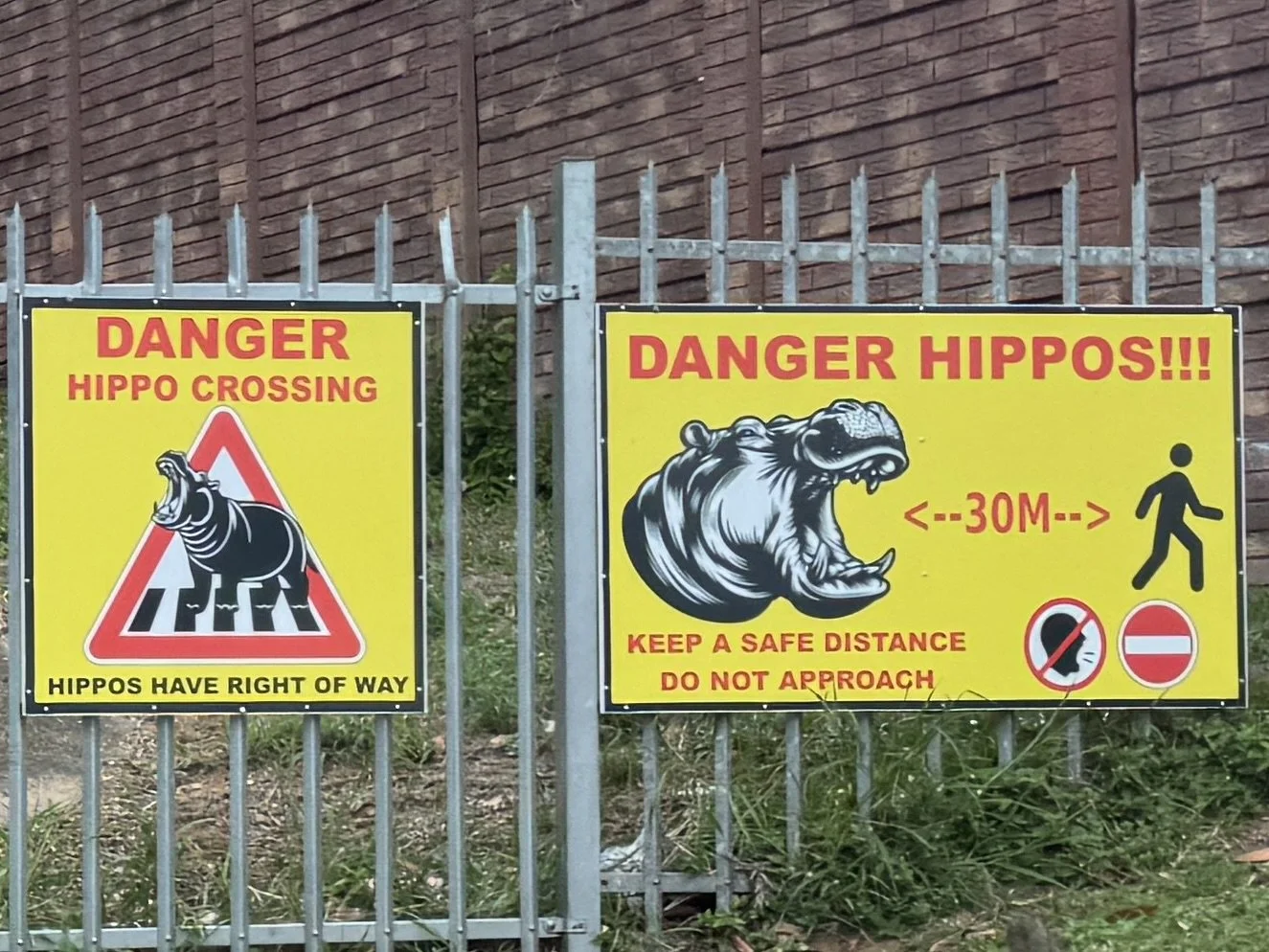
Our cruise took us onto the waters of the St Lucia Estuary. It is home to roughly 1,200 Nile Crocodile and nearly 800 Hippopotamus—about one-third of the world’s hippo population. Hippos here are famous for occasionally wandering through the nearby town of St Lucia at night, and the many warning signs posted around town make it clear this is something locals take seriously. When we arrived that evening, it was raining,, so instead of heading into town we stayed close to the campground and grabbed dinner nearby.
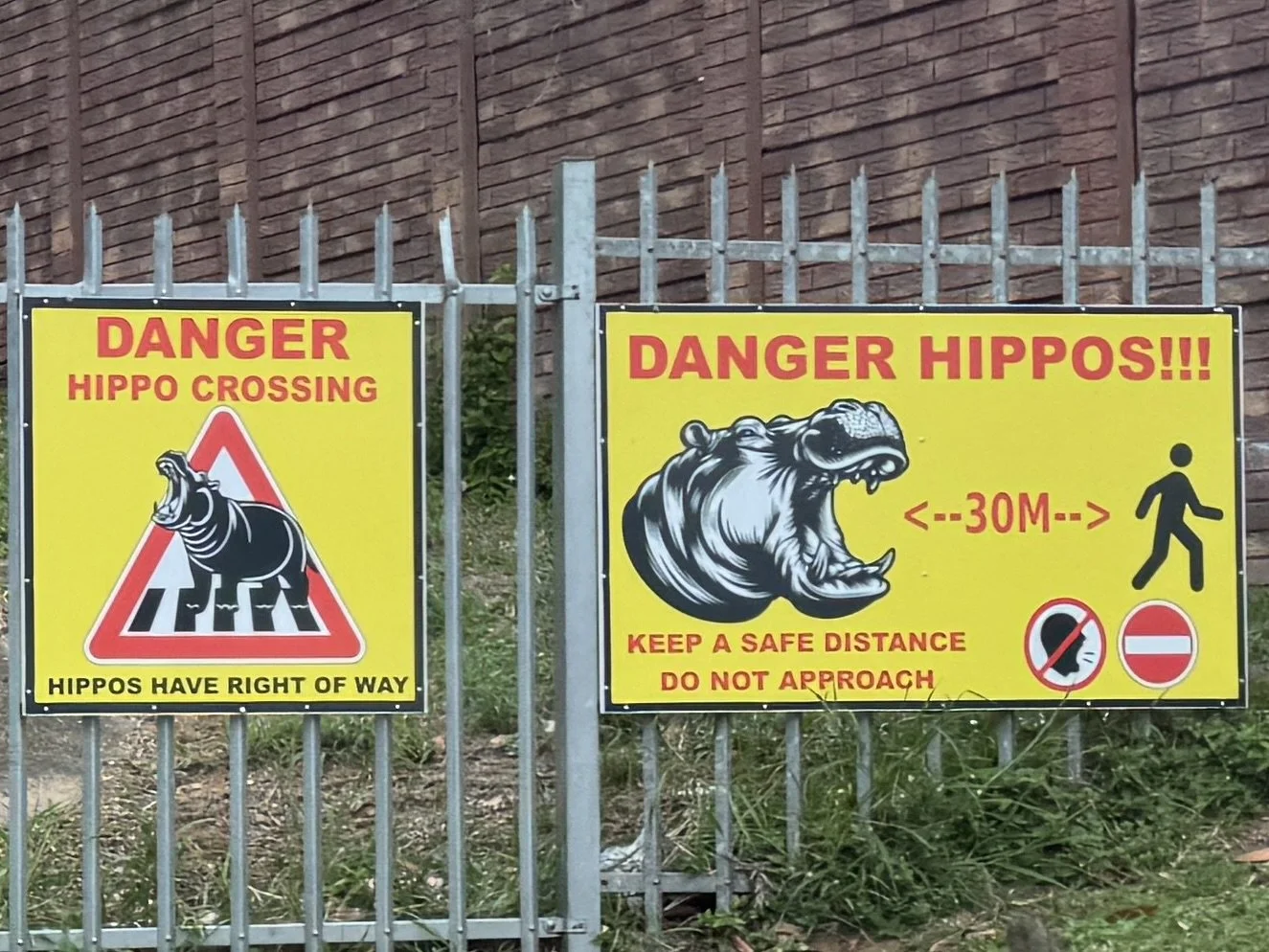
hippo warning signs in St Lucia
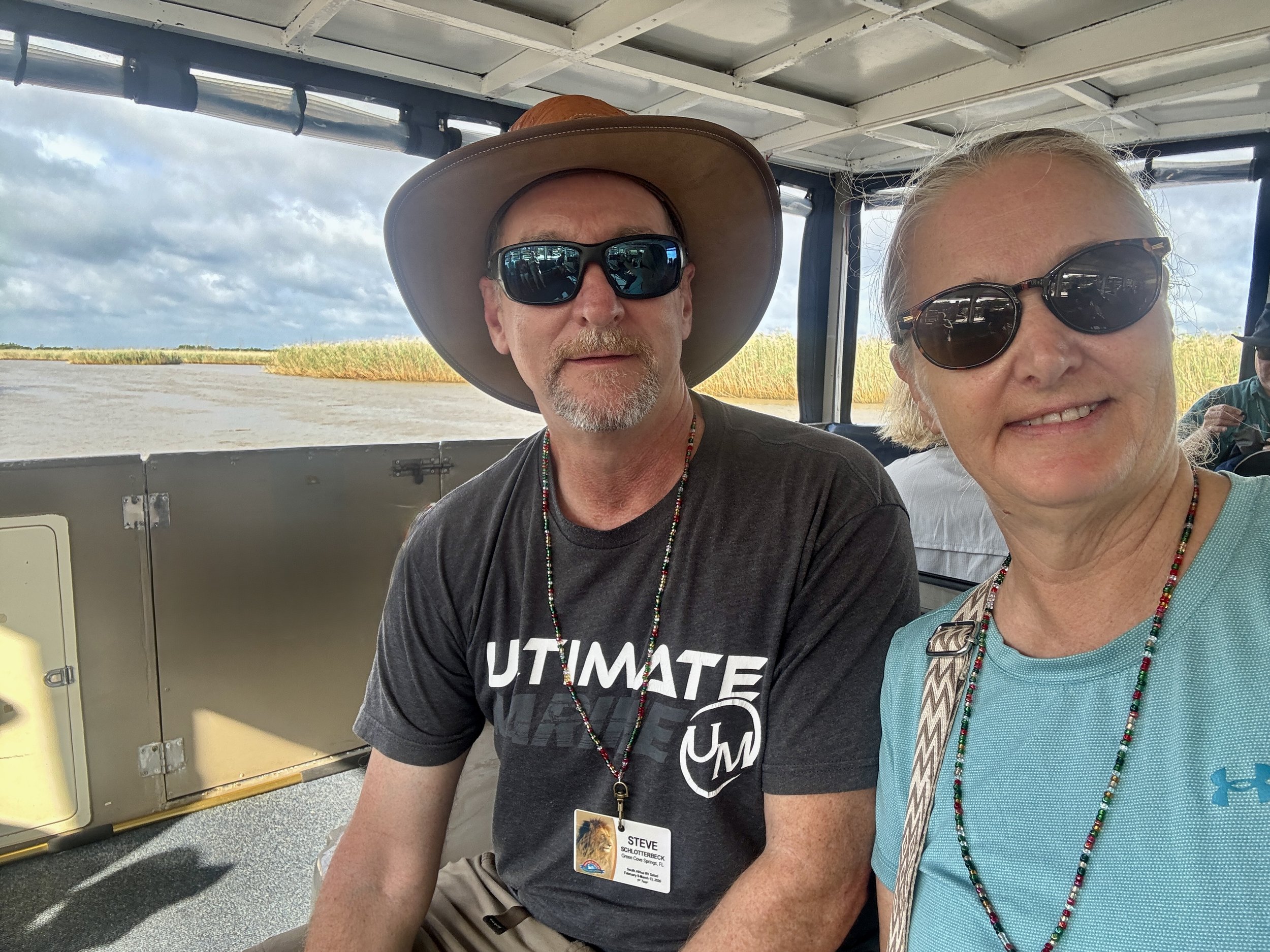
Thankfully, blue skies greeted us in the morning as we boarded our cruise boat and set off along the estuary. With breakfast in hand, we slowly drifted across the water, scanning the surface for hippos and crocodiles. Since hippos spend most of their daytime hours resting in the water—leaving the river mainly at night to graze—you rarely see their full bodies. Instead, the river surface is dotted with the tops of their heads, quietly bobbing up and down as they surface for air. Every so often one would lift a little higher, or open its mouth in a massive yawn, giving us a much better look at these enormous animals.
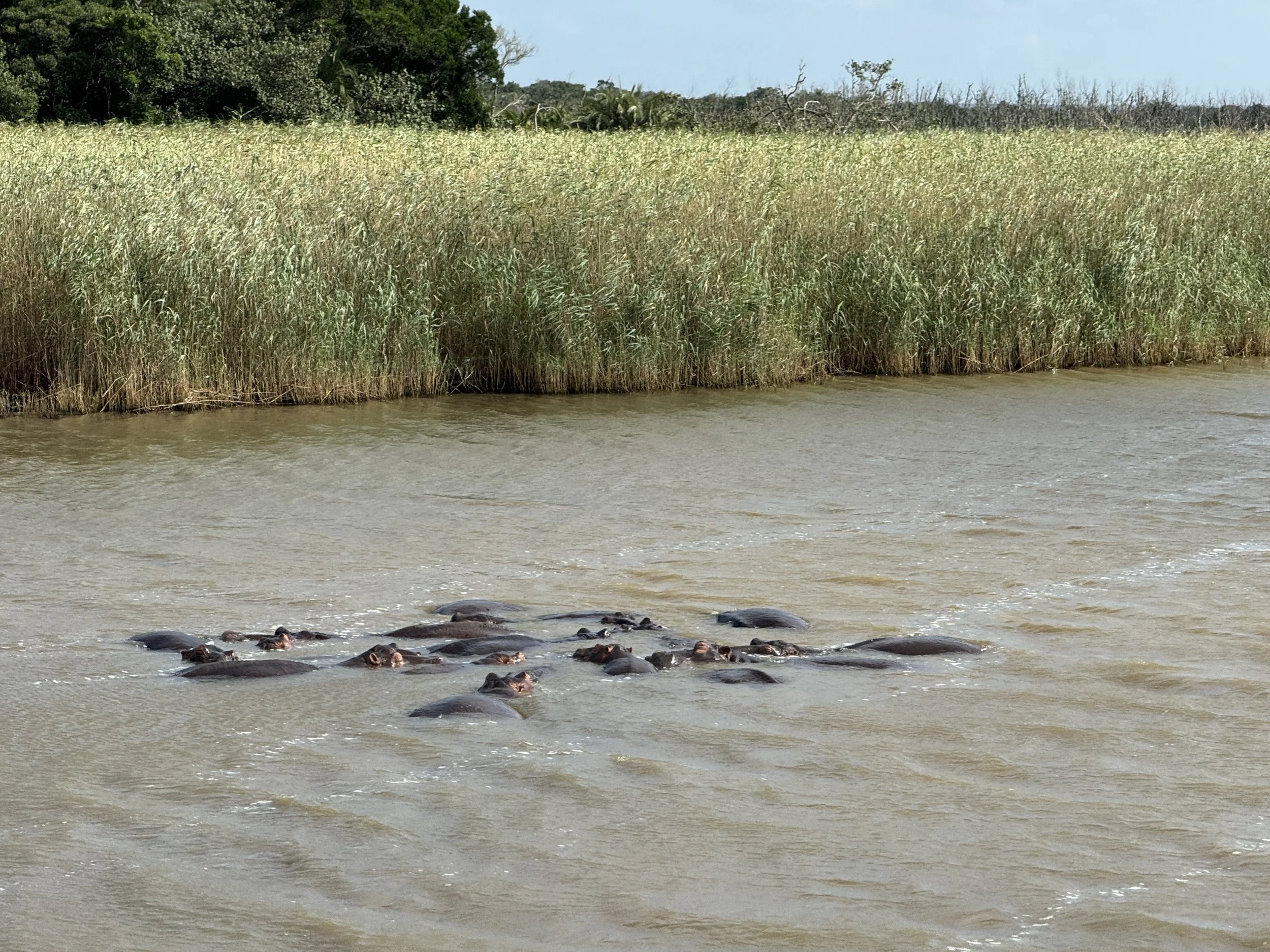
a bloat of hippos
Our self-drive safaris took us through Hluhluwe–Imfolozi Park as we traveled to and from our campground. Once two separate reserves, the park now forms a single protected area of about 960 square kilometers (370 square miles) of rolling hills and valleys. The Imfolozi section was once believed to be a royal hunting ground during the reign of Shaka Zulu. Today, the combined reserve is recognized as the oldest nature reserve in Africa. On our drive into camp through the Imfolozi side, we spotted many familiar safari favorites—Warthog, Impala, Giraffe, Zebra, and Cape Buffalo. But there was one animal we were especially hoping to see: the White Rhinoceros. Before leaving the park, we decided to take one final small loop. That decision paid off. Suddenly, right in front of us, three rhinos calmly walked across the road. We stopped the car and enjoyed the presence of these magnificent animals.
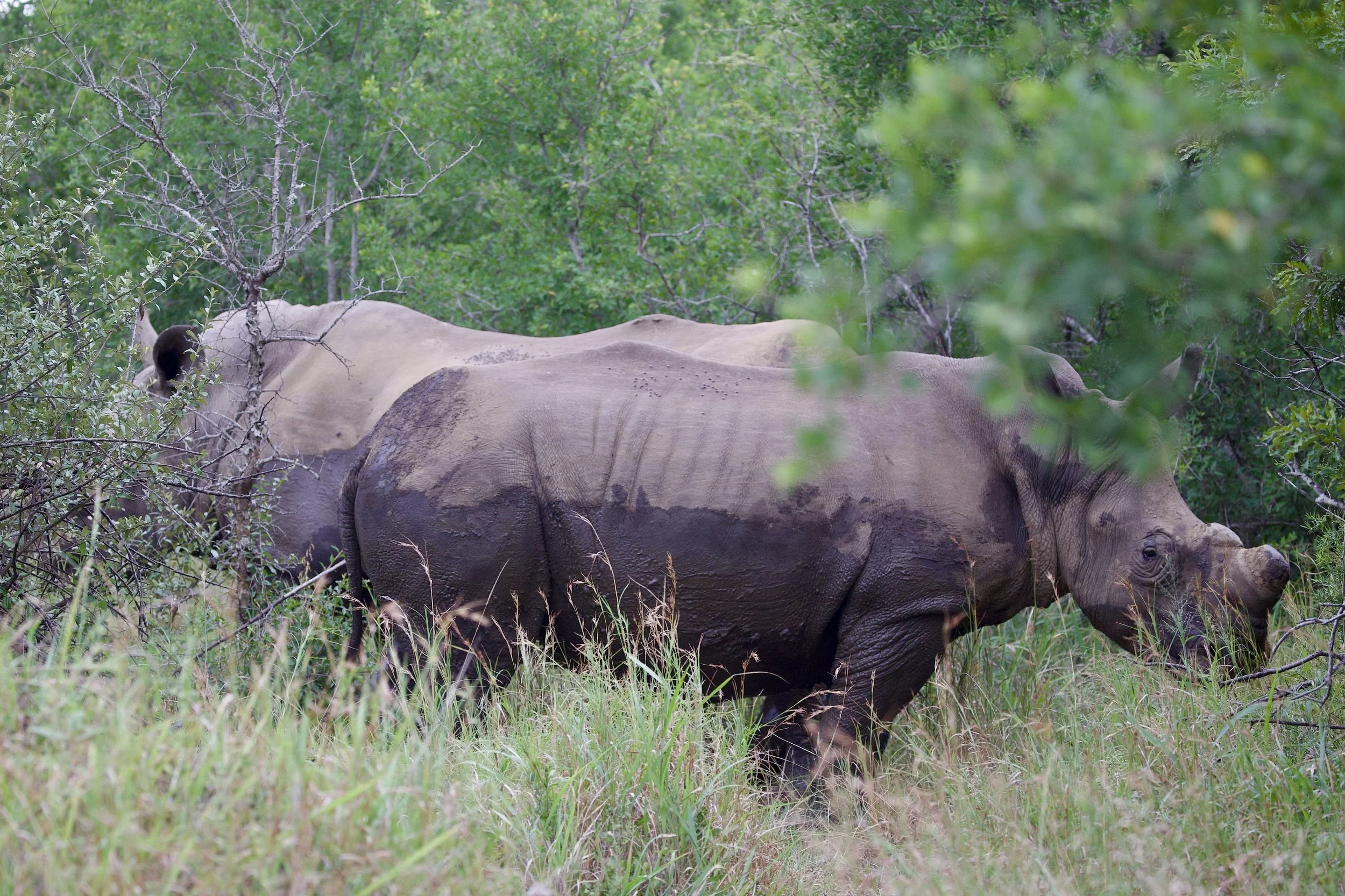
white Rhinos
The next morning, as we left camp, we drove through the Hluhluwe section of Hluhluwe–Imfolozi Park. This part of the park is more mountainous and rugged. Once again, we were treated to a wonderful variety of wildlife. Along with many of the familiar safari animals—like Impala, Zebra, and Giraffe—we also spotted some Greater Kudu and Nyala. One particularly memorable sight was a White Rhinoceros lounging contentedly in a muddy waterhole, enjoying what looked like the perfect morning spa treatment.
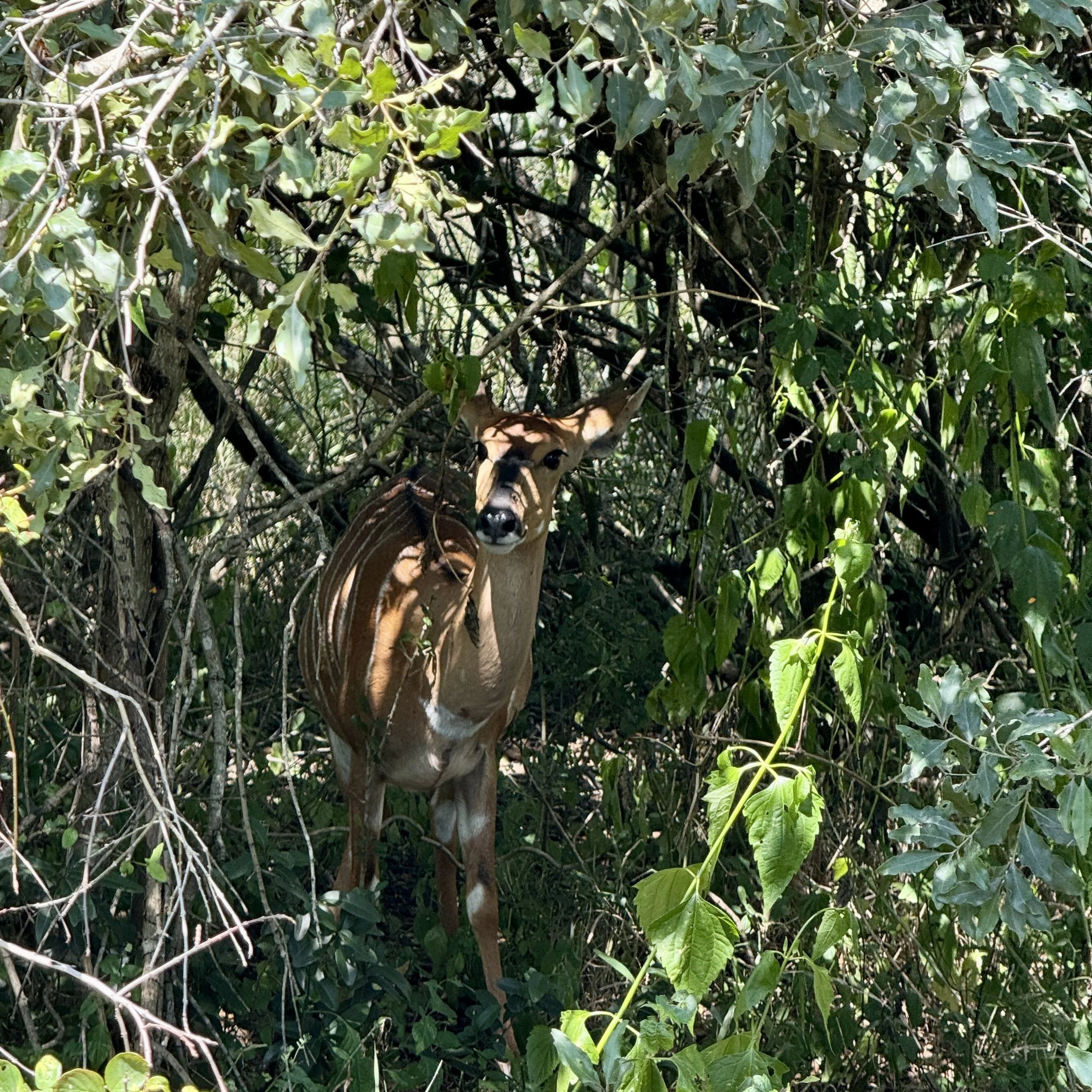
Nyala
We had the opportunity to cross the border into Eswatini (formerly known as Swaziland) in our campers for a one-night stay at Mlilwane Wildlife Sanctuary. While we didn’t go on a formal safari here, our campground was located inside the sanctuary, so we still spotted a few animals as we made our way to our campsite.
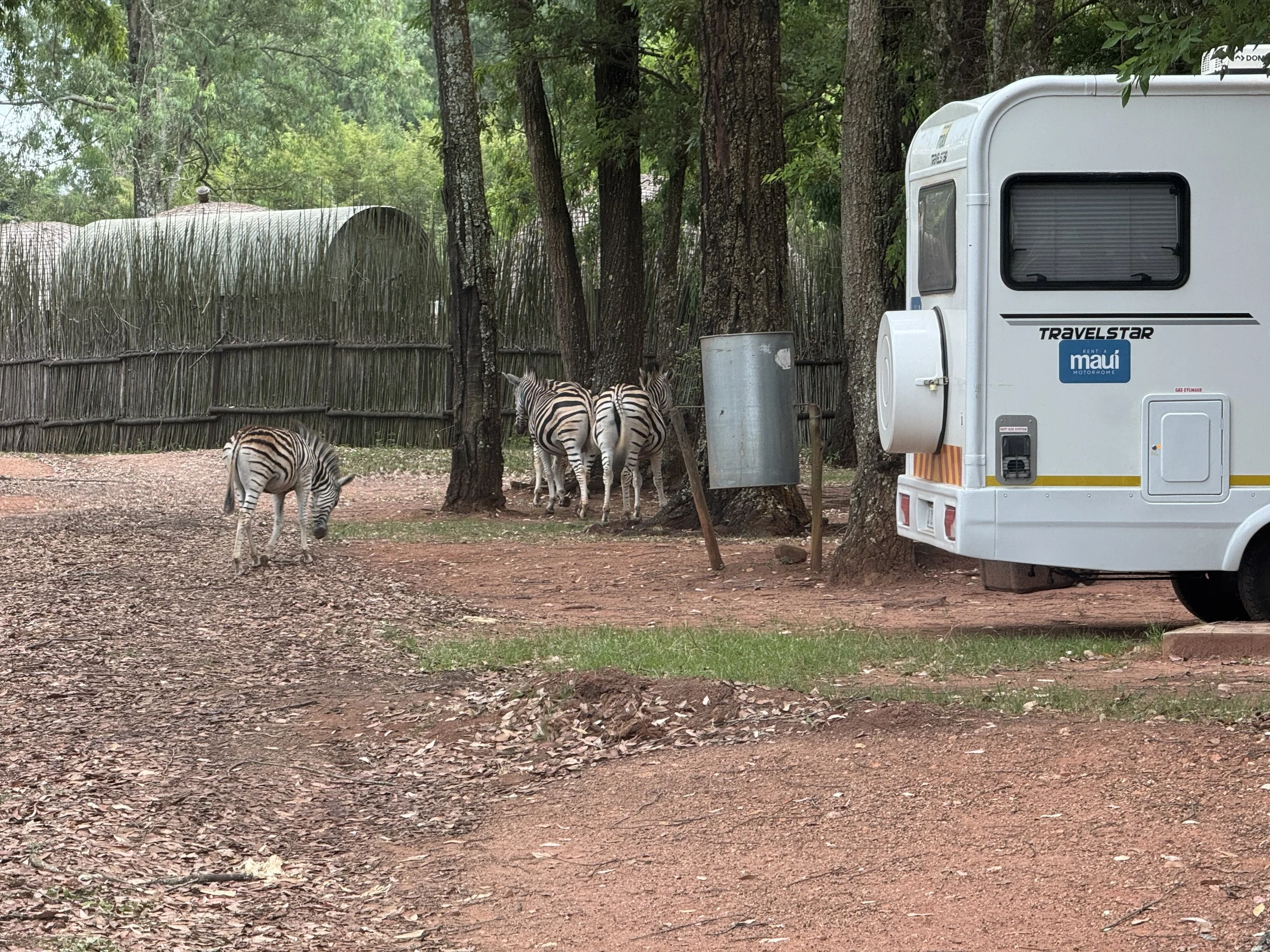
zebras in the campground
Crossing the border itself was a unique experience for us. First, we stopped on the South Africa side, where we parked and entered a small building to receive an exit stamp in our passports. After driving through the border crossing, we parked again and entered another building—this time on the Eswatini side—to receive our entry stamp into the new country. When it was time to return, the process was simply repeated in reverse.
Even without a safari, we had two memorable shopping stops: Swazi Candles and Swazi Glass.
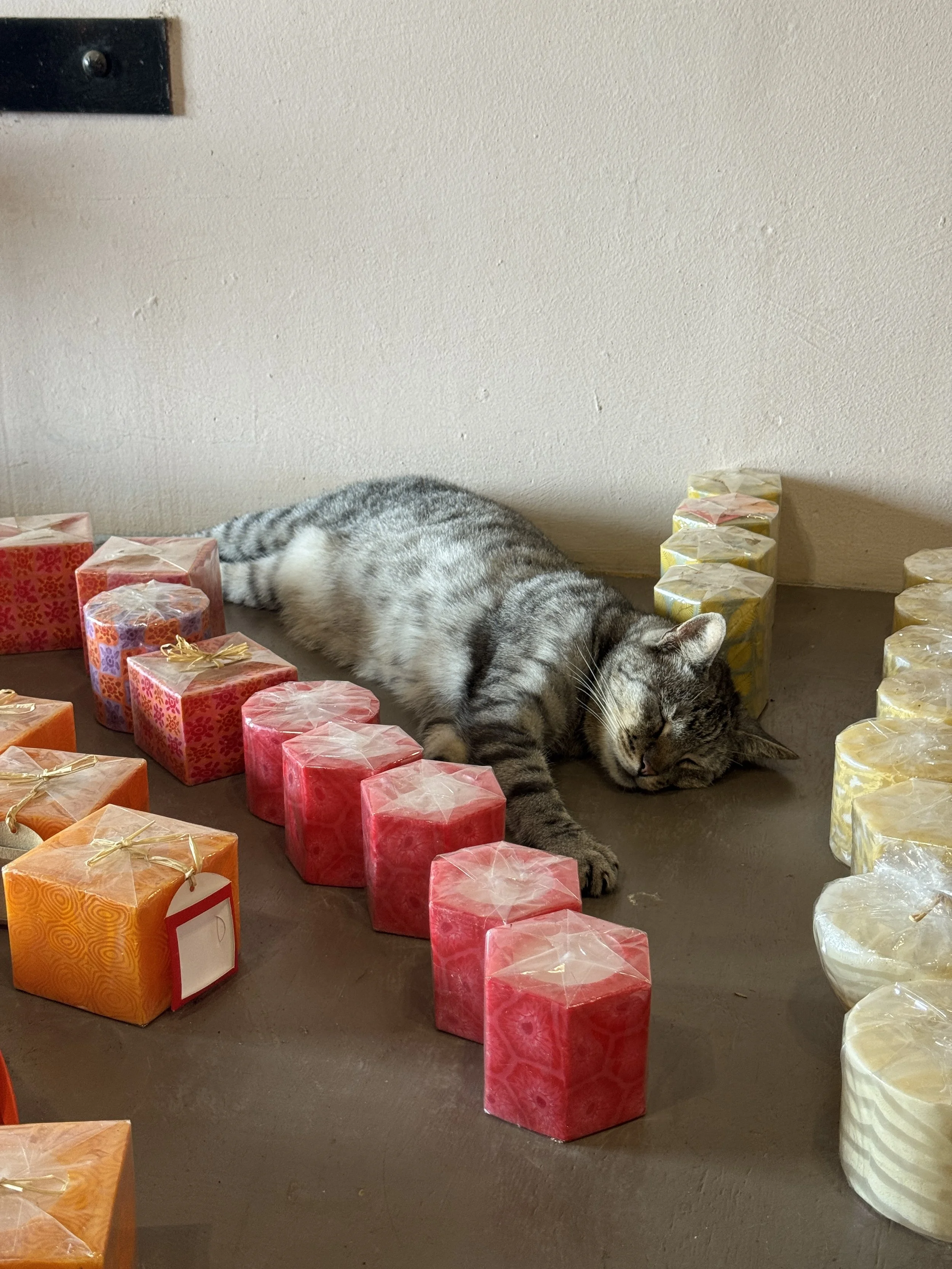
At Swazi Candles, we found beautifully handmade candles created by skilled local artisans. Each candle is colorful and intricately patterned using traditional techniques. While they look like decorative art pieces, they are fully functional candles. The surrounding area also features several small shops selling locally made crafts, making it a fun place to browse.
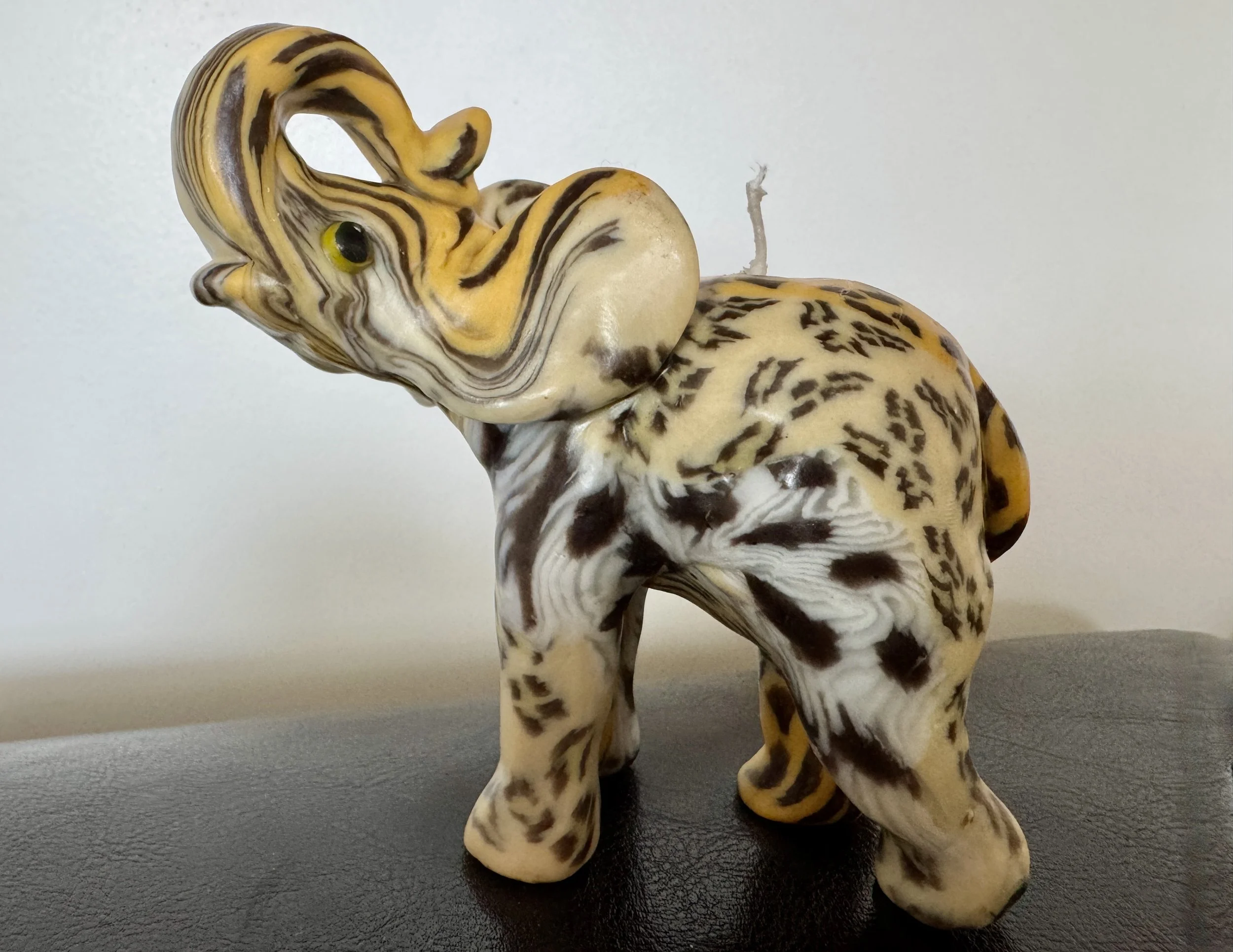
Swazi candle - elephant
Our visit to Swazi Glass was just as fascinating. This workshop is famous for its handcrafted glass pieces, made using recycled materials and traditional glass-blowing techniques, and every piece is individually crafted, making each one unique. Visitors can walk along a balcony that overlooks the production floor, where we watched the artisans carefully shaping the molten glass. It was incredible to see their skill up close—and to feel the intense heat from the furnaces while they worked.
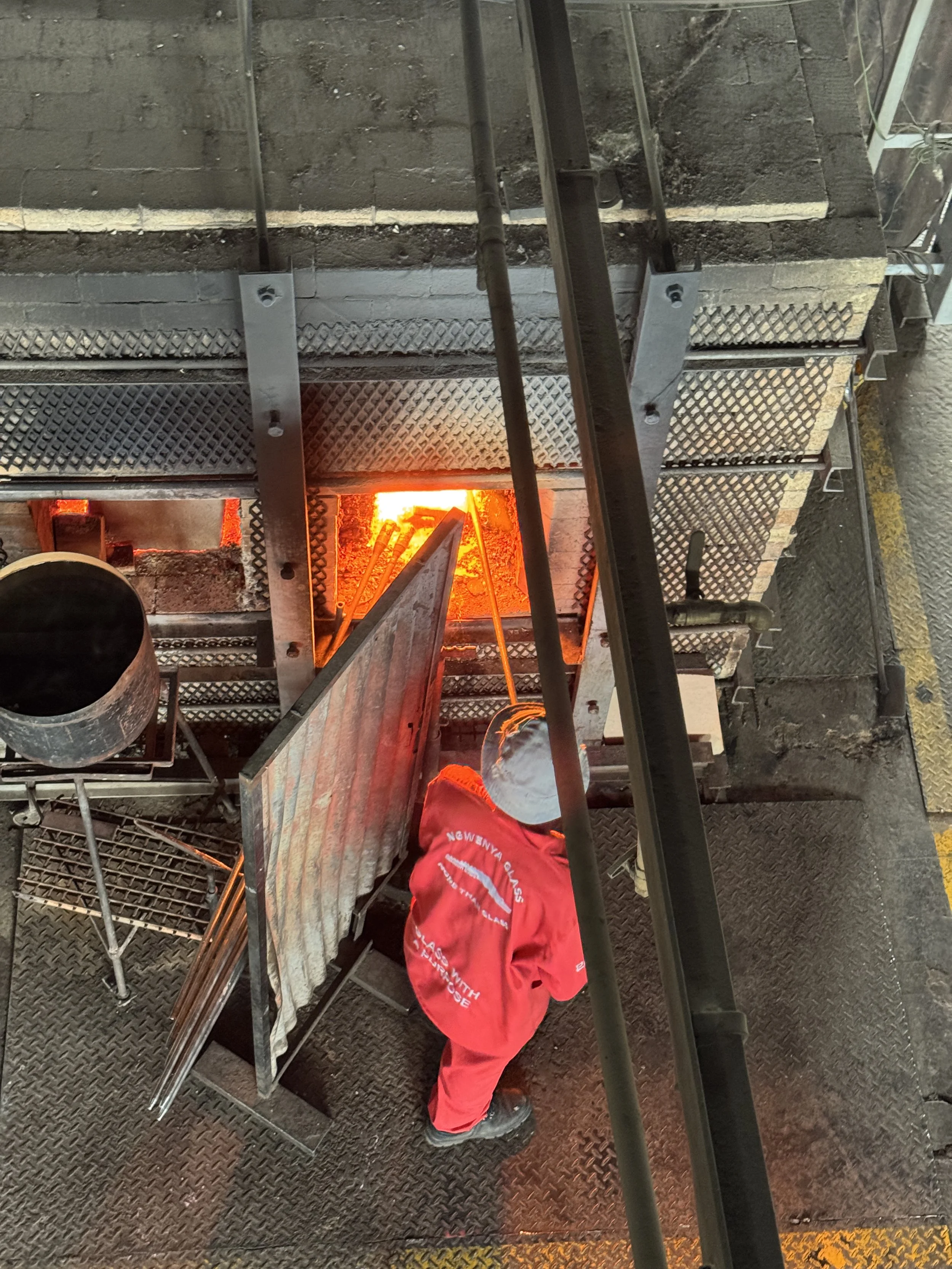
getting melted glass from the furnace
Just like at the candle market, there were also several artisan shops on the grounds, giving us plenty of opportunities to explore and pick up a few special souvenirs.