Cliff Dwellings
Mesa Verde National Park
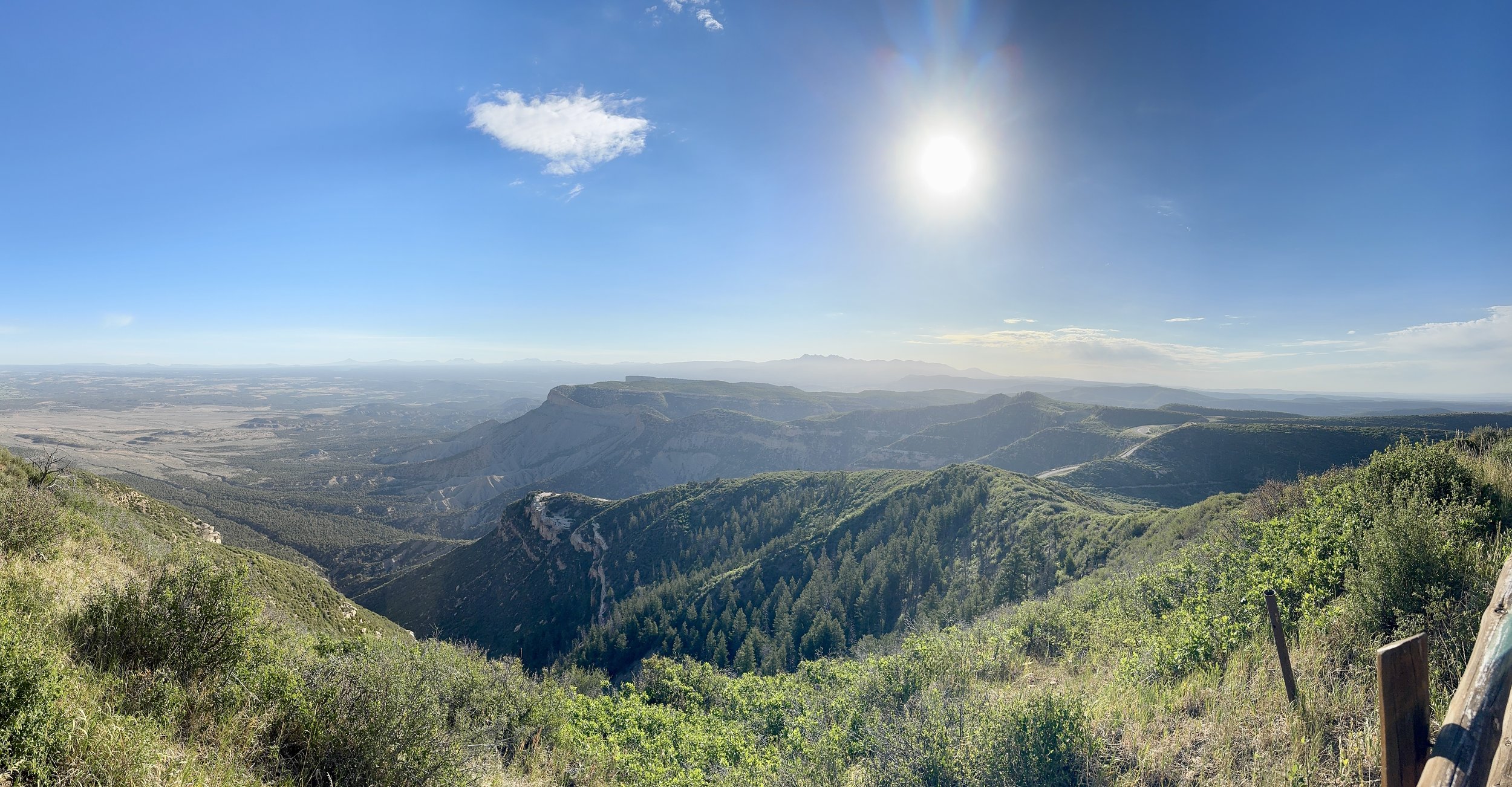
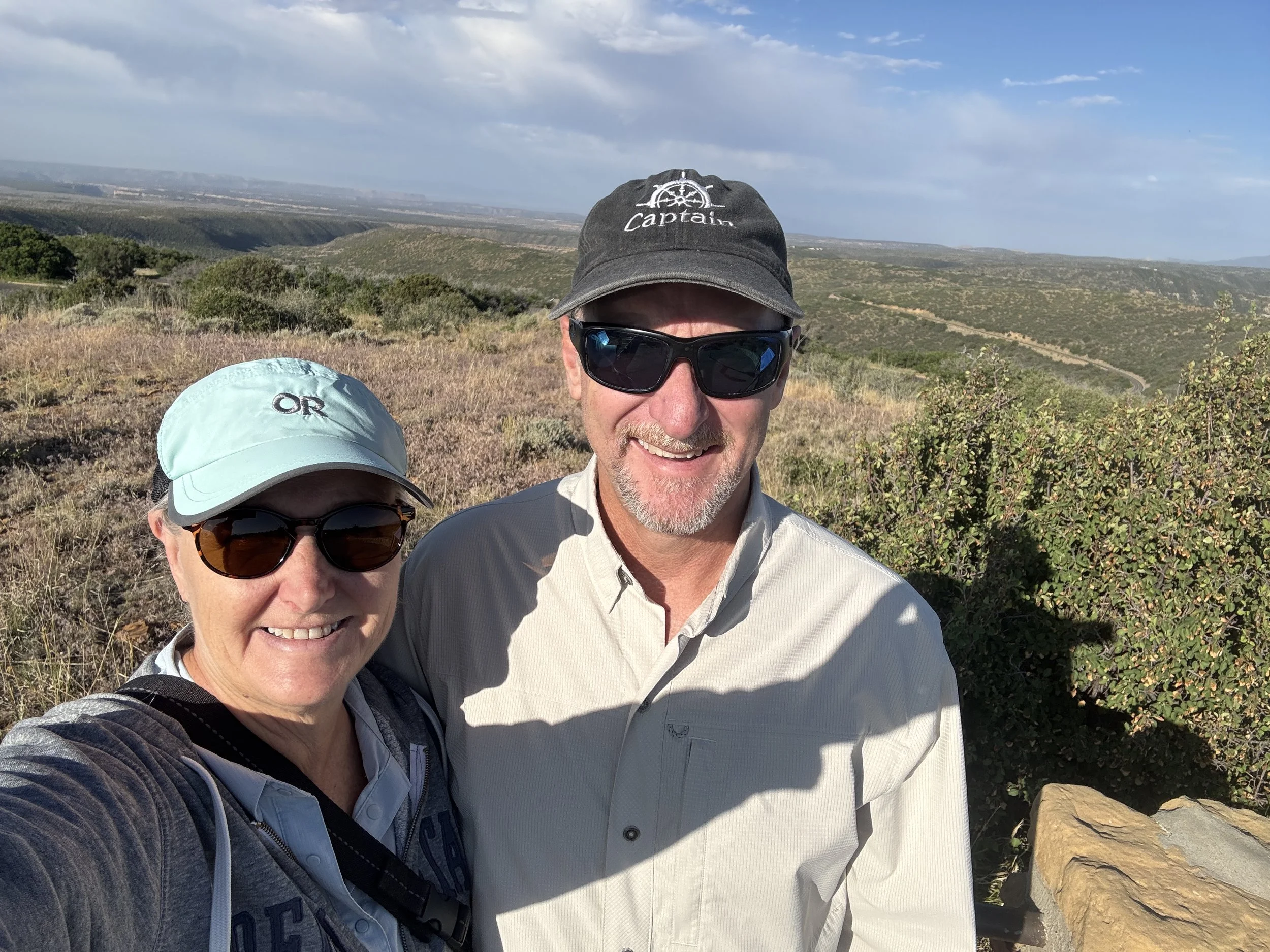
Our National Park quest continued in Mancos, Colorado, where we spent some time exploring Mesa Verde National Park. Unlike many of the parks we've visited so far, Mesa Verde is known more for its rich cultural history than its natural scenery. The park preserves and shares the story of the Ancestral Pueblo people, who built thriving communities on the mesas and within the cliffs of this rugged landscape between about 750 and 1300 AD. While the views across the canyons are beautiful, it's the remarkable cliff dwellings that draw most visitors to the park.
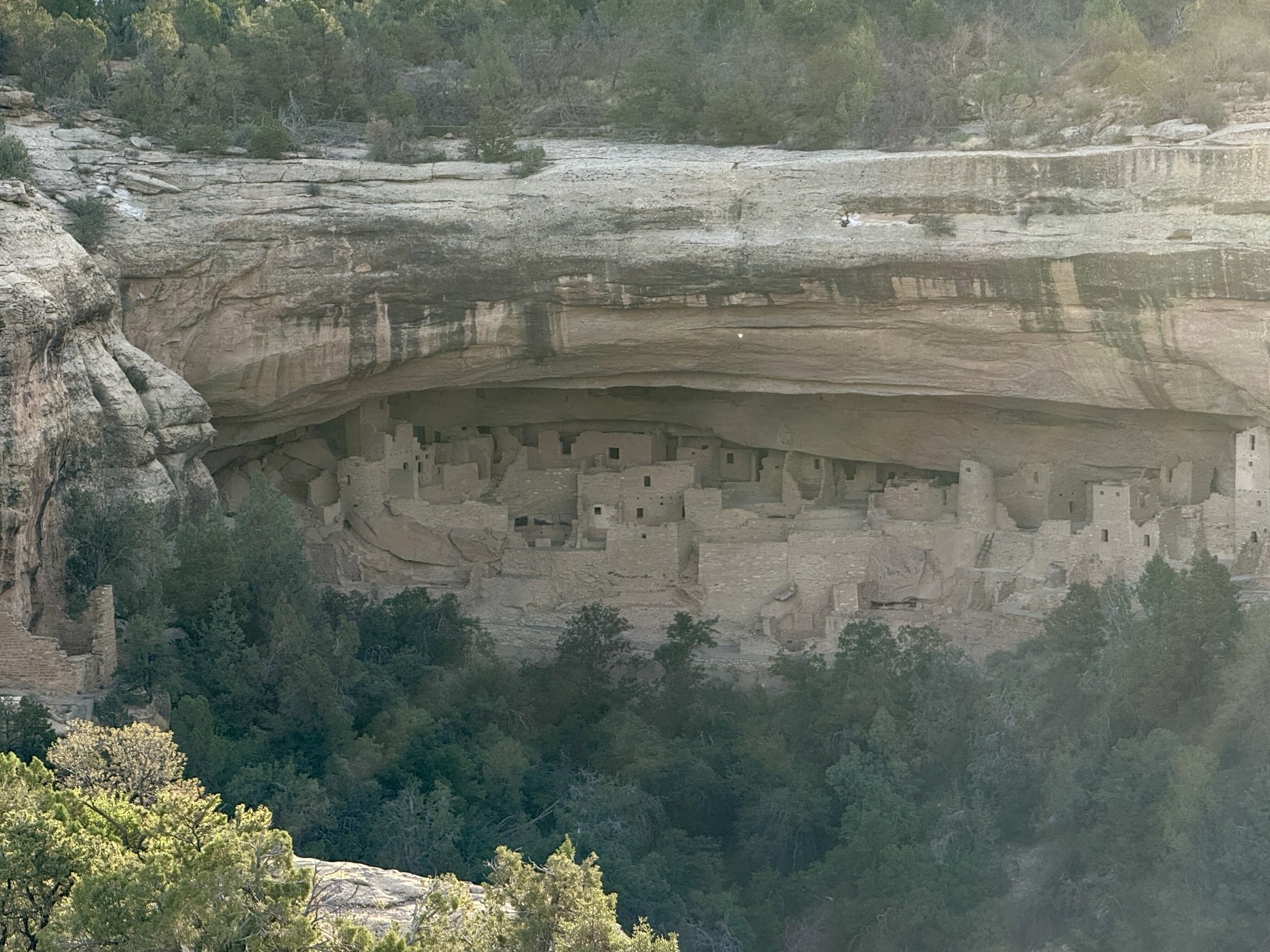
view of Cliff Palace
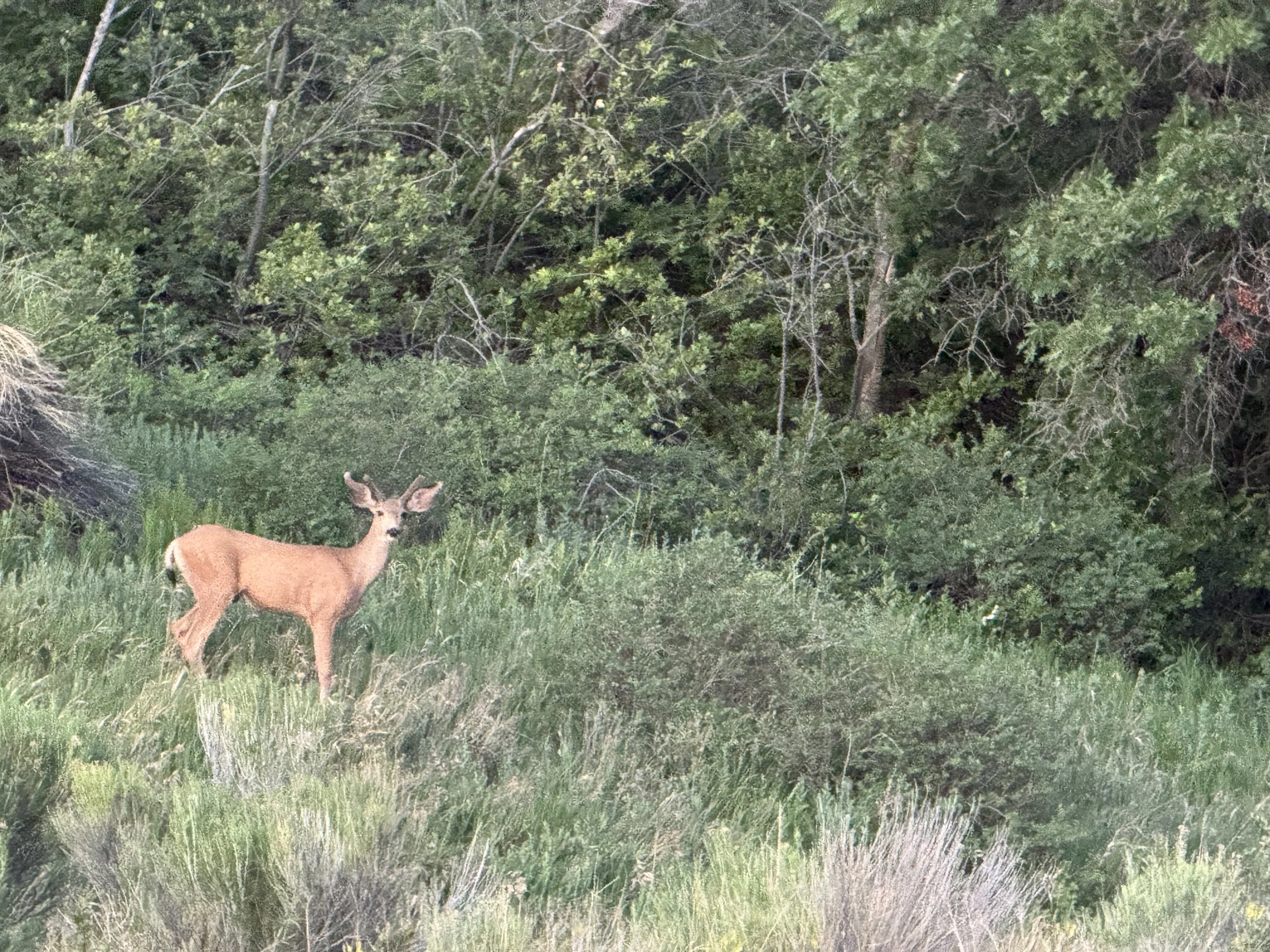
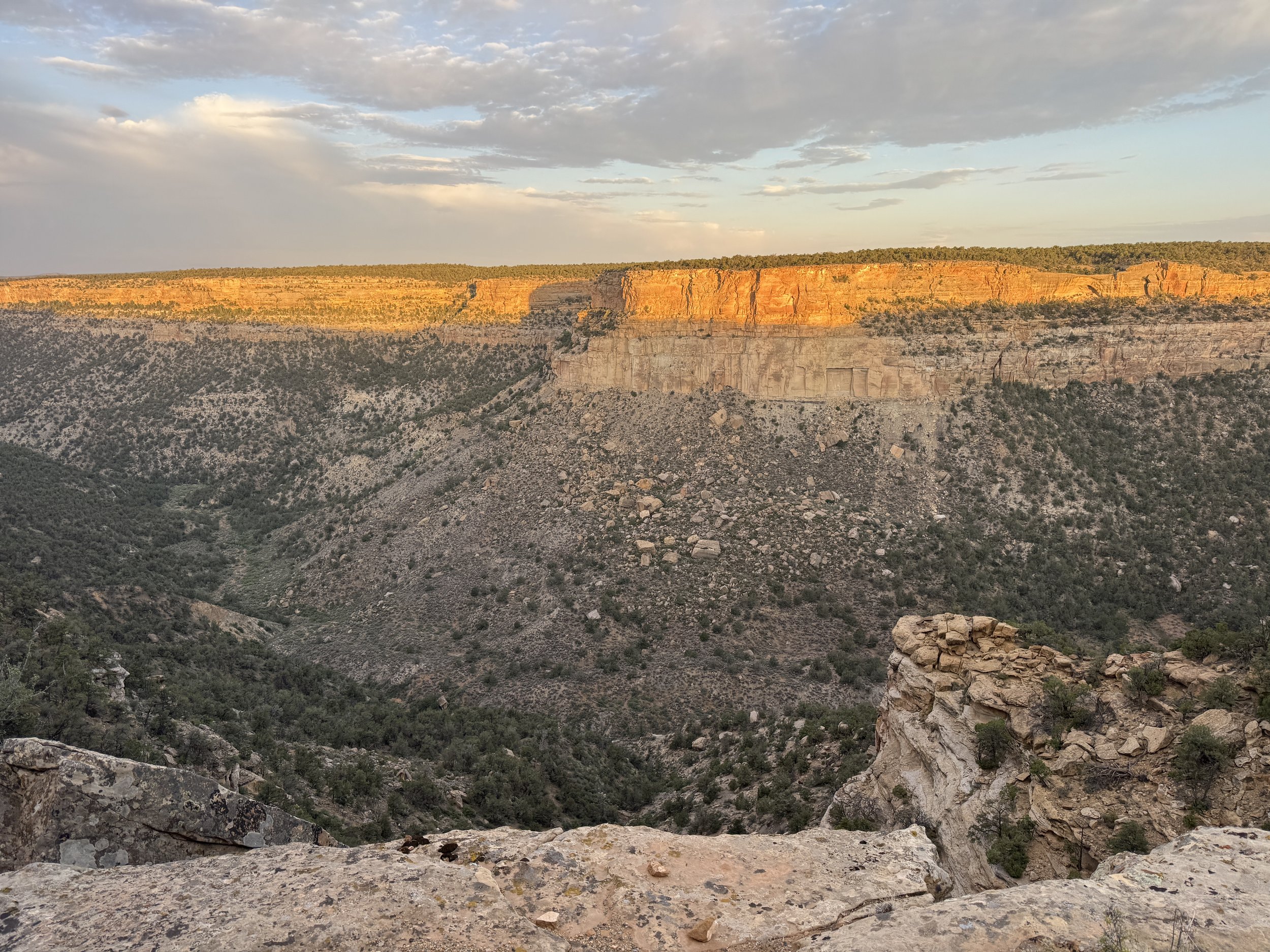
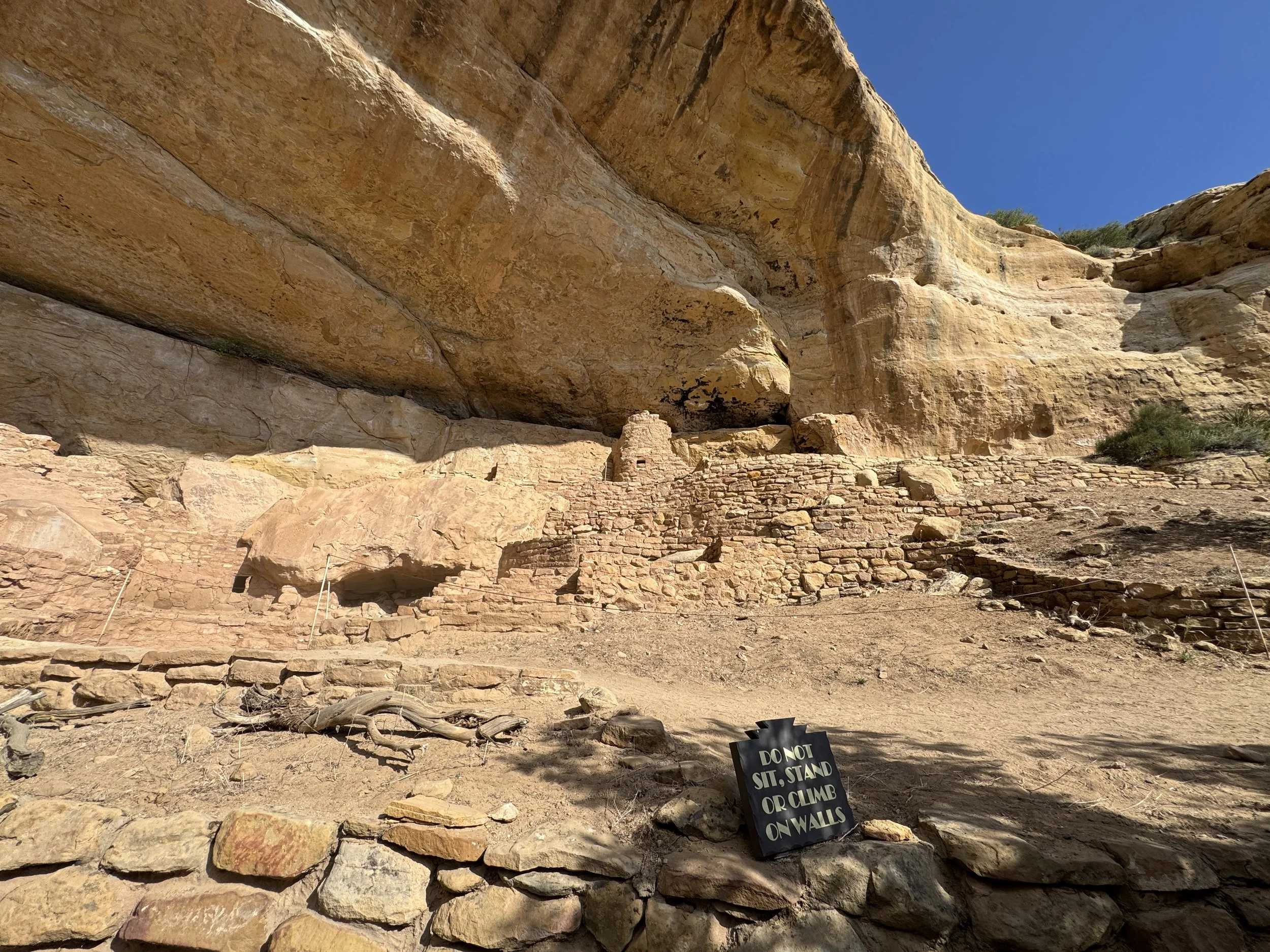
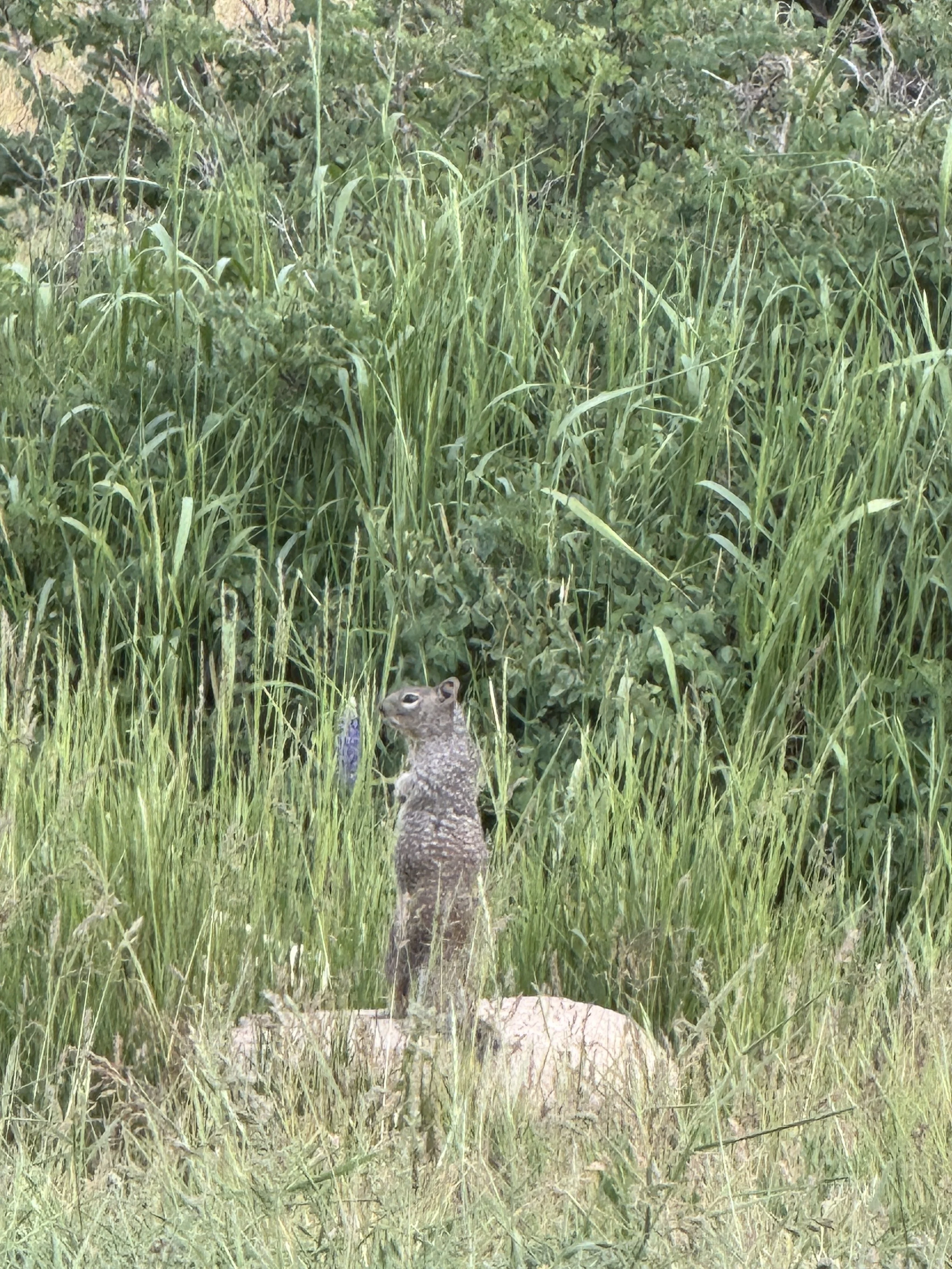
We started our visit early in the morning as the first rays of sunlight peeked over the mountains, hoping to spot some wildlife at dawn. While we did see a few mule deer, most of the animals we encountered were rabbits and squirrels. Even so, it was wonderfully peaceful to have the park almost entirely to ourselves. We spent the morning driving through the park, frequently stopping to walk short trails to overlooks where we could view cliff dwellings tucked into the canyon walls across from us. The alcoves vary greatly in size, from large complexes like Cliff Palace with dozens of rooms to smaller sites like Step House with only a handful of structures. Some alcoves are tall enough to hold dwellings several stories high. Seeing these communities built into the cliffs is truly impressive, and it's hard not to marvel at the Ancestral Pueblo people who navigated this rugged terrain with ease. It's safe to say that anyone afraid of heights probably wouldn't have felt very comfortable living here.
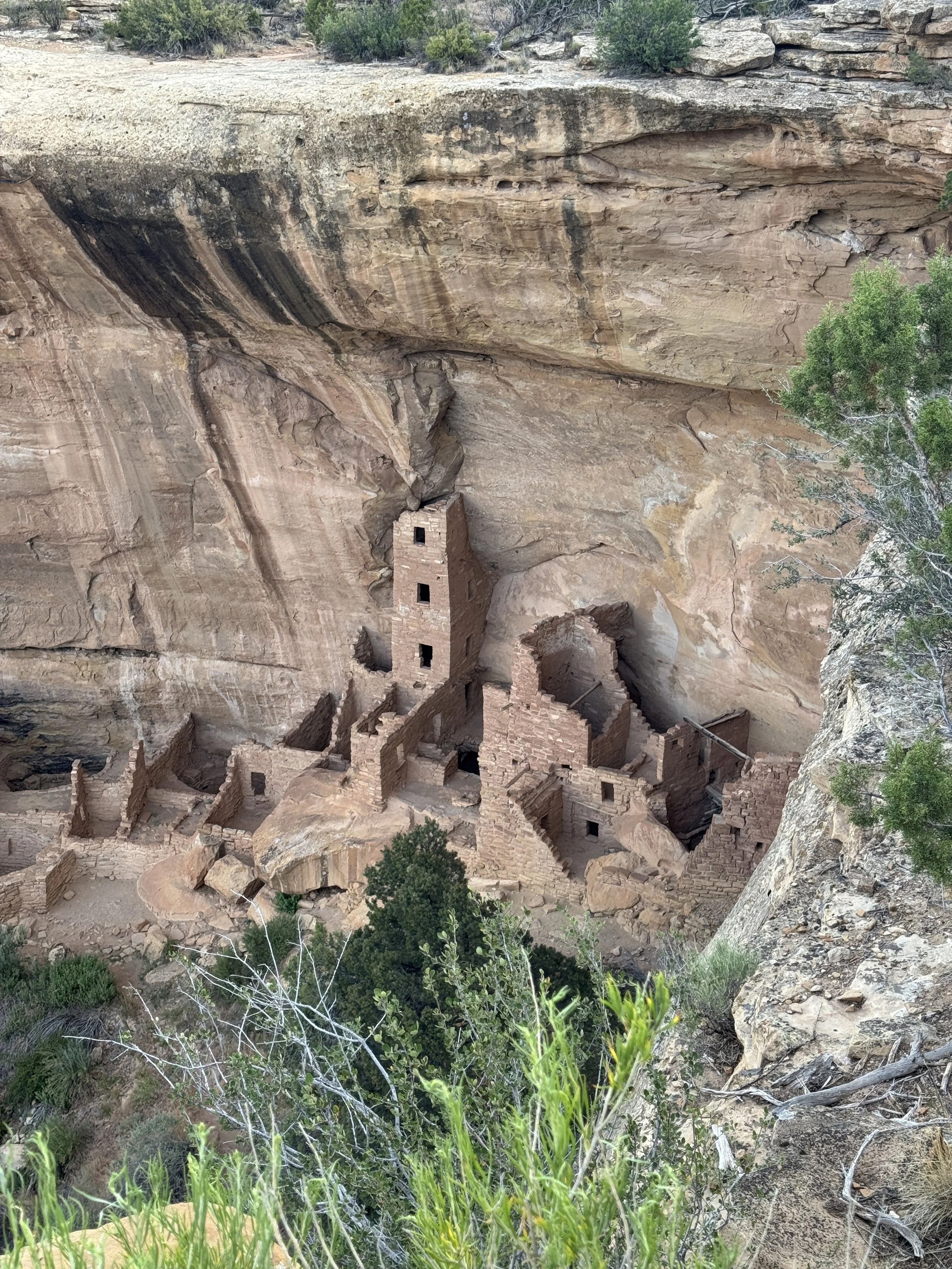
view of Square Tower House
Most of the cliff dwellings at Mesa Verde can only be viewed from overlooks above, and several of the most famous sites can only be visited on ranger-guided tours. Given my sensitivity to heights and the number of ladders involved, Steve took two of those tours on his own: Cliff Palace and Balcony House.
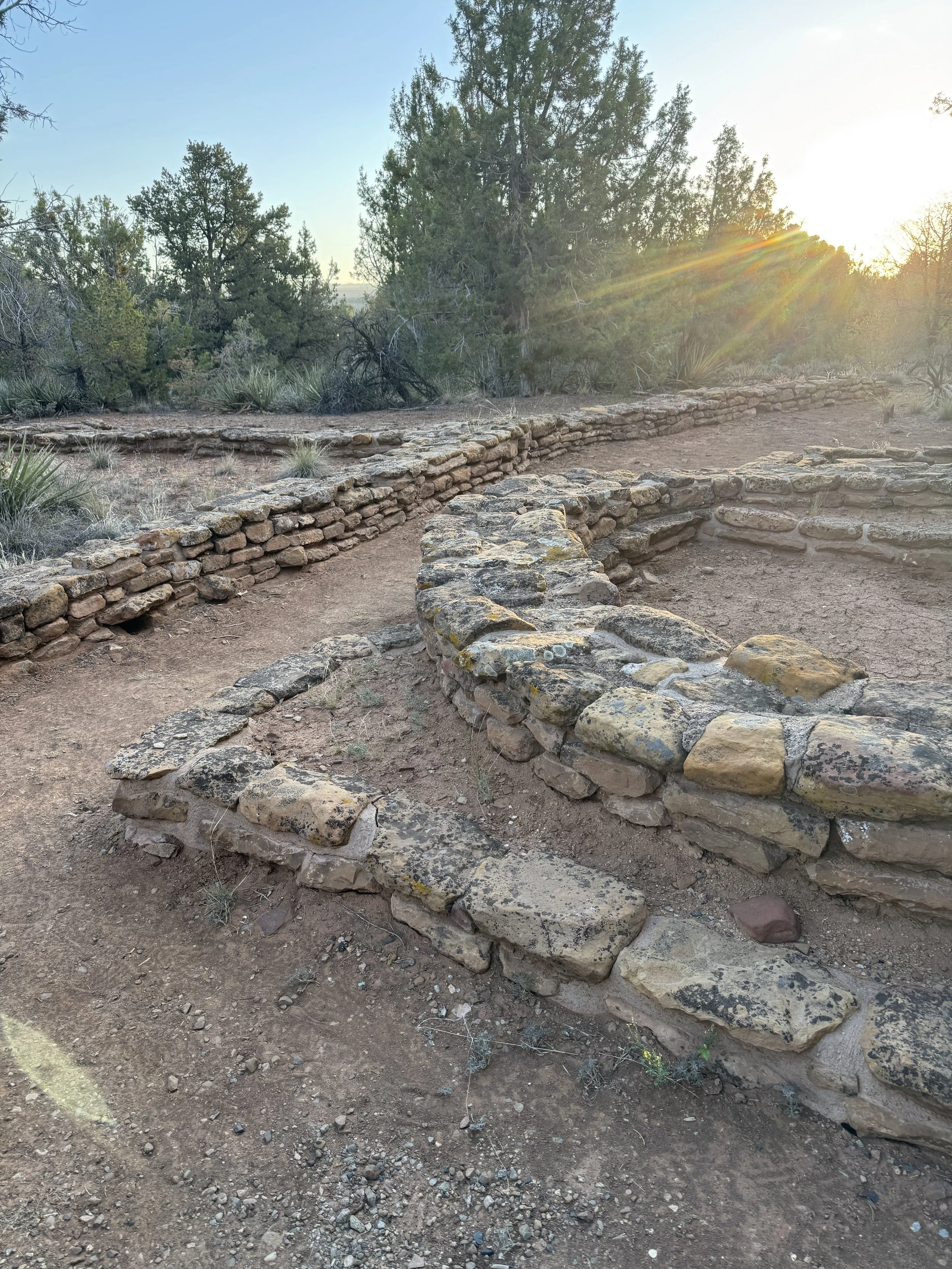
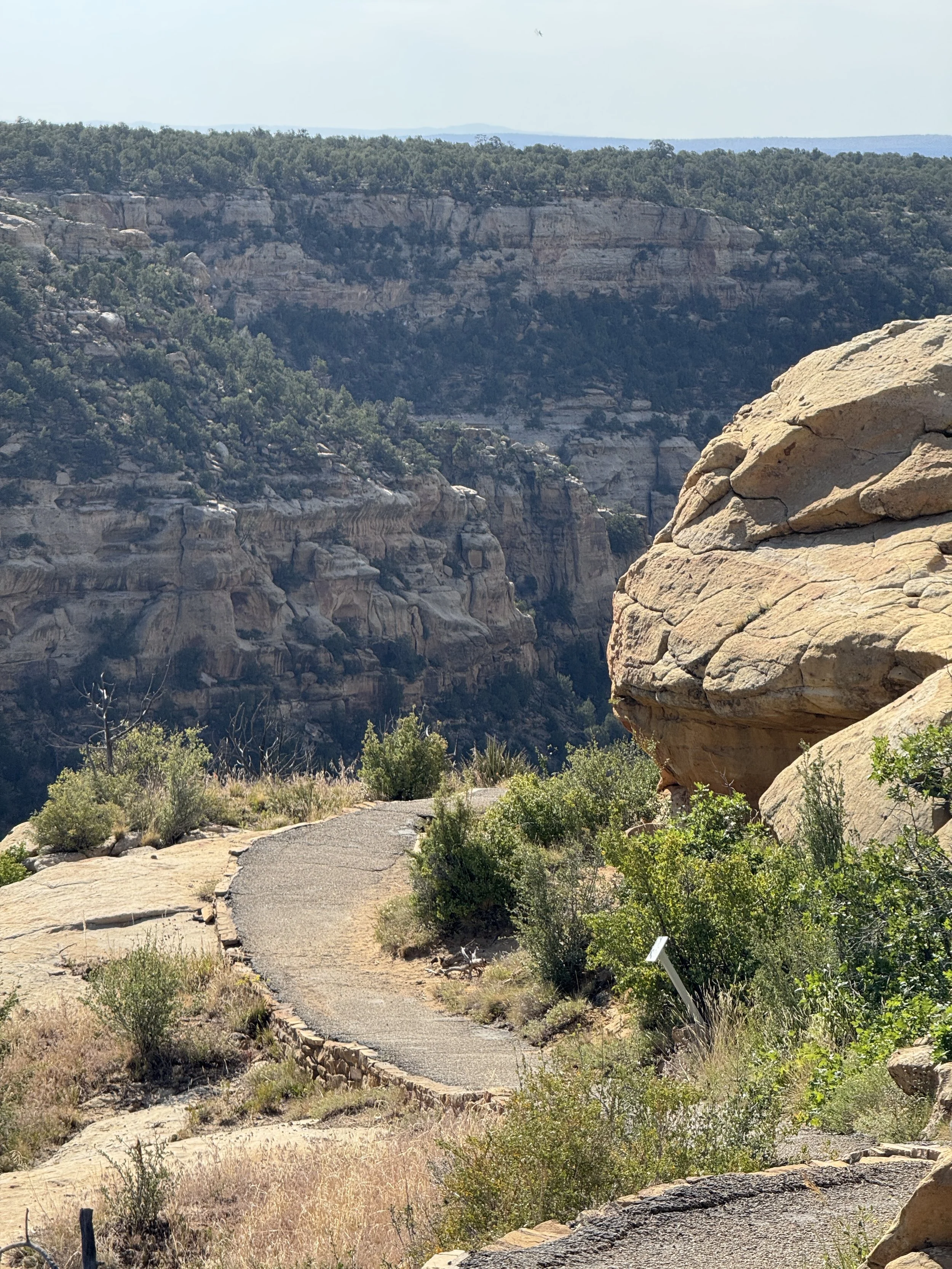
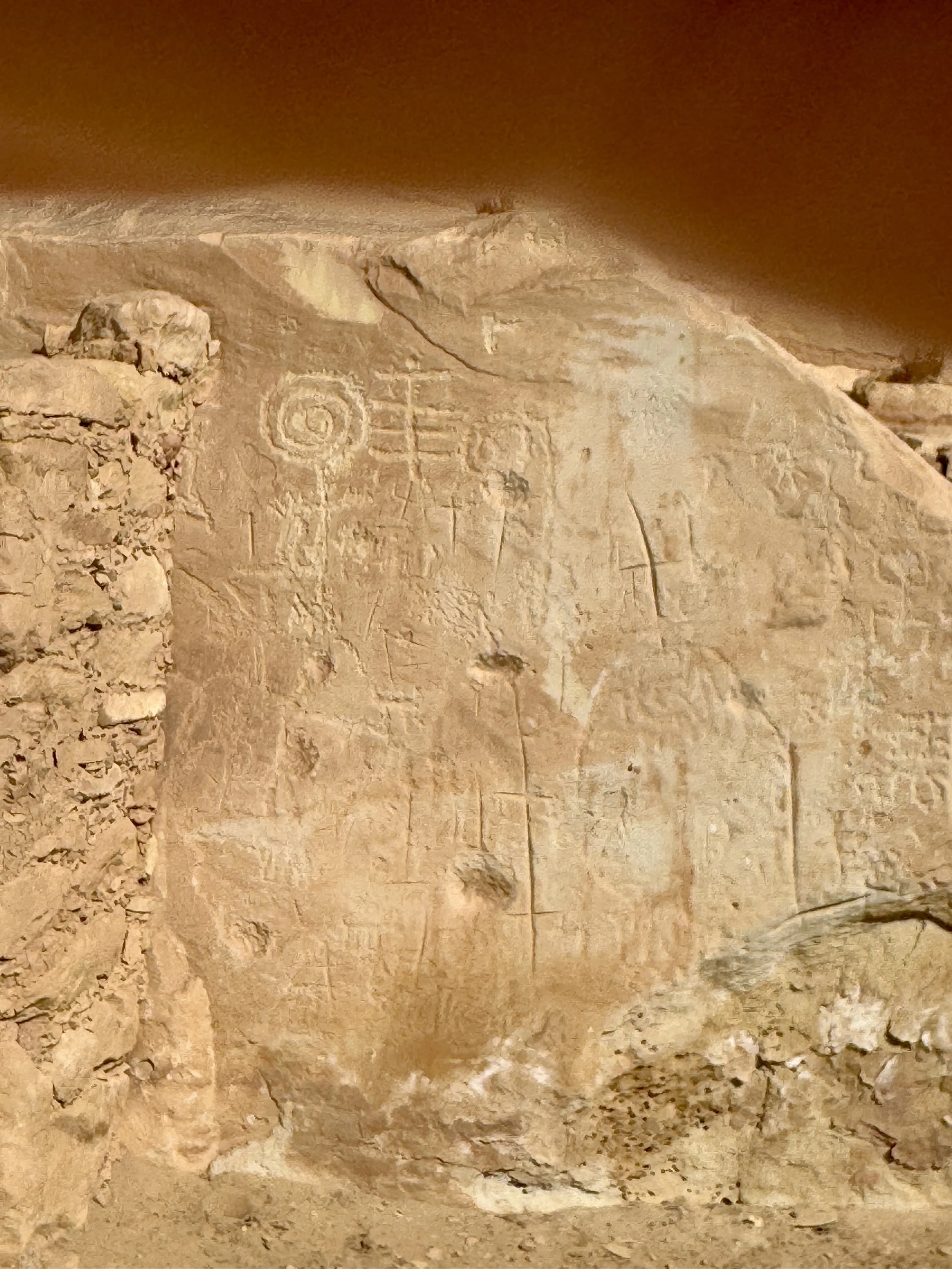
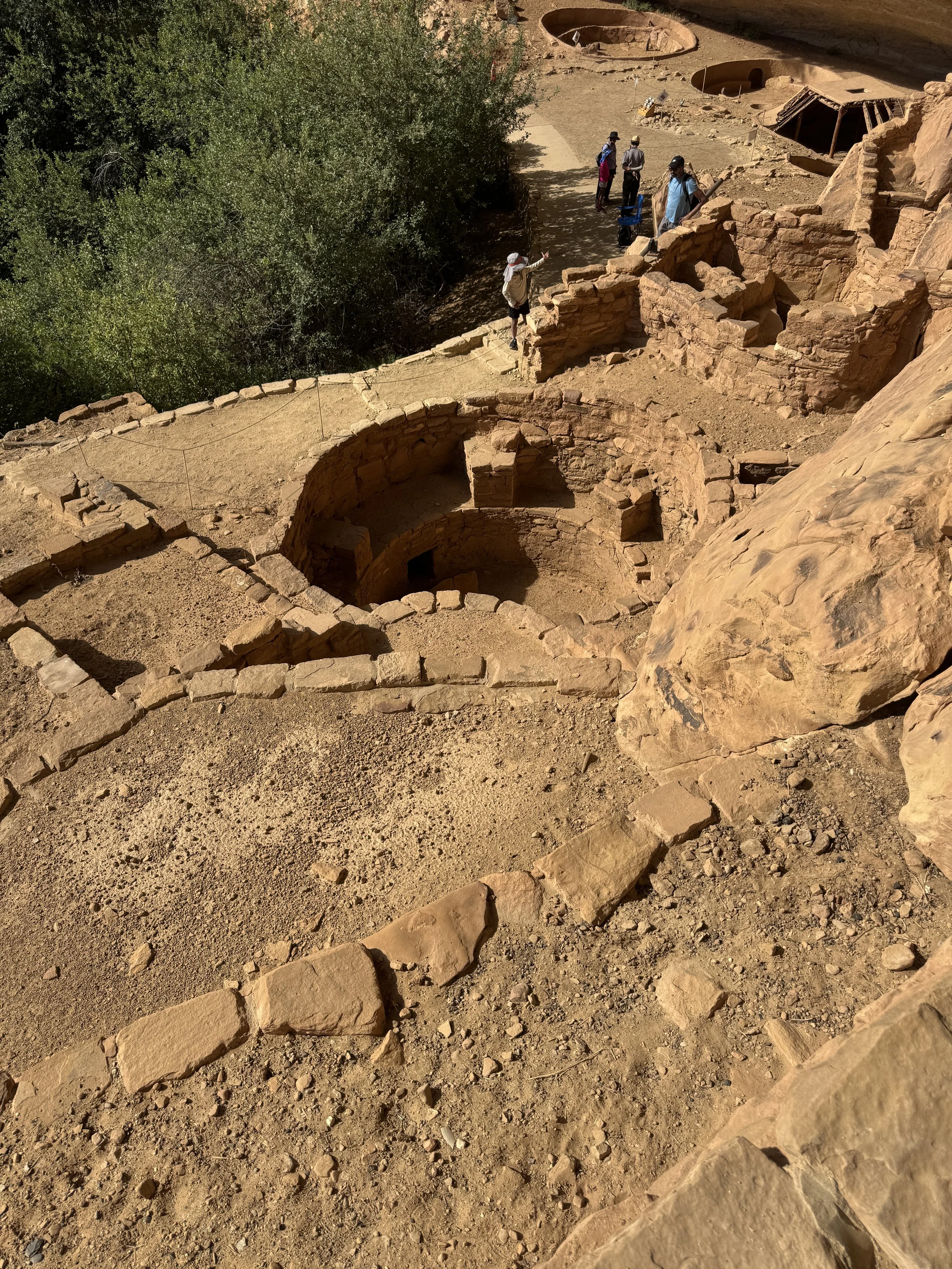
The one cliff dwelling visitors can explore without a tour is Step House. Access is available from late May through October between 9:00 a.m. and 2:45 p.m., when a ranger is stationed at the site. The trail begins at Wetherill Pavilion on Wetherill Mesa and winds down the side of the cliff to the dwelling below. The good news is that it's mostly paved and only about a half mile long. The bad news is that the return trip is uphill the entire way back to the pavilion. Normally the trail forms a loop, but during our visit part of the route beyond Step House was closed, so we had to retrace our steps. What makes Step House especially interesting is that it contains both pithouses dating to around 600 AD and a cliff dwelling from around 1200 AD, allowing visitors to see how life in the area evolved over roughly 700 years of occupation. Visitors can climb a short ladder, walk through part of the dwelling, and take advantage of having a ranger on site to answer questions about the history and archaeology of the area.
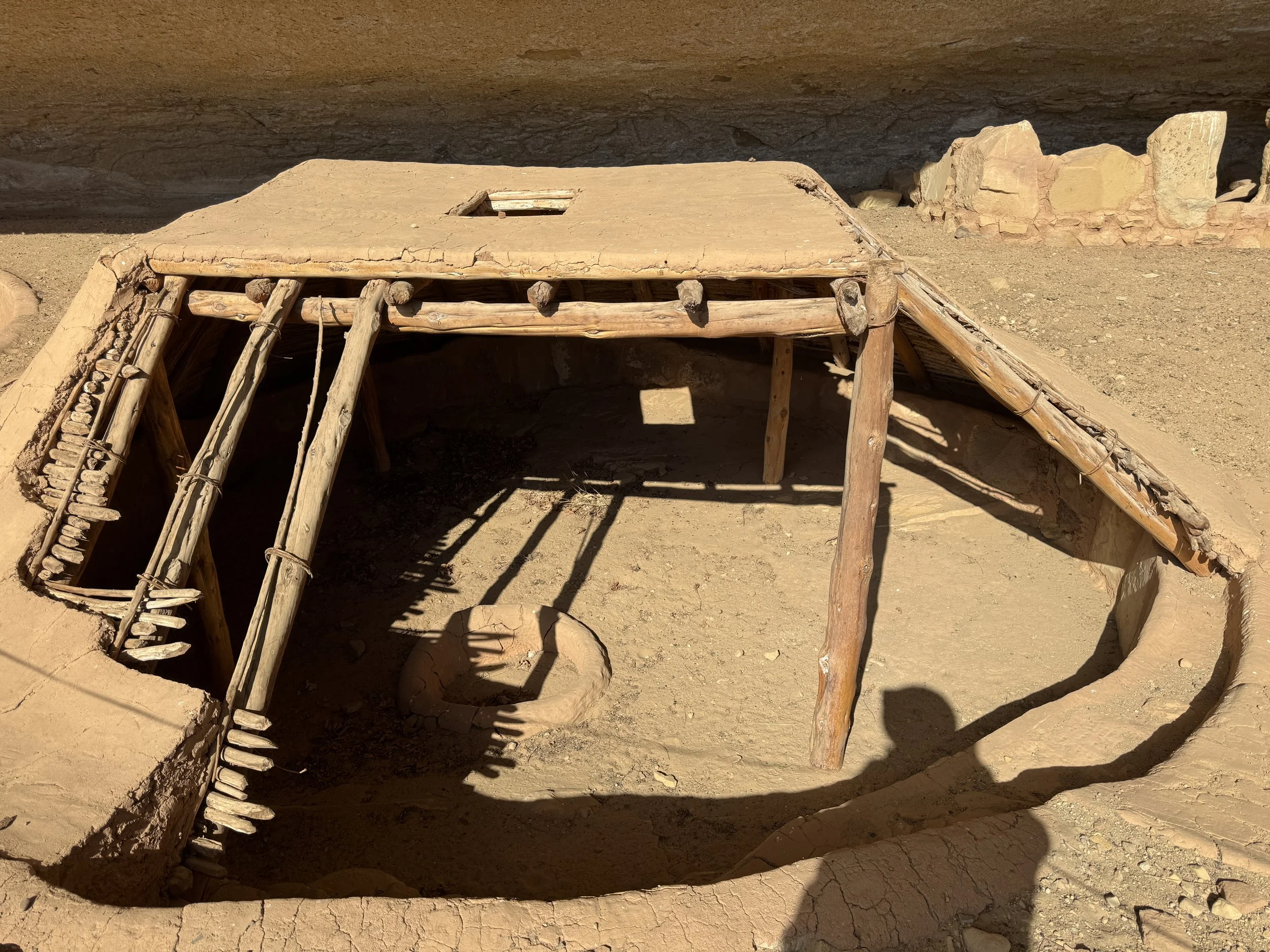
pithouse at Step House
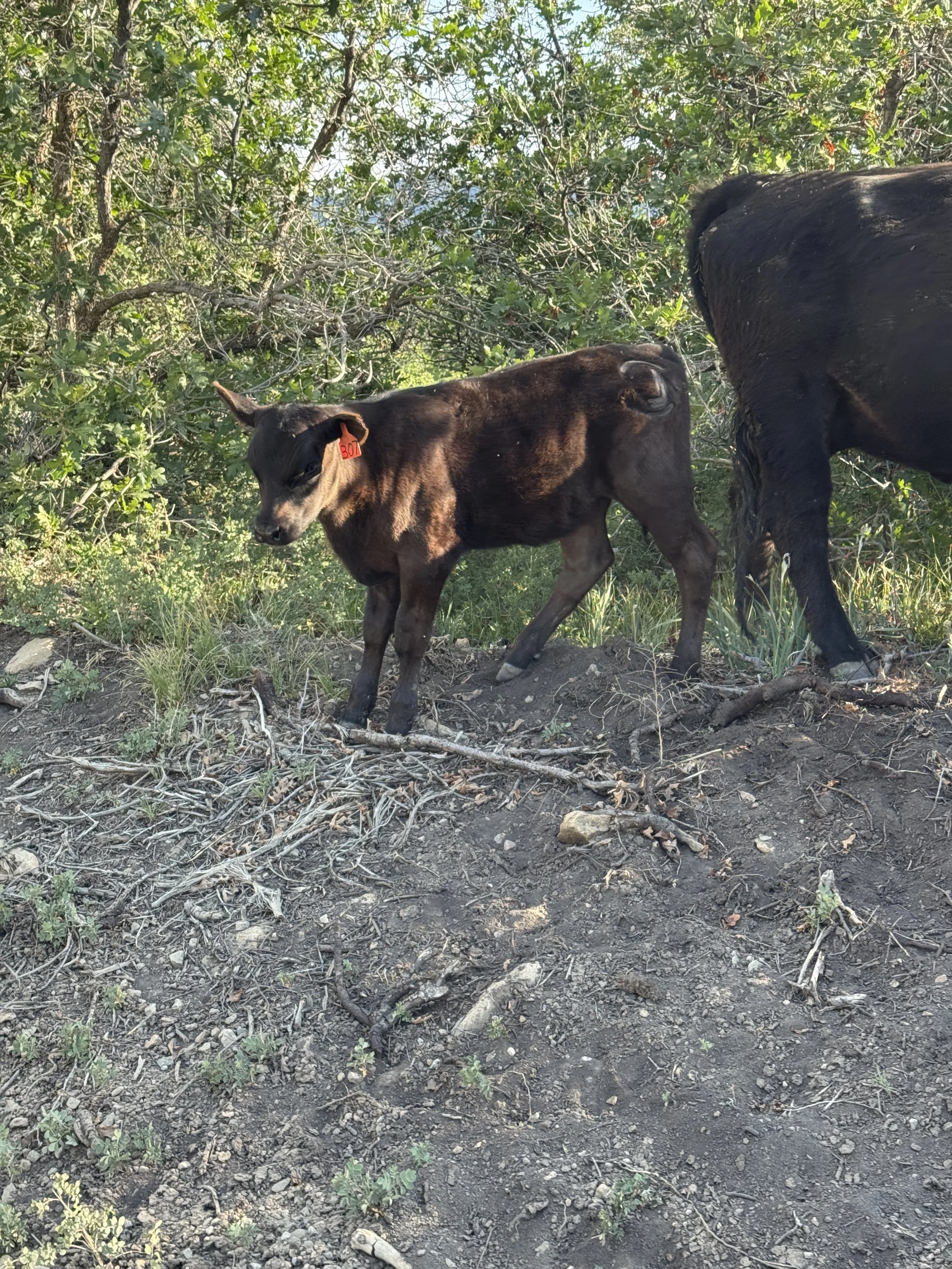
Since we were in Mancos for three days, we also found time to do a little exploring outside the park. One afternoon, we took the Jeep up into the mountains on a network of gravel forest roads. The higher elevations provided some amazing views of the surrounding landscape, and we were lucky enough to spot a bit of wildlife along the way, including mule deer and a Dusky Grouse. As we made our way back down the mountain, we came across a herd of cattle grazing beside the road. It was fun to watch them stop and stare at us as we passed by, and the adorable calves were especially fun to see.
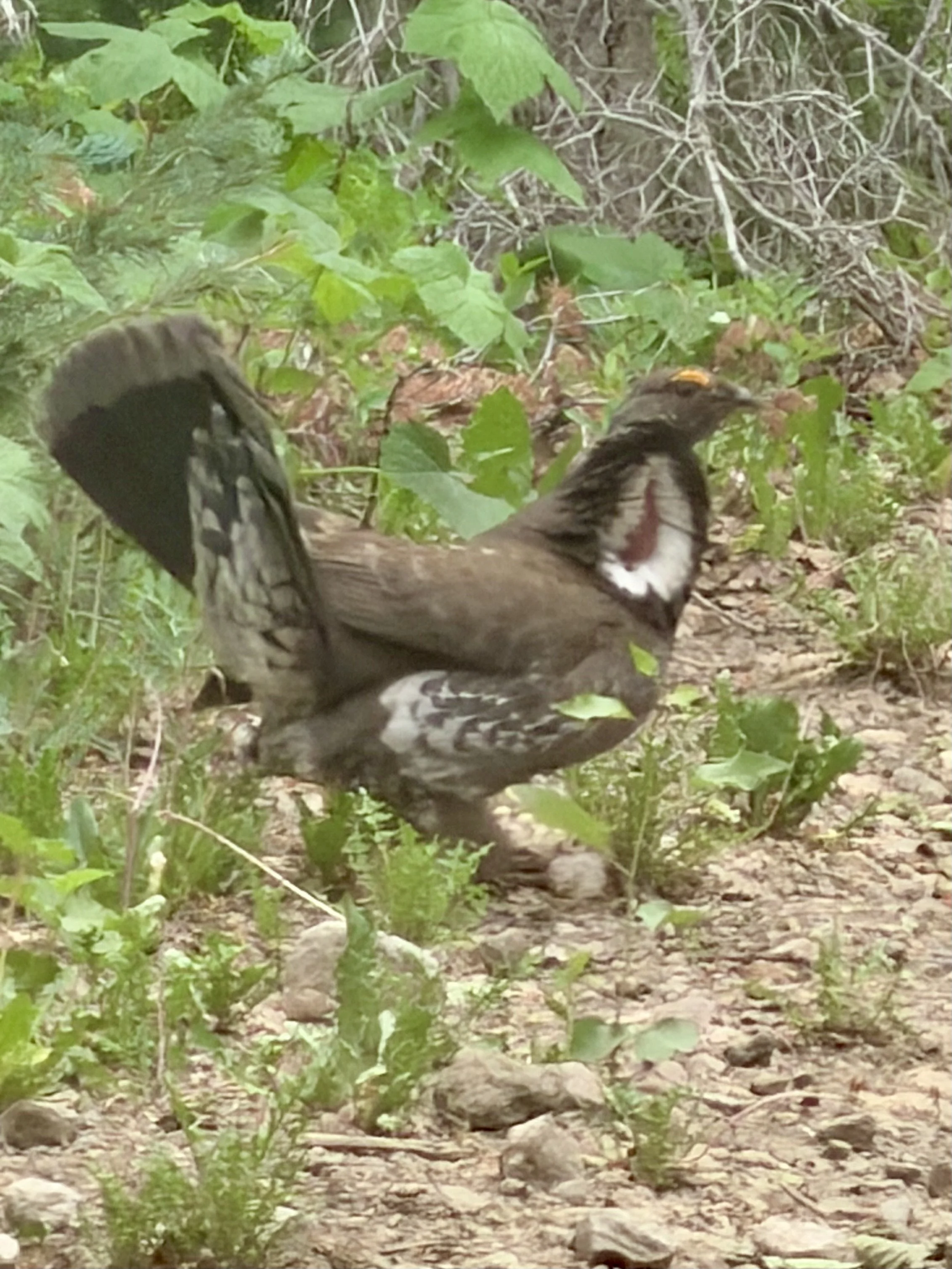
Dusky Grouse
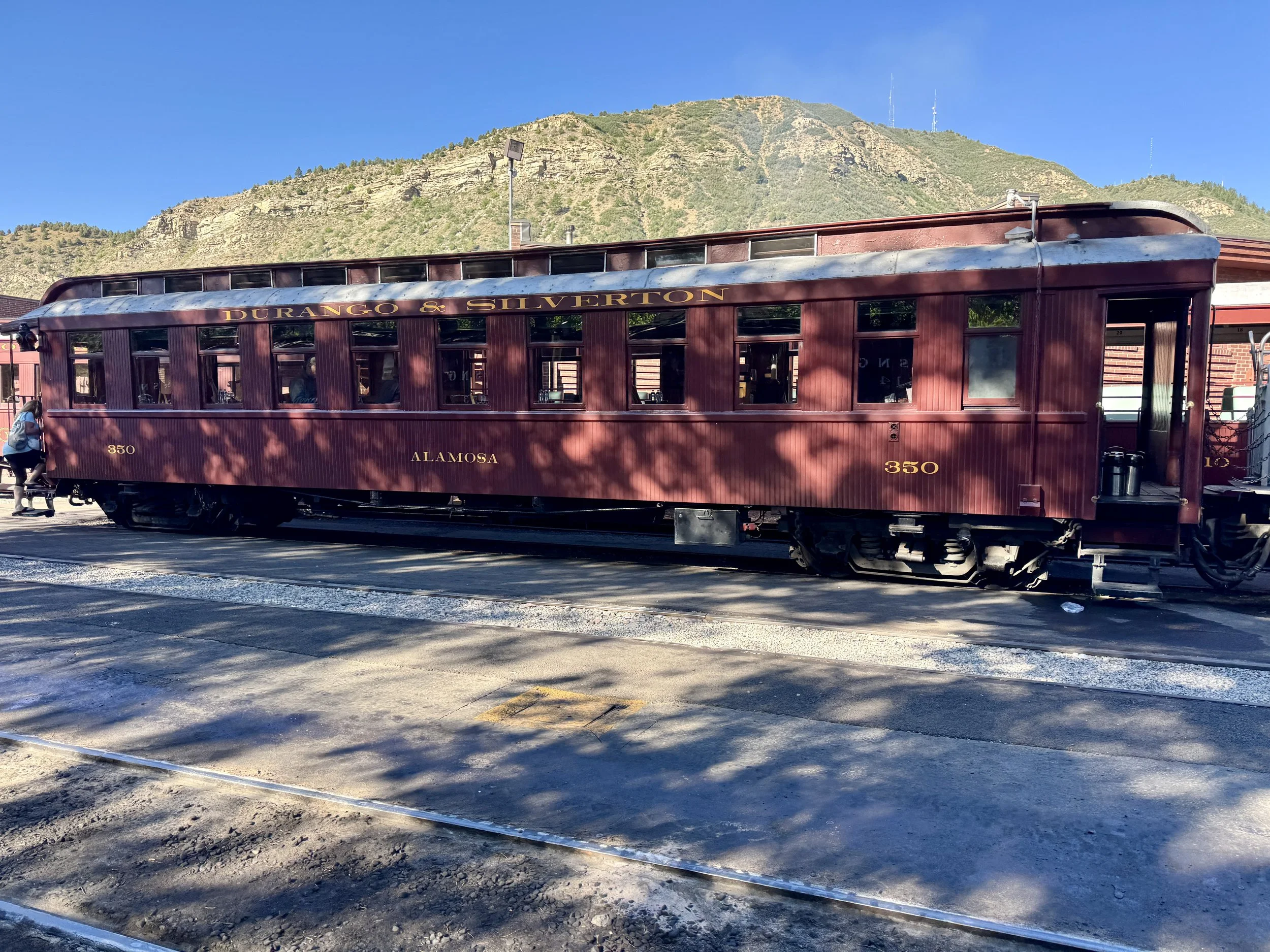
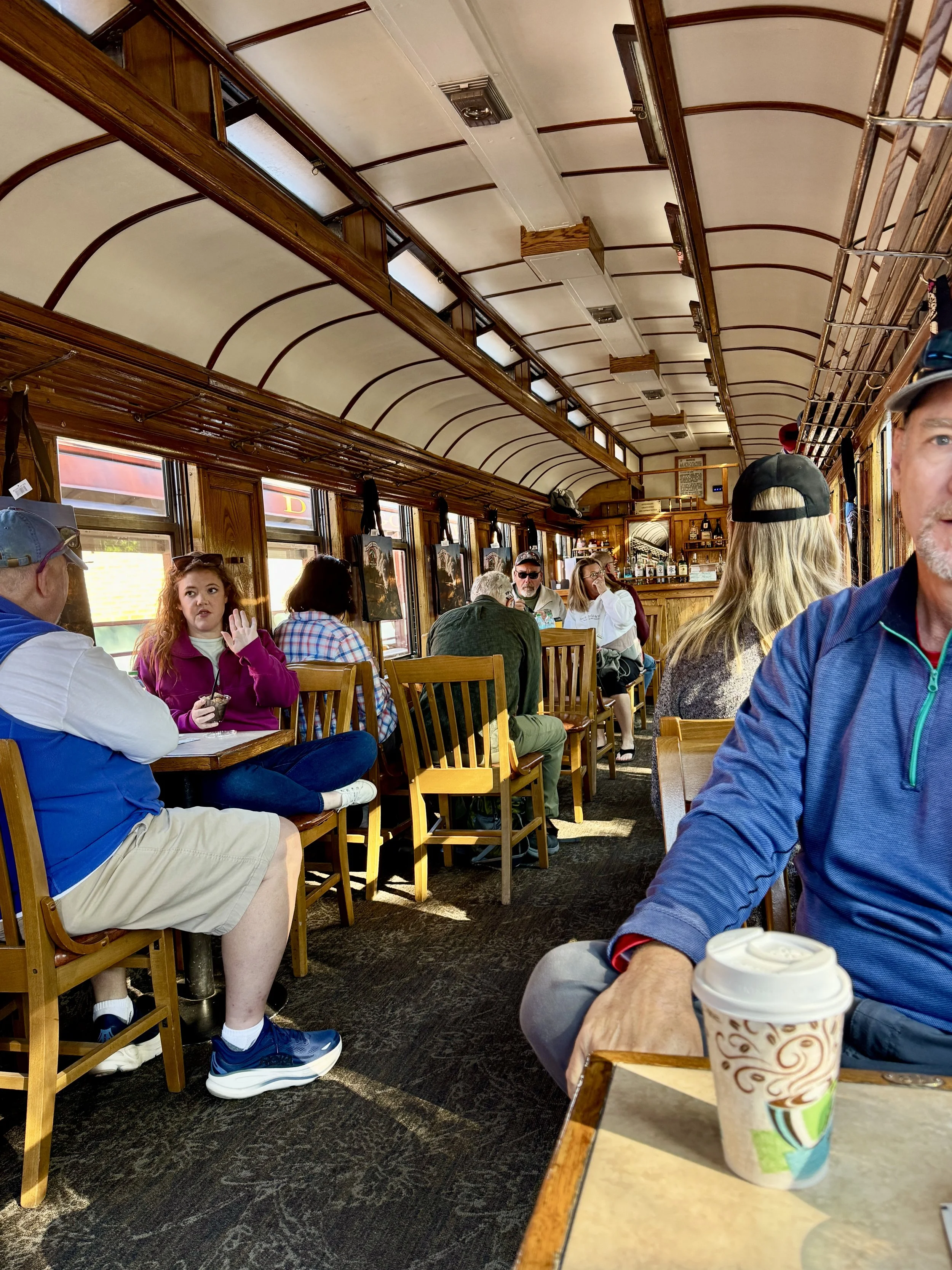
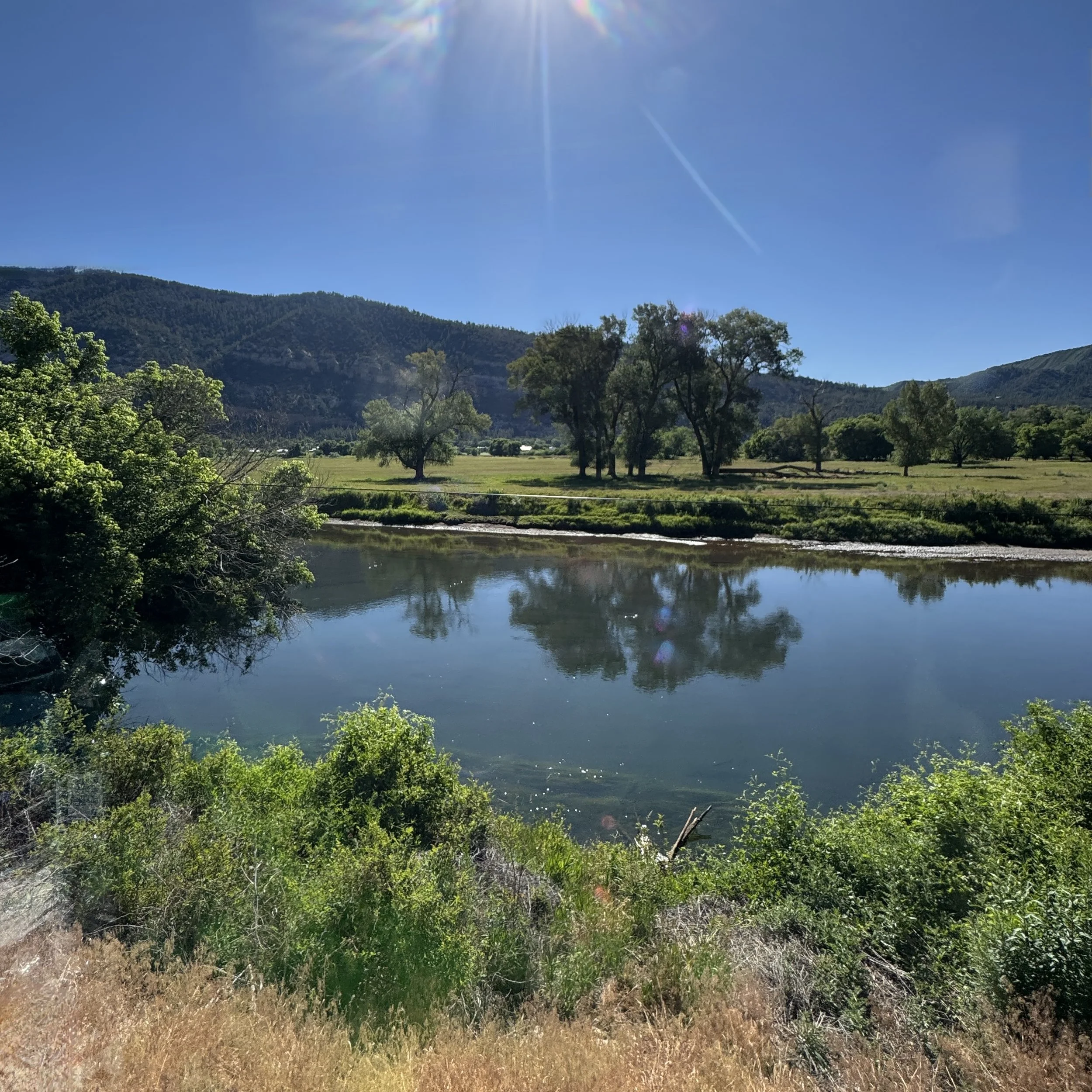
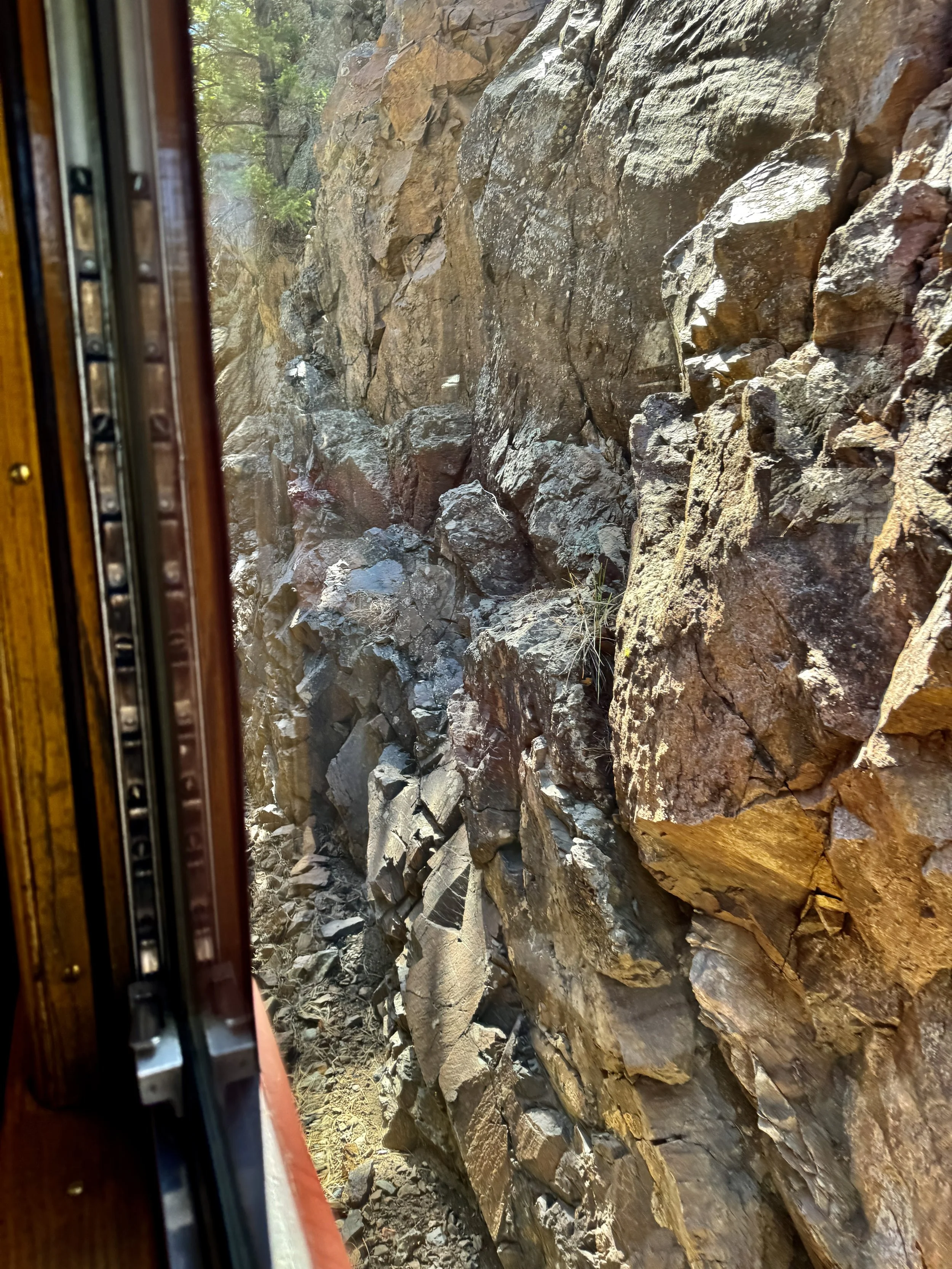
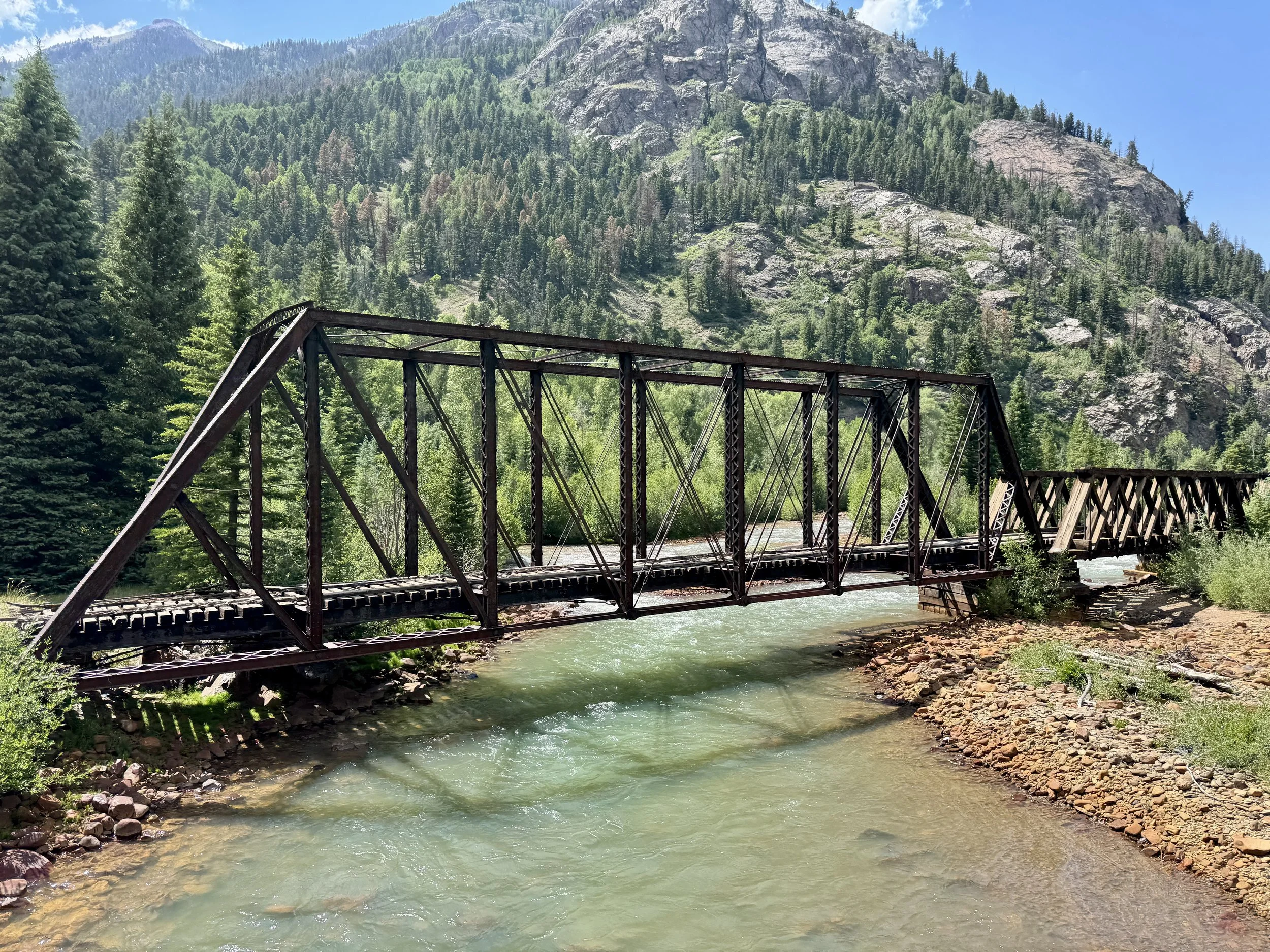
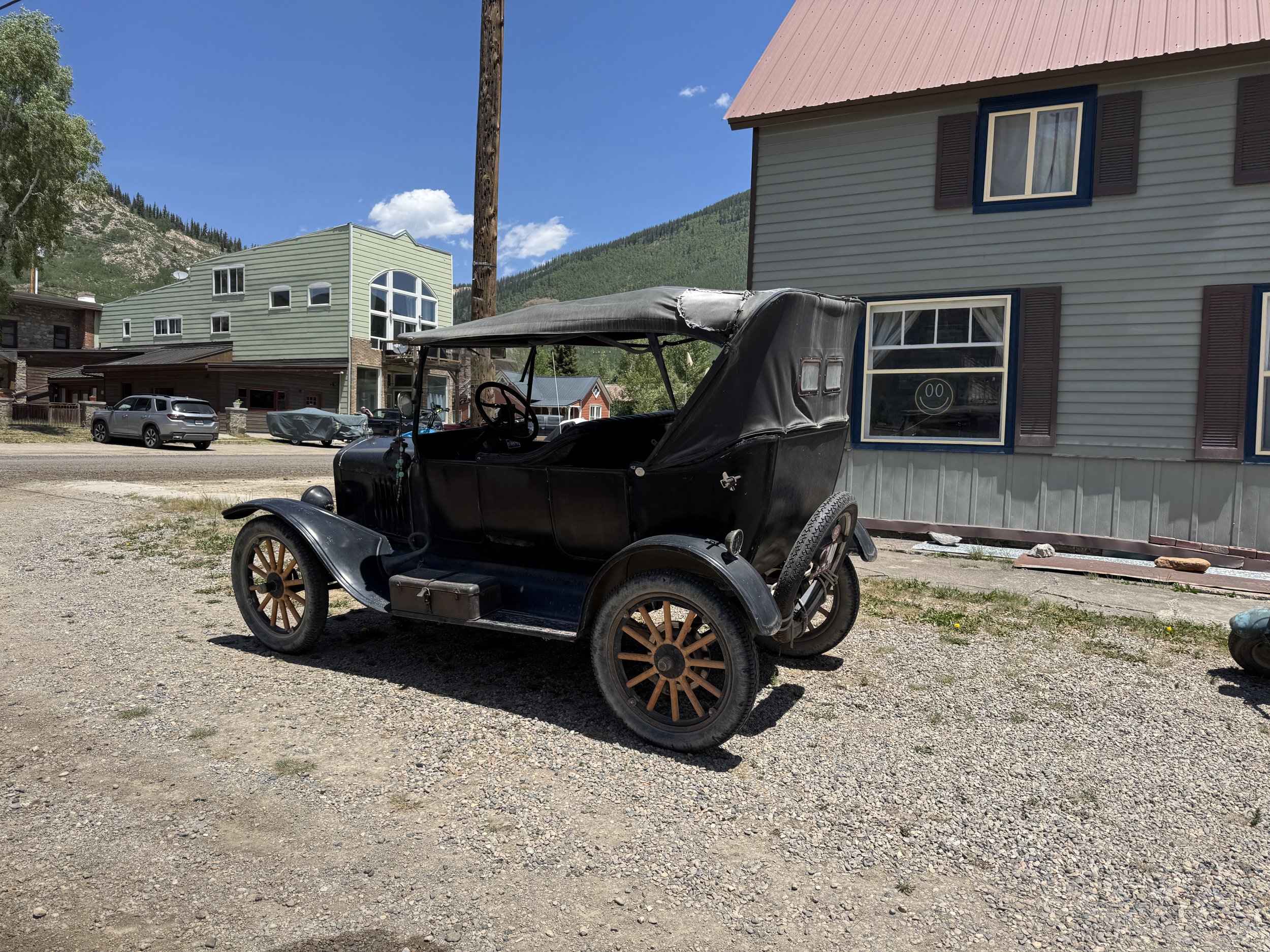
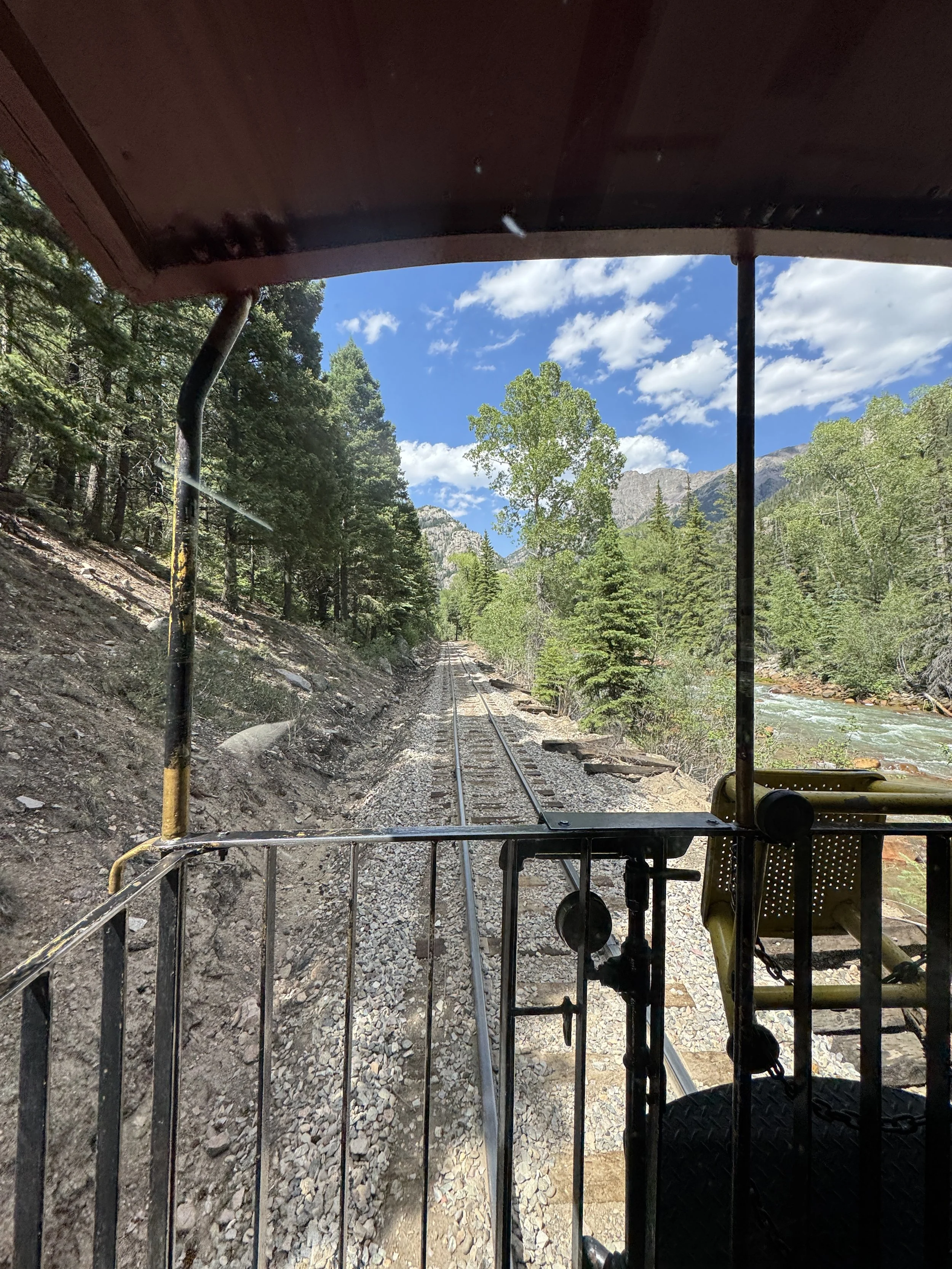
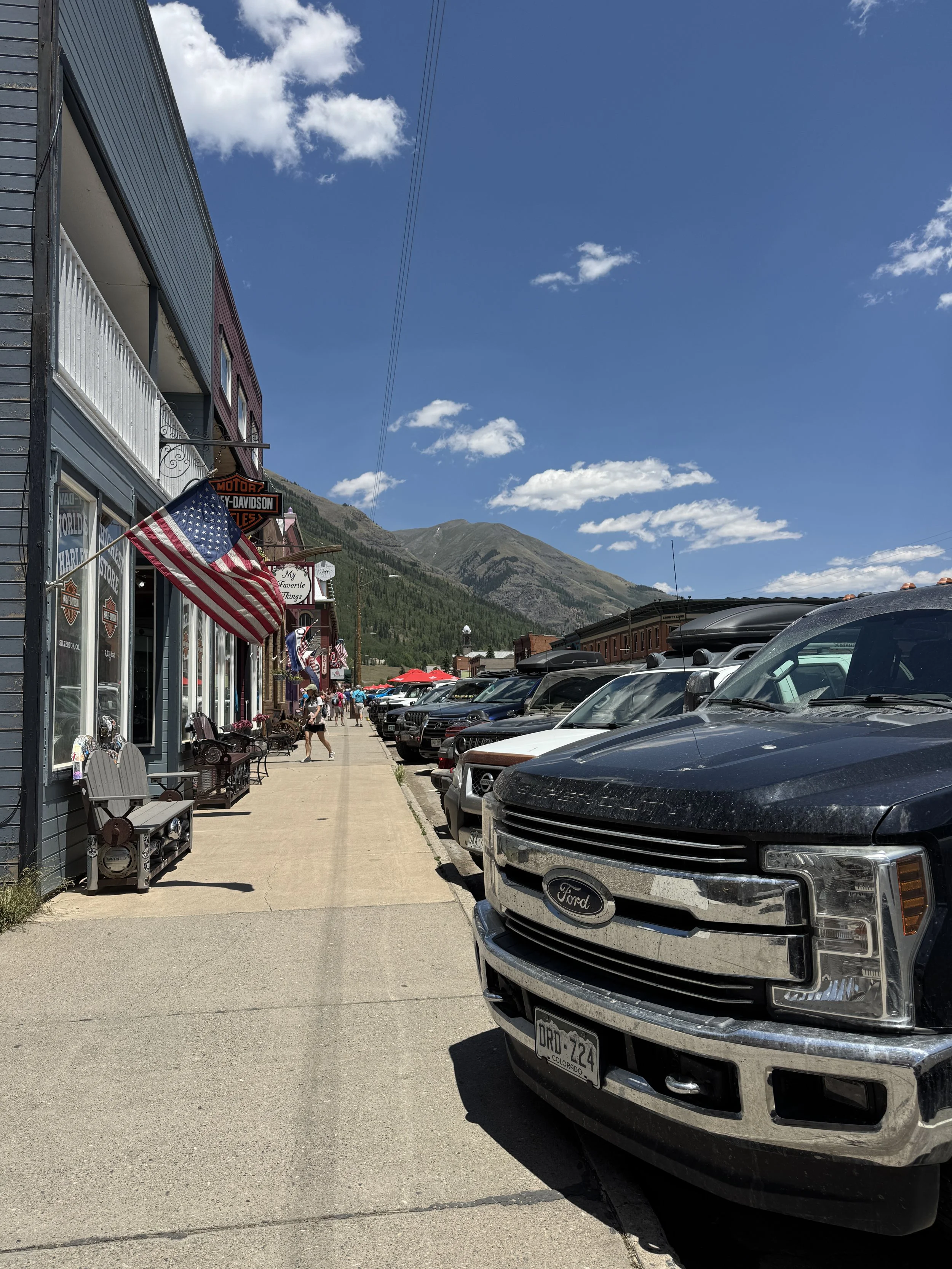
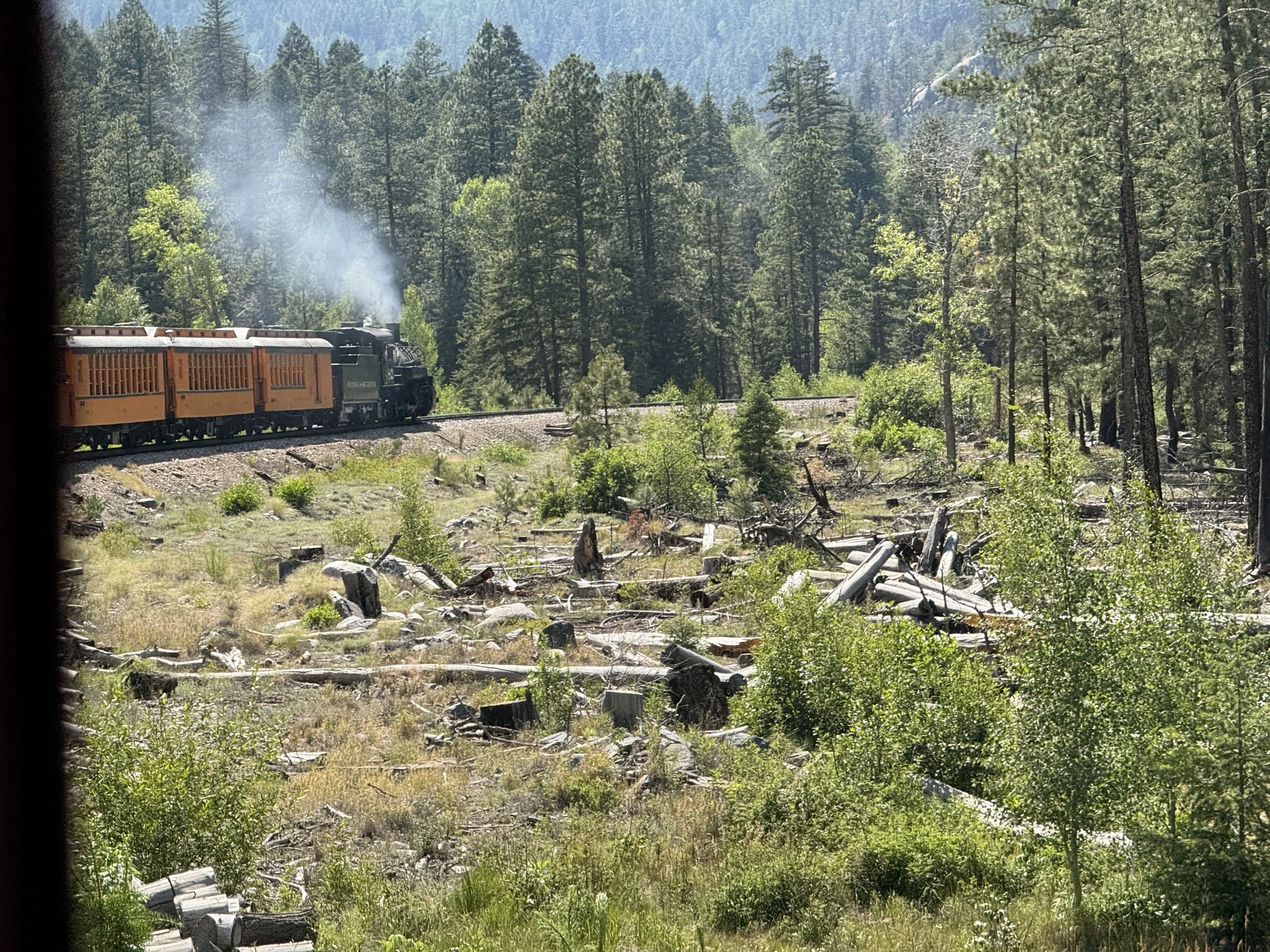
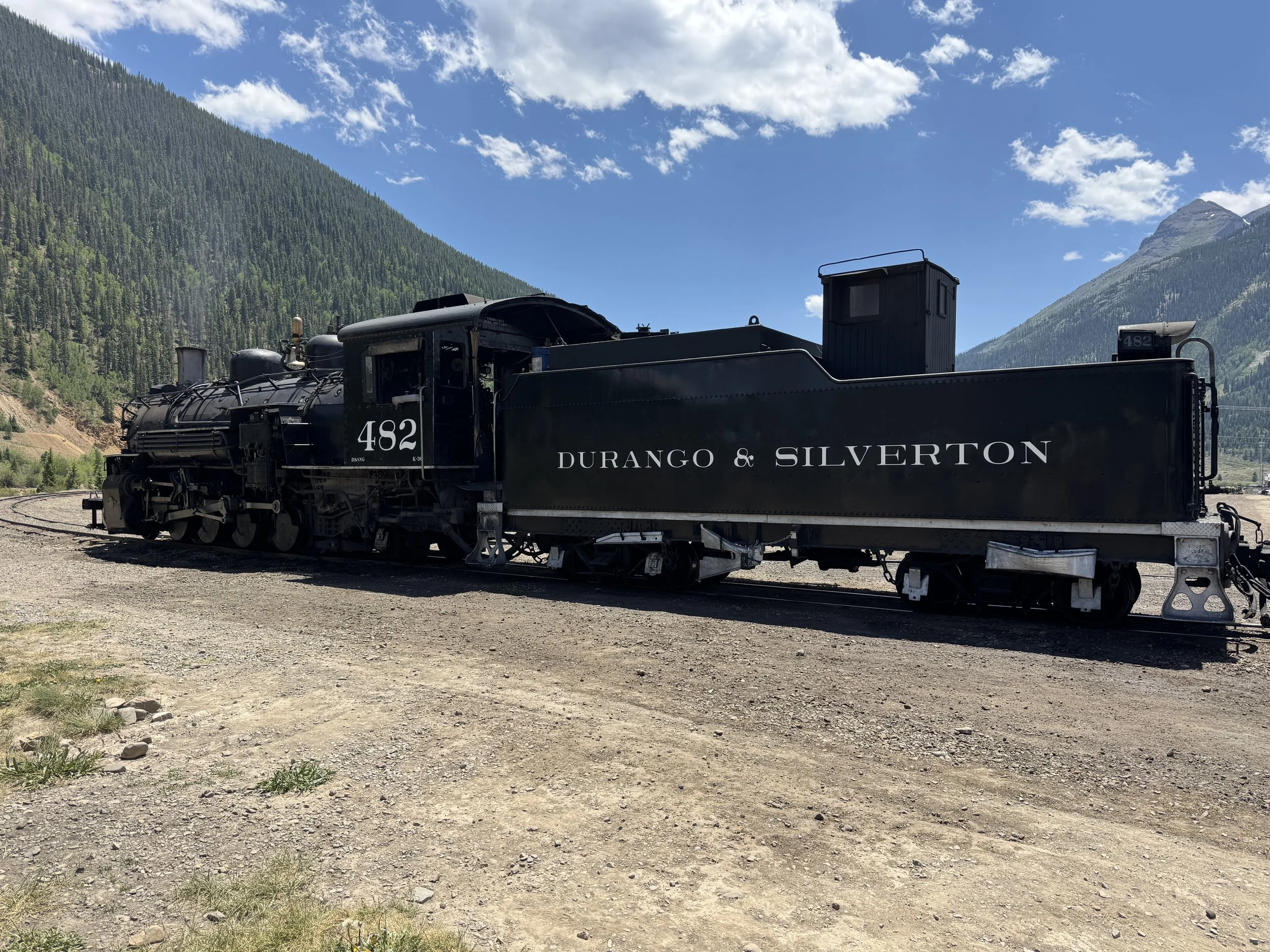
Our last day in Mancos took us to Durango, where we boarded the famous narrow-gauge railroad for a day-long adventure. We spent the day riding the train from Durango to Silverton and back, enjoying both the scenery and a step back into Colorado's mining history. The 45-mile rail line was built between 1881 and 1882 by the Denver and Rio Grande Railway under the leadership of General William Jackson Palmer. He chose a narrow-gauge track, with rails only 3 feet apart instead of the standard 4 feet 8½ inches, because it was less expensive to build, could use lighter equipment, and was better suited to the tight curves required in the rugged mountain terrain. Originally, the railroad operated entirely with coal-fired steam locomotives. Today, all of the trains are powered by diesel engines, although a few diesel steam-powered locomotives are still used, helping preserve the feeling of traveling back in time. The journey begins in Durango, nestled in the Animas River Valley, and follows the Animas River north into the San Juan Mountains. One of the most spectacular sections passes through Animas Canyon, where the tracks cling to steep rock walls high above the river below. The train eventually reaches Silverton, a small mining town that flourished during the mining boom of the 1870s through the 1890s. Today, tourism has replaced mining as the town's primary industry, but Silverton still retains much of its historic charm, with many of its old buildings now serving as hotels, restaurants, and shops. The train stops for about two hours, giving passengers enough time to enjoy lunch, browse the shops, and, in our case, finish with an ice cream treat before boarding for the return trip. The entire excursion takes about seven hours, making it a full-day experience, but the incredible mountain scenery and historic train ride make it well worth the time.
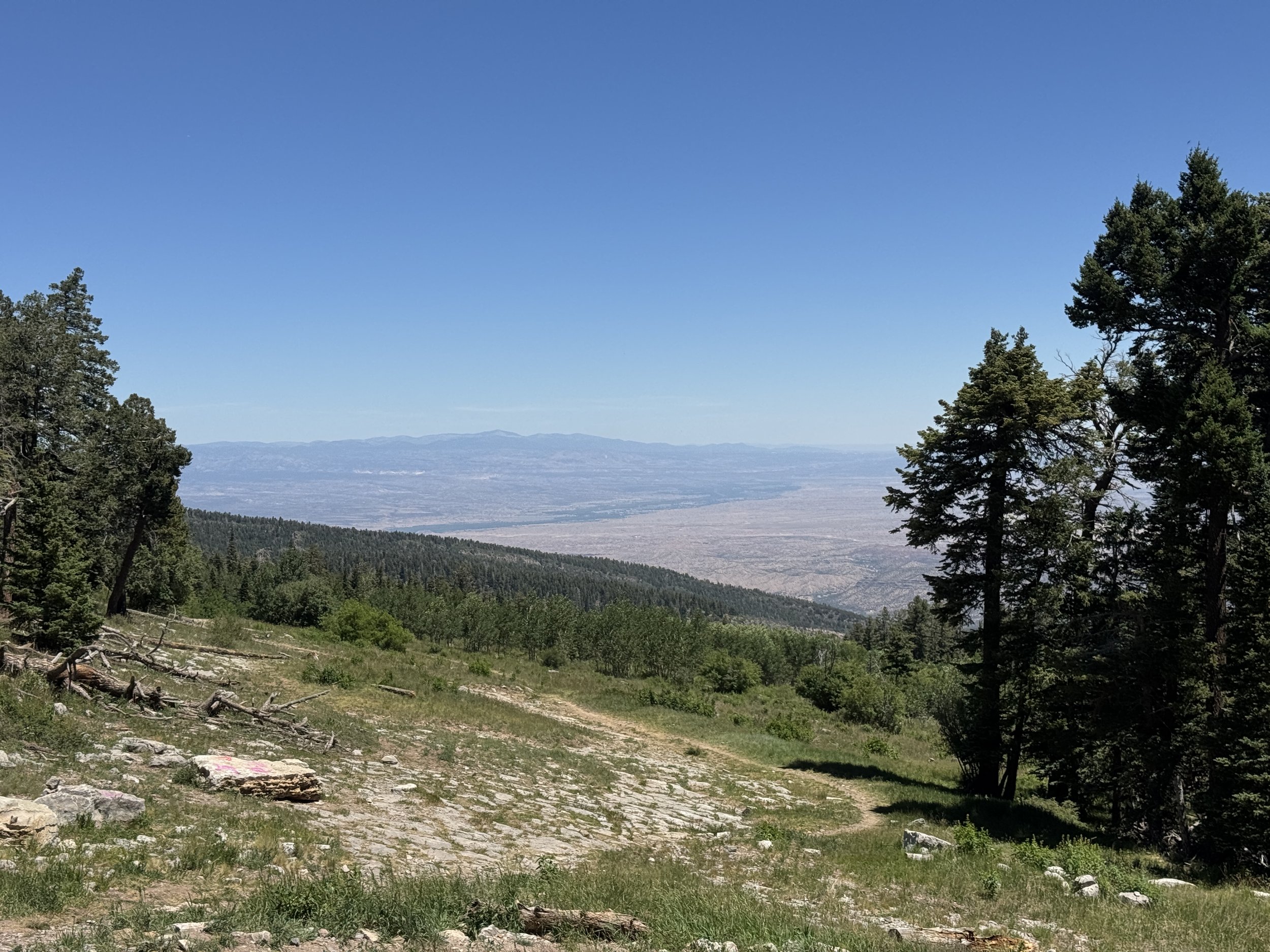
Traveling from Carlsbad Caverns to Mesa Verde is a little over nine hours, so we decided to break the drive into two shorter days with a stop in Albuquerque, New Mexico. With one full day to explore the area, we started with a little exercise and headed into the nearby Sandia Mountains for a 5.5-mile hike. It was a gorgeous day, and the small peaks we climbed rewarded us with beautiful views of the surrounding landscape. I also learned an important lesson about paying closer attention to the trail. At one point, I stepped right over a snake stretched across the path without even noticing it. I had no idea it was there until I heard Steve behind me say, “Oh man.” Thankfully, it turned out to be a harmless gopher snake, but it definitely got my heart rate elevated.
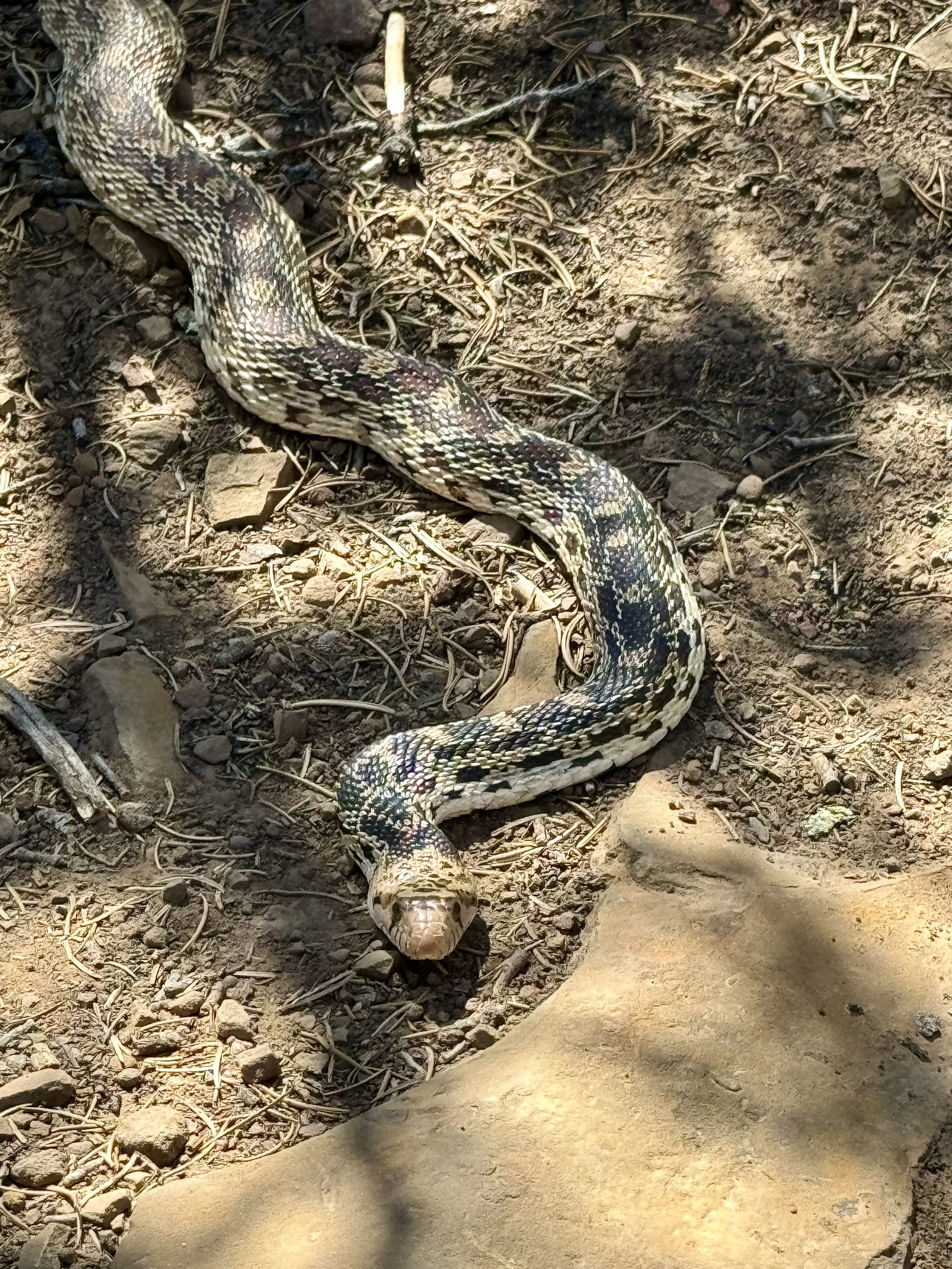
Gopher Snake
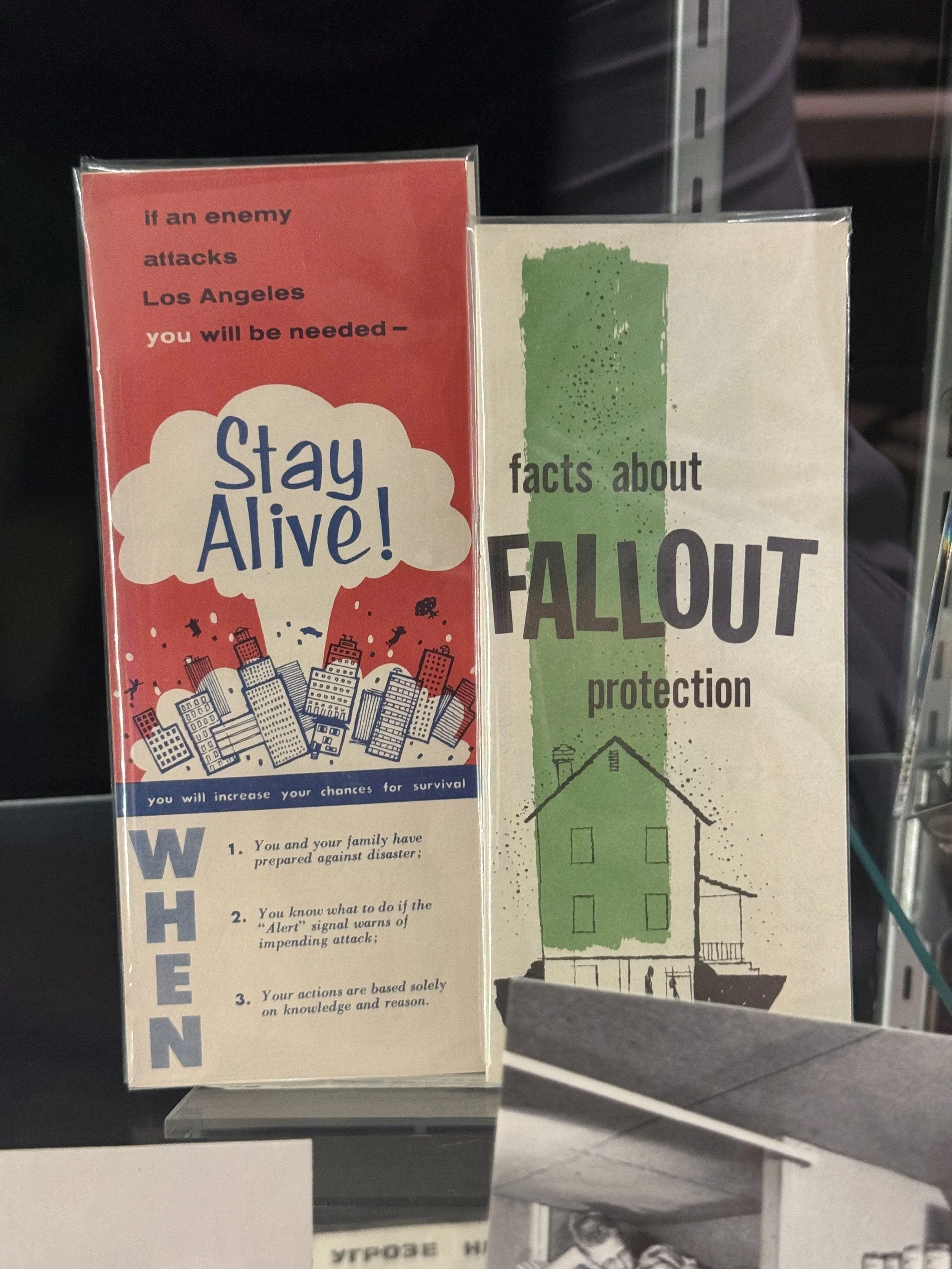
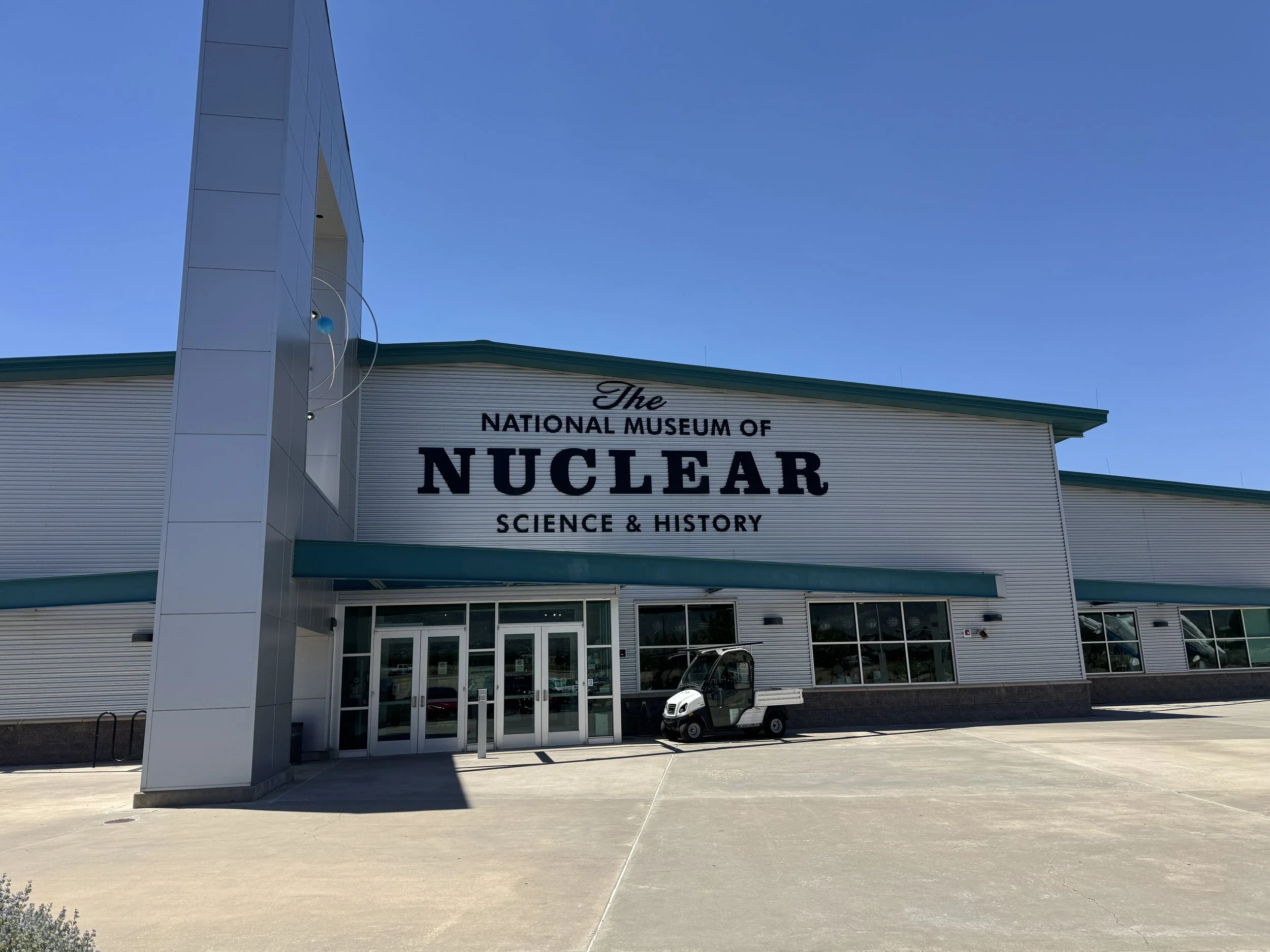
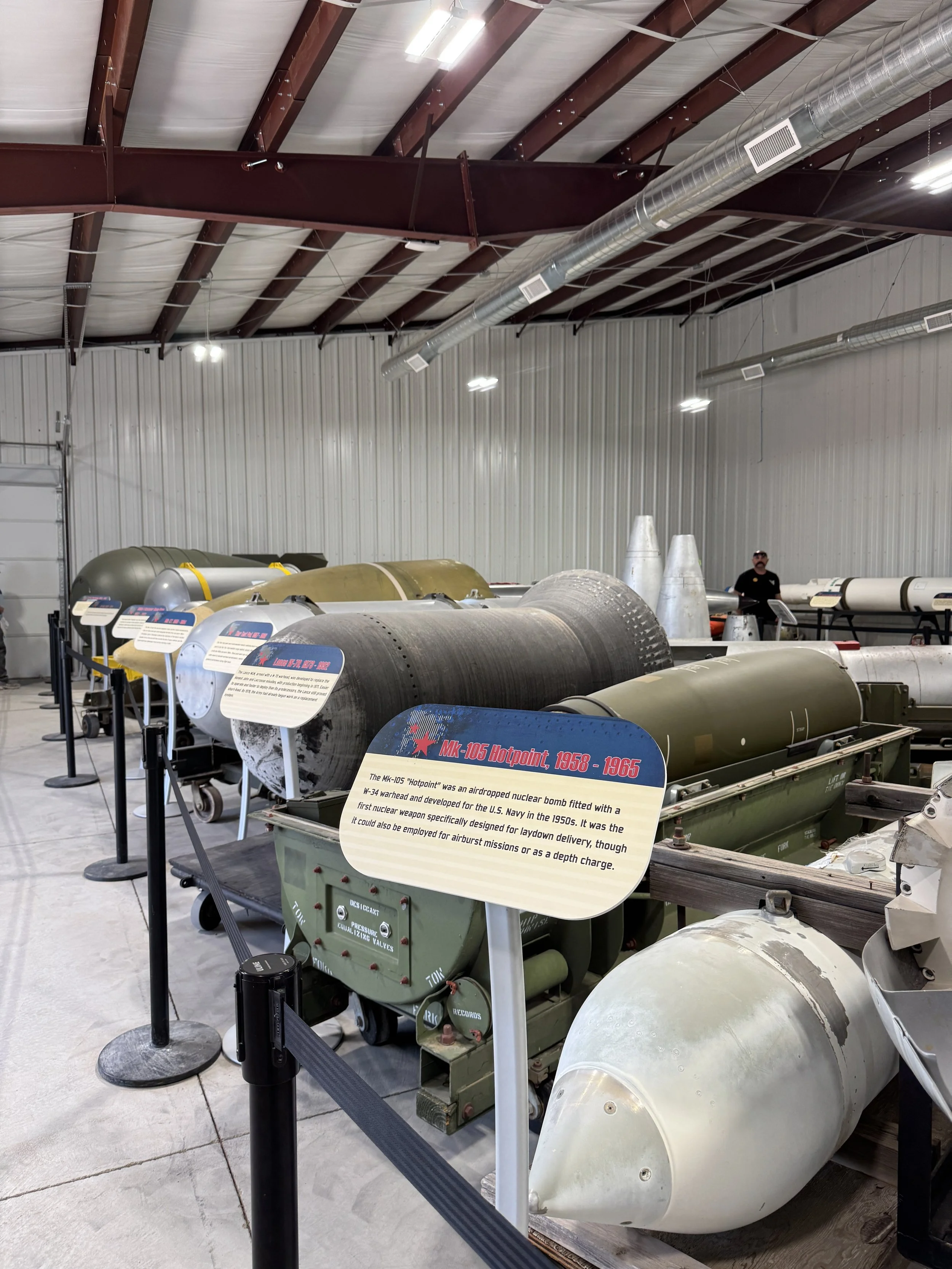
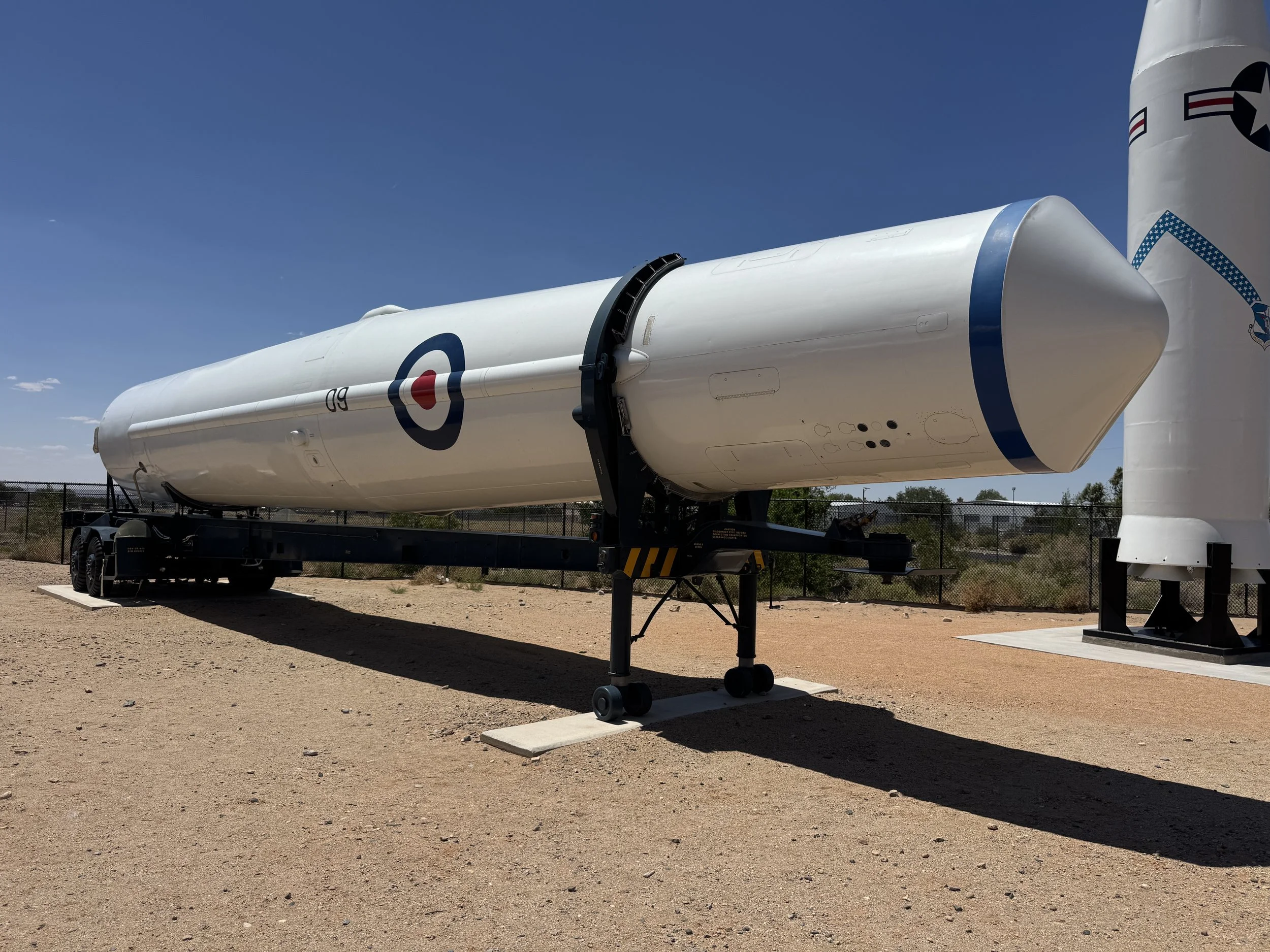
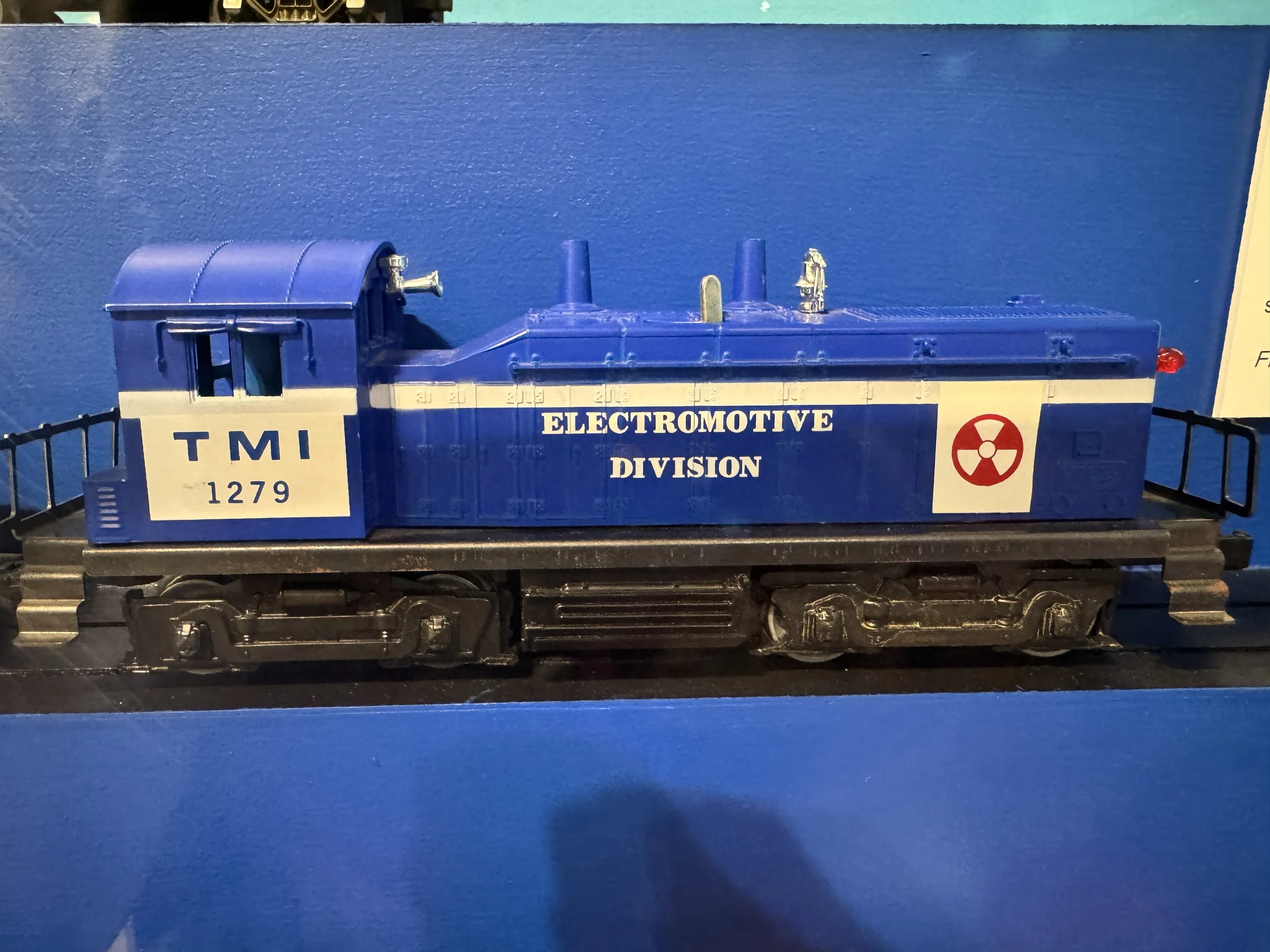
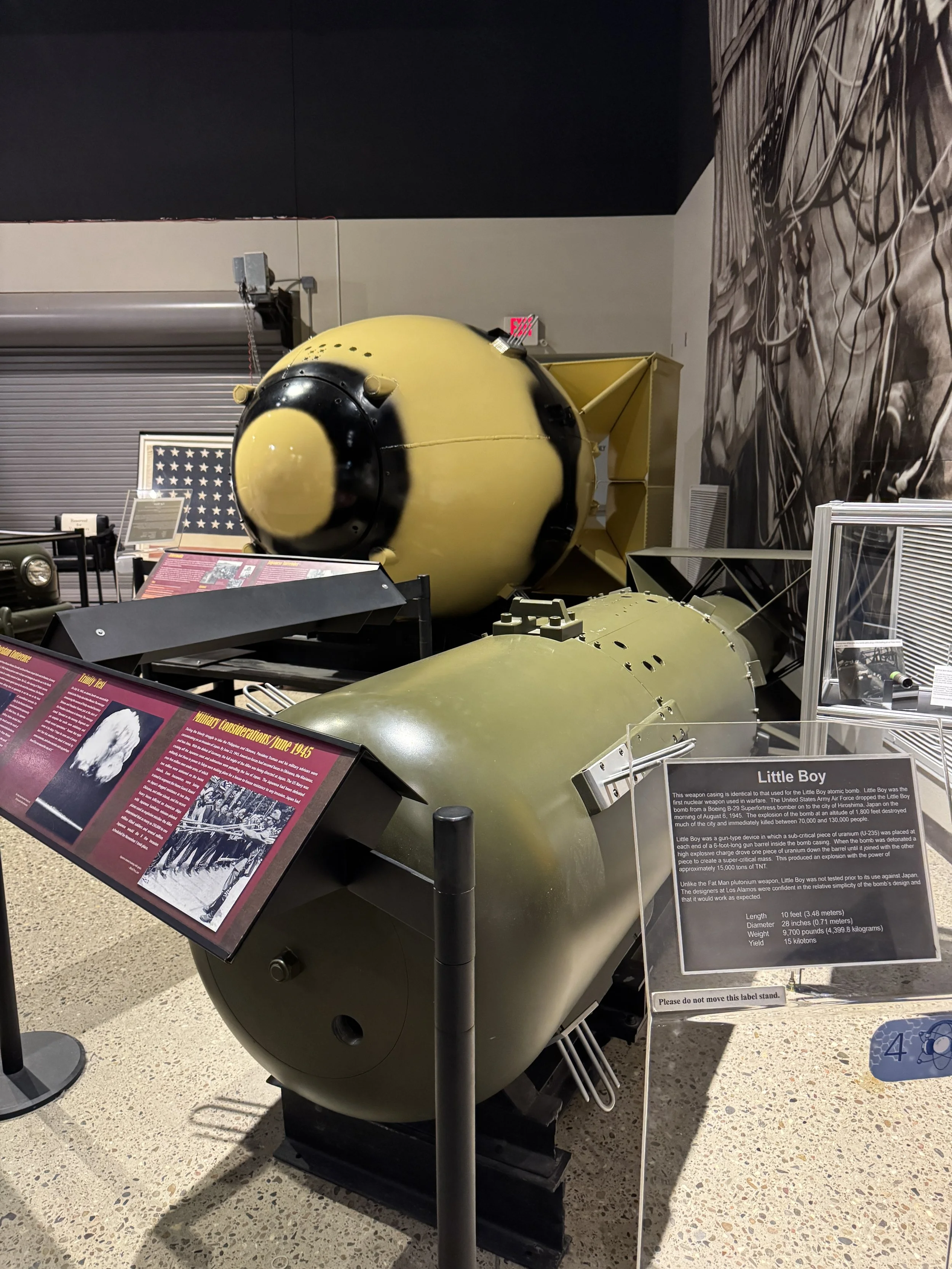
For the afternoon, we visited the National Museum of Nuclear Science & History. Since I didn't know much about nuclear science going in, I found the museum surprisingly fascinating. The exhibits cover both the science behind nuclear technology and the human history of the Atomic Age. Everything from how atoms work and the development of atomic theory to displays of military aircraft and mockups of nuclear weapons from the earliest designs to those in use today is represented. The exhibits did a great job of making some very complex topics understandable. The section we found most interesting focused on the Manhattan Project, with displays and information about the scientists, facilities, and events that led to the development of the first atomic bombs and forever changed the course of history.
Now it’s time to get back on the road and continue our summer adventure. With 10 more National Parks still ahead of us this summer, we’re excited to see what new landscapes, wildlife, and experiences await on the journey.